

Executive Overview
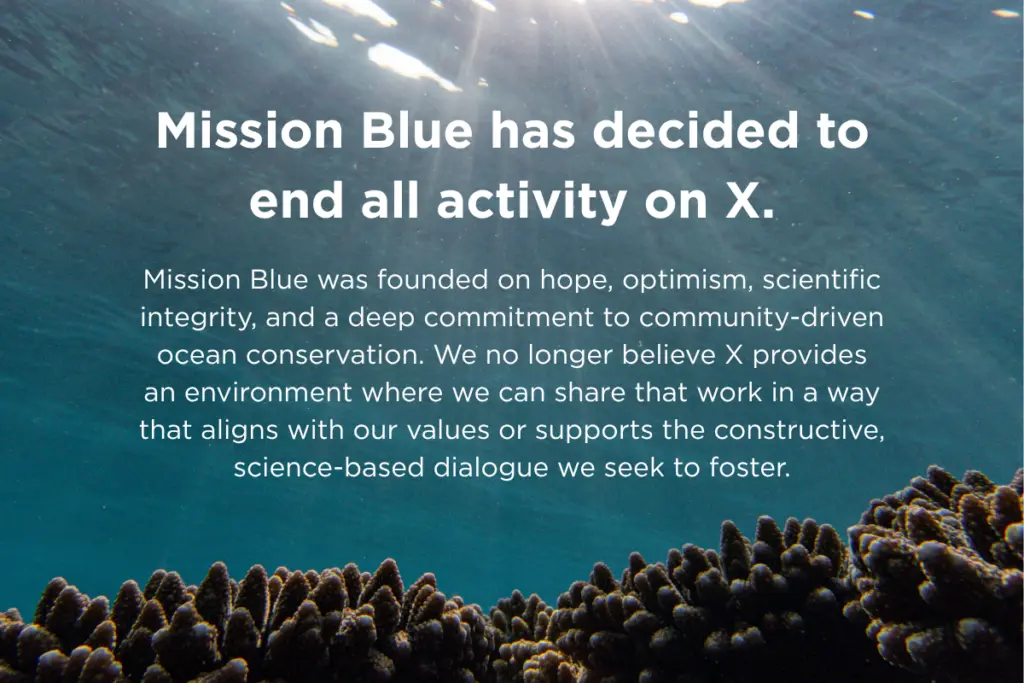
In an era where digital platforms serve as the vital connective tissue between global NGOs and their constituent communities, the decision to abandon a major social media channel is not taken lightly. Mission Blue, the renowned ocean conservation foundation founded by legendary oceanographer Dr. Sylvia Earle, has officially announced its departure from X (formerly Twitter). Moving forward, the organization will channel its digital advocacy, educational outreach, and community-building efforts exclusively into alternative networks, specifically Instagram, Facebook, LinkedIn, and YouTube.
This strategic retreat from X marks a significant turning point in how environmental organizations evaluate the health, safety, and productivity of digital public squares. Founded on principles of radical hope, optimism, and science-driven stewardship, Mission Blue found itself increasingly at odds with the cultural and algorithmic trajectory of X. Citing a pervasive rise in misinformation, digital hostility, and the systematic undermining of scientific consensus, organization leadership concluded that the platform no longer serves as a constructive environment for environmental dialogue.
While the historic archive of Mission Blue’s posts will remain visible on X for historical reference, no new content will be published. This move reflects a broader, growing trend among scientific bodies, academic institutions, and conservation groups who are reassessing the cost-benefit ratio of engaging in polarized digital ecosystems. By redirecting its resources toward platforms that better foster respectful, solutions-oriented engagement, Mission Blue aims to protect the integrity of its message and safeguard the psychological safety of its global community of ocean champions.
Detailed Chronology: The Evolution of Mission Blue’s Digital Strategy
To understand the weight of Mission Blue’s recent departure from X, it is necessary to examine the historical trajectory of the organization’s digital footprint and the changing nature of online communication over the past decade and a half.
Phase 1: The Early Promise of Open-Source Networking (2009–2015)
When Mission Blue was established in the wake of Dr. Sylvia Earle’s 2009 TED Prize wish—which called for a global network of marine protected areas known as "Hope Spots"—social media was widely heralded as a democratizing force for grassroots activism. In its infancy, the platform then known as Twitter offered an unprecedented mechanism for real-time connection. Field scientists aboard research vessels, independent divers, policy advocates, and ocean lovers could converge in a single digital space to share breaking discoveries, coordinate conservation efforts, and amplify calls to action without the traditional gatekeeping of legacy media.
During this era, Mission Blue utilized X as a dynamic ledger of oceanic discovery. Tweets featured rapid updates from expeditions, direct interactions with marine-policy makers, and immediate mobilization around threatened marine habitats. The platform rewarded brevity, speed, and cross-pollination of ideas, creating an optimistic ecosystem where scientific authority was respected and amplified by an eager public.
Phase 2: Algorithmic Shifts and Cultural Polarization (2016–2021)
As the decade progressed, the underlying architecture of social media began to shift. Platforms increasingly prioritized engagement metrics driven by emotional arousal—frequently operationalized through outrage, controversy, and polarization—over nuance and verified expertise. For environmental organizations, this transition presented a subtle yet insidious challenge. Complex ecological issues, which require careful explanation, data interpretation, and multi-faceted policy analysis, struggled to compete with sensationalized narratives.
Simultaneously, the tone of discourse on X began to curdle. Scientific consensus regarding climate change, biodiversity loss, and anthropogenic marine degradation, long treated as settled baseline data within professional networks, became subjects of coordinated skepticism and hostility. Mission Blue staff and associated scientists observed a marked increase in targeted harassment, bad-faith arguments, and the proliferation of climate and environmental misinformation.
Phase 3: The Breaking Point and Strategic Realignment (2022–Present)
The acquisition of the platform by new leadership and its subsequent rebranding to X accelerated structural and cultural changes that alienated many institutional users. Content moderation teams were drastically downsized, verification systems were overhauled in ways that elevated unverified or malicious actors, and algorithmic feeds began pushing highly divisive content directly into users’ timelines.
For Mission Blue, the tipping point arrived when the foundational ethos of the platform—fostering open, constructive dialogue—was deemed fundamentally incompatible with the organization’s core values. Conservation requires hope, collaboration, and trust in empirical science. An environment defined by hostility and the active undermining of scientific inquiry directly undermines the psychological safety required to build a constructive global community. Consequently, leadership initiated a comprehensive audit of their digital strategy, culminating in the formal decision to cease active operations on X and pivot entirely to platforms capable of supporting healthier community engagement.
Supporting Context & Metrics: The Mass Migration of Science from X
Mission Blue’s departure from X is not an isolated incident; rather, it mirrors a broader, structural exodus of academic, scientific, and environmental organizations from the platform. Understanding the macroeconomic and sociological dynamics of this migration provides vital context for why modern NGOs are rethinking their digital dependencies.
The Rise of Scientific Disintermediation
For years, academic institutions, meteorological agencies, conservation NGOs, and individual researchers relied on X as the primary infrastructure for public-facing science communication. However, empirical studies tracking platform health post-2022 reveal a precipitous decline in the visibility of peer-reviewed research and verified expert commentary. Algorithms that once favored institutional credibility now frequently reward sensationalism, leading to what sociologists term the "disintermediation of science"—a process wherein expert consensus is systematically sidelined in favor of viral contrarianism.
Environmental science has borne a disproportionate share of this shift. Climate denialism, anti-conservation rhetoric, and deliberate misinformation campaigns regarding marine ecosystems (such as overfishing, deep-sea mining, and plastic pollution) have found fertile ground under relaxed moderation policies. When organizations like Mission Blue post updates on fragile Hope Spots, their content increasingly exists in an adversarial ecosystem where trolls and automated bot networks actively work to sow doubt and derail constructive engagement.
The Cost-Benefit Ratio of Toxicity
Non-profit organizations operate under strict resource constraints. Every hour spent managing toxic comment sections, mitigating PR crises fomented by bad-faith actors, or attempting to correct coordinated disinformation is an hour diverted from actual conservation work—such as lobbying governments for marine protected areas, funding local expeditions, or educating the next generation of ocean stewards.
Furthermore, digital environments saturated with hostility exact a toll on staff well-being. Mission Blue’s core philosophy is rooted in "hope and optimism." Maintaining an active presence in a digital town square defined by cynicism and aggression creates a cognitive dissonance that conflicts with the organization’s mission to inspire people to care for the ocean.
The Alternative Digital Landscape
In pivoting away from X, Mission Blue is not shrinking its digital footprint; rather, it is strategically relocating to platforms that offer better structural safeguards for community health:
- Instagram: Provides a visual-first medium where the breathtaking beauty of marine life and Hope Spots can be showcased, fostering emotional connection and immediate aesthetic appreciation.
- Facebook: Facilitates deeper community organizing, long-form discussions, and localized engagement through groups and hyper-targeted educational campaigns.
- LinkedIn: Serves as the premier professional network for connecting with corporate partners, marine scientists, policymakers, and institutional donors who operate within a professional, solutions-oriented framework.
- YouTube: Offers an unmatched library for long-form documentary storytelling, expedition recaps, and deep-dive educational content that respects the complexity of marine science.
By consolidating efforts across these four pillars, alongside direct-to-inbox newsletters, Mission Blue ensures that its communication channels remain constructive, educational, and aligned with its organizational values.
Official Statements and Institutional Perspective
The decision to leave X was deliberated at the highest levels of Mission Blue, reflecting a deep philosophical commitment to the integrity of the organization’s public voice.
In its official transition statement, the organization emphasized the foundational role that community played in its early digital days:
"Mission Blue was founded with a spirit of hope, optimism, and dedication to community-driven ocean conservation. When we first started our Twitter account, it offered a great way to connect with our Champions, scientists in the field, and an audience of people who love the ocean. Thank you for connecting with us there and supporting our mission to spread awareness and ocean hope."
However, leadership did not mince words regarding the systemic deterioration of the platform’s ecosystem:
"Over time, however, the environment on X has changed significantly. We have become increasingly concerned about the prevalence of misinformation, hostility, and divisive content on the platform, including content that undermines science and constructive dialogue around environmental issues. We do not believe this environment is aligned with the kind of informed, respectful, and solutions-oriented community Mission Blue seeks to foster."
Reiterating the interconnected nature of both the global ocean and digital society, the organization underscored its ethical boundaries:
"We are all connected to the same ocean. Through our digital strategy, we seek to build a curious, welcoming online community. We cannot, in good faith, continue to use the X platform. The Mission Blue page will remain archived on X, but we do not plan to publish any new material on the account."
This sentiment resonates deeply across the modern non-profit sector. As digital public squares become increasingly commercialized and deregulated, organizations are forced to draw a hard line between public engagement and brand safety. For Mission Blue, safeguarding the integrity of marine science takes precedence over maintaining a presence in a compromised digital space.
Future Outlook: Charting a Course for Ocean Hope
As Mission Blue closes the chapter on its X account, the organization looks forward to a revitalized digital future centered around deep engagement, education, and actionable conservation. The shift represents not a retreat from public advocacy, but a sophisticated refinement of how environmental groups must operate in an increasingly fractured media landscape.
Deepening Engagement Through Alternative Channels
With resources previously tied up in monitoring and maintaining the X account now freed up, Mission Blue’s digital team is focusing on scaling impact where audiences are most receptive to constructive dialogue.
- Expedition Storytelling: Future expeditions to remote Hope Spots will be documented with richer, long-form multimedia assets optimized for YouTube and Instagram.
- Community Empowerment: By leveraging Facebook and LinkedIn, Mission Blue will provide corporate partners, local conservationists, and everyday citizens with tangible toolkits for policy advocacy and grassroots marine protection.
- Direct Communication: Recognizing the volatility of algorithmic social media feeds, the organization is placing renewed emphasis on its direct-to-consumer newsletter. This ensures that updates, scientific breakthroughs, and urgent calls to action land directly in the inboxes of supporters without algorithmic interference or commercial mediation.
A Call to Action for the Global Ocean Community
The health of the global ocean depends on collective action, empathy, and an unwavering commitment to scientific reality. Mission Blue’s departure from X serves as a reminder to the broader environmental movement that digital platforms are tools, not masters. When a platform ceases to serve the collective good, walking away is a powerful assertion of organizational values.
Mission Blue invites all its loyal Champions, scientists, divers, and ocean advocates to make the journey with them. By migrating to Instagram, Facebook, LinkedIn, and YouTube—and by subscribing to the official Mission Blue newsletter—supporters can continue to stay informed, inspired, and mobilized.
The digital tides may shift, but the mission remains immutable: to ignite public support for a global network of marine protected areas large enough to save the blue heart of our planet. The conversation continues, the community remains strong, and the hope for our oceans burns brighter than ever.



