

Executive Overview
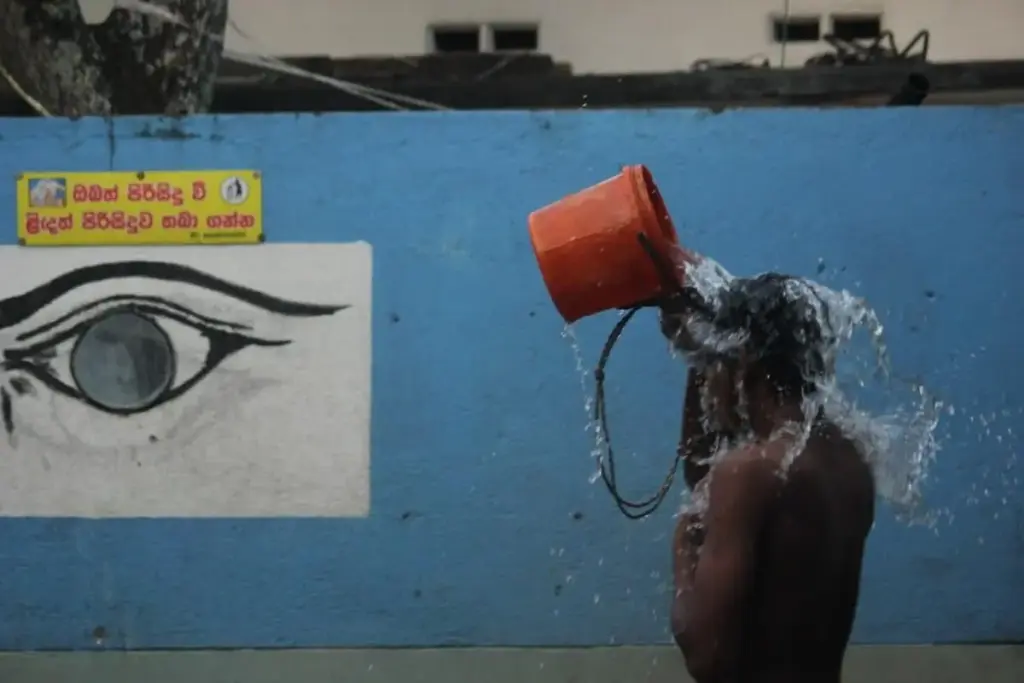
In the heart of Sri Lanka’s bustling commercial capital, Colombo, daily life revolves around the quiet, persistent rituals of survival. For Nalin Kaluwitharana, a three-wheeler driver residing in the low-income settlement of "Ranjan Wijerathnapura," his morning routine begins with carefully watering his small home garden. Surrounded by the concrete density of the city, Kaluwitharana clings to this small patch of green, ensuring his immediate surroundings remain alive despite soaring utility tariffs and stringent public advisories to conserve water amid looming drought conditions.
Yet, beneath this routine lies a fragile reality. Like many residents in Colombo’s underserved neighborhoods, Kaluwitharana and his neighbors lack basic household water storage facilities. They are directly tethered to pipe-borne water lines managed by the National Water Supply and Drainage Board (NWSDB). When routine maintenance, emergency repairs, or climate-induced weather extremes disrupt this supply, these communities face immediate vulnerability.
Water access in Sri Lanka’s Western Province is a complex paradox. While official metrics highlight a significant expansion in centrally managed utility coverage—climbing from 43.1% of households in 2012 to 58.7% by 2024—the lived experience of marginalized urban populations tells a story of compounding hurdles. Rising utility tariffs, deteriorating water safety after service interruptions, pollution in urban waterways, and the mounting specter of climate variability converge to create a high-stakes environment. For urban low-income families, the fundamental right to safe, reliable drinking water is increasingly squeezed between escalating costs and systemic vulnerabilities.
Detailed Chronology: Evolution of Sri Lanka’s Water Infrastructure and Crisis Points
To understand the current pressures facing Colombo’s urban poor, it is vital to trace the historical and regulatory trajectory of Sri Lanka’s water management systems.
-
The 1990s: The Rise of Community Water Schemes
Recognizing a widening service gap in areas unreached by the centralized NWSDB network, Sri Lanka established community water supply schemes. Designed primarily for rural regions, these systems tapped into natural springs, streams, and shallow groundwater sources. At their inception, environmental degradation was minimal, and water safety concerns were virtually non-existent. -
2012–2021: Expanding Access and Emerging Contamination
According to Department of Census and Statistics data, household access to NWSDB infrastructure in the Western Province surged to 43.1% by 2012. However, the ensuing decade brought industrialization, rapid agricultural expansion, and unchecked livestock farming within catchment areas. By the late 2010s, natural water sources feeding community schemes showed alarming signs of agricultural and development-induced contamination. To counter this, the Department of National Community Water Supply (DNCWS) stepped up efforts to register community-based organizations. Between 2019 and 2021 alone, 367 new community water schemes were initiated, with a target completion timeline stretching to 2027. -
August 2022–2024: The Tariff Shock and Regulatory Revisions
Decades of economic shifts culminated in major administrative and financial disruptions for the NWSDB. Following an exorbitant water tariff hike in August 2023, low-income households were battered by escalating utility costs. A subsequent gazette notification in 2024 reclassified consumers, establishing tariffs for low-income settlements ranging from 100 rupees to 1,600 rupees ($0.30 to $4.87) per unit. Minor adjustments in 2024 offered negligible relief to families already struggling with daily wage labor. -
May 2026: Special Audit and Research Findings
A damning special audit report released in May 2026 exposed deep-seated management weaknesses within the NWSDB, which directly fueled the justification for aggressive tariff increases. The report revealed that domestic consumers generated the lion’s share of NWSDB revenue—accounting for approximately 73% of total earnings. Simultaneously, seminal research published in the Journal of Water, Sanitation and Hygiene for Development by consultant community physician Novil Wijesekara and colleagues assessed household water treatment and storage (HWTS) mechanisms across the Western Province, underscoring critical safety gaps in non-centrally managed water supplies.
Supporting Context & Metrics: The Anatomy of Urban Water Insecurity
The Economic Burden on Daily Wage Earners
In settlements like Ranjan Wijerathnapura, the demographic makeup largely consists of informal sector workers, daily wage earners, and contract laborers. Abdul Rahman Mohamed, a local resident, points out that the economic reality of these neighborhoods clashes sharply with modern utility billing structures.
"Many residents engage in contract labor and simply cannot keep pace with recurring utility bills," Mohamed explained to Mongabay. While residents may enjoy a relatively continuous baseline flow under normal operating conditions, prolonged water cuts—sometimes lasting up to nine hours—severely disrupt their daily routines.
Under the 2024 tariff framework, low-income households face charges up to 1,600 rupees per unit. When weighed against unstable incomes, these costs force difficult compromises between basic hydration, sanitation, and other household necessities.
Water Quality, Filtration, and Hidden Hazards
Centrally supplied water is not immune to post-treatment vulnerabilities. Linda Arulanantham, a resident of the same Colombo neighborhood, highlights a persistent aesthetic and safety hazard: "Immediately after a water cut, the water turns muddy. We use a water filter to make sure that the water we drink is clean."
However, water filtration systems are a luxury that not every household can afford. In urban low-income settlements, water safety is frequently sidelined until illness strikes.
Dr. Novil Wijesekara, a consultant community physician at the Ministry of Health, emphasizes that while Western Province coverage under the NWSDB rose to 58.7% by 2024, a substantial percentage of the population still relies on alternative sources such as dug wells and community schemes.
"These sources may be safe in some settings, but they require regular protection, monitoring, and household-level precautions," Wijesekara noted. "If non-NWSDB sources show bacteriological non-compliance, people using such sources face higher risks unless proper household water treatment and safe storage practices are followed."
According to Sri Lanka Standards Institution (SLSI) benchmarks, drinking water must meet rigorous multi-tiered criteria. As Dr. Wijesekara outlines, achieving these standards requires an integrated approach: "We do chlorination to remove bacteria. We filter water to get rid of mud. As for heavy minerals, we opt for complex purification systems. All three features should be brought to the standardized level."

Climate Variability and Extreme Weather
Sri Lanka’s geography makes it acutely vulnerable to the cascading impacts of climate change. Unseasonal rainfall, prolonged droughts, and intense flooding directly threaten both the availability and microbiological integrity of water resources.
During heavy downpours and floods, surface water bodies face severe contamination risks. Floodwaters wash sewage, animal waste, and solid municipal waste directly into open water sources and shallow dug wells. This introduces high levels of bacteriological pathogens into systems that were previously considered safe.
Conversely, prolonged dry spells trigger severe water scarcity. When primary supplies dwindle, communities are often driven to utilize unprotected alternative sources, amplifying public health risks unless aggressive household water treatment—such as boiling and cooling—is universally practiced.
Official Statements & Institutional Perspectives
NWSDB: Managing Demand and Distribution
Addressing concerns over supply reliability, Atham Bawa, Deputy General Manager of Environmental and Water Resources at the NWSDB, stated that the Colombo district requires approximately 1 million cubic meters of water daily.
"So far, we have no challenges in distributing water to Colombo district," Bawa affirmed. "Except for emergencies and standard maintenance work, which are rare instances, we ensure regular water supply to people in Colombo."
To combat dry-season vulnerabilities, Bawa noted that a comprehensive drought management plan has been activated. This strategy involves scaling up a dedicated groundwater division to extract reserves during dry months and deploying emergency bowsers. Collaborating with the Disaster Management Centre, the NWSDB has successfully supplied bowser water to over 70,000 individuals in drought-stricken regions.
Mahaweli Authority: Conveyance Challenges vs. Storage Capacity
From a macro-resource management perspective, Nilantha Dhanapala, Director at the Water Management Secretariat of the Mahaweli Authority of Sri Lanka, offered a pragmatic assessment of national reserves. As of late August, major reservoirs across the island stood at 55% of their total storage capacity.
"As for domestic water consumption, the amount of water usage is significantly little compared to irrigation water. It is manageable at this moment," Dhanapala explained.

However, he pinpointed a critical systemic bottleneck: "One of the issues is that even though there is an adequate amount of water, there is limited conveyance capacity, which makes it difficult for the NWSDB to distribute safe drinking water to all areas of the country. If this could be managed, then this situation could be controlled."
DNCWS: Adapting Rural and Peri-Urban Networks
Ananda Vijitha Kumara Mapa, Director General at the Department of National Community Water Supply (DNCWS), reflected on the shifting challenges facing community-managed schemes since their inception in the 1990s.
"Most water schemes were established in places where there were natural water springs, streams and so on. The water sources were not contaminated at the time," Mapa said. "But 20-25 years later, the need to purify water arose. Water sources have become contaminated due to development activities, agricultural expansion, livestock farms and other activities happening in catchment areas."
To address these compounding threats, the DNCWS continues to formalize community-based organizations, pushing forward with the completion of infrastructural upgrades for hundreds of schemes by 2027.
Future Outlook: Pathways Toward Urban Water Resilience
As Sri Lanka navigates the twin pressures of economic restructuring and accelerating climate volatility, securing safe and equitable urban water access requires targeted, multi-faceted interventions.
- Upgrading Conveyance and Distribution Infrastructure: As highlighted by the Mahaweli Authority, raw water availability is currently sufficient, but the physical infrastructure required to transport and treat this water safely requires substantial capital investment. Upgrading NWSDB conveyance networks will minimize distribution losses and reduce the frequency of emergency line failures that introduce muddy, contaminated water into urban taps.
- Institutional Reform and Financial Relief: The revelations of the May 2026 special audit underscore the need for internal administrative reforms within the NWSDB. Addressing operational inefficiencies can help alleviate the crushing tariff burden on low-income domestic consumers, who currently generate 73% of the board’s revenue yet struggle to pay monthly utility bills.
- Institutionalizing Household Water Treatment and Storage (HWTS): Dr. Novil Wijesekara’s research emphasizes that central utility provision alone cannot guarantee public health safety, particularly in communities prone to service disruptions. Public health campaigns promoting accessible HWTS practices—such as low-cost filtration, safe storage containers, and boiling protocols—must be systematically integrated into urban community health frameworks.
- Climate-Resilient Water Safety Plans: Moving forward, urban planning in Colombo must account for climate variability. Developing robust water safety plans that anticipate both flood-induced pathogen contamination and drought-driven scarcity will be essential in safeguarding vulnerable populations.
Ultimately, the plight of residents in settlements like Ranjan Wijerathnapura serves as a vital bellwether. Ensuring that urban low-income communities have uninterrupted access to clean, affordable water is not merely a matter of utility management—it is a fundamental prerequisite for equitable urban development, public health, and human dignity in Sri Lanka’s evolving capital.



