

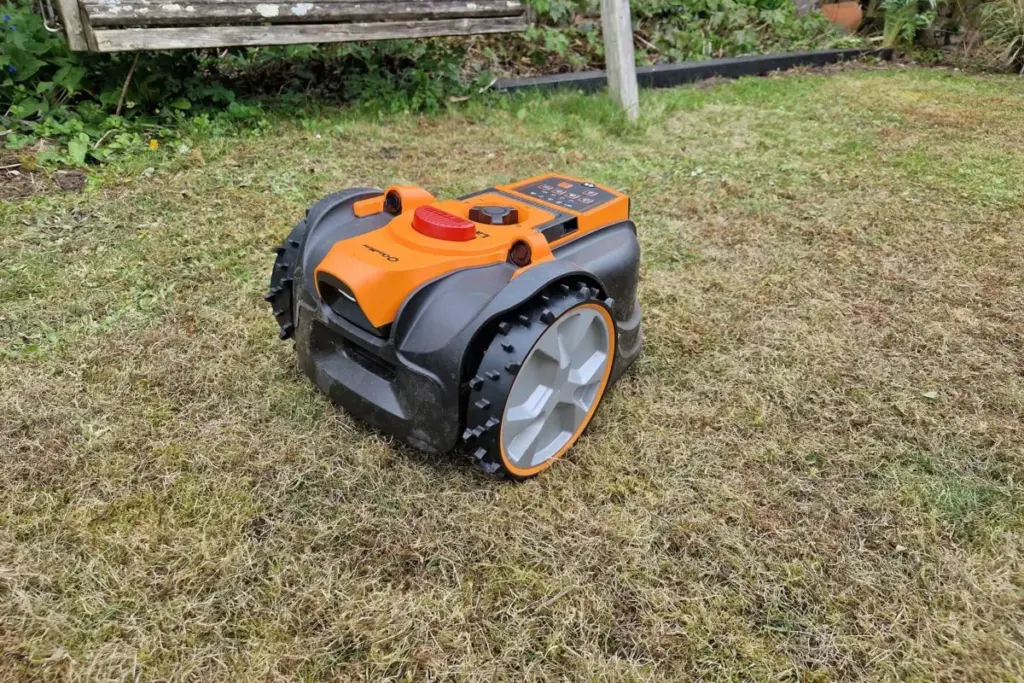
The landscape of British gardening is undergoing a profound technological transformation. For generations, maintaining a pristine lawn meant breaking out the petrol or electric mower, wrestling with extension cables, or enduring the deafening roar of internal combustion engines on a peaceful weekend morning. Today, however, an increasingly popular, hands-free alternative is storming UK gardens: the robotic lawn mower.

Once viewed as an expensive novelty for tech enthusiasts with deep pockets, autonomous mowers have matured into sophisticated, reliable, and accessible domestic appliances. Powered by rechargeable lithium-ion batteries and guided by an array of cutting-edge technologies—ranging from traditional boundary cables and AI-enhanced cameras to Real-Time Kinematic (RTK) GPS and solid-state LiDAR—these machines are reshaping how homeowners manage outdoor spaces.

For gardeners with mobility concerns, those who travel frequently, or anyone who simply views mowing as an unwelcome chore, robot mowers offer a compelling solution. Following rigorous, weeks-long testing protocols across a diverse range of UK gardens—featuring complex shapes, steep slopes, and variable weather conditions—industry experts have evaluated the latest crop of autonomous mowers. This comprehensive report breaks down the market’s top performers, analyses their underlying technologies, weighs their pros and cons, and provides expert guidance on selecting the ideal machine for your green space.

Detailed Chronology: The Evolution of Robotic Mowing
To understand how modern robot mowers operate, it is helpful to look at how the technology has evolved over successive generations.

Phase 1: The Boundary-Wire Era
Early robotic mowers relied almost entirely on perimeter wire installations. Installers—or homeowners with patience and a mallet—had to pin a copper boundary wire around the edge of the lawn and across flower beds to designate the cutting zone. While effective at keeping the mower out of trouble, these wired systems were labor-intensive to set up, vulnerable to accidental severance during landscaping, and difficult to reconfigure if garden layouts changed.

Phase 2: GPS and RTK Navigation
As satellite technology improved, manufacturers began introducing GPS-guided mowers. Early iterations suffered from standard commercial GPS drift, leading to a margin of error of several meters. The breakthrough came with RTK (Real-Time Kinematic) positioning. By communicating with positioning satellites and a fixed ground station or antenna, RTK-enabled mowers achieved centimeter-level precision. This allowed for straight-line parallel cutting, multi-zone management, and wire-free operation.

Phase 3: Vision-Based AI and LiDAR Integration
The current generation of robotic mowers represents a massive leap forward. Machines now incorporate high-definition AI-enhanced cameras, ultrasonic sensors, and solid-state LiDAR (Light Detection and Ranging). These systems allow mowers to map a garden instantly, recognize hundreds of distinct obstacles (such as garden toys, pets, and fallen fruit), and navigate complex environments without requiring perimeter wires or separate garden antennas. Furthermore, entry-level "drop-and-mow" hybrid models have emerged, offering camera-based navigation without docking stations for smaller urban lawns.

Supporting Context & Metrics: Top-Rated Robot Mowers Tested
The 2026 testing cohort was subjected to rigorous, real-world evaluations. Mowers were assessed on setup ease, cutting performance, battery endurance, obstacle avoidance, and value for money.

1. Budget & Entry-Level Contenders (Under £400)
- LawnMaster OcuMow 16 (RRP: £299.99 | Rating: 4.5/5)
- Guidance System: Camera and ultrasonic sensors
- Max Lawn Area: 150m² | Max Slope: 19°
- Verdict: Our best basic robot mower. It ditches the charging dock entirely; users simply charge the 24V lithium-ion battery (which is interchangeable with other LawnMaster tools), pop it into the rear flap, and press "Auto Mow." Ideal for well-defined small lawns with clear borders.
- LawnMaster OcuMow AMB16-400 (RRP: £399.99 | Rating: 4.5/5)
- Guidance System: Single camera and dual ultrasonic sensors
- Max Lawn Area: 400m² | Max Slope: 19°
- Verdict: The bigger sibling to the OcuMow 16, introducing a self-charging docking station for under £400. It lacks app connectivity, relying on straightforward manual controls and a random mowing pattern, but offers unbeatable budget autonomy.
2. Mid-Range & Smart Navigation Models (£400 – £1,000)
- Ecovacs GOAT O600 (RRP: £449 | Rating: 4.5/5)
- Guidance System: RTK Navigation and camera
- Max Lawn Area: 600m² | Max Slope: 24°
- Verdict: Best value for medium-sized lawns. Utilising an RTK positioning station communicating with up to 45 satellites, it navigates narrow pathways down to 70cm wide and offers app-controlled zone management.
- WORX Landroid Vision Cloud WR303E (RRP: £699.99 | Rating: 4.5/5)
- Guidance System: GPS, AI-enhanced camera, and VSLAM
- Max Lawn Area: 300m² | Max Slope: 17°
- Verdict: Combines onboard RTK GPS and camera vision without requiring a separate garden antenna. It utilizes standard WORX interchangeable batteries, though it tends to be conservative around bushy borders, leaving minor perimeter tufts.
- Segway Navimow i208 LiDAR (RRP: £1,099 | Rating: 4.5/5)
- Guidance System: GPS, solid-state LiDAR, and camera
- Max Lawn Area: 800m² | Max Slope: 24°
- Verdict: Outstanding for fast automapping. Solid-state LiDAR takes 200,000 laser measurements per second, making it virtually immune to patchy GPS reception under overhanging trees. Operating at an ultra-quiet 59dB, it can run day or night.
3. Premium & Heavy-Duty Performance (£1,000+)
- Mammotion Luba mini 2 AWD 1000 (RRP: £1,399 | Rating: 5/5)
- Guidance System: GPS and triple-camera AI
- Max Lawn Area: 1,000m² | Max Slope: 38°
- Verdict: The gold standard for bumpy or hilly ground. Featuring true all-wheel drive, omni-directional front wheels, and a dedicated secondary side-cutting disc for flawless edge trimming, it conquers gradients up to 38° with ease.
- Stihl iMOW 5 (RRP: £1,729 | Rating: 4.8/5)
- Guidance System: Boundary and guide wires
- Max Lawn Area: 500m² | Max Slope: 22°
- Verdict: A premium wired machine offering exceptional cutting proficiency, a robust five-year warranty, adjustable rain sensors, and an intelligent handling system for gardens with complex boundaries.
Official Industry Insights & Expert Testing Methodology
According to the testing panel—comprising seasoned horticulturists, tool testers, and editors from BBC Gardeners’ World Magazine—choosing the right mower requires careful auditing of garden topography and personal technical confidence.

Testing protocols dictate that each machine is placed in active service for weeks at a time across real-world gardens featuring slopes, awkward corners, and obstacles. Scoring metrics evaluate setup simplicity, cutting performance, smart features, and value for money on a strict scale. Notably, stringent criteria established for recent testing dictate that newly awarded "Best Buy" badges are reserved exclusively for robotic mowers achieving a score of 4.5 out of 5 or higher, ensuring consumers receive uncompromised recommendations.

Future Outlook: What Lies Ahead for Robotic Lawn Care?
The trajectory of autonomous garden machinery points toward absolute autonomy combined with seamless smart-home integration. As solid-state LiDAR prices drop and AI vision algorithms improve, the reliance on external RTK antennas and boundary wires is rapidly fading into obsolescence.

Future developments are expected to focus heavily on eco-friendly charging integration—such as synchronizing mowing schedules with free or off-peak electricity hours—and multi-purpose utility, where autonomous chassis might swap mower decks for sweeper attachments or security camera modules. For UK gardeners, the message is clear: whether you seek a simple, cable-free drop-in mower for a small urban patch or a heavy-duty, all-wheel-drive mountaineer for a sloping country acre, the robotic mower has firmly established itself as an indispensable garden partner.



