

Executive Overview
In a sweeping push to advance the Trump administration’s domestic industry deregulation agenda, the National Oceanic and Atmospheric Administration (NOAA) Fisheries released a contentious list of 34 strategic priorities on September 2. The roadmap outlines a definitive intention to loosen federal restrictions governing where, when, and with what gear commercial operators can fish across United States waters. While framed by administration officials as a vital measure to bolster American seafood competitiveness, reduce unnecessary administrative burdens, and enhance local economic output, the initiative has triggered profound alarm across the conservation community and among segments of the fishing industry itself.
Environmental advocates warn that dismantling core regulatory safeguards—including historical guidelines set forth by the landmark 1976 Magnuson-Stevens Fishery Conservation and Management Act and critical protections under the Endangered Species Act (ESA)—will open the floodgates to overfishing. Critics argue that such a trajectory threatens fragile marine ecosystems, undermines long-term stock sustainability, and risks causing irreversible ecological damage. Simultaneously, within the commercial fishing sector, reactions are mixed. While many industry groups and harvesters applaud the administration’s focus on technological modernization and streamlining data-sharing, others express deep anxiety. They fear that simultaneous federal budget cuts and the depletion of NOAA’s expert workforce will undermine the very science and management structures required to keep fisheries robust and resilient.

Detailed Chronology: The Road to the September 2 Priorities
The publication of NOAA Fisheries’ 34 strategic priorities does not occur in a vacuum; it is the latest milestone in a coordinated, multi-pronged legislative and executive campaign launched at the onset of the current administration.
- April 2025: President Donald Trump signs a high-profile executive order titled Restoring American Seafood Competitiveness. The directive mandates a comprehensive review of federal marine policies, promising to lift the perceived pressure of "unnecessary regulations and unfavorable policies" that have historically constrained domestic commercial fishers.
- August 2025: Legal friction intensifies when a federal district court in Honolulu strikes down an administration directive that had attempted to open vast Pacific marine national monuments to commercial extraction. Despite this setback, the administration continues to pursue regulatory rollback strategies.
- February 6, 2026: The administration successfully issues a proclamation reopening the Northeast Canyons and Seamounts Marine National Monument—the sole marine national monument in Atlantic waters—to commercial fishing, immediately drawing fierce legal challenges from environmental coalitions.
- June 2026: Proposed federal budget documents for fiscal year 2027 reveal deep fiscal contractions slated for NOAA Fisheries. The blueprint includes the complete termination of essential fisheries management programs, scientific surveys, and crucial conservation grants dedicated to protecting endangered marine species.
- June 11, 2026: President Trump signs a subsequent proclamation aimed explicitly at removing commercial fishing restrictions across three major Pacific marine national monuments: Papahānaumokuākea, Rose Atoll, and the Mariana Trench.
- September 2, 2026: Capitalizing on these prior actions, NOAA Fisheries formally publishes its comprehensive list of 34 agency-level reforms. The document formalizes plans to weaken national standard guidelines, roll back spatial protections, and pivot toward what the agency terms the America First Seafood Strategy, slated for full release later in the year.
Supporting Context & Metrics: Ecological Stakes and Legal Battlegrounds
Globally, U.S. fisheries have long held a reputation as some of the most heavily regulated, scientifically monitored, and sustainable operations in the world. This high standard was largely forged by the Magnuson-Stevens Fishery Conservation and Management Act, which turns 50 amid current anxieties over budget cuts and regulatory rollbacks. The framework relies heavily on "national standards"—the regulatory bedrock ensuring that overfishing is prevented and long-term yield is optimized.
However, the new NOAA priorities explicitly recommend weakening these national standards, a pivot that Reggie Paros, senior director of public affairs at the Environmental Defense Fund (EDF), describes as an unprecedented regulatory retreat. "I don’t think we have seen in previous administrations where they intended to actually revise those national standard guidelines and move forward with deregulation for deregulation’s sake," Paros noted. "I do think this is kind of a new and emerging threat that we’re experiencing."

The ecological footprint of these proposed rollbacks is vast. The priorities target restrictions designed to safeguard a suite of vulnerable marine species under the ESA and the Marine Mammal Protection Act. Affected species include:
- North Atlantic right whales (Eubalaena glacialis): With fewer than 400 individuals remaining, the species faces existential threats from commercial gear entanglements. NOAA Fisheries’ current priorities explicitly oppose future mandates requiring the Northeast lobster fishery to adopt expensive ropeless gear designed to prevent these fatal interactions.
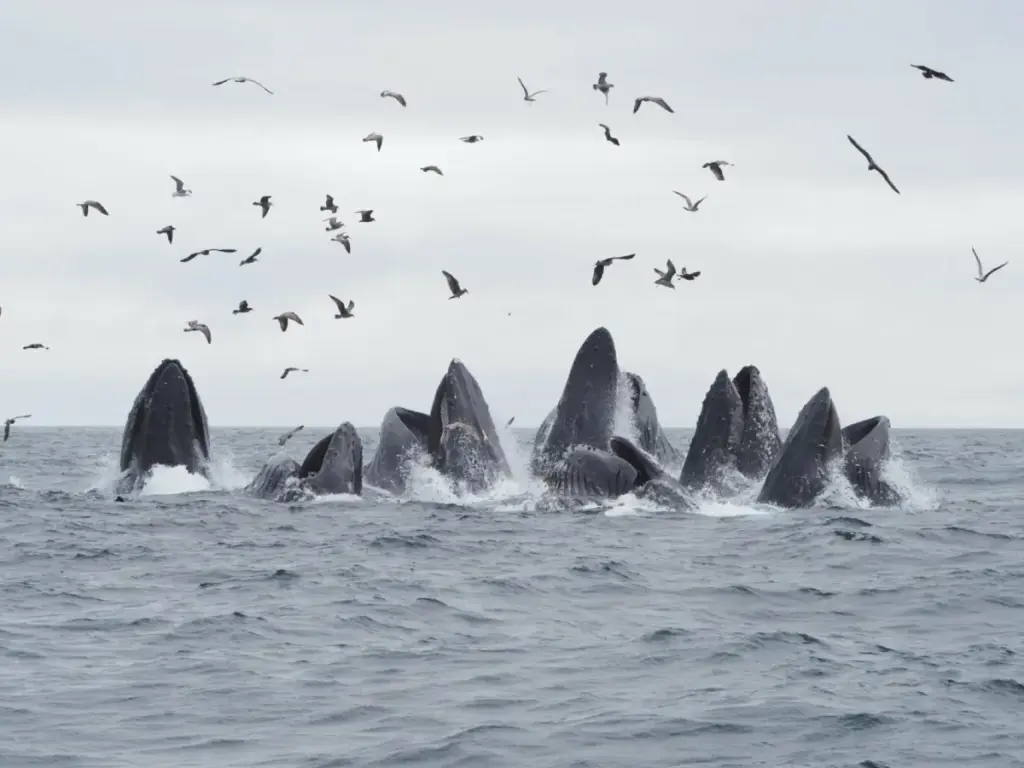
- Cetaceans and marine mammals: Humpback whales (Megaptera novaeangliae), harbor seals (Phoca vitulina), sea lions, and ice seals are slated to see reduced protective spatial buffers.
- Elasmobranchs and reptiles: Smalltooth sawfish (Pristis pectinata), giant manta rays (Mobula birostris), and multiple species of sea turtles face weakened habitat protections, compounded by the administration’s broader July decision to drop certain critical habitat protections under the ESA.
Furthermore, the battle over marine national monuments places vast swaths of pristine ocean ecosystems in the crosshairs. The Pacific monuments targeted by presidential proclamations and agency priorities—Papahānaumokuākea, Rose Atoll, the Mariana Trench, and the Pacific Remote Islands—span approximately 3.1 million square kilometers (1.2 million square miles) of critical deep-sea trenches, coral atolls, and unique seamount habitats. Conservation groups, including Earthjustice and the Center for Biological Diversity, continue to battle these policy shifts in federal courts, arguing that sacrificing these nurseries of ocean biodiversity provides only short-term economic gains at the expense of multi-generational ecological stability.
Official Statements and Industry Perspectives
The release of the 34 priorities has laid bare a profound philosophical split between federal leadership, conservation watchdogs, and the working waterfront.

Defending the agency’s pivot, NOAA Fisheries Assistant Administrator Eugenio Piñeiro Soler emphasized a results-oriented mandate in his leadership message:
"Our mandate is clear: We must regulate only where necessary, innovate where possible, and always evaluate our work by the real-world economic and conservation results we deliver to the American public."
Yet, legal experts view these objectives with deep skepticism. Andrea Treece, deputy managing attorney for the Oceans Program at Earthjustice, argues that the agency is attempting to strip away the fundamental prerequisites of marine health. What NOAA proposes to discard, Treece asserts, are "the absolute basics of conserving a healthy ocean ecosystem… that is the building block for having a healthy, long-term fishery in the first place."

Within the commercial fishing sector, opinions reflect a complex balancing act between economic necessity and resource anxiety. Beth Casoni, executive director of the Massachusetts Lobstermen’s Association, highlighted the perpetual uncertainty gripping coastal fleets, noting that fishers are constantly "holding our breath" with each successive administration to see which operational mandates will be enforced or discarded.
Meanwhile, grassroots perspectives from working captains reveal a nuanced critique of federal management. Scott Hickman, a charter boat captain and commercial red snapper shareholder harvester in Galveston, Texas, expresses strong support for increasing the availability of domestic ocean protein, acknowledging that certain modernizing aspects of NOAA’s plan—such as data-sharing improvements and advanced technology integration—hold genuine promise. Hickman has spent years partnering with academic institutions, including testing Starlink satellite-supported video monitoring systems on his vessel to track location and catch data efficiently.
However, Hickman warns that technological innovation cannot substitute for robust scientific oversight or compensate for devastating institutional staff reductions. Pointing to the stark reality on the ground, Hickman summarized the dissonance within the fleet:

"The current administration wants more American protein from the ocean and I support that. How do we get there? How do we increase that? It’s through better management, better science, and better technology managing these stocks… You know we’re trying to do stock assessments and do the science. Well, hell, you got rid of half the [fisheries staff] and then you cut all these programs."
Future Outlook: A Precarious Crossroad for American Seafood
As NOAA Fisheries prepares to release its broader America First Seafood Strategy in the coming months, the U.S. marine management landscape stands at a critical historical crossroads. The tension between rapid industrial deregulation and rigorous, science-based conservation has rarely been sharper.
On one side, federal architects and pro-industry advocates are pressing forward with structural reforms intended to remove bureaucratic friction, expand commercial access to historically protected zones, and integrate modern tracking technologies. On the other side, environmental NGOs, legal coalitions, and pragmatic fishers warn that cutting the budgetary and regulatory sinews of NOAA Fisheries risks a devastating ecological lag.

If valuable commercial fish stocks are overexploited under relaxed guidelines, fisheries experts warn that recovery periods could span years or even decades, ultimately harming the very economic stability the administration seeks to enhance. As ongoing federal court battles challenge the legality of opening marine monuments and dismantling bedrock conservation standards, the ultimate fate of America’s oceans—and the communities that depend on them—hangs heavily in the balance.



