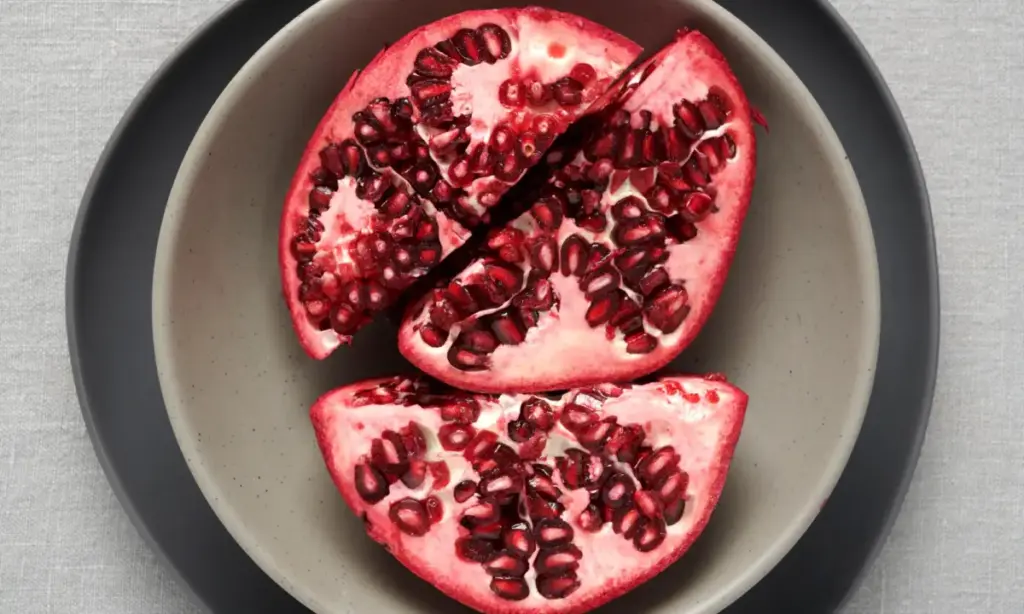
For generations, nutritional science has held up the vibrant, ruby-red pomegranate as an elite heart-healthy food. Long before modern clinical trials mapped out molecular pathways, traditional medicine prized the fruit for its vitality-boosting properties. In recent decades, mainstream nutritional research attributed these cardiovascular benefits to the high concentration of polyphenols—potent plant antioxidants—found within the seeds and juice.
However, a groundbreaking study conducted by researchers at Cardiff University challenges this foundational premise, suggesting that the true cardioprotective hero is not the fruit itself, but rather what your gut bacteria do to it.
When humans consume pomegranate, the body cannot directly absorb most of its large polyphenol compounds. Instead, these molecules travel deep into the gastrointestinal tract, where resident microbial populations break them down into a smaller, highly bioavailable secondary metabolite known as urolithin A.
In a recent preclinical trial published in the journal Antioxidants, researchers investigated the precise impact of urolithin A on artery health in murine models prone to atherosclerosis. The findings are nothing short of paradigm-shifting. When administered to mice fed a high-fat diet, urolithin A significantly reduced arterial plaque buildup, decreased localized vascular inflammation, and stabilized existing lesions—all completely independent of changes in systemic cholesterol levels.
While researchers emphasize that these results currently stem from animal models and require human clinical validation, the implications are profound. This discovery points toward a novel, non-lipid-lowering pathway for combating cardiovascular disease, illuminates why different people experience varying health benefits from the exact same diet, and underscores the pivotal role of the human microbiome in translating whole foods into cellular medicine.
Detailed Chronology & Methodology: From Bench Science to Preclinical Trials
To understand the weight of the Cardiff University discovery, one must trace the evolutionary step of how nutritional science evaluates botanical compounds. Historically, researchers looked at a food—such as a pomegranate or a glass of green tea—measured its antioxidant capacity in a test tube (often via assays like ORAC), and assumed those exact antioxidant molecules circulated through human bloodstreams to protect organs.
Over the last fifteen years, however, microbiomics has shattered this linear model. Scientists realized that the human gut acts as a sophisticated metabolic factory. Large polyphenols, such as the ellagitannins found in pomegranates, berries, and walnuts, are structurally too massive to pass through the intestinal wall. They require enzymatic transformation by specialized gut microbiota to yield bioavailable derivatives.
Phase 1: Screening the Metabolites
The Cardiff University research team set out to isolate the exact active agent responsible for pomegranate’s observed vascular benefits. Rather than testing whole pomegranate juice directly on human endothelial cells, the researchers isolated the primary pomegranate polyphenol alongside several of its distinct gut-derived breakdown products (urolithins).
They exposed human vascular cells in vitro to these various compounds, measuring key markers of cellular stress, including:
Cellular damage and oxidative stress thresholds.
Inflammatory cytokine expression.
Low-density lipoprotein (LDL) oxidation and cellular absorption rates.
Across every single metric, urolithin A emerged as the superior compound. It consistently outperformed both the parent pomegranate polyphenols and other related urolithin variants in mitigating cellular injury and dampening inflammatory pathways.
Phase 2: Testing in Murine Models
Armed with cellular data demonstrating urolithin A’s superiority, the research team advanced to an in vivo study design. They utilized a standard experimental model for cardiovascular disease: mice genetically predisposed to atherosclerosis (plaque buildup in the arteries).
For a duration of 12 weeks, these atherosclerosis-prone mice were placed on a rigorous, high-fat Western-style diet designed to accelerate arterial disease. The experimental cohort received supplemental urolithin A alongside their high-fat diet, while the control cohort received the high-fat diet alone.
Upon conclusion of the 12-week trial, vascular tissues were harvested and subjected to rigorous histological and molecular analysis to evaluate plaque morphology, immune cell infiltration, and structural integrity.
Supporting Context & Metrics: Unpacking the Data
The results of the Cardiff University trial offer a striking departure from conventional cardiovascular therapeutics, which have historically focused almost exclusively on lipid management (lowering LDL cholesterol and triglycerides).
Key Findings and Metrics:
Plaque Burden Reduction: Mice receiving urolithin A exhibited a statistically significant decrease in total arterial plaque volume compared to the control group. Their arterial lumens remained markedly more open and clear of atherosclerotic lesions.
Immune Cell Modulation: Inside the remaining plaques, researchers observed a dramatic shift in cellular composition. The urolithin A group showed a major reduction in macrophages and other pro-inflammatory immune cells—the primary drivers of vascular inflammation that typically make plaques unstable and prone to rupture.
Structural Plaque Stabilization: Conversely, the plaques in the treated mice contained higher proportions of stabilizing structural elements, specifically smooth muscle cells and collagen fibers. In clinical pathology, a plaque rich in collagen and smooth muscle with a thick fibrous cap is far less likely to rupture, thereby drastically lowering the risk of acute thrombotic events like heart attacks and strokes.
The Cholesterol Anomaly: Perhaps the most intriguing metric of the study was the lipid panel. There was zero change in total cholesterol, LDL, HDL, or triglycerides between the urolithin A-treated mice and the control mice.
This final metric upends the conventional medical paradigm that arterial protection must be mediated by lipid-lowering mechanisms (such as statin therapy). Instead, the data proves that direct cellular protection, anti-inflammatory action, and oxidative stress mitigation can halt and stabilize atherosclerosis through an entirely separate, complementary pathway.
Expert Perspectives and Official Implications
While the academic community has responded to the study with cautious optimism, cardiovascular specialists and nutritional epidemiologists are eager to contextualize what these findings mean for broader human health.
Dr. Jonathan Vance, a leading molecular cardiologist not involved in the study, notes that the independence of the lipid profile is the most exciting takeaway for future pharmaceutical and nutritional research.
"For decades, our entire arsenal against heart disease has been anchored to lipid control," Dr. Vance explains. "While statins and PCSK9 inhibitors remain lifesaving tools, they do not address the inflammatory cascade that causes plaques to rupture in the first place. Finding a compound that targets plaque stability and vascular inflammation without touching blood lipids opens up an entirely new frontier in cardiology."
Furthermore, microbiome researchers have seized upon the study to emphasize the concept of metabolic inter-individuality. Not every human gut microbiome is populated by the specific bacterial strains required to convert pomegranate ellagitannins into urolithin A.
"You can drink a liter of pomegranate juice every day," explains clinical microbiologist Dr. Elena Rostova, "but if your gut lacks the precise microbial architecture—such as specific species from the Gordonibacter genus—you will pass those polyphenols without ever generating the active urolithin A metabolite. This explains why historical clinical trials on pomegranate juice and human heart health have yielded such mixed, highly variable results."
Future Outlook: Translating Rodent Data to Human Clinical Practice
As with all preclinical trials, researchers urge a measured approach when translating murine data to human dietary recommendations. Mice possess metabolic rates and microbiome compositions that differ significantly from humans, and direct dosage translation requires careful clinical validation.
However, urolithin A is not an entirely unknown entity in human medicine. Over the past several years, urolithin A has been heavily investigated in human clinical trials for its profound impact on mitochondrial health, cellular recycling (mitophagy), and skeletal muscle function in aging populations.
In these prior human safety and efficacy trials, participants safely ingested supplemental urolithin A at doses of approximately 1,000 mg per day for durations ranging from 28 days to four months. These trials established two critical facts:
Safety and Bioavailability: Urolithin A is exceptionally safe, well-tolerated, and highly bioavailable in humans.
Dosage Feasibility: The human equivalent of the protective dose used in the Cardiff University murine study roughly translates to 4 mg/kg/day—a target easily achieved within ranges already proven safe in human trials.
What Lies Ahead?
The immediate horizon of this research involves launching human clinical trials specifically targeted at cardiovascular endpoints. Researchers aim to enroll human cohorts—stratified by their baseline microbiome composition—to evaluate whether direct urolithin A supplementation or targeted prebiotic stimulation can reduce arterial stiffness, lower systemic inflammatory biomarkers, and stabilize subclinical plaque buildup in patients at risk for cardiovascular disease.
Practical Takeaways for Consumers
While waiting for definitive human trials on artery health, health-conscious consumers can leverage these insights in two distinct ways:
Embrace Whole-Food Polyphenols: Incorporate pomegranate, berries, walnuts, and pecans into your diet. Even if your gut microbiome is still developing its conversion capacity, these whole-food polyphenols provide sweeping antioxidant and prebiotic benefits.
Nourish Your Microbiome: Cultivate a diverse, resilient gut microbiome through fiber-rich plant foods, fermented products, and a reduction in ultra-processed foods. A healthy, diverse microbiome is your body’s ultimate bio-synthetic laboratory, capable of unlocking therapeutic metabolites that food alone cannot deliver.
Ultimately, the Cardiff University study serves as a compelling reminder of the intricate biological symbiosis between human hosts and their resident microbes. When it comes to heart health, the future of medicine lies not just in what we eat, but in how our internal ecosystem transforms it.