

Executive Overview
Nestled in the sweeping expanse of the Bristol Channel, approximately 19 kilometers off the rugged coast of north Devon, lies Lundy Island—a breathtaking sanctuary renowned for its striking granitescapes, vibrant marine life, and iconic colonies of Atlantic puffins. Spanning just 5 kilometers (3.1 miles) in length, this self-sufficient haven is typically a pristine refuge for birdwatchers, hikers, and nature enthusiasts seeking solace from the mainland bustle.
However, beneath its idyllic surface, a severe environmental crisis is unfolding. Lundy is currently facing the very real, unprecedented prospect of total closure and evacuation. Following the hottest and driest spring and summer on record, the island’s freshwater reserves have plummeted to critical, life-threatening lows. With reservoirs dipping to a mere 13 percent capacity at the height of the crisis, managing authorities, residents, and local businesses have been forced to implement drastic, never-before-seen emergency protocols.
From removing bathtub plugs to prevent guests from indulging in long soaks, to pumping dwindling wildlife pond water through makeshift fire-hose networks, Lundy’s community is locked in a desperate race against time. As logistical hurdles compound—exacerbated by a damaging summer landslip that severed primary transport routes—the island’s leadership warns that without significant and sustained rainfall in the coming weeks, the historic community, its working farm, and its tourism infrastructure face an unthinkable shutdown. This deep-dive investigation explores the anatomy of Lundy’s water emergency, the extraordinary measures keeping the island afloat, and what this micro-crisis signals for a rapidly warming British climate.

Detailed Chronology: A Season of Unprecedented Drought
The seeds of Lundy’s current crisis were sown in the shifting meteorological patterns of late winter and spring. Ironically, the emergency follows a period of extreme volatility: late 2025 and early 2026 brought record-breaking winter rainfall to the wider South West of England. By March, regional reservoirs were comfortably full, lulling many into a false sense of security regarding water availability.
However, the weather engine shifted dramatically as spring turned to summer. According to meteorological data, Lundy experienced virtually no significant rainfall from April onward, receiving a meager 20 percent of the 1.5 meters (4.92 feet) of precipitation it typically expects by this point in the year.
- April–May 2026: The traditional spring rains fail to materialize. Water tables, reliant on winter recharge and seasonal showers, begin to drop rapidly through the island’s fractured granite bedrock.
- June 2026: A secondary catastrophe strikes when a major landslip occurs along the island’s primary track. The geological failure cuts off vital vehicular access to the tiny village perched 400 feet above sea level, severely hampering internal logistics just as water consumption begins to peak with the arrival of the summer tourist season.
- August 2026: With main reservoir levels plunging below safe operating thresholds—eventually bottoming out at an alarming 13 percent—the National Trust and Landmark Trust-managed island initiates emergency measures. The seasonal passenger ferry, the MS Oldenberg, is pressed into emergency service to ship thousands of litres of mainland water across the Bristol Channel.
- September 2026: As reservoir recovery stalls and supplies remain precariously thin, island management considers an emergency closure. Rather than capitulating, leadership authorizes an absolute "last resort": drawing water directly from natural wildlife ponds and routing it through treatment works.
- October 2026: Thanks to the infusion of pond water, reservoir levels experience a slight recovery, hovering around 23.7 percent. Yet, with the seasonal ferry service preparing to end its runs for the year, the community remains trapped on a knife-edge, praying for an immediate and sustained autumn deluge.
Supporting Context & Metrics: The Logistics of Island Survival
Operating a self-contained community of 28 permanent residents, alongside fluctuating numbers of tourists, staff, and agricultural livestock, is a complex logistical feat under normal conditions. During a severe drought, it becomes a masterclass in crisis management.

Lundy relies entirely on a delicate ecosystem of rainwater harvesting, borehole extraction, and surface storage. When these natural systems fail, transporting life-sustaining resources across 19 miles of unpredictable marine waters presents immense financial and operational challenges.
The Water Supply Metrics
- Daily Consumption: Under normal conditions, the island community utilizes between 9,000 and 11,000 litres of water daily.
- Emergency Shipments: Beginning in August, the MS Oldenberg passenger ferry delivered an initial emergency payload of roughly 67,000 litres of water—a single shipment costing an estimated £7,000.
- Ongoing Resupply: Following the initial delivery, emergency protocols established a rhythm of shipping 4,000 litres of water three times a week from north Devon.
- Storage and Deficit: At its lowest point, the primary reservoir dropped to 13% capacity. Even after pumping emergency water from local wildlife ponds, levels have only managed a sluggish recovery to approximately 23.7%.
Overcoming Geographical Obstacles
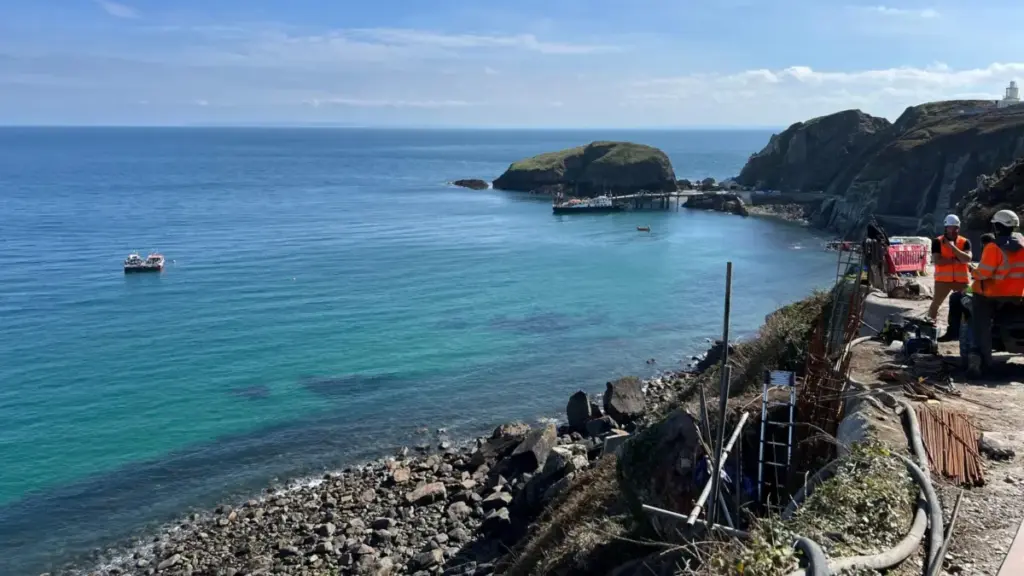
The physical geography of Lundy compounds its vulnerability. With only a rugged granite track connecting its port to the plateau above, and a fleet limited to three 4×4 vehicles, tractors, quadbikes, and a single fire engine, moving bulk liquid uphill is an arduous undertaking.
The June landslip forced island workers to devise an ingenious, improvised engineering solution. Managing Director Derek Green detailed the grueling process:

"We have to offload the tanks off the ship and we have to bring them up to a staging post halfway up the hill. We then have to pump water with a fire hose past the vulnerable part of the road to another tank where it’s then staged pumped to the reservoir at the top."
Official Statements: Voices from the Frontline
The psychological toll on Lundy’s custodians has been profound. For those tasked with protecting both the human community and the island’s delicate ecological balance, every decision carries immense weight.
Derek Green, Managing Director (on Lundy since 2004):
Green emphasizes that the climate pressures facing Lundy are distinct and increasingly acute compared to the mainland. Reflecting on the decision to tap into wildlife habitats, he noted the gravity of the situation:

"Bringing in pond water is something we’ve never had to do before. It’s really our last chance saloon here. If we didn’t do this, we would be facing the reality of closing Lundy… it would be devastating for us.
We’ve got a working farm here and the animals need water every day… so to evacuate those animals, those people and to cancel all those holidays is something that has never happened in the history of Lundy before. We’re on the cusp of having to make that decision."
Matt Scantlebury, Island Manager:
Scantlebury describes the crisis as a "logistical nightmare" that has transformed daily operations across the island, particularly at its social hub, The Tavern.

"We can’t have baths… all the plugs have been removed to resist temptation. People are showering with buckets to catch the water and then using that to flush the toilets and that’s saving water.
We’ve had to close the pub toilets so the visitors have all been funnelled to the back shed toilets because they aren’t on our mains water supply… we now have to fill them from our pond water."
Tara McEvoy-Wilding, Assistant Warden:
For younger staff members, the environmental transformation of the landscape has served as a stark, visceral wake-up call regarding global heating.

"This year feels like the real first year people have been noticing climate change. The vegetation looks brown, sad, and crispy—a constant visual reminder of how dry it has been. For Lundy, it’s going to be a challenge going forward. We’re going to have to be extra mindful and plan further in advance to maintain our water security."
David Braine, BBC Meteorologist:
Offering a sobering meteorological assessment, Braine notes that while some rain is written into the short-term forecast, the relief it brings will be deceptively modest. It will take weeks of continuous, heavy precipitation to adequately recharge the deep groundwater tables and bedrock reservoirs upon which Lundy’s long-term viability depends.
Future Outlook: Adapting to a New Climate Reality
As the autumn weather rolls across the Bristol Channel, the mood on Lundy Island is a mixture of gritty determination and profound anxiety. The events of 2026 have shattered any remaining illusions of climatic isolation. An island historically buffeted by wind and sea now finds itself uniquely exposed to the creeping threat of hydrological drought.

Long-term survival will require a fundamental paradigm shift in how Lundy manages its resources. Leadership has already outlined key adaptation strategies for future years, which include:
- Infrastructure Expansion: Substantially increasing on-island water storage capacity and reservoir volume to buffer against increasingly erratic multi-month dry spells.
- Behavioral Conservation: Cultivating a year-round culture of stringent water conservation among residents, staff, and incoming visitors—starting from the winter months onward.
- Enhanced Forward Planning: Treating water security not as a secondary logistical concern, but as the foundational pillar of the island’s operational calendar.
For now, however, structural reforms must take a backseat to immediate meteorological mercy. As Derek Green surveys the tranquil, windswept vistas of the island he has managed for over two decades, his message remains simple and urgent:
"When it next rains, it needs to pour. We never ever thought we would have to take water from our ponds, but this is the position we find ourselves in. We’re in real jeopardy right now unless it rains very, very soon."



