Executive Overview
An underground power line may not sound like the stuff of technological revolutions, but the newly completed Champlain Hudson Power Express (CHPE) represents a monumental leap forward for regional grid planning, energy security, and carbon emissions reduction. Stretching an unprecedented 339 miles from the pristine hydro-rich waters of Quebec to the bustling energy markets of Queens, New York, this colossal infrastructure project is designed to supply up to 20 percent of New York City’s total electricity demand. By largely relying on abundant, clean hydropower, the CHPE aims to dramatically alter the state’s energy landscape and accelerate its transition away from carbon-emitting fossil fuels.
Yet, despite its visionary premise, the $6 billion privately funded endeavor has experienced a rocky debut. For much of its first operational month, the line has remained offline due to a series of technical failures and early-stage outages. These hiccups have reignited critical discussions regarding the reliability of massive trans-boundary transmission lines, the vulnerability of cross-border supply chains, and the looming threat of climate-induced droughts on northern water reserves.
As energy experts, regulators, and developers grapple with these teething troubles, the CHPE stands as a vital case study. It illustrates both the immense potential of interregional grid interconnection and the formidable engineering, logistical, and environmental hurdles that accompany the clean energy transition. This report explores the history, engineering marvels, initial operational setbacks, and future outlook of North America’s longest underground transmission line.
Detailed Chronology: From Concept to Construction and Early Outages
The realization of the CHPE—affectionately and colloquially known within engineering circles as "Chippy"—did not happen overnight. The planning phase spans a decade and a half, with the official permitting process formally commencing back in March 2010. The fundamental vision was as ambitious as it was straightforward: build high-capacity infrastructure capable of directly bridging the vast, renewable energy surplus of Quebec with the ravenous energy demands of southern New York.
The Construction Marathon
Following years of regulatory reviews, legal battles, and environmental assessments, actual construction on the privately funded project finally kicked off in late 2022. Spearheaded by Transmission Developers—a firm owned by alternative asset management giant Blackstone—in partnership with Hydro-Québec, the province’s premier generation and transmission utility, the project wrapped up earlier this year with a final price tag of $6 billion.
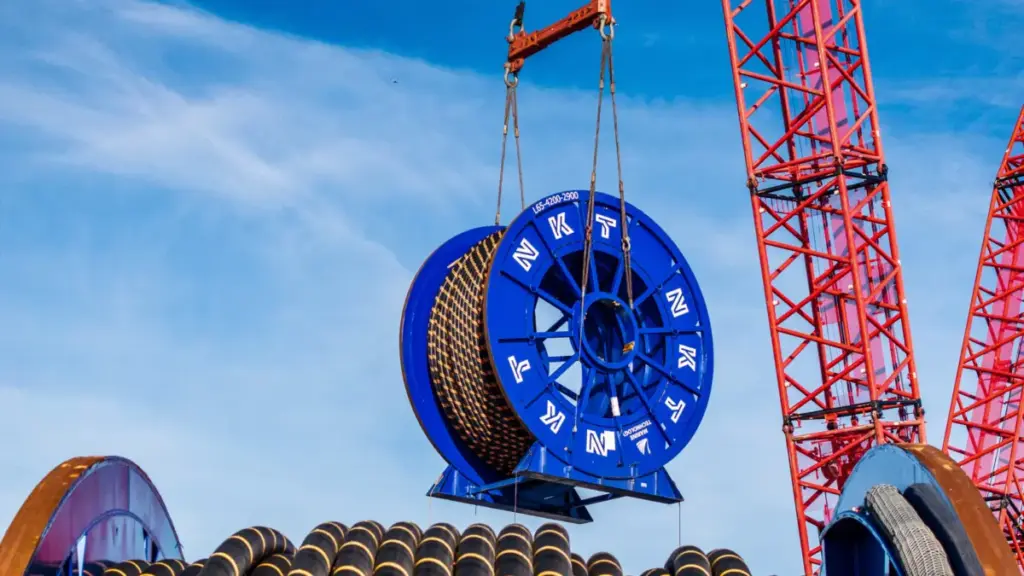
The physical construction of the line was nothing short of an engineering odyssey. The project comprises a bundle of two high-voltage direct-current (HVDC) power cables, each measuring approximately five inches in diameter. To route these cables down the length of New York State without marring the landscape with overhead towers, developers buried the bundle either underground or underwater. A significant portion of the line was laid directly at the murky, sediment-heavy bottom of the Hudson River. This phase required specialized marine vessels equipped with high-powered water jets that carved deep trenches into the riverbed to securely cradle the cables.
A Rocky Outage-Plagued Launch
Despite the meticulous planning and state-of-the-art engineering, the CHPE’s operational rollout has faced severe headwinds. The line has suffered two major outages since going live.
- The First Outage (July 1): Shortly after the system was energized, operators registered a sudden trip at a converter station located on the Canadian side of the international border, forcing an immediate shutdown.
- The Second Outage (July 4): Just days after initial system re-energization, a second, more persistent outage struck. As of late July, the line remains out of service, leaving industry watchers anxious to see how quickly developers can restore permanent functionality.
According to investigative reporting by energy trade publication RTO Insider, utility officials eventually traced the root cause of the second outage to a physically damaged section of the cable located on the US side of the border. In response, the cable’s manufacturer dispatched a specialized team of forensic engineering experts to unearth the specifics of the failure.
Lynn St-Laurent, a spokesperson for Hydro-Québec, provided an update on the remediation efforts, confirming that the compromised portion of the cable had already been excised and replaced. “It is currently estimated that the remaining work, including necessary post-repair testing, will be completed by the weekend,” St-Laurent stated, offering a glimmer of hope for a swift return to service.
Supporting Context & Metrics: The Numbers Behind the Energy Superhighway
To fully grasp the strategic importance of the CHPE, one must examine the stark contrast in energy generation profiles between Quebec and New York State, alongside the broader economic and environmental metrics driving intertie development.
The Energy Disparity and Renewable Potential
Quebec is an absolute titan of renewable energy. Over 99 percent of the province’s electricity generation stems from renewable resources. The vast majority of its domestic demand and export capacity is met via massive hydroelectric installations, while its wind energy portfolio expands at a rapid clip.
Conversely, while New York boasts notable renewable assets—including upstate hydroelectric plants, nuclear facilities, and a burgeoning wind sector—the state remains heavily reliant on fossil fuels (primarily natural gas and oil) to meet peak electricity demand, particularly downstate in the New York City metropolitan area.
| Metric / Feature | Specification |
|---|---|
| Total Route Length | 339 miles (Longest underground transmission line in North America) |
| Capacity Share | Up to 20% of New York City’s total electricity demand |
| Total Project Cost | $6 billion (Privately funded by Blackstone / Transmission Developers & Hydro-Québec) |
| Cable Specifications | Bundle of two high-voltage direct-current (HVDC) cables, ~5 inches in diameter |
| Quebec Renewables | >99% of total electricity generation (primarily hydroelectric) |
| Permitting Genesis | Formally initiated in March 2010 (15-year developmental arc) |
The Macroeconomics of Interconnection
The push for projects like the CHPE is backed by a robust body of scientific and economic research. Connecting disparate power grids allows regional operators to share resources dynamically, balancing out local generation deficits and tamping down the need to build expensive, redundant local generation capacity.

- Emissions Reductions: Peer-reviewed studies, such as research published in academic journals like Nature Climate Change, underscore that expanding inter-grid transmission capacity is one of the most effective pathways to accelerate the displacement of fossil-fired generation, directly cutting carbon emissions.
- System Cost Savings: According to analyses by institutions like the Pacific Northwest National Laboratory (PNNL), integrating larger geographic footprints lowers overall system operational costs by routing the cheapest available power directly to high-load urban centers.
A Broader Regional Trend of Startup Troubles
The CHPE is not alone in encountering early-stage growing pains. Similar hurdles have plagued the New England Clean Energy Connect (NECEC) line. Opening in January, the 145-mile transmission project designed to ferry Canadian hydropower from Quebec into Maine has also wrestled with intermittent outages. Consequently, very little additional clean energy has managed to consistently flow into the broader New England grid during its infancy.
Normand Mousseau, a physics professor at the Université de Montréal, noted in an interview with the Montreal Gazette that such engineering hurdles are far from unprecedented for mega-scale infrastructure projects. According to Mousseau, complex electrical systems often cannot be fully validated until they are subjected to real-world operational stress, meaning early commissioning failures are an unfortunate but standard rite of passage.
Official Statements and Risk Mitigation
While a major infrastructure asset sitting idle weeks after completion is undeniably frustrating for stakeholders, New York’s grid managers emphasize that the system was built with redundancy in mind.
Grid Reliability and Contingency Planning
The New York Independent System Operator (NYISO)—the non-profit corporation responsible for managing the state’s bulk electricity grid—reported that the state’s power network weathered a punishing early-July heat wave entirely without the benefit of the CHPE.
"Our planning studies did not assume CHPE would be available this summer, and that was one reason the grid performed reliably during the heat wave earlier this month," explained Kevin Lanahan, a spokesperson for NYISO. "A core principle of reliability planning is not relying on any single project."
This conservative, risk-averse planning philosophy highlights the reality of modern grid management. Planners treat new interties as upside potential rather than foundational lifelines during their initial commissioning phases. Only as the equipment undergoes rigorous stress-testing over months and years do system operators gain the confidence required to factor these lines into long-term resource adequacy models.
The Long-Term Vision
Despite the immediate setbacks, the underlying pressure to resolve these technical glitches remains intense. Developing multi-billion-dollar transmission corridors requires immense financial commitment and political capital. Utilities and investors view these assets as generational investments designed to operate reliably for decades. Over time, as manufacturing defects are ironed out and predictive maintenance protocols are established, projects like the CHPE are expected to form the backbone of a decarbonized northeastern power grid.
Future Outlook: Climate Pressures and the Hydropower Horizon
Looking beyond the immediate task of repairing the damaged cable and completing post-repair testing, energy analysts point to a looming structural challenge that could impact the CHPE’s long-term utility: the health of Quebec’s hydrological resources.
The Threat of Intense Drought
While the physical transmission line may soon be repaired and ready to carry electrons southward, the availability of those electrons cannot be taken entirely for granted. The Quebec region has experienced an intense, prolonged drought over the past three years. This ongoing lack of precipitation has steadily eaten into the massive water reservoirs that Hydro-Québec relies upon to drive its turbine fleets.
Even if transmission lines like the CHPE operate at peak technical efficiency, severe hydrological deficits in the north could constrain the volume of surplus hydropower available for export. If northern water levels remain depleted, New York utilities may find that the capacity is there, but the water—and therefore the cheap, clean electricity—is not.
Conclusion
The Champlain Hudson Power Express remains a masterclass in modern energy infrastructure ambition. By marrying the vast renewable wealth of Canada with the massive energy appetite of New York City, the project offers a compelling blueprint for how North America can decarbonize its urban centers.
However, the path to a fully integrated, green grid is rarely a straight line. The recent cable failures, combined with the underlying threats of regional climate change and prolonged drought, serve as a sobering reminder of the complexities inherent in the energy transition. As developers race to finalize repairs and bring the line back online this weekend, the eyes of the energy world will remain fixed on this underground superhighway—watching to see if "Chippy" can overcome its growing pains and fulfill its promise of powering a cleaner, greener future.