

Executive Overview
The global environmental movement is experiencing a critical juncture, characterized by intensified grassroots mobilization, corporate accountability campaigns, and high-stakes direct actions. Over the past week, Greenpeace activists and allied organizations have captured the attention of international media through a series of synchronized interventions spanning multiple continents. From the strategic disruption of high-level fossil fuel summits in Southeast Asia to massive public demonstrations in European urban centers, activists have confronted the structural drivers of climate change, biodiversity loss, and ecological degradation.
This week’s actions underscore a unified global demand: an immediate halt to fossil fuel expansion, corporate greenwashing, and toxic industrial practices. Whether targeting the misleading branding of liquefied natural gas (LNG) as a "transition fuel" in Bangkok, projecting soaring energy profits onto petroleum infrastructure in Hamburg, or intercepting toxic fast-fashion supply chains in Berlin, the environmental justice movement continues to weaponize transparency and direct action. This report provides an in-depth examination of these developments, detailing the geographical scope, political friction points, and underlying systemic crises defining contemporary environmental activism.
Detailed Chronology of Global Actions
1. Bangkok, Thailand: Confronting the "Gas Scam" at GasTech 2026
Date: September 2026
Location: Bangkok, Thailand
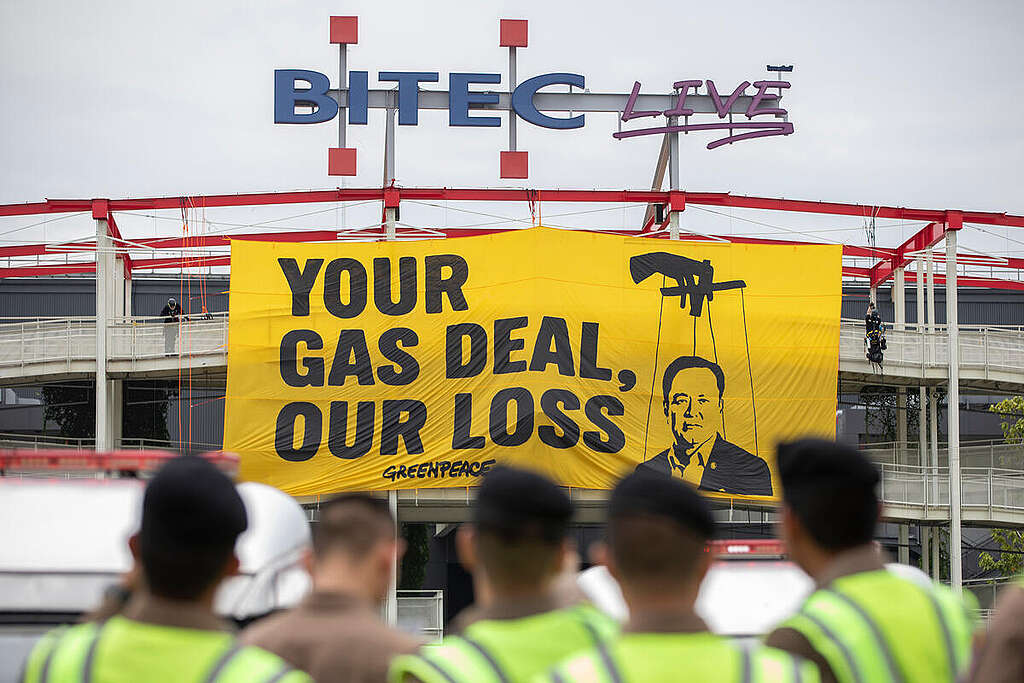
Kicking off a week of intense international protest, Greenpeace Thailand activists delivered an uncompromising message directly to the architects of fossil fuel expansion at the opening of GasTech 2026. Unfurling a massive 17-by-7-meter banner bearing the stark declaration—“YOUR GAS DEAL, OUR LOSS”—activists targeted the summit’s promotion of fossil gas and liquefied natural gas (LNG) as viable solutions for energy security, economic growth, and the climate crisis.

The action served as a direct rebuke to government officials and energy conglomerate executives gathered inside the venue. Greenpeace Thailand argues that the continued promotion of gas locks developing economies into long-term carbon lock-in while ignoring the vast, untapped potential of genuine renewable infrastructure. Activists called for an immediate cessation of fossil gas expansion, demanding that regional governments redirect capital toward renewable power generation, enhanced energy efficiency, advanced storage solutions, and modernized, decentralized power grids.
2. Amsterdam, Netherlands: Tens of Thousands Rally for the Climate
Date: September 12, 2026
Location: Amsterdam, Netherlands
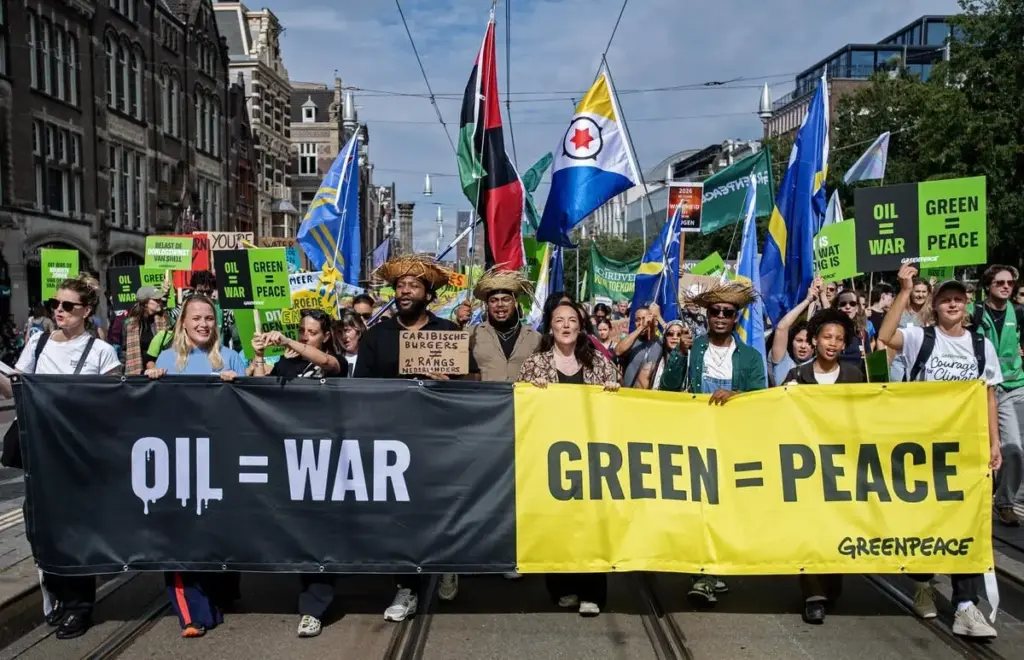
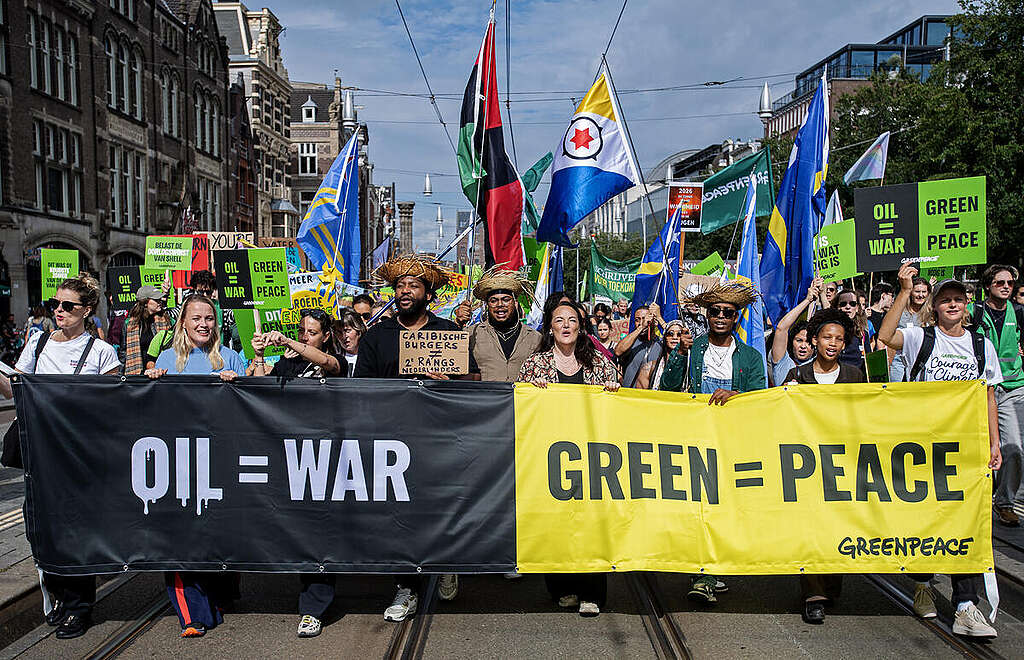
Demonstrating the immense scale of European public discontent, tens of thousands of citizens flooded the streets of Amsterdam for the annual Climate March. Against a backdrop of increasing climate volatility and persistent corporate pollution, the massive coalition of protesters demanded an immediate, legally binding end to society’s reliance on fossil fuels.
Capturing the energy of the march, photographers Marten van Dijl and Gosse Bouma documented a diverse cross-section of society—from youth climate strikes to labor unions and scientific collectives—advocating for a fair, equitable, and sustainable future. The mobilization reinforced the message that public pressure on national and European Union regulators must remain relentless if climate targets are to be met without shifting the burden onto vulnerable populations.
3. Hamburg, Germany: Highlighting Windfall Profits on Fuel Infrastructure
Date: September 2026
Location: Hamburg Port, Germany
In an innovative display of projection activism, Greenpeace Germany turned its lens on the economic inequities driving the energy crisis. Activists projected a massive, glowing pile of coins onto a primary fuel storage facility within the Port of Hamburg.
The striking visual was designed to protest the soaring windfall profits accumulated by major oil and gas corporations within the German petrol market while ordinary citizens bear the brunt of inflation and high energy costs. Emblazoned with the slogan "They profit – pay us!", the action served as a searing critique of corporate greed and government inaction regarding excess profit taxation during periods of acute economic strain.
4. Mexico City, Mexico: Demanding the Cancellation of the Topolobampo Ammonia Plant
Date: September 2026
Location: Zócalo, Mexico City, & Topolobampo, Sinaloa
In Mexico, environmental friction intensified as Greenpeace Mexico staged a high-visibility peaceful protest in Mexico City’s historic Plaza de la Constitución (the Zócalo). Following the raising of the national flag, activists scaled the central flagpole to unfurl a banner reading, "PRESIDENT: PROTECT TOPOLOBAMPO!", directly appealing to federal executive leadership.
Concurrently on the ground, activists deployed a red circular banner bearing the message "Not in Mexico!". The action targeted the controversial mega-ammonia plant currently under construction by Grupo Proman and Gas y Petroquímica de Occidente (GPO) in Topolobampo, Sinaloa. Environmentalists argue that the industrial facility poses severe ecological risks to local marine ecosystems, coastal communities, and regional biodiversity, urging the federal government to intervene and revoke project permits.
5. West Kalimantan, Indonesia: Bearing Witness to River Basin Haze
Date: September 2026
Location: Kapuas River, Kubu Raya, Indonesia
Shifting focus to the devastating human and ecological impacts of land-use changes, visual reports from West Kalimantan documented thick, hazardous haze blanketing the Kapuas River in Kalibandung Village. Caused by persistent forest and land fires, the crisis highlights the ongoing vulnerability of Indonesia’s carbon-rich peatlands and tropical forests.

These fires, frequently exacerbated by illegal land clearing for industrial agriculture, not only devastate localized air quality and public health but also release staggering quantities of greenhouse gases into the atmosphere, accelerating global climate destabilization.
6. Berlin, Germany: Exposing the Toxic Reality of Fast Fashion
Date: September 2026
Location: Berlin, Germany
Targeting the disposable fashion industry, Greenpeace activists blockaded the Berlin pop-up store of ultra-fast-fashion giant Shein. Using pink barrier tape inscribed with the words "Shame on you, Shein" and signs reading "Closed due to irresponsibility," the peaceful intervention sought to expose the environmental and health hazards associated with the brand’s aggressive retail model.
The action builds upon years of independent laboratory testing by Greenpeace, which has repeatedly detected dangerously high concentrations of hazardous synthetic chemicals—including PFAS ("forever chemicals") and endocrine-disrupting phthalates—in clothing items sourced from Shein’s online catalog. The protest challenged the unchecked expansion of ultra-fast fashion and its disregard for planetary health and consumer safety.

7. The Bosphorus Strait, Turkiye: The Arctic Sunrise Demands a Coal Phase-Out
Date: September 2026
Location: The Bosphorus Strait, Turkiye
As Greenpeace’s iconic icebreaker, the Arctic Sunrise, transited the historic Bosphorus Strait, crew members and activists unfurled a bold, clear mandate: "Phase out coal, now!"
The vessel was returning from an extensive Black Sea tour orchestrated by Greenpeace’s Central and Eastern Europe office. The tour was designed to draw regional attention to the acute dangers posed by continued fossil fuel combustion, air pollution, and ecological degradation in the Black Sea basin, while championing localized transitions to renewable energy infrastructure.
8. Yaoundé, Cameroon: Grassroots Eco-Jogging and Plastic Waste Action
Date: September 2026
Location: Yaoundé, Cameroon

Demonstrating that environmental resistance takes many forms, fifteen local volunteers in Yaoundé partnered with the Cameroonian non-governmental organization CNEDD (Centre National de Développement Durable) to host an ecological march and cleanup.
Combining physical fitness with civic engagement, participants engaged in "eco-jogging" to collect plastic waste along designated routes. The initiative concluded with a public forum where community members debated the systemic impacts of plastic pollution, emphasizing the urgent need for extended producer responsibility and robust national waste management policies across Central Africa.
Supporting Context & Metrics
The convergence of these diverse actions highlights several systemic trends shaping the global environmental landscape:
- The LNG Mirage: International energy forums like GasTech continue to push liquefied natural gas as a bridge fuel. However, scientific analyses demonstrate that methane leakage across the LNG supply chain can render its climate footprint comparable to, or worse than, that of coal.
- Chemical Persistence in Consumer Goods: Fast-fashion supply chains remain largely unregulated regarding chemical inputs. The detection of PFAS and phthalates in ultra-low-cost apparel highlights a pervasive public health hazard, as these compounds persist indefinitely in ecosystems and human tissue.
- Corporate Windfall vs. Energy Poverty: While European households faced severe cost-of-living crises driven by inflated energy prices, major oil and gas operators recorded historic net profits. Actions such as the Hamburg fuel storage projection quantify this glaring economic disparity.
Official Statements and Perspectives
Environmental leaders and organizers have emphasized the interconnected nature of these disparate campaigns:

"The fossil fuel industry is attempting to rebrand gas as clean, but the physics and the economics prove otherwise. Deals struck behind closed doors in venues like GasTech are mortgaging our collective future. We demand a complete pivot toward renewables, grid modernization, and genuine energy democracy."
— Greenpeace Campaign Spokesperson, Bangkok Action"Fast fashion is built on a foundation of chemical pollution, exploitation, and disposability. Brands like Shein treat environmental regulations and human health as optional. Our intervention in Berlin is a warning that toxic corporate models will face direct, unyielding resistance."
— Verena Brüning, Greenpeace Activist, Berlin
Future Outlook
As the global community navigates an increasingly volatile climate landscape, the trajectory of environmental activism points toward heightened direct engagement and cross-border solidarity. The events of this week demonstrate that grassroots organizations are increasingly adept at connecting local struggles—such as the defense of the Topolobampo coastline or the cleanup of Yaoundé’s streets—with macroeconomic critiques of global capitalism and fossil fuel dependency.
Looking ahead, Greenpeace and allied environmental networks will maintain intense scrutiny on upcoming international policy forums, corporate expansions, and regulatory loopholes. By combining empirical science, investigative journalism, and high-impact visual advocacy, the movement aims to dismantle the foundational pillars of ecological destruction and accelerate the transition toward a just, equitable, and sustainable planetary future.

For ongoing updates, high-resolution imagery, and verified multi-media documentation of these and other global actions, visit the official Greenpeace Media Library.



