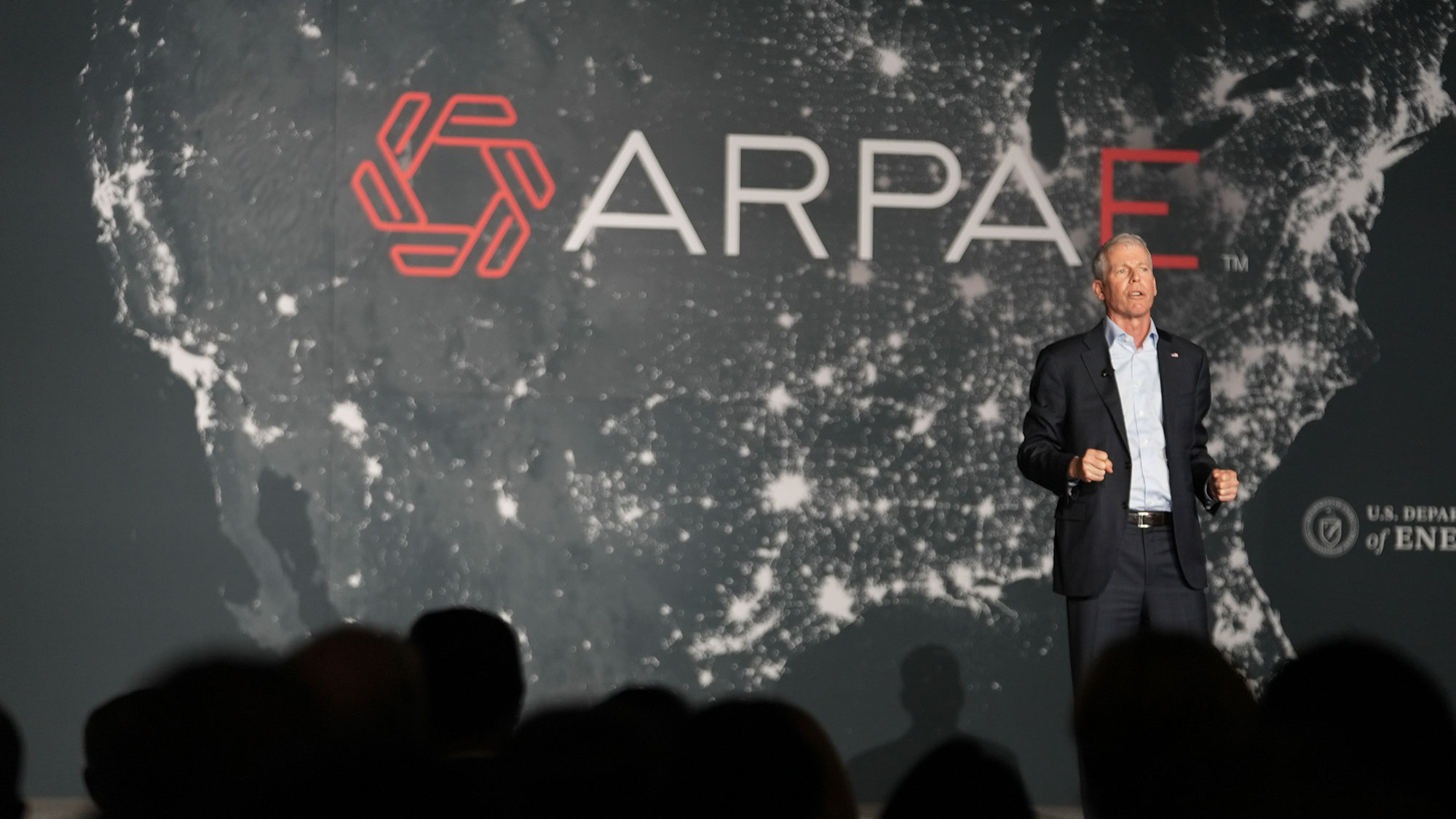
For decades, the United States has navigated a rocky and politically fractured path toward addressing climate change, often lagging behind international peers in sweeping legislative mandates. Yet, quietly embedded within the federal apparatus sits a high-stakes engine of invention: the Advanced Research Projects Agency–Energy, universally known as ARPA-E. Modeled after the military’s legendary Defense Advanced Research Projects Agency (DARPA)—the crucible that birthed the internet and GPS—ARPA-E was created to take giant leaps where commercial markets fear to tread.
Over the past 15 years, the program has injected more than $4 billion into universities, research laboratories, and early-stage startups attempting to radically reshape how humanity produces, stores, and consumes power. It targets the notorious "valley of death"—that perilous chasm where radical, blue-sky laboratory experiments fail to secure commercial funding because their path to profitability is measured in decades rather than quarters.
A landmark report released last week by the National Academies of Science, requested by Congress, reveals that this high-risk, high-reward bet has paid off dramatically. According to the findings, ARPA-E’s $4 billion investment has catalyzed more than $20 billion in follow-on private funding and spurred the creation of over 1,400 patents. Projects nurtured by ARPA-E demonstrated a significantly higher propensity to secure patents and outside venture capital than their unfunded counterparts. Furthermore, roughly 40 percent of the agency’s grants triggered a "crowding-in" effect, inspiring independent market competitors to pile into nascent sectors once a startup proved feasibility.
Yet, even as scientific consensus champions ARPA-E as an indispensable pillar of modern American innovation, the program finds itself trapped in a political crossfire. While the Trump administration has signaled partial support for ARPA-E’s pivot toward heavy industrial decarbonization—framing it under the umbrella of "American energy dominance"—it simultaneously pushes for deep budget cuts that threaten to hamstring the agency. As clean-tech pioneers navigate shifting political winds, the fate of ARPA-E highlights a central paradox of American energy policy: celebrating the harvest of past technological breakthroughs while starving the soil where tomorrow’s green revolutions must grow.
Detailed Chronology: The 15-Year Evolution of ARPA-E
Inception and the Early Years (2009–2015)
ARPA-E was officially established by the America COMPETES Act of 2007, but it roared to life under the Obama administration in 2009. At a time when the clean energy landscape was desolate compared to today, the agency’s initial mandate was broad. Early rounds of grants poured millions into foundational technologies: lowering the cost of silicon wafers for solar panels and optimizing lithium-ion batteries.
Back then, wind and solar were prohibitively expensive, and electric vehicles were a punchline for mainstream automakers. (A parallel Department of Energy loan program famously provided early-stage life support to Tesla, proving the catalytic power of federal intervention). During this first era, ARPA-E served as a financial incubator, helping researchers drive down the unit economics of intermittent renewables just as global markets were beginning to wake up to the looming climate crisis.
The Scale-Up and the Global Shift (2015–2022)
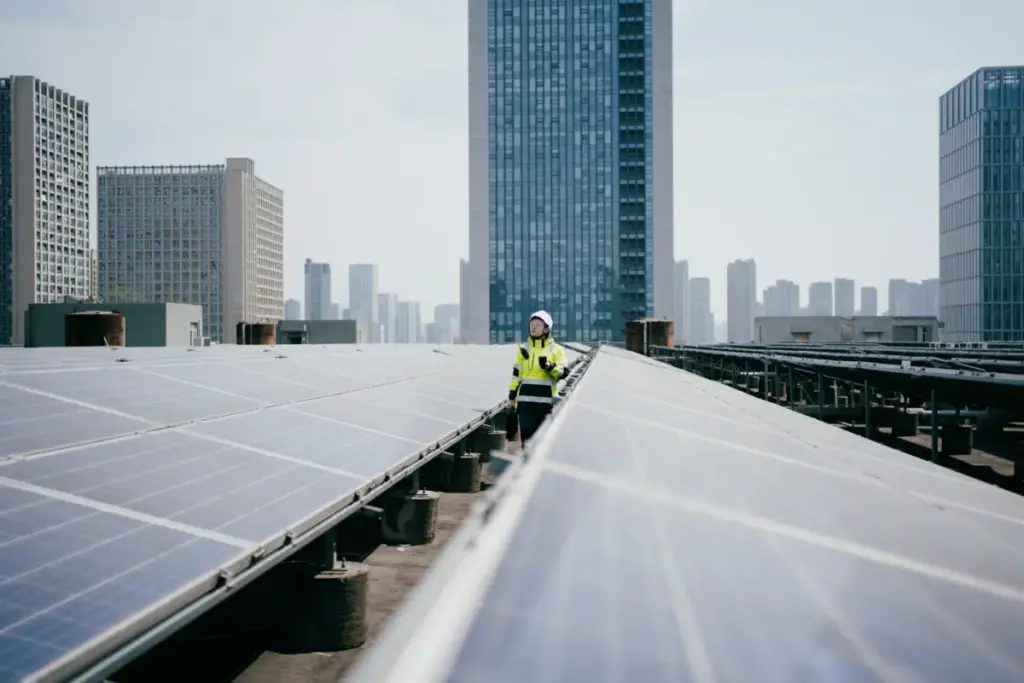
As the 2010s progressed, the renewable energy landscape shifted beneath America’s feet. Propelled by massive state subsidies and manufacturing overcapacity in China, the cost of solar panels and lithium-ion batteries plummeted by orders of magnitude. Solar and wind shifted from expensive boutique experiments to the cheapest forms of new electricity generation in history.
Recognizing this market saturation, ARPA-E began pivoting away from basic photovoltaic improvements. Instead, the agency trained its sights on the next tier of systemic energy challenges: grid integration, long-duration energy storage, and geothermal extraction. Companies that would later become household names in the green-tech sector—such as geothermal pioneer Fervo and multi-day battery developer Form Energy—secured critical early backing during this window, setting the stage for their eventual leaps into the public markets and multi-billion-dollar corporate partnerships.
Political Turbulence and Second-Term Realities (2017–Present)
The program’s journey has rarely been smooth. During his first term, President Donald Trump attempted to defund ARPA-E entirely, prompting a Government Accountability Office (GAO) investigation that found the administration had illegally withheld funds appropriated by Congress.
As Trump entered his second term, his administration renewed its scrutiny of federal spending, targeting billions of dollars in climate grants. The White House’s latest budget request called for slashing ARPA-E funding by nearly 50 percent. Paradoxically, even as budget execution threats loom, the Department of Energy continues to distribute grants for bleeding-edge domains like nuclear fusion, deep-earth geothermal, and critical mineral extraction. However, the chilling effect on the broader clean-tech ecosystem has been palpable: private sector enthusiasm has cooled, casting long shadows over manufacturing startups trying to transition from laboratory benchtop to factory floor.
Supporting Context & Metrics: Navigating the "Valley of Death"
The foundational thesis of ARPA-E rests on a harsh economic reality: private venture capital is structurally unequipped to fund multi-decade, capital-intensive engineering marvels. Venture capitalists typically look for returns within a 5-to-7-year window. Breakthroughs in nuclear fusion, seasonal energy storage, or zero-emission steel production require patience measured in generations. Without government intervention, these transformative concepts perish in the valley of death.
[Laboratory Experiment]
        │
        ▼  <-- The "Valley of Death" (ARPA-E Funding Bridge)
[Venture Capital / Prototype Scale-up]
        │
        ▼
[Commercial Market / Big Business]
The National Academies of Science report quantifies how effectively ARPA-E bridges this chasm:
$4 Billion Invested: The federal baseline capital deployed over the past 15 years.
$20+ Billion Leveraged: The multiplier effect, representing private and follow-on institutional funding attracted by ARPA-E-backed startups.
1,400+ Patents: Intellectual property generated directly by agency-funded projects, significantly outperforming control groups of unfunded research initiatives.
40% Crowding-In Effect: The percentage of grants that triggered a ripple effect, prompting rival corporations to enter and commercialize nascent technology fields after feasibility was proven.
Chris Bataille, a fellow at the Columbia University Center on Global Energy Policy, emphasizes the unique psychological and financial hurdles facing these innovators.
"We’re trying to enable very talented people who could be doing other things to spend their lives trying to do incredibly risky things that, probabilistically speaking, will not deliver a profit in time to benefit them," Bataille noted. "We’re talking about projects that will likely be profitable, but they’re just not valued unless the government values them. There’s probably one-one-hundredth of the necessary money going into those."
Official Statements and Policy Paradoxes
The political framing surrounding ARPA-E reflects an intricate dance between fiscal conservatism, industrial policy, and national security aspirations.
In an official statement provided to Grist, the Department of Energy defended the agency’s ongoing utility while maintaining its commitment to spending cuts:
"ARPA-E is advancing President Trump’s agenda to restore American energy dominance by backing breakthrough, high-risk technologies."
At the same time, the administration defended its proposed 50 percent budget reduction by stating it:
"…demonstrates fiscal discipline and a commitment to an efficient and effective federal government."
This dual narrative—praising high-tech innovation while starving its administrative engine—has real-world consequences for the startups trying to build industrial infrastructure on American soil.
Consider the trajectory of Natron Energy. The company received crucial early ARPA-E grant funding to develop experimental sodium-ion batteries—an alternative to lithium that relies on abundant, cheap materials. In 2024, Natron triumphantly announced plans to construct a massive $1.4 billion manufacturing plant in Rocky Mount, North Carolina. However, the political friction surrounding green investments following the subsequent presidential election chilled private sector enthusiasm for electric vehicles and alternative storage systems. Unable to secure the necessary private investors to finalize factory financing, Natron Energy was forced to halt its North Carolina plans and shut down its operations entirely.
Future Outlook: Tackling the Hardest Climate Problems
With solar and wind power now economically mature enough to compete without direct federal tax subsidies—a reality accelerated by global manufacturing capacity—the National Academies report strongly urges ARPA-E to pivot away from low-hanging fruit and direct its firepower toward the hardest decarbonization challenges.
1. Clean Firm Power Around the Clock
Solar and wind are inherently intermittent; they generate power only when weather permits. Factories, heavy industrial plants, and modern artificial intelligence data centers demand constant, uninterrupted power. ARPA-E investments are increasingly bearing fruit in this arena:
Fervo Energy: Backed by ARPA-E as early as 2019, Fervo utilizes super-deep horizontal drilling techniques to harvest ambient geothermal heat from the Earth’s crust. After successful commercial demonstrations, the company went public and has already inked major power-purchase agreements with tech giants like Google to power Nevada data centers.
Form Energy: Developing iron-air batteries capable of storing multi-day reserves of renewable energy to offset seasonal lulls.
X-energy: Pioneering advanced small modular nuclear reactors designed to provide carbon-free baseload electricity.
2. Heavy Industrial Decarbonization
Steel and cement manufacturing alone account for approximately 16 percent of global greenhouse gas emissions (roughly 8 percent each). Because these industrial processes require extreme chemical heat and reactions that cannot be easily electrified using standard battery setups, they represent the ultimate frontier of climate engineering. Future ARPA-E funding rounds are expected to prioritize zero-emission chemical pathways for these hard-to-abate sectors.
3. Nuclear Fusion and Seasonal Storage
Looking decades ahead, committee experts recommend funding speculative "moonshots" like controlled nuclear fusion—which promises nearly limitless clean energy if commercial hurdles can be overcome—alongside seasonal energy storage systems capable of banking summer solar energy for use during dark, freezing winter months.
As Bataille observes, breaking free from deeply entrenched fossil fuel pathways requires sustained, intentional government foresight:
"You need this sort of constant innovation to move us off the fossil fuel pathway, right? Because we’re very firmly entrenched on it. We’re talking about projects that will likely be profitable, but they’re just not valued unless the government values them."
Whether Congress chooses to heed the National Academies’ warning and expand ARPA-E’s budget—or proceeds with proposed cuts that risk strangling tomorrow’s industrial titans in their infancy—will determine whether the United States remains the global epicenter of clean energy innovation or watches the next industrial revolution unfold abroad.