

Executive Overview
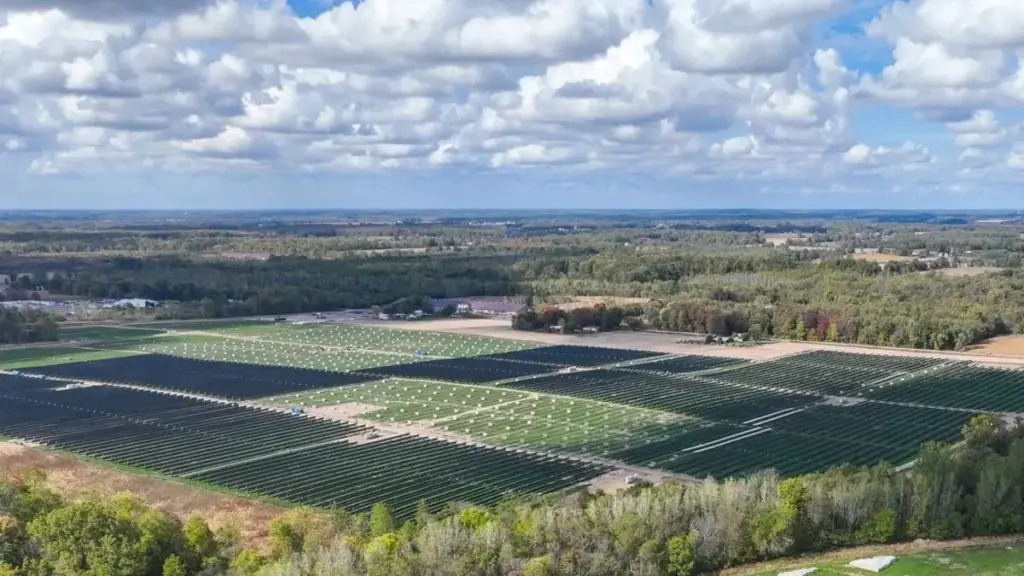
The transition of the American automotive industry toward a sustainable, decarbonized future has reached a significant milestone in the heart of the Midwest. Detroit-based energy titan DTE Energy has officially completed the construction of the Cold Creek Solar Park, a massive 100-megawatt (MW) renewable energy facility situated near Coldwater, Michigan. Funded entirely by Ford Motor Company through its strategic enrollment in DTE’s voluntary green energy program, CleanVision MIGreenPower, the $194 million project represents a pivotal leap forward in Ford’s localized manufacturing decarbonization strategy.
The Cold Creek installation is no minor addition to the regional power grid. Spanning vast acres of Michigan countryside, the facility generates a formidable volume of clean electricity, capable of powering the equivalent of roughly 23,000 to 25,000 typical Michigan households annually. More importantly, this clean energy is being funneled directly toward supporting Ford’s home-state automotive manufacturing ecosystem.
However, the completion of the Cold Creek Solar Park also underscores the complex realities, shifting timelines, and broader economic implications of corporate sustainability commitments on a mega-scale. While the project brings tangible green energy capacity to the grid, it arrives alongside a quiet revision to Ford’s internal climate deadlines—pushing its target for complete carbon-free electricity in Michigan manufacturing out from 2025 to late 2027.
This deep dive examines the architecture of the Cold Creek project, the structural mechanics of the DTE-Ford partnership, the economic ripple effects on local host communities, and what this massive solar undertaking means for the Blue Oval’s overarching roadmap toward total carbon neutrality by 2050.
Detailed Chronology of the Cold Creek Project
The realization of the Cold Creek Solar Park is the result of years of strategic planning, regulatory navigation, and intensive engineering execution. To understand how a 100-MW solar farm materialized in rural Michigan, it is essential to trace the timeline of commitments and ground-level milestones that brought the project to fruition.
The Genesis: August 2022
The foundational cornerstone of the Cold Creek project was laid in August 2022. During a high-profile announcement, Ford and DTE Energy revealed a landmark agreement that would dramatically reshape the utility’s renewable energy portfolio. Under the terms of the accord, Ford agreed to purchase up to 650 MW of renewable energy through DTE’s MIGreenPower program. At the time, this was heralded as the largest corporate renewable energy purchase ever announced in the United States from a utility provider.
This historic agreement was designed to immediately supercharge DTE’s clean energy buildout, committing both companies to a collaborative effort that would finance and construct multiple utility-scale wind and solar parks across Michigan. During this initial announcement, corporate leadership established an ambitious target: Ford aimed to assemble every vehicle it manufactures in Michigan using the equivalent of 100% carbon-free electricity by the end of 2025.
Groundbreaking: April 2025
Following years of site acquisition, environmental impact assessments, engineering designs, and grid-interconnection studies, physical work on the first major project tied to the 2022 agreement officially began. In April 2025, construction crews broke ground on the Cold Creek Solar Park near Coldwater, Michigan.
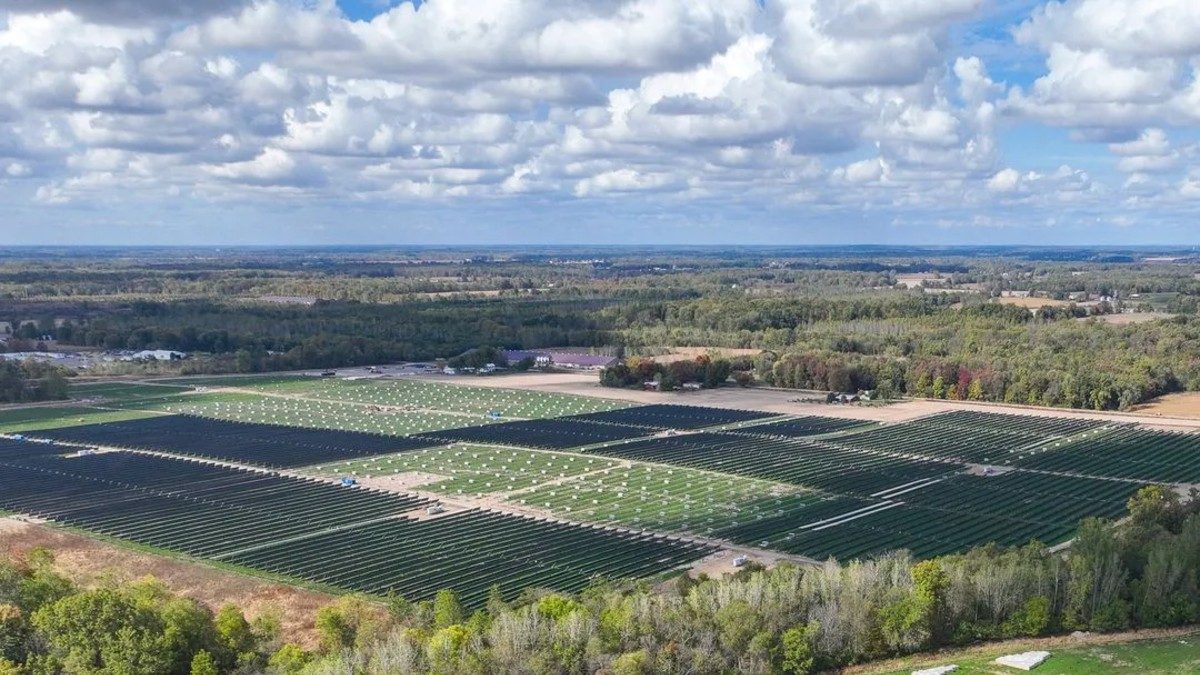
The construction phase transformed the rural landscape. Heavy machinery, advanced photovoltaic mounting systems, and thousands of high-efficiency solar panels began arriving at the site. Managed and constructed in partnership with industrial builders like Roncelli, the project required meticulous logistical coordination to install the sprawling array of photovoltaic cells, inverters, and high-voltage substations required to tie a 100-MW facility into the local transmission grid.
Completion and Commissioning: October 2026
Fast forward to October 2026, and DTE Energy officially announced the completion of construction at the Cold Creek facility. With the arrays fully erected, wired, and tested, the $194 million solar park transitioned from an active construction zone into an operational power generator.
The completion of Cold Creek marks a watershed moment for the broader 650-MW procurement agreement. It stands as the vanguard project—the first of several utility-scale developments specifically engineered to fulfill Ford’s localized clean energy mandates in Michigan. As electrons from Cold Creek begin flowing into the grid, they mark the tangible realization of corporate climate pledges turning into physical steel, silicon, and copper.
Supporting Context & Metrics: Decoding the Numbers
To fully grasp the scale and impact of the Cold Creek Solar Park, one must analyze the hard metrics that define its output, financial footprint, and technological scope.
Power Generation and Equivalencies
At 100 megawatts of capacity, Cold Creek is a utility-scale powerhouse. Solar capacity, however, differs from actual energy generation due to factors like weather, daylight hours, and seasonal shifts. Even accounting for these variables, the park generates enough clean electricity to power the equivalent of 23,000 to 25,000 Michigan households.
To put this into an industrial perspective, this volume of continuous renewable energy is essential for offsetting the heavy power demands of modern automotive assembly lines, robotic welding arrays, paint shops, and administrative facilities.
Financial Investment
The $194 million price tag for Cold Creek reflects the immense capital expenditure required for modern utility-scale solar infrastructure. This investment covers not just the procurement of hundreds of thousands of photovoltaic panels, but also:
- Land acquisition and site preparation: Securing thousands of acres of suitable terrain.
- Balance of system (BOS) components: Inverters, transformers, underground cabling, and tracking systems that allow panels to follow the sun.
- Grid interconnection infrastructure: High-voltage substations and transmission line upgrades necessary to inject 100 MW of power safely into the regional electrical grid.
The MIGreenPower Framework
The financial and operational vehicle making Cold Creek possible is DTE’s CleanVision MIGreenPower program. This voluntary green tariff program is designed to bridge the gap between major corporate energy buyers, residential consumers, and utility providers.
Through MIGreenPower, businesses and homeowners can voluntarily attribute a portion of their monthly electricity consumption to specific local wind and solar projects. Crucially, the program does not merely redirect existing green energy; it is structured to additionality standards—meaning participant subscriptions directly finance the construction and operation of new, dedicated renewable energy infrastructure in Michigan. Ford’s massive 650-MW commitment acts as a primary financial anchor, guaranteeing the long-term revenue streams necessary for DTE to secure financing and build these multi-million-dollar solar parks.
Official Statements and Evolving Timelines
As with any major corporate-utility partnership, the narrative surrounding the project involves both celebrated milestones and subtle adjustments to strategic goals.
The Shifting 2027 Deadline
One of the most notable revelations accompanying the completion of Cold Creek is an adjustment to Ford’s timeline for achieving 100% carbon-free electricity in its home-state manufacturing plants.
When Ford and DTE initially inked their landmark 650-MW agreement in August 2022, both corporations publicly established an aggressive target: 2025. The goal was to ensure that every vehicle assembled in Michigan would be built using the equivalent of 100% carbon-free electricity by the close of 2025.
However, in the October 2026 completion announcement, DTE updated that milestone, noting that Ford’s goal is now to achieve this 100% carbon-free manufacturing benchmark by the end of 2027. Neither DTE nor Ford provided a detailed, explicit explanation for the two-year timeline extension in their latest joint communications.
Industry analysts point to several systemic factors that commonly impact large-scale renewable energy and grid-integration timelines:
- Supply Chain Complexities: Global supply chains for specialized electrical components, high-voltage transformers, and photovoltaic cells have experienced persistent volatility over recent years.
- Grid Interconnection Queues: Regional transmission organizations (RTOs) face unprecedented backlogs as hundreds of gigawatts of wind, solar, and storage projects queue up for engineering studies and grid-connection clearance.
- Construction Sequencing: Building out 650 MW of renewable energy requires a staggered portfolio of multiple wind and solar sites. Delays or sequencing adjustments in subsequent projects can naturally ripple backward, influencing the precise date when total manufacturing load is fully matched by operational green assets.
Economic and Community Impact
Beyond its carbon-reduction metrics, the Cold Creek project is designed to deliver localized economic benefits to the host community near Coldwater, Michigan. While DTE has not published granular, site-specific economic data exclusively for Cold Creek, the utility’s broader projections for its major solar buildouts highlight significant community advantages.
When the overarching 650-MW initiative was first launched, DTE estimated that construction of the associated solar arrays would generate approximately 250 temporary construction jobs and 10 permanent operational and maintenance positions. Furthermore, the influx of capital infrastructure introduces substantial new tax revenue streams for host municipalities and townships.

In rural communities across the Midwest, utility-scale solar projects have increasingly become vital economic engines. Local governments can leverage this recurring tax revenue to fund essential public services without placing additional tax burdens on local residents. Targeted areas for these funds typically include:
- Road maintenance and infrastructure upgrades
- Local public school systems and educational programs
- Public libraries and community centers
- First responder agencies (local fire departments, EMS, and sheriff departments)
Future Outlook: The Road to 2035 and 2050
The completion of the Cold Creek Solar Park is a critical milestone, but it is ultimately a stepping stone within a much grander, long-term sustainability framework for both Ford Motor Company and DTE Energy.
Ford’s Global Decarbonization Roadmap
Ford’s investment in Michigan’s renewable energy grid via DTE is part of a tiered, multi-decade sustainability strategy:
- Short-to-Medium Term (2027): Achieve the equivalent of 100% carbon-free electricity across all vehicle manufacturing facilities located within the state of Michigan.
- Medium-to-Long Term (2035): Scale this achievement globally, transitioning 100% of Ford’s worldwide manufacturing facilities to use 100% carbon-free electricity. This will require replicating similar utility partnerships, green tariffs, and direct renewable energy procurements across Europe, Asia, and other North American regions.
- Ultimate Horizon (2050): Reach total, enterprise-wide carbon neutrality. This encompasses not only direct manufacturing operations (Scope 1 and Scope 2 emissions) but also the notoriously complex supply chain (Scope 3 emissions) and the operational lifecycle emissions of the vehicles themselves.
DTE Energy’s CleanVision Transition
For DTE Energy, projects like Cold Creek are central to the utility’s broader decarbonization commitments under its CleanVision plan. As Michigan transitions away from legacy fossil-fuel generation—specifically retiring coal-fired power plants—utilities are under immense pressure from both state regulators and corporate customers to rapidly scale up zero-carbon generation capacity.
Corporate renewable programs like MIGreenPower are proving to be powerful catalysts in this transition. By allowing massive industrial giants like Ford to underwrite the high upfront capital costs of massive solar and wind installations, utilities can accelerate the greening of the grid without placing the entire financial burden onto residential ratepayers.
Conclusion
The Cold Creek Solar Park stands as a physical manifestation of the modern corporate energy transition. It bridges the worlds of heavy automotive manufacturing and cutting-edge utility-scale solar engineering. While timeline shifts—such as the adjustment of Ford’s Michigan manufacturing target from 2025 to 2027—illustrate the complexities of large-scale green transitions, the ultimate trajectory remains steadfast. As the 100-MW arrays near Coldwater begin feeding clean electricity into the grid, they illuminate a clear path forward: the iconic vehicles rolling off Michigan’s assembly lines are moving steadily toward a fully electrified, carbon-free future.



