From the bustling streets of Bangkok to the rising tides of Fiji, and from the smog-choked air of Sumatra to the heat-stressed urban centers of Europe, the global fight for environmental and social justice intensified dramatically over the past week. Grassroots activists, Indigenous leaders, and international environmental organizations have mobilized across continents, confronting crises that range from unchecked corporate plastic production and aggressive militarization to the escalating emergency of climate breakdown and the fundamental human right to decent housing.
This dispatch captures a pivotal moment in global activism. For more than half a century, visual storytelling and direct action have served as foundational tools for organizations like Greenpeace, bearing witness to environmental devastation while galvanizing public demand for systemic reform. The images captured this week—whether featuring traditional outrigger canoes traversing Pacific waters or Muay Thai fighters symbolizing a direct blow against plastic pollution—do more than document dissent; they articulate a unified global demand for a sustainable, equitable future. As major international summits approach and communities grapple with the immediate impacts of ecological collapse, this week’s actions underscore a singular truth: the boundaries between climate defense, social equity, and human survival have dissolved.
Detailed Chronology of Global Actions
1. Bangkok, Thailand: Striking at the Source of Plastic Pollution
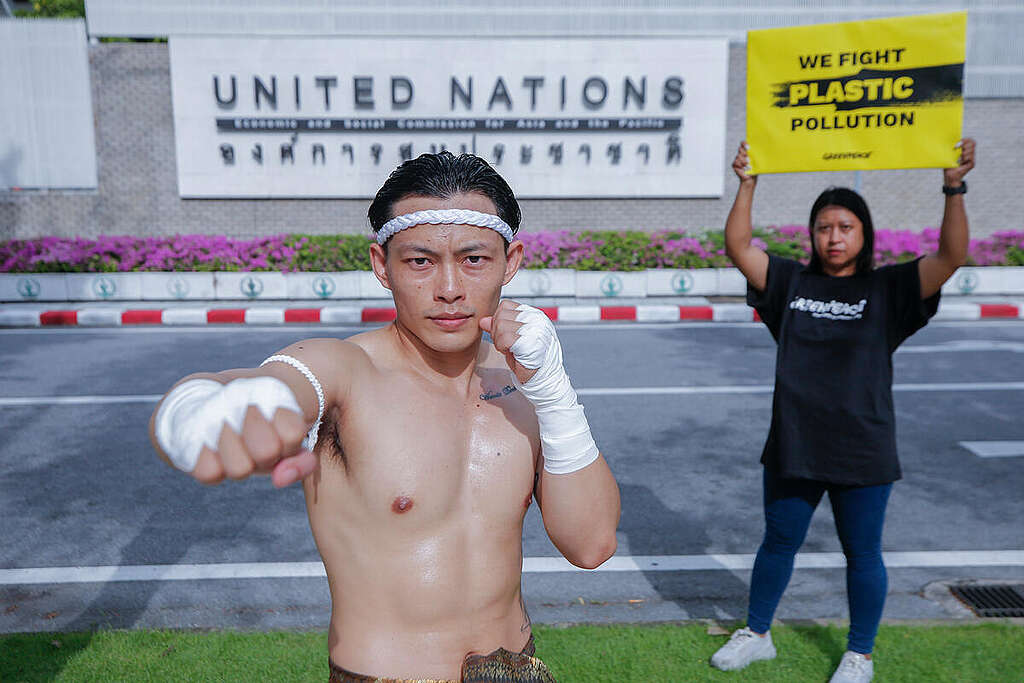
Outside the United Nations regional offices in Bangkok, where Heads of Delegation (HODs) from member states gathered for critical negotiations, Greenpeace Thailand activists staged a high-visibility, symbolic demonstration. Joined by a professional Muay Thai fighter, the activists delivered a powerful visual message: humanity must "fight" plastic pollution at its very source.
The demonstration was strategically timed to influence discussions surrounding the Global Plastics Treaty. Activists forcefully argued that downstream waste management and recycling initiatives are profoundly inadequate. Instead, they demanded that governments place mandatory, enforceable cuts in primary plastic production at the heart of the treaty. The collaboration with a martial arts exponent emphasized that halting the plastic deluge requires proactive, aggressive intervention rather than passive containment.
2. Berlin, Germany: Rallying Against Militarization and Conscription
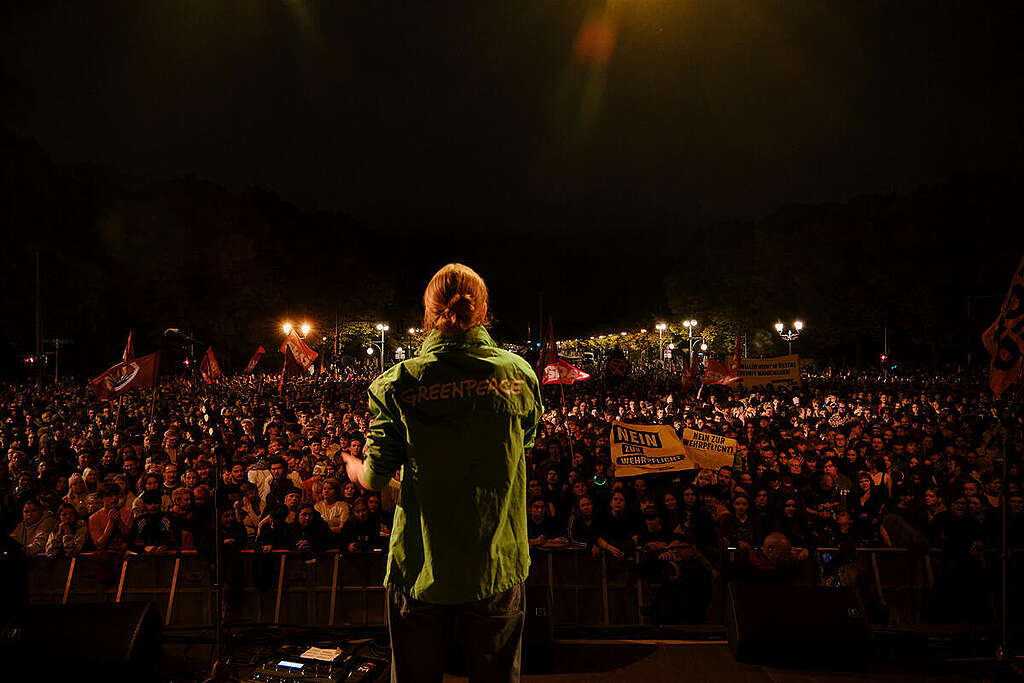
Shifting focus to European security and domestic policy, the Brandenburg Gate in Berlin served as the backdrop for a massive youth-led concert and protest. Operating under the motto "Unzwingbar – kein Bock auf Krieg und Wehrpflicht" ("Indomitable – No Interest in War and Conscription"), a coalition of peace organizations, youth groups, and environmental advocates—including Greenpeace Germany—rallied against the potential reintroduction of compulsory military service.
Featuring performances by prominent musical acts such as K.I.Z., Disarstar, and Apsilon, the event drew thousands of attendees. Speakers from civil society and Greenpeace Youth addressed the disproportionate impacts of growing militarization on younger generations. The core critique challenged the prevailing political consensus that relies exclusively on spiraling defense budgets, advocating instead for a comprehensive security policy rooted in climate stability, social welfare, and international diplomacy.
3. Nadi, Fiji: Holding the Line at 1.5°C
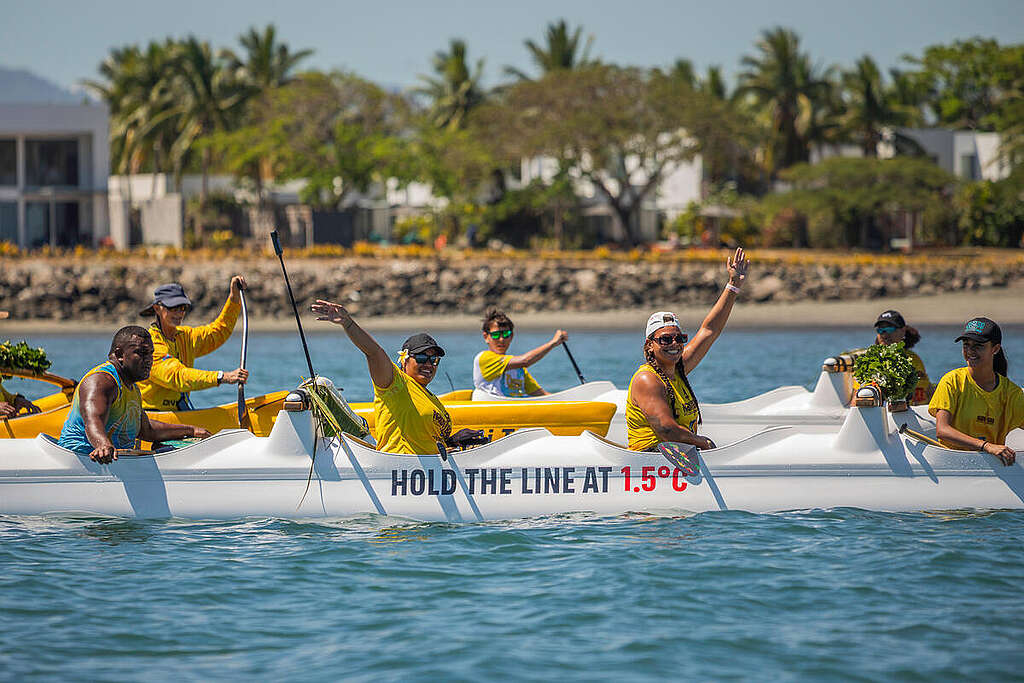
In the heart of the Pacific Ocean, a vibrant and determined flotilla comprising around 80 participants—including Indigenous community members from the Pacific and Torres Strait, cultural Elders, and youth activists—navigated past official Pre-COP venues in Nadi, Fiji. Aboard traditional outrigger canoes and the vessel SV Oceania, the demonstrators carried an uncompromising message to global policymakers: "Keep 1.5°C Alive" and "Hold the Line at 1.5°C."
This aquatic mobilization served as an urgent reminder that the 1.5°C warming limit established under the Paris Agreement is not a flexible political target, but a non-negotiable threshold for the survival of low-lying island nations. With Australia preparing to assume the COP31 presidency in Türkiye, Pacific leaders intensified their pressure on regional neighbors to halt all new fossil fuel expansion and commit to a rapid, managed phase-out of coal, oil, and gas.
4. Palembang, Indonesia: Confronting the Smog Crisis
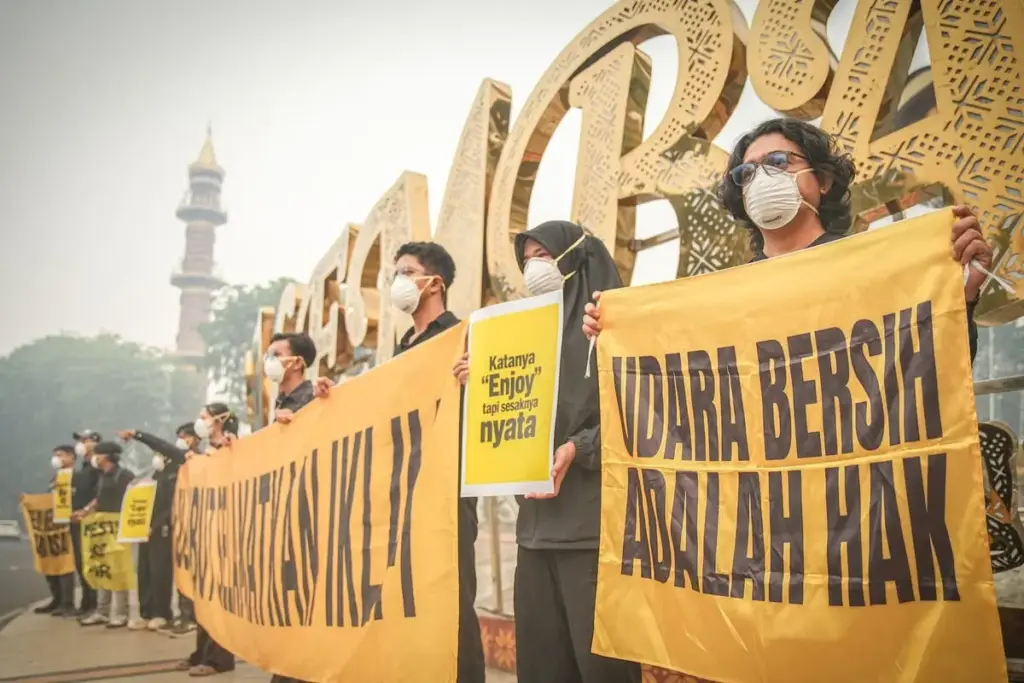
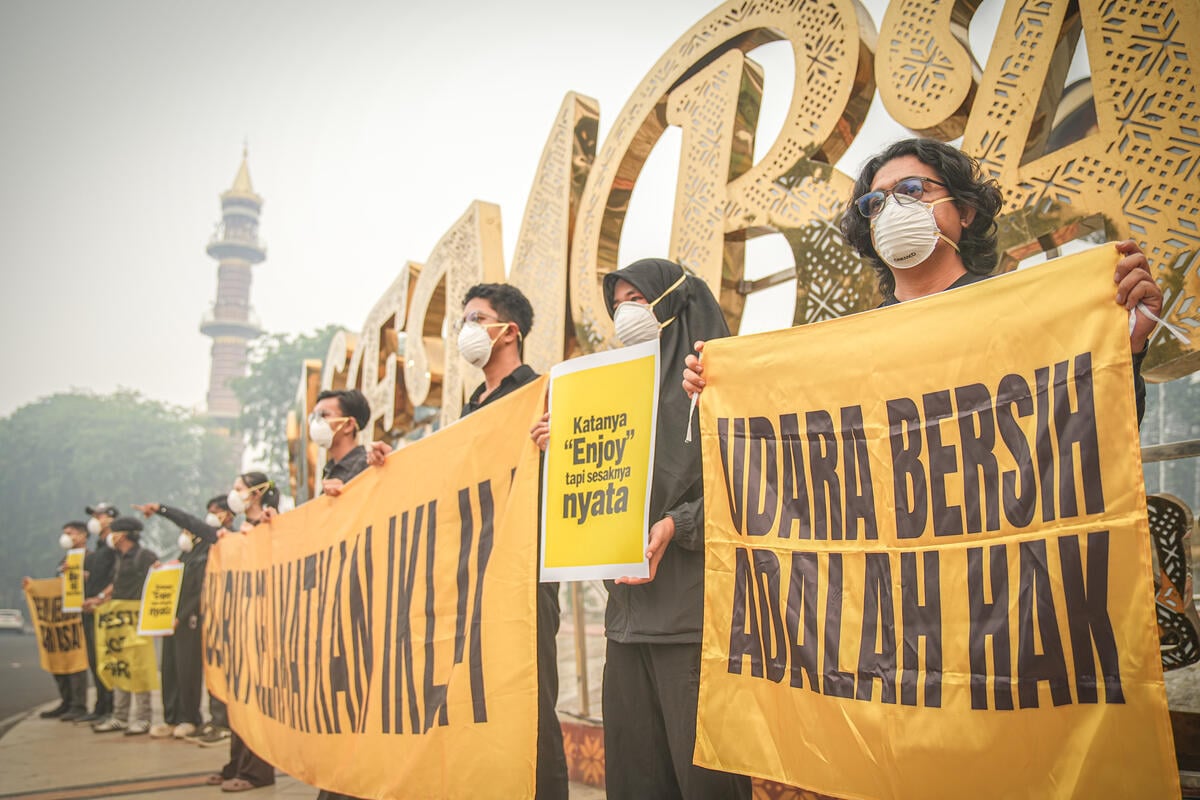
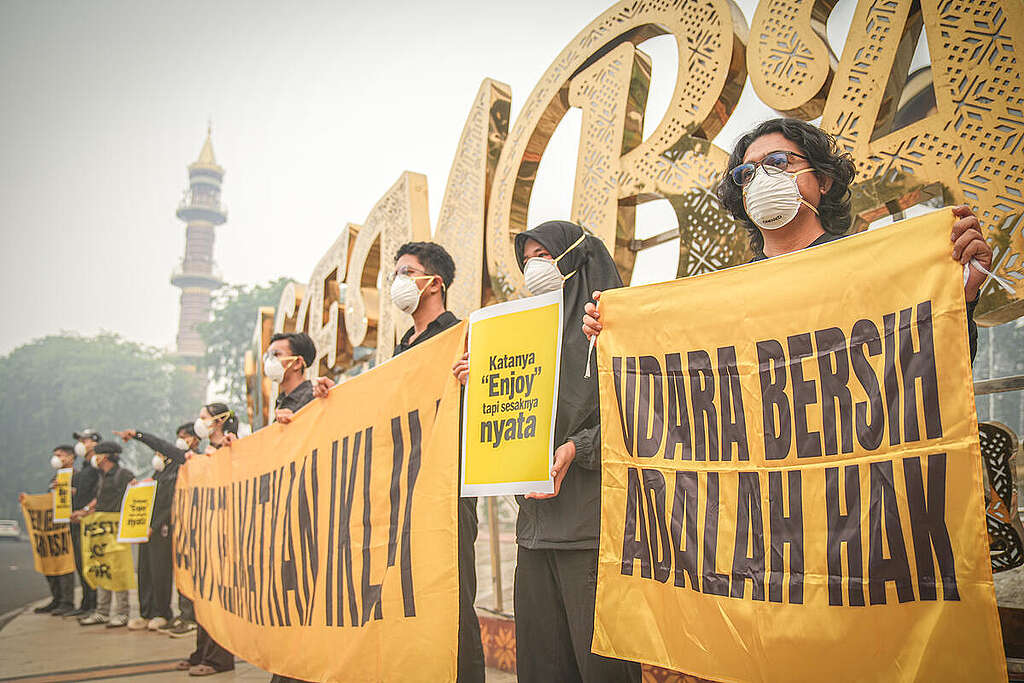
In South Sumatra, Indonesia, members of the Greenpeace Forest Fires Prevent Team (Tim Cegah Api) staged a peaceful protest against the persistent, toxic haze that has blanketed Palembang for nearly two months. Air pollution levels in the region have soared into the hazardous zone, severely impacting public health and disrupting daily life.
The catastrophic agricultural and peatland fires driving the haze are not isolated domestic events; the transboundary pollution has degraded air quality across neighboring Singapore and Malaysia. The Indonesian team’s action highlighted systemic failures in corporate forestry regulation, land-clearing practices, and enforcement mechanisms, demanding urgent accountability from agribusiness conglomerates whose operations destabilize regional ecosystems.
5. Zurich, Switzerland: Demanding "No 50°C Summers!"
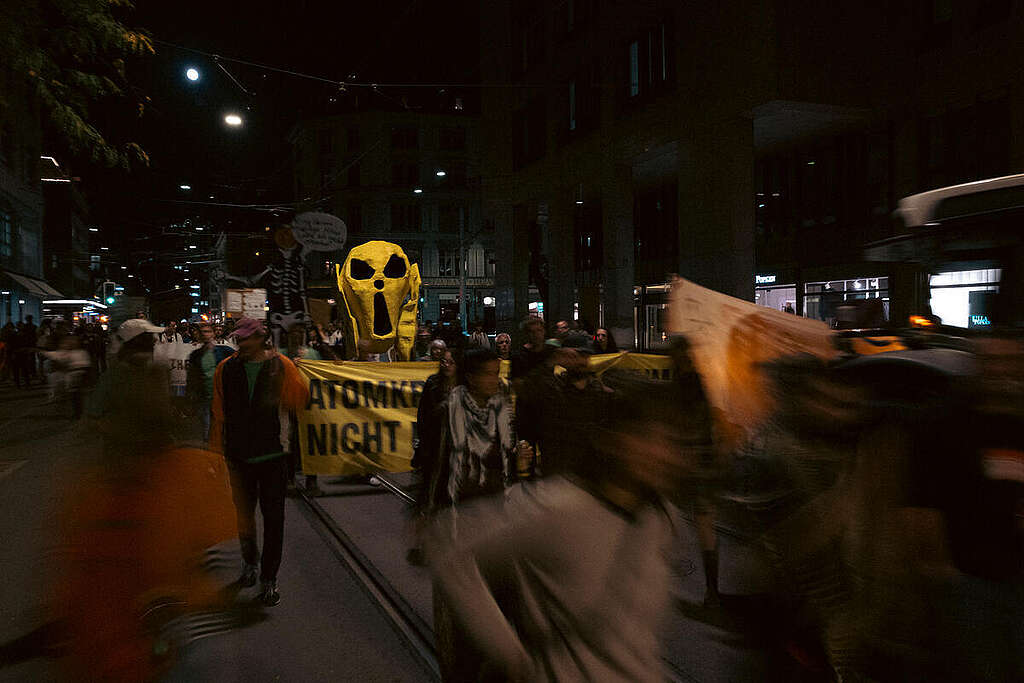
Europe’s escalating vulnerability to extreme weather prompted a historic coalition march through the streets of Zurich, Switzerland. Approximately 7,000 demonstrators mobilized under the banner "No 50°C summers!" Organized by an expansive alliance of more than 70 civil society organizations spanning the climate, health, environmental, and agricultural sectors, the march called for immediate, legally binding municipal and national adaptation frameworks.
With Alpine glaciers melting at unprecedented rates and prolonged heatwaves threatening vulnerable populations, the Swiss coalition emphasized that climate change is already a public health emergency. The protesters demanded robust heat-protection plans, stringent emissions reductions, and an end to political foot-dragging on environmental policy.
6. Madrid, Spain: Defending the Right to Decent Housing
In the historic Puerta del Sol plaza in Madrid, Greenpeace Spain joined a broad coalition of urban rights advocates in a sustained sit-in demanding the fundamental human right to decent housing. While traditionally associated with ecological campaigns, environmental organizations increasingly recognize that urban resilience, housing affordability, and climate justice are deeply interconnected.
Soaring real estate costs, unchecked speculation, and energy-inefficient housing stocks leave marginalized urban populations acutely vulnerable to extreme urban heat islands and economic precarity. The Madrid sit-in underscored that sustainable cities must guarantee secure, dignified shelter for all residents as a baseline requirement of ecological transition.
7. Chachoengsao, Thailand: Flood Relief and Fossil Fuel Resistance
Back in Thailand, Greenpeace staff and volunteers transitioned from advocacy to direct humanitarian assistance, supporting communities devastated by severe flooding in Chachoengsao Province. Initiated by relentless monsoon rains, the floods affected 11 districts and overwhelmed more than 23,790 households.
Compounding this climate-driven disaster, local residents are battling an additional existential threat: the proposed construction of the Burapha Power project, a massive 540-megawatt fossil gas power plant in the province. Communities voiced grave concerns over the plant’s depletion of local water resources, air pollution contributions, and its contradiction of global decarbonization imperatives. Greenpeace Thailand urged the government to abandon fossil fuel expansion and redirect resources toward community-led renewable energy infrastructure.
Supporting Context and Metrics
The convergence of these diverse crises illustrates the systemic nature of modern environmental degradation. To understand the scale of the challenges addressed by global activists this week, it is essential to examine the underlying metrics:
The Plastic Crisis: Global plastic production currently exceeds 400 million metric tons annually, with projections indicating a doubling by 2040 if unmitigated. Less than 10% of all plastic ever produced has been recycled, making source reduction the only mathematically viable solution for the upcoming Global Plastics Treaty.
Pacific Vulnerability: According to the Intergovernmental Panel on Climate Change (IPCC), emissions trajectories must be halved by 2030 to maintain any realistic pathway toward the 1.5°C Paris Agreement limit. For Pacific Island nations, breaching this threshold translates directly to existential displacement and sea-level inundation.
Southeast Asian Haze: Peatland degradation and deforestation in Indonesia release gigatons of stored carbon dioxide while generating annual regional health crises. Prolonged exposure to PM2.5 particulate matter from forest fires is directly linked to tens of thousands of premature deaths across maritime Southeast Asia.
Urban Heat Stress: Central European cities are warming at roughly twice the global average rate. Urban centers like Zurich face unprecedented risks from heat-related mortality among elderly and low-income demographics without aggressive green infrastructure deployment.
Official Statements and Perspectives
Environmental leaders and coalition representatives emphasized the interconnected urgency of this week’s mobilizations:
"We cannot negotiate with physics. When communities in the Pacific demand that leaders hold the line at 1.5 degrees, they are speaking for humanity’s shared survival. Every new fossil fuel project approved today is a deliberate choice to accelerate tomorrow’s catastrophe."
— Pacific Climate Coalition Representative
Addressing the intersection of corporate accountability and political will during the Bangkok negotiations, a Greenpeace delegation spokesperson noted:
"Fighting plastic pollution by focusing exclusively on consumer recycling is a deliberate distraction manufactured by petrochemical giants. Just as a Muay Thai fighter strikes at the opponent’s core, our policy must strike directly at virgin plastic production."
In Europe, youth organizers in Berlin and Zurich highlighted the generational stakes of current policy stagnation:
"Governments are rapidly increasing defense budgets while cutting investments in our future. True security cannot be achieved through militarization while the planet burns and our housing markets collapse. We refuse to inherit a world of 50-degree summers and perpetual conflict."
Future Outlook: The Road Ahead
As the international community looks toward upcoming pivotal milestones—including the formalization of the Global Plastics Treaty negotiations, the COP31 transitions led by Australia and Türkiye, and escalating municipal battles over housing and energy infrastructure—the role of independent investigative reporting and visual activism remains indispensable.
The events of this week demonstrate that resistance to environmental destruction is no longer siloed within traditional conservationist agendas. It has evolved into a comprehensive global movement linking public health, urban equity, pacifism, and climate survival. By continuing to bear witness, document injustice, and amplify marginalized voices from the frontlines, global civil society ensures that those responsible for ecological degradation cannot hide behind corporate greenwashing or diplomatic complacency.
To explore archival photography, video documentation, and high-resolution media assets from Greenpeace’s global actions, visit the official Greenpeace Media Library.