Executive Overview
For the average consumer, electricity is an invisible utility—a convenience summoned instantly by the simple flip of a wall switch, the hum of a refrigerator, or the cooling blast of an air conditioner on a blistering August afternoon. Yet, beneath this seamless user experience lies a complex, finely tuned machine operating under unprecedented strain. Across the United States, electricity demand is skyrocketing at a velocity not seen in decades. This surge is fueled by an influx of power-hungry data centers driving the artificial intelligence boom, the rapid reshoring of advanced manufacturing, and the punishing reality of extreme weather events driven by climate change.
Keeping the lights on in this high-demand era requires more than just generating electricity; it requires a modernized grid capable of capturing, holding, and delivering power precisely when and where it is needed.
Enter grid-scale energy storage—the linchpin of modern energy infrastructure. Energy storage allows grid operators to harvest cheap, abundant electricity during off-peak hours and dispatch it rapidly during critical demand spikes, mitigating price volatility and preventing blackfires. The market for this technology has evolved from a nascent niche into a multi-billion-dollar juggernaut. In 2020, the United States possessed roughly 6,000 megawatt-hours (MWh) of cumulative energy storage capacity. Today, that figure has eclipsed 175,000 MWh—a staggering accumulation of power capable of lighting up more than 5 million American homes for an entire day on a single charge.
State policymakers and utility regulators nationwide are taking notice, rapidly overhauling their energy blueprints to integrate massive amounts of storage. While the deployment wave is nationwide, five states—California, Nevada, Illinois, Virginia, and Massachusetts—stand out as pacesetters, establishing bold regulatory frameworks, shattering early deployment targets, and providing a masterclass for policymakers everywhere.
Detailed Chronology: The Evolution of U.S. Energy Storage Policy
The rapid ascendance of energy storage did not happen by accident; it is the result of deliberate, forward-looking policy interventions that began more than a decade ago. Tracing the chronology of these legislative milestones reveals how early risk-taking by pioneering states laid the groundwork for today’s nationwide boom.
- 2010 — The Pioneer Phase: California changes the landscape of American energy regulation by becoming the first state in the nation to adopt an explicit energy storage procurement target, mandating 1,825 megawatts (MW) of capacity by 2024. This single policy signals to capital markets that stationary storage is a recognized, investable asset class.
- 2017 — Bipartisan Momentum in the Desert: Nevada proves that energy storage transcends partisan politics. Republican Governor Brian Sandoval signs a bipartisan storage standard into law, establishing a collaborative framework between utilities, regulators, and legislators that sets the stage for exponential growth.
- 2018 — New England Joins the Fold: Massachusetts Governor Charlie Baker signs An Act to Advance Clean Energy, setting a formal target of 1,000 MWh of storage capacity by 2025. The state embraces batteries as an essential tool to manage regional grid constraints and integrate offshore wind.
- 2020–2021 — The National Awakening: Spurred by the falling costs of lithium-ion technology and federal tax incentives, states begin updating their long-term decarbonization plans. Virginia passes the Virginia Clean Economy Act, embedding initial storage benchmarks into its utility framework to prepare for an incoming wave of energy-intensive data centers.
- 2024–2026 — Scaling Up and Shifting to Long Duration: Recognizing that short-duration lithium-ion batteries are only part of the solution, states accelerate their ambitions. Illinois Governor J.B. Pritzker signs the Clean and Reliable Grid Affordability Act in early 2026, targeting 3,000 MW by 2030. Concurrently, states like California and Virginia pivot aggressively toward long-duration energy storage (LDES) to handle multi-day generation drops.
State-by-State Deep Dive: The Five Vanguard States
1. California: Shattering Records and Proving Scale
California’s 2010 procurement mandate was initially met with skepticism by traditional utility operators. However, the Golden State rapidly met its initial 2024 targets years ahead of schedule, fundamentally transforming its grid dynamics. Today, California boasts over 21,000 MW of operational energy storage capacity and has shifted its regulatory focus toward long-duration assets.
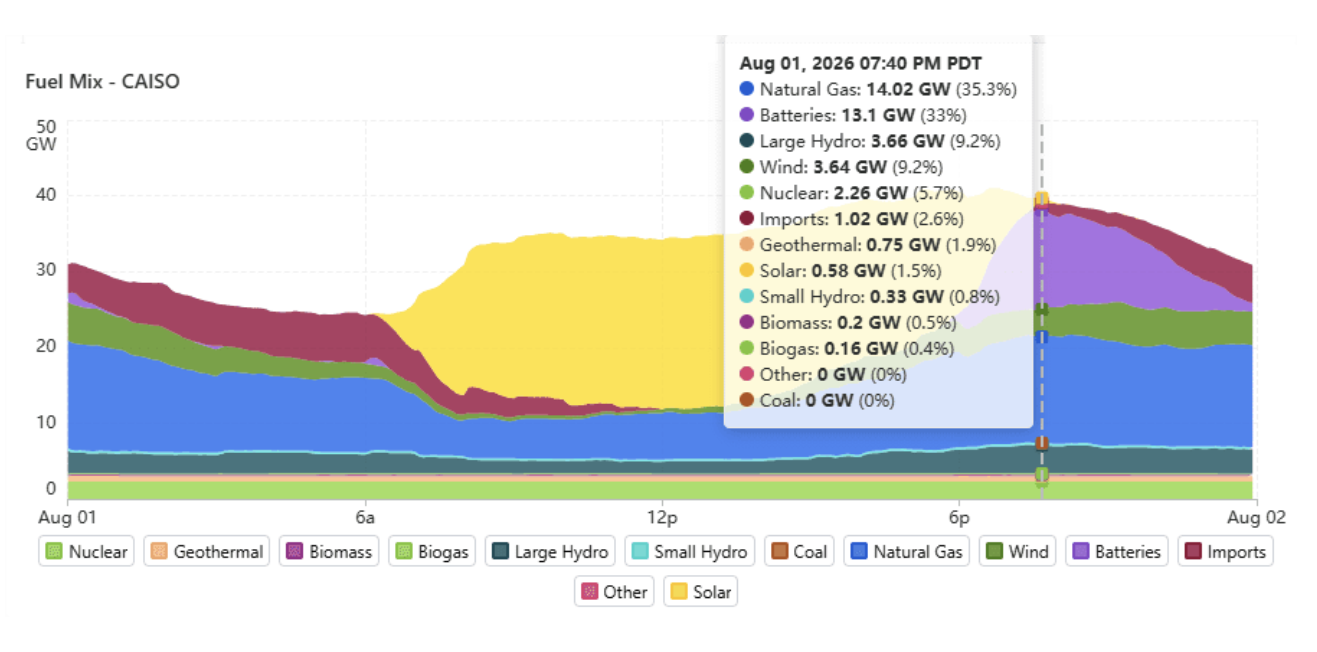
The true testament to this infrastructure buildout occurred on the evening of August 1, 2026. As extreme heat drove evening air-conditioning loads skyward while solar generation faded, California’s primary grid operator (CAISO) surpassed 13,000 MW of battery discharge in a single hour. For that critical slice of time, utility-scale batteries supplied a remarkable one-third of the state’s total power demand, averting rolling blackouts and proving that storage can successfully substitute for fossil-fuel peaker plants.
2. Nevada: Blasting Past Targets Ahead of Schedule
Nevada’s energy storage trajectory is a masterclass in cross-party consensus. Initiated under Republican Governor Brian Sandoval in 2017, the state’s storage standard was subsequently championed by succeeding administrations.
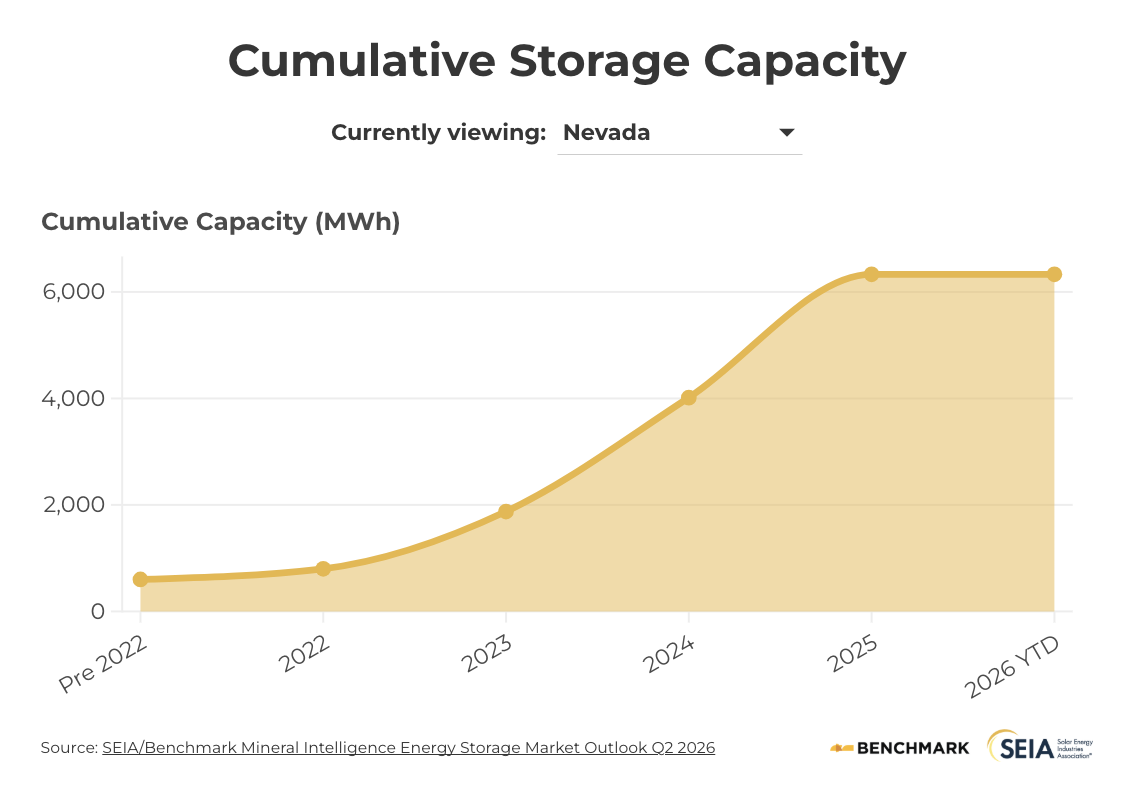
Following the legislation, the Nevada Public Utilities Commission established incremental milestones aimed at reaching 1,000 MW of storage capacity by 2030. Driven by abundant solar resources and strategic co-location of batteries at photovoltaic plants, Nevada has already eclipsed 1,700 MW of operational capacity. This remarkable velocity places Nevada fourth in the nation for total installed energy storage, proving that desert states can marry massive renewable generation with robust grid buffers.
3. Illinois: Targeting Affordability and Virtual Power Plants
Moving into the Midwest, Illinois has positioned energy storage not just as a reliability tool, but as an economic shield for consumers. Under the leadership of Governor J.B. Pritzker, the state enacted the Clean and Reliable Grid Affordability Act, directing the Illinois Power Agency to procure 3,000 MW of energy storage by the close of the decade.
Crucially, the Illinois legislation goes beyond utility-scale projects by aggressively incentivizing standalone and distributed energy resources. By establishing a formalized Virtual Power Plant (VPP) framework, the state can aggregate thousands of residential and commercial smart batteries, tapping into distributed capacity when the grid faces maximum stress. Economic analyses project that these combined measures will save Illinois families and businesses an estimated $13.4 billion in electricity bills over the next twenty years.
4. Virginia: Managing the Data Center Boom
Virginia faces a unique and intense grid challenge: Northern Virginia is home to "Data Center Alley," the largest concentration of data centers in the world. This digital infrastructure boom is driving some of the fastest electricity demand growth in United States history, turning rising electricity bills and grid reliability into front-burner political issues.
To meet this unprecedented demand without sacrificing climate goals, Governor Abigail Spanberger and state legislators enacted legislation in 2026 to massively expand Virginia’s energy storage targets beyond the framework originally established in the 2020 Virginia Clean Economy Act. Backed by advocacy from the Solar Energy Industries Association (SEIA) and local stakeholders, the Commonwealth is now targeting an additional 16,780 MW of short-duration storage by 2040, alongside 4,520 MW of long-duration storage by 2045.
5. Massachusetts: Building on a Legacy of Clean Energy
In Massachusetts, the energy storage transition represents a continuous evolution of bipartisan policy. Following the 2018 legislation signed by Governor Charlie Baker—which established a goal of 1,000 MWh by 2025—the state cleared its initial hurdle well ahead of schedule, crossing the 1,500 MWh threshold.
Current Governor Maura Healey has aggressively built upon this foundation. Through comprehensive legislation enacted in 2024 and targeted executive orders, the Healey administration is doubling down on storage deployment. By focusing heavily on multi-hour and long-duration storage technologies, Massachusetts is insulating its regional grid against winter heating crunches and summer heatwaves alike, keeping power affordable for ratepayers across the Commonwealth.
Supporting Context & Metrics: The Macro Picture
While these five states command the headlines, the energy storage revolution is rapidly sweeping across the broader American energy landscape. The economic and operational metrics underscore a permanent structural shift in how power is generated, managed, and consumed.
- Exponential Capacity Growth: From a modest 6,000 MWh nationwide in 2020, the U.S. storage market has surged past 175,000 MWh. This capacity provides essential grid services, including frequency regulation, spinning reserve substitution, and peak shaving.
- The Rise of New Markets: Georgia is rapidly emerging as a southeastern powerhouse. In 2025, the Georgia Public Service Commission unanimously approved an Integrated Resource Plan incorporating more than 1,500 MW of new energy storage for Georgia Power. Meanwhile, Texas (ERCOT) has cemented its position as the second-largest energy storage market in the country, utilizing un-regulated market signals to deploy merchant battery systems at breathtaking speeds.
- Cost Dynamics and Supply Chains: Despite inflationary headwinds and global supply chain reconfigurations, battery pack costs have maintained a long-term downward trajectory on a per-kilowatt-hour basis. This cost reduction, paired with federal investment tax credits (ITCs) for standalone storage under federal policy frameworks, has turned battery projects into highly attractive propositions for private capital and institutional investors.
Official Perspectives and Industry Advocacy
The rapid maturation of the energy storage sector has drawn enthusiastic endorsement from industry leaders, trade organizations, and regulatory bodies who view batteries as the ultimate equalizer in the modern energy transition.
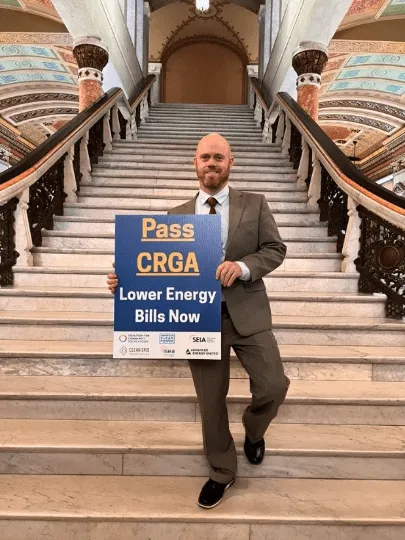
Industry groups like the Solar Energy Industries Association (SEIA) have played a central role in lobbying for state-level storage mandates. During the legislative push in Illinois, SEIA’s Midwest State Affairs Director, Andrew Linhares, underscored the dual benefits of battery deployment at the State Capitol:
"Energy storage is no longer just an experimental feature for a green grid; it is an economic necessity. By deploying utility-scale and distributed storage concurrently, states like Illinois are shielding consumers from volatile fossil-fuel price spikes while ensuring that the lights stay on during extreme weather events."
Furthermore, state utility regulators who historically favored traditional baseload thermal generation are increasingly embracing storage as a cost-effective alternative to building expensive new natural gas peaker plants—facilities that sit idle for most of the year yet incur high capacity charges for ratepayers. State public service commissions across the country are moving rapidly to update grid interconnection rules, streamlining the bureaucratic bottlenecks that have historically slowed down clean energy integration.

Future Outlook: Every State Can Be a Storage State
The collective experience of California, Nevada, Illinois, Virginia, and Massachusetts delivers a clear message to policymakers across the remaining 45 states: energy storage is the cornerstone of modern grid resilience. While policy mechanisms vary—ranging from mandatory utility procurement targets and clean peak standards to executive orders and virtual power plant incentives—the strategic outcome remains universal.
Energy storage endows grid operators with unprecedented flexibility. It transforms intermittent wind and solar generation into dispatchable power baseloads, dampens price volatility during extreme weather, and defers the need for costly transmission upgrades. As data centers continue to multiply, manufacturing plants return to U.S. soil, and climate-driven weather anomalies test the limits of legacy infrastructure, the states that invest in storage today will dictate the economic and industrial competitiveness of tomorrow.
The question facing state capitals is no longer whether to deploy energy storage, but how fast they can scale it to meet the demands of the twenty-first century. As the technology matures and costs decline, the horizon points toward a unified reality: every state has the potential to become a storage state.