The transition to electric vehicles (EVs) has long been framed as an impending challenge for municipal electrical grids, a narrative driven by fears of localized overloads and costly transformer upgrades. However, a major paradigm shift is underway in New England. Major Massachusetts utilities Eversource and National Grid are officially expanding their established virtual power plant (VPP) initiatives—known as ConnectedSolutions—to incorporate residential vehicle-to-grid (V2G) capabilities.
This evolution transforms parked electric vehicles from passive electrical loads into dynamic, decentralized energy assets. Qualifying residential customers who own V2G-capable electric vehicles and bidirectional chargers will soon be permitted to discharge stored battery energy back to the local grid during periods of peak demand. By leveraging the vast, untapped energy storage sitting idle in residential driveways across the Commonwealth, utilities aim to mitigate grid strain, defer costly infrastructure overhauls, and reduce overall dependence on expensive, carbon-intensive peak power generation.
The implementation of this initiative relies heavily on foundational tech integration from industry leaders including EnergyHub, Sunrun, and The Mobility House. While initial rollout parameters initially sparked questions regarding vehicle compatibility and compensation structures, subsequent updates have clarified an initial roster of eligible vehicles and established lucrative performance-based financial incentives.
Detailed Chronology of the Massachusetts V2G Integration
The integration of residential V2G technology into New England’s energy infrastructure did not happen overnight; it represents the culmination of years of pilot projects, technological maturation, and regulatory evolution.
Phase 1: The Foundation of Virtual Power Plants
Long before bidirectional residential charging was considered viable at scale, Eversource and National Grid laid the groundwork through the ConnectedSolutions program. Originally designed to aggregate commercial and industrial assets, smart thermostats, and stationary residential energy storage systems (such as Tesla Powerwalls), ConnectedSolutions proved that decentralized demand-side management could successfully shave peak loads during sweltering summer heatwaves and freezing winter nights.
Phase 2: Fleet Electrification and Early Testing
Before opening the program to single-family residential homeowners, utilities tested bidirectional technology on controlled, centralized fleets. National Grid pioneered light- and medium-duty fleet V2G applications through ConnectedSolutions, notably integrating electric school buses into grid-support frameworks. Simultaneously, Eversource initiated dialogues with regional school districts to deploy V2G capabilities via its complementary ConnectedSolutions+ program. These commercial pilots demonstrated that the hardware, software protocols, and safety mechanisms required for bi-directional power flow were robust enough for commercial deployment.
Phase 3: The Residential Breakthrough
The announcement that Eversource and National Grid are officially extending V2G integration to residential customers marks a monumental leap forward. By incorporating residential vehicles into the ConnectedSolutions framework, the program taps into the largest segment of energy storage potential in the state.
Initially, utility announcements left lingering ambiguities regarding eligible automotive hardware, proprietary charger compatibility, and exact payout structures. However, program administrators quickly clarified these parameters, releasing an initial list of certified vehicles and concrete financial incentives designed to jump-start consumer adoption.
Supporting Context, Metrics, and Technical Framework
To understand the scale of the opportunity in Massachusetts, one must examine the intersection of EV adoption rates, technical standards, and financial incentives.
The Numbers Behind the Massachusetts Grid
Massachusetts boasts a rapidly expanding electric vehicle market, with more than 150,000 EVs currently registered and operating on state roadways. As automotive manufacturers increasingly pivot toward standardizing bidirectional charging capabilities, this number represents a massive, distributed battery bank.
To put the potential capacity into perspective: a standard residential EV battery ranges from 60 kWh to over 130 kWh of energy storage. Multiply that capacity by even a fraction of the state’s EV fleet, and the collective storage capacity dwarfs traditional utility-scale battery installations.
Initial Eligible Hardware and Manufacturers
To ensure grid stability, safety, and seamless communication, V2G programs require strict hardware compatibility. Program administrators have confirmed an initial roster of vehicles certified for the Massachusetts residential V2G rollout, including:
Ford F-150 Lightning (which previously powered the United States’ first residential V2G power plant pilot)
Nissan LEAF (a long-time pioneer of CHAdeMO-based bidirectional capabilities)
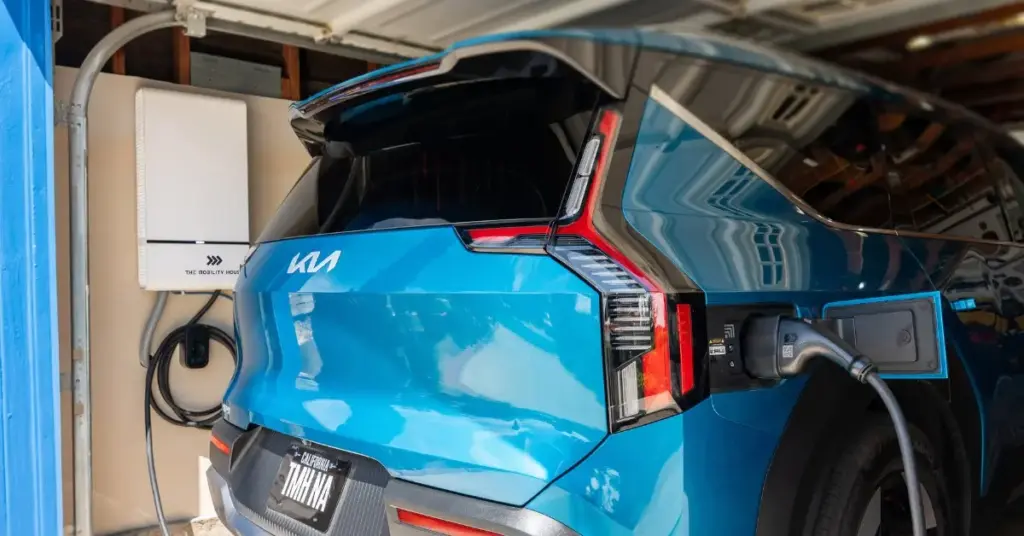
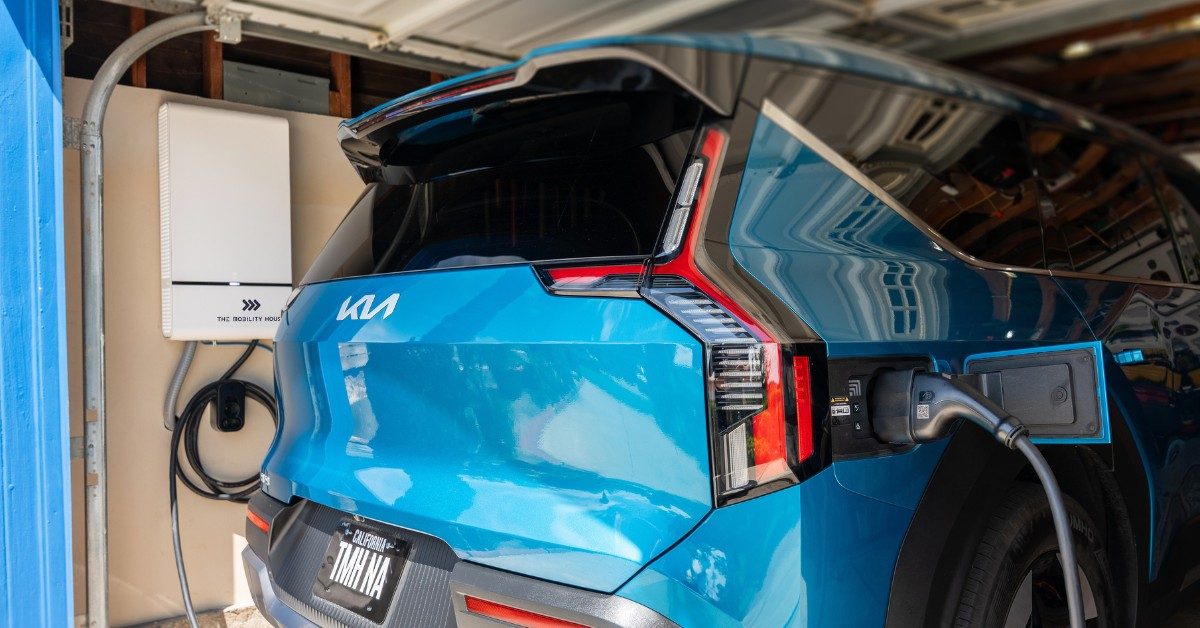
Kia EV9
Polestar 3
Volvo EX90
These vehicles, when paired with certified bidirectional EV chargers (EVSE) and managed via smart-charging platforms provided by EnergyHub, Sunrun, and The Mobility House, can safely export power back to the home or the grid under utility command.
Financial Incentives and Economic Models
Participation in ConnectedSolutions is entirely voluntary, meaning that consumer adoption hinges directly on attractive financial returns. Under the current structure for National Grid participants, performance-based incentives can reach up to $275 per average kilowatt (kW) of performance over the summer season.
Depending on the specific charger capacity, vehicle battery size, and total energy dispatched during high-demand events, residential participants can anticipate earning roughly $1,375 to $2,750 over the course of a single season. These performance metrics reward drivers not just for owning the technology, but for actively participating when the grid faces its most severe stress tests.
Official Statements and Industry Perspectives
Key stakeholders across the clean energy and utility sectors have expressed immense enthusiasm for the rollout, viewing Massachusetts as a critical testing ground for the future of American energy independence.
Chip Silverman, Sunrun’s director of grid services, emphasized the multifaceted benefits of the initiative:
"We are excited to bring our dispatching expertise to Massachusetts and help expand our vehicle-to-grid technology to more customers. Vehicle batteries play a critical role in stabilizing the grid, providing backup power to homes, and lowering energy costs for everyone."
Utilities echo this sentiment, noting that demand response programs do not merely benefit participating EV owners—they protect the macroeconomic health of the entire regional grid. By curbing the need to fire up expensive, polluting "peaker plants" during peak usage hours, V2G technology drives down wholesale electricity costs for all ratepayers, regardless of whether they drive an electric vehicle or a traditional gasoline-powered car.
Future Outlook: Challenges and Opportunities Ahead
While the launch of residential V2G in Massachusetts represents a historic milestone, widespread adoption is not without hurdles. The future success of the program depends on overcoming several key challenges:
Equipment Costs and Installation Complexity: Bidirectional chargers and the associated home electrical panel upgrades remain significantly more expensive than standard Level 2 chargers. Subsidies, tax credits, and utility rebates will be vital in lowering the initial barrier to entry for consumers.
Standardization and Interoperability: As automotive brands transition toward universal standards (such as SAE J3068 and ISO 15118-20), software integration must remain frictionless. Ensuring that drivers can plug in and participate without navigating proprietary ecosystems will dictate mainstream adoption.
Battery Degradation Concerns: A common hesitation among EV owners is the fear that cycling energy back to the grid will accelerate battery wear and tear. However, modern battery management systems and smart-charging algorithms are specifically calibrated to minimize thermal stress, ensuring that grid-support discharges have a negligible impact on long-term battery health.
Conclusion
Massachusetts is proving that the path to a resilient, 100% clean energy grid does not require building endless miles of transmission lines or massive stationary utility batteries. Instead, the solution is already parked in millions of American garages. As Eversource, National Grid, and their technology partners roll out these groundbreaking residential V2G incentives, the Commonwealth is setting a powerful precedent for the rest of the nation—transforming the electric vehicle from a simple mode of transportation into the ultimate localized power plant.