

Executive Overview
For decades, marine biologists have faced a frustrating data vacuum regarding the earliest stages of a sea turtle’s life cycle. Once hatchlings scramble across the sand and disappear into the surf, they seemingly vanish into the vastness of the global ocean. This enigmatic period—often referred to by scientists as the "lost years"—has long stymied conservation efforts, as researchers struggled to determine where juvenile turtles travel, what hazards they encounter, and how they navigate pelagic ecosystems.
Today, however, a groundbreaking collaborative initiative is bridging this critical knowledge gap. By outfitting rehabilitated juvenile loggerhead sea turtles with state-of-the-art miniature satellite tags, conservation scientists are shining a high-tech spotlight on these previously untraceable odysseys. Spearheaded by a partnership between the Two Oceans Aquarium Turtle Conservation Centre, Upwell Turtles, and Sylvia Earle’s marine conservation foundation Mission Blue, this project follows the remarkable journeys of individual turtles like Tolkien and Mpho.
By tracking these animals as they migrate through South Africa’s legally designated "Hope Spots" and out into the open ocean, researchers are gathering unprecedented real-time data. This information not only sheds light on individual survival and behavior but also provides actionable intelligence for marine spatial planning, illuminating precisely where international conservation policies and ocean protections must be fortified to safeguard the future of these endangered mariners.
Detailed Chronology: From Rescue to Pelagic Pioneer
The journey of a satellite-tracked loggerhead begins long before it ever encounters a high-tech tracking device. It is a grueling, multi-stage odyssey spanning acute medical intervention, intensive rehabilitation, and, ultimately, a triumphant return to the wild.
Phase 1: Rescue and Stabilization
Most juvenile loggerheads that enter the care of the Two Oceans Aquarium Turtle Conservation Centre arrive as vulnerable "strandings." Often washed ashore along the rugged South African coastline due to severe storms, hypothermia, or entanglement in marine debris, these young reptiles are frequently emaciated, dehydrated, and suffering from secondary infections. Upon arrival, veterinary teams initiate rigorous stabilization protocols. This includes fluid therapy, vitamin supplementation, specialized wound care, and carefully monitored rehabilitation diets designed to restore metabolic function without shocking their weakened digestive systems.
Phase 2: The Rehabilitation Milestones
Rehabilitation is a painstaking process that can take anywhere from several months to over a year, depending on the severity of the initial injuries or illness. During this period, turtles like Tolkien and Mpho transition from intensive care units to larger rehabilitation pools where they can regain their muscle tone, practice diving mechanics, and learn to hunt live prey. Veterinarians conduct regular blood panels, diagnostic imaging, and physical assessments to ensure the animals have achieved optimal physiological health and buoyancy control before they are deemed ready for release.
Phase 3: High-Tech Instrumentation
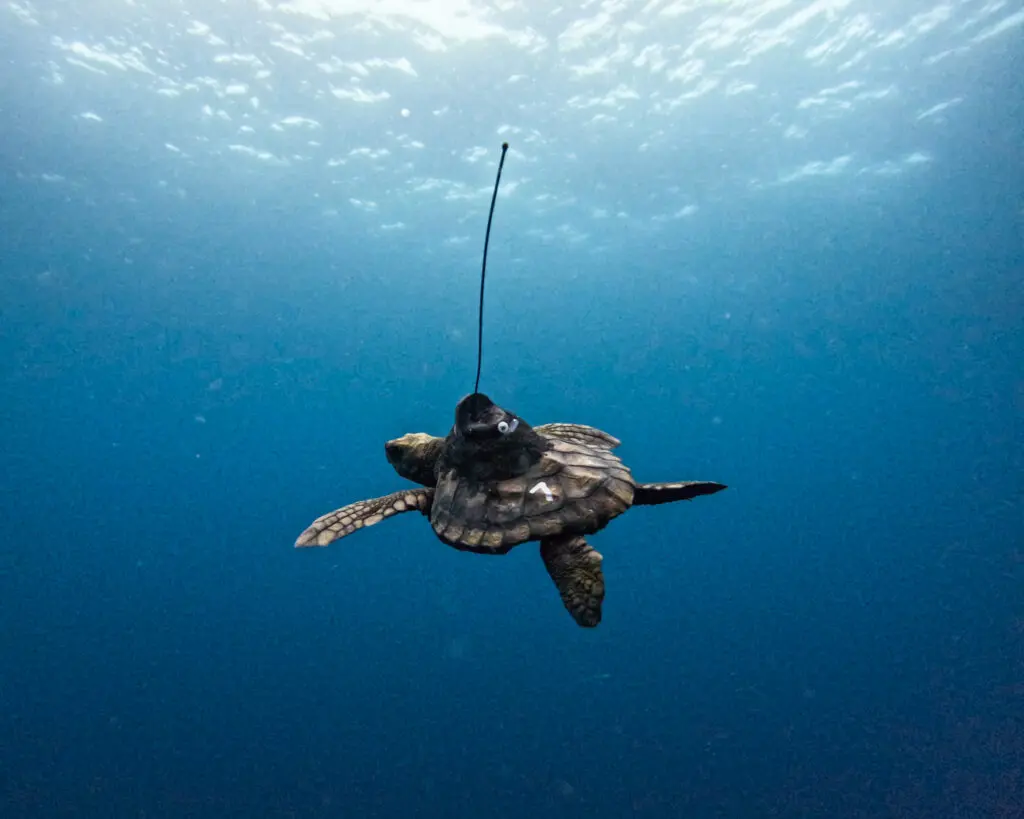
Once a juvenile loggerhead is cleared for release, it becomes an ambassador for marine conservation through the application of advanced telemetry. Technicians carefully mount miniature, streamlined satellite tags to the turtle’s carapace using specialized, non-toxic marine epoxies. These transmitters are engineered to withstand the immense pressure of deep dives and the corrosive nature of saltwater while creating minimal hydrodynamic drag. Crucially, the attachment methods are designed to naturally shed over time as the turtle grows, ensuring the animal is unencumbered in the long term.
Phase 4: Return to the Wild and the Open Ocean
Released off the coast of South Africa, these rehabilitated juveniles immediately face the true test of their survival instincts. As they re-enter the dynamic marine environment, their satellite tags begin transmitting precise GPS coordinates every time the turtle surfaces to breathe. The resulting data streams chronicle their departures from coastal nurseries, their navigation through turbulent coastal currents, and their eventual ventures into the deep blue water of the open ocean—transforming anecdotal rescue stories into a robust, empirical dataset.
Supporting Context & Metrics: Decoding the "Lost Years" and Hope Spots
To fully appreciate the significance of this tracking initiative, one must understand the ecological framework in which these juvenile loggerheads operate. The term "lost years" refers to the pelagic stage of a sea turtle’s life cycle, a multi-year span following hatching where young turtles drift with oceanic currents, hiding in Sargassum weed mats and feeding on microscopic pelagic organisms. Historically, mortality rates during this phase were entirely speculative, and habitat utilization was largely unknown.
[Hatchling Emergence]
       │
       ▼
[Coastal Stranding & Rescue] ──► [Two Oceans Aquarium Rehabilitation]
                                           │
                                           ▼
[Open Ocean Pelagic Migration] ◄── [Satellite Tagging & Release]
       │
       ▼
[Hope Spot Navigation & Data Transmission]
The Role of South African Hope Spots
Hope Spots are special conservation areas recognized by Mission Blue that are scientifically identified as critical to the health of the ocean. South Africa boasts several such zones along its rich, biodiverse coastline where the Atlantic and Indian Oceans converge.
- Upwelling Zones: The coastal waters off South Africa are characterized by powerful upwelling systems driven by the Benguela and Agulhas currents. These currents create nutrient-rich environments that attract an abundance of marine life.
- Corridor Navigation: Tracking data reveals that rehabilitated loggerheads frequently utilize these dynamic current corridors as pelagic highways. Rather than swimming aimlessly, turtles like Tolkien and Mpho demonstrate sophisticated movement patterns that align with major oceanic convergence zones, where food is concentrated and thermal conditions are favorable.
Metrics of Impact
The integration of satellite telemetry has revolutionized marine conservation biology through measurable operational metrics:
- Spatial Resolution: Modern miniature satellite transmitters provide location fixes accurate to within a few meters, allowing researchers to map micro-habitats utilized by the turtles.
- Temporal Continuity: Transmitters can remain active for many months, recording continuous behavioral timelines that encompass seasonal shifts in water temperature and current velocities.
- Threat Mapping: By overlaying turtle movement tracks with commercial shipping lanes, industrial fishing effort maps, and oceanic plastic accumulation zones, scientists can quantify cumulative anthropogenic pressures in real-time.
Official Statements and Collaborative Perspectives
The success of the Tolkien and Mpho tracking project relies entirely on the synergy between institutional husbandry, cutting-edge technology, and global marine advocacy. Leaders from the partnering organizations have emphasized the broader implications of this work for ocean stewardship.
Conservation scientists from the Two Oceans Aquarium Turtle Conservation Centre note that every rehabilitated turtle represents a dual victory:
"Rehabilitating and releasing an individual turtle is deeply rewarding, but the real power of this work lies in the data they carry with them. By following Tolkien, Mpho, and their peers, we are no longer guessing about where our rehabilitated animals go or what challenges they face once they leave our care. We are gaining a window into a hidden world, and that knowledge is essential for shaping targeted, effective conservation policies."
Representatives from Upwell Turtles—an organization dedicated to the conservation of sea turtles throughout their marine habitats—highlight the importance of bridging the gap between coastal protection and high-seas management:
"Sea turtles do not recognize geopolitical boundaries or marine reserve borders. The ‘lost years’ have remained a mystery for generations simply because we lacked the technological capacity to follow small juveniles across vast pelagic expanses. Miniaturized satellite telemetry has changed the game. We can now identify critical pelagic developmental habitats that require urgent, international protection."
Furthermore, advocates from Mission Blue stress the philosophical and educational weight of the initiative, noting that individual animal narratives are vital for engaging the public in complex ecological debates:
"When people can open an interactive StoryMap and follow the exact daily progress of a turtle named Mpho, conservation ceases to be an abstract scientific concept. It becomes a personal journey. These turtles are teaching us vital lessons about the interconnectedness of our oceans, reminding us that protecting coastal Hope Spots is only half the battle—we must also secure the open ocean."
Future Outlook: Implications for Global Marine Conservation
As the data from Tolkien, Mpho, and other tracked loggerheads continues to stream into research servers, the horizon of sea turtle conservation is shifting. The insights generated by this collaborative StoryMap project are laying the groundwork for several critical advancements in marine policy and science:
1. Refining Marine Protected Areas (MPAs)
Traditional marine protected areas are often fixed, polygon-based zones established primarily to protect static coastal ecosystems such as coral reefs, mangroves, and sea grass beds. However, highly migratory species like juvenile sea turtles require dynamic management frameworks. By pinpointing the exact oceanic corridors and convergence zones utilized during the pelagic stage, conservationists can advocate for Dynamic Ocean Management (DOM)—flexible, real-time spatial protections that shift alongside migrating species and changing oceanographic conditions.
2. Mitigating Anthropogenic Threats
Understanding pelagic movement patterns allows authorities to proactively address the primary drivers of sea turtle decline:
- Bycatch Reduction: Equipping longline and gillnet fisheries with better spatial awareness data can reduce accidental entanglements of juvenile turtles in open-water deployment zones.
- Plastic Pollution Interception: Tracking data frequently reveals overlap between turtle aggregation zones and major oceanic gyres characterized by high concentrations of microplastics and discarded fishing gear ("ghost gear"). This data helps direct clean-up initiatives where they will save the most lives.
3. Public Engagement and Education
The ongoing dissemination of tracking data via interactive platforms like the ArcGIS StoryMap democratizes marine science. By allowing students, educators, and ocean enthusiasts worldwide to monitor the daily trajectories of rescued turtles, the project fosters a new generation of ocean stewards.
Conclusion
The remarkable journeys of Tolkien and Mpho demonstrate that the boundary between rescue and conservation is fluid. What begins as a desperate struggle to save an individual, stranded reptile on a South African beach ultimately culminates in a masterclass of marine science. Through the combined efforts of the Two Oceans Aquarium Turtle Conservation Centre, Upwell Turtles, and Mission Blue, the veil of the "lost years" is slowly being lifted.
As these young loggerheads navigate the currents of South Africa’s Hope Spots and venture boldly into the open ocean, they are carrying more than just miniature satellite transmitters—they are carrying our best hope for understanding, managing, and ultimately protecting the high seas for generations to come.
To follow the ongoing journeys of these young turtles and explore the interactive data firsthand, visit the official project portal at storymaps.arcgis.com.



