


By Tristan Bronca
Newmarket, Ontario
Executive Overview
Today, roughly 80% of Canada’s electricity is generated from emissions-free sources, placing the nation in an enviable global environmental position. Yet, as the country looks toward a net-zero future, that baseline is deceptively fragile. According to the 2026 levelized-cost-of-energy report by global accounting firm Lazard, wind and solar remain, by far, the cheapest new sources of electricity to add to the grid. However, building a grid that truly emits less carbon requires a massive expansion in capacity.
As Canada’s roads, homes, commercial buildings, and heavy industries rapidly reduce their dependence on fossil fuels, overall demand for electricity is poised to skyrocket. By the federal government’s own estimates, the widespread adoption of electric vehicles (EVs), heat pumps, energy-hungry data centres, and industrial electrification will require the Canadian grid to double the amount of electricity it produces in less than 25 years.
According to the Corporate Knights Climate Dollars analysis—a comprehensive assessment of the capital investments needed to decarbonize Canada’s economy sector by sector—this economic and technical shift will require approximately $2.17 trillion in capital investments over a quarter-century. Of that staggering total, $1.26 trillion is urgently needed for grid infrastructure, while $915 billion must be directed toward end-use sectors. For the grid alone, this translates to average capital investments of roughly $50 billion per year for the next 25 years.
While these figures are daunting, they represent a generational opportunity. Rather than acting as a drain on public coffers, accelerated investment in our electrical arteries will unlock immense long-term cost savings, bring down utility rates for millions of citizens, and democratize ownership of the energy transition through innovative financial tools like community bonds.
Detailed Chronology & Policy Evolution
The Shift Toward National Electrification
The historical trajectory of Canada’s electrical grid has long been characterized by provincial silos—utilities operating within self-contained jurisdictions, prioritizing centralized generation and distribution. However, the accelerating urgency of climate change and the structural shift toward electrification have forced a pivot toward federal coordination.
- May 14, 2026: Prime Minister Mark Carney’s government formally announces the much-anticipated national electricity strategy, signaling a decisive federal intent to unify and modernize the country’s fragmented grid networks. Accompanied by sweeping new commitments to improve interprovincial grid connections, the strategy aims to break down the historic barriers preventing clean energy from flowing freely across provincial borders.
- June 2026: Building upon the national strategy, the federal government rolls out targeted action plans to advance a stronger, more resilient grid capable of handling intermittent renewable inputs and surging localized demand. Despite approximately $13 billion being earmarked annually for clean-energy initiatives, structural hurdles remain.
- The Legacy of the 2009 Green Energy Act: To understand contemporary public pushback against green energy, one must look back to Ontario’s Green Energy Act of 2009. That top-down legislation stripped local municipalities of their zoning authority, allowing wind turbines to be erected across rural farmlands over the fierce objections of local populations. The resulting political fallout—which saw 155 Ontario municipalities formally denounce future wind projects as "unwilling hosts"—left deep scars, demonstrating that top-down infrastructure mandates can alienate the very communities they seek to serve.
Supporting Context & Metrics: The Anatomy of a $2.17 Trillion Transformation
Transforming the Canadian energy landscape is an exercise in monumental math. Annual investments of $50 billion to overhaul the nation’s grids may initially induce sticker shock, but they must be viewed in the context of existing capital flows.
Current Capital Expenditure vs. Future Needs
In 2024, capital investments in Canada’s electrical grid—spanning new power generation projects, battery storage solutions, and localized network upgrades—totalled $32 billion. That figure crept upward to $34 billion in 2025. To put this into perspective, grid infrastructure represents the largest baseline capital expenditure for the nation’s energy sector, trailing only oil and gas extraction, which commanded $42 billion over the same period. Bridging the gap from $34 billion to the required $50 billion annual average is a steep climb, but entirely achievable given the economic stakes.
The Dividends of Connectivity
Far from being an economic black hole, accelerated grid spending will generate historic economic returns. According to estimates by Corporate Knights researchers, constructing a single trans-Canada transmission line would result in up to $255 billion in net savings after accounting for its estimated $100-billion price tag.
Furthermore, complementary grid improvements could save hundreds of billions of dollars more in mitigated fuel expenditures, reduced line losses, and deferred local infrastructure costs. These cumulative efficiencies will ultimately translate into lower electricity rates for millions of Canadian households and businesses currently grappling with the cost-of-living crisis.
The Funding Equation
Where will the $1.26-trillion grid-funding equation be sourced?
- 20% to 25% will come directly from government financing, leveraging public funds, tax credits, and specialized initiatives like the federal Smart Renewables and Electrification Pathways Program (SREPP).
- 75% to 80% must be mobilized by private players, including institutional investors, pension funds, and private utilities looking for stable, long-term yield.
Official Statements & Industry Perspectives
The path to a decarbonized grid is as much political and social as it is technical. Experts across the financial and cooperative sectors are increasingly vocal about the necessity of blending institutional capital with grassroots engagement.
De-Risking and Democratizing Renewables
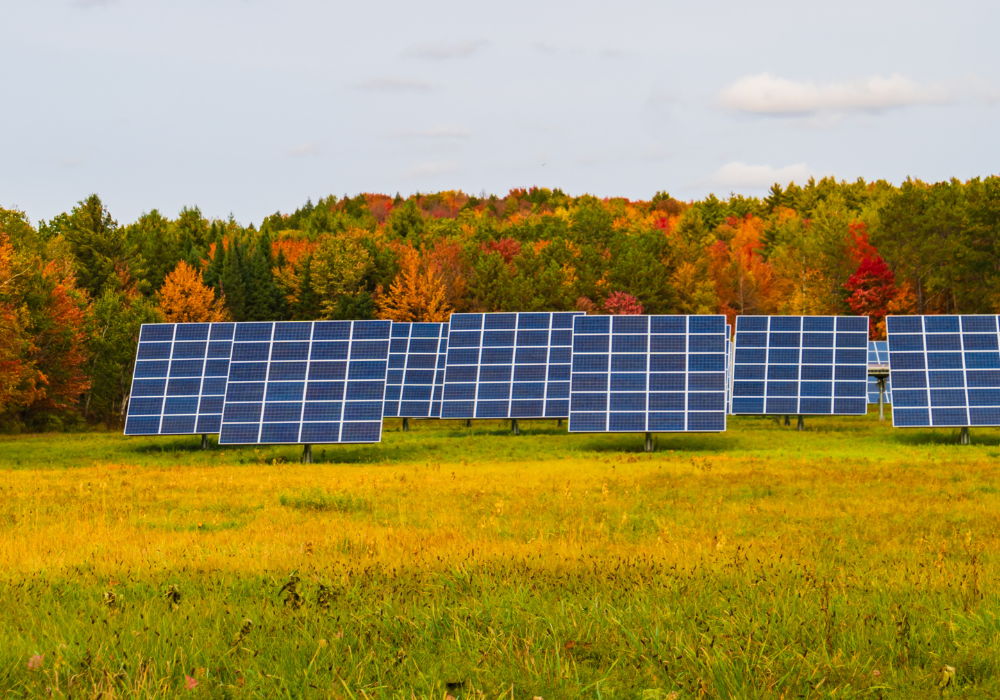
Brian Chang, general manager of SolarShare—Canada’s largest renewable-energy co-op—argues that community-focused financial structures offer distinct advantages over traditional corporate stock ownership. Operating 51 solar projects across Ontario, SolarShare bridges the gap between everyday investors and utility-scale green infrastructure.
"If you invest in a solar company, you also don’t get much say," Chang explains. "Here, every member gets one vote. It doesn’t matter if you’ve invested $1,000 or $100,000."
Chang points out that SolarShare’s investment model is carefully structured to mitigate risk for retail investors. Because bonds are fixed-income instruments, they are repaid at agreed-upon rates independent of corporate stock volatility. Furthermore, the co-op conducts comprehensive feasibility analyses for new projects, outsources initial construction to trusted engineering firms, and subsequently buys project ownership back at a premium—a rigorous process that de-risks the asset before retail capital is fully deployed.
The Regulatory and Geographic Reality
Despite pockets of innovation, Canada faces uniquely severe geographical and administrative hurdles:
- The Remote Diesel Dilemma: More than 200 remote, off-grid communities across Canada’s northern and rural expanses still rely on polluting, expensive diesel generators year-round.
- Regulatory Fragmentation: Because Canadian provinces maintain constitutional jurisdiction over their own electricity systems, the regulatory landscape remains deeply fragmented, complicating efforts to build a unified, interprovincial super-grid.
Future Outlook: Decentralization, Community Bonds, and the Road Ahead
As Canada looks toward 2050, the consensus among energy planners is clear: the future grid cannot rely solely on centralized monopolies. Decarbonizing the Canadian grid requires decentralizing both power generation and energy storage solutions.
While a trans-Canada transmission line is vital for moving offshore wind power generated in the Maritimes to serve peak energy demand in southern Ontario, that continental backbone must be fed by resilient power-generating nodes embedded in communities from coast to coast to coast.
The Untapped Potential of Energy Co-ops
Grassroots renewable energy models remain surprisingly underutilized in Canada compared to international peers. A study out of Royal Roads University estimates that there are currently just 82 active energy co-ops across Canada, collectively owning or co-owning 214 renewable-energy projects. For context:
- Germany boasts 847 active energy co-ops.
- The Netherlands maintains 713.
The number of active renewable-energy co-ops in Canada has actually been cut in half since its peak in 2016. That contraction was triggered when provincial governments discontinued guaranteed, long-term fixed-price energy contracts. Ongoing regulatory friction—such as restrictive rules governing the sale of localized electricity back to the main grid, alongside burdensome, expensive legal requirements surrounding public fundraising—continues to hinder the cooperative sector.
Community Bonds as a Catalyst
Despite these hurdles, community bonds represent one of our most potent untapped tools for financing the energy transition. Requiring a relatively modest minimum investment (often starting at $1,000), these bonds allow ordinary citizens to become direct financial stakeholders in local clean energy infrastructure. While offering competitive returns—SolarShare’s current bond offerings hover around 4% over a three- to seven-year term, roughly on par with Guaranteed Investment Certificates (GICs)—they carry specific risks, including the lack of a secondary market that can make them difficult to liquidate before maturity, as well as the baseline risk of issuer default.
However, when paired with supportive public policies and streamlined regulatory frameworks, community bonds offer a powerful antidote to public pushback. By giving citizens a direct financial stake and a democratic vote in local energy projects, Canada can transform its citizenry from "unwilling hosts" into enthusiastic architects of the clean energy economy.
Canada’s historic reliance on centralized electricity generation and distribution is giving way to a new paradigm: one where decentralized solutions with deep community buy-in are essential. If the political will persists and policy frameworks are successfully aligned, the monumental task of building tomorrow’s grid will not only be achieved—it will be built by Canadians, for Canadians.



