The global commercial transport sector stands at a complex crossroads. While the decarbonization of heavy-duty freight is universally recognized as vital to meeting international climate goals, the everyday realities of logistics present daunting hurdles. Fully battery-electric heavy trucks—even engineering marvels like the Tesla Semi—face stubborn physical and infrastructure limits. Hauling a fully loaded semi-trailer up grueling inclines, such as the Eisenhower Tunnel in the Rocky Mountains, demands immense energy. When combined with sparse heavy-duty charging corridors, unpredictable weather, and congested routes, battery-only limitations frequently threaten the economic viability and strict delivery schedules of fleet operators.
To break this impasse, tier-one automotive and commercial vehicle supplier Mahle is stepping forward with a two-pronged technological intervention. Set to debut at the upcoming IAA Transportation trade show in Hannover, Germany, Mahle’s new innovations aim to decouple the transition to zero-emission trucking from the painfully slow rollout of heavy-duty megawatt charging infrastructure.
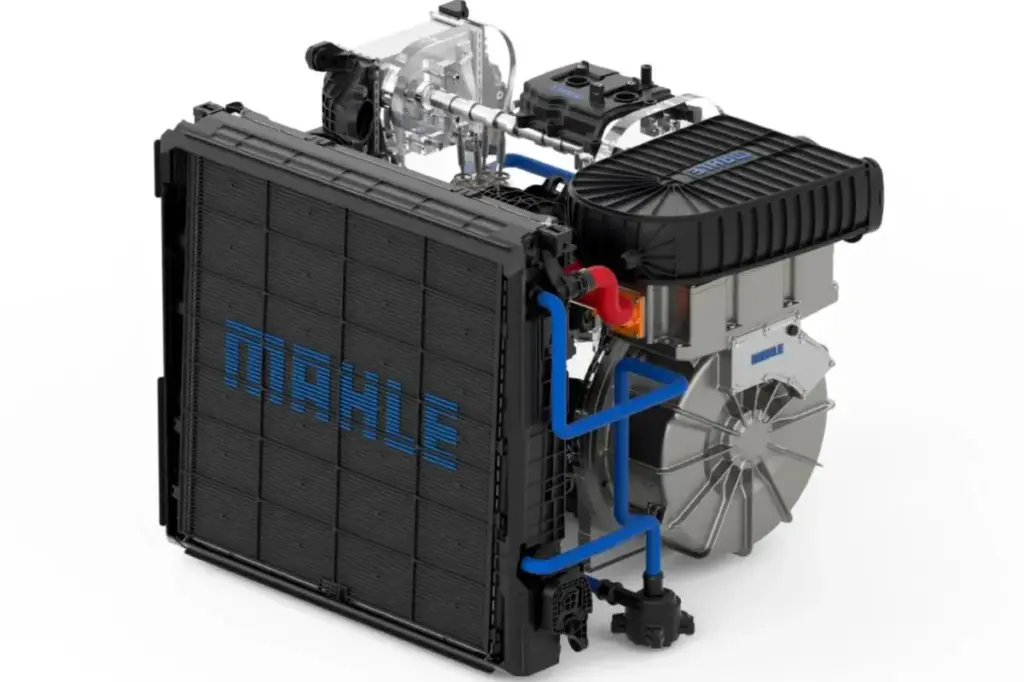
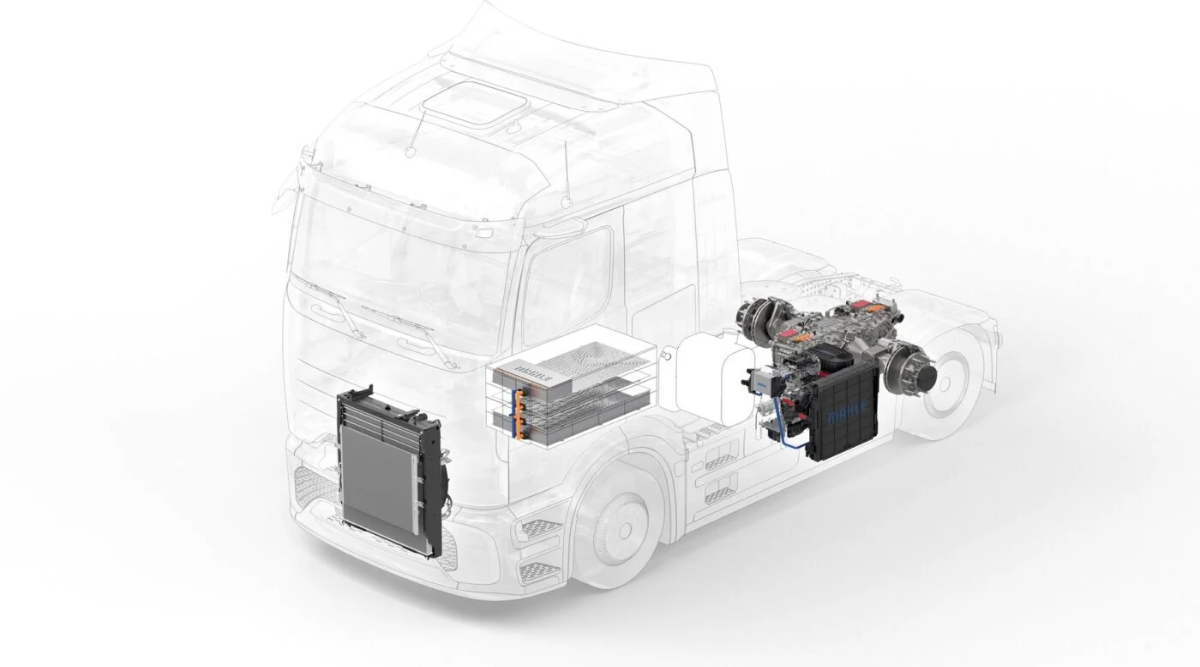
First, the company is introducing a smart Range Extender System designed specifically for heavy-duty commercial vehicles. By utilizing an ultra-efficient internal combustion generator that neatly slips into existing battery pack configurations, the system trims vehicle weight, lowers upfront battery costs, and extends total operational range past 800 kilometers (approx. 500 miles). Second, Mahle is tackling supply chain vulnerabilities with its new Contactless Transmitter (MCT) electric motor, an advanced drive system engineered entirely without rare-earth magnets.
Together, these developments represent a pragmatic bridge technology. They acknowledge that while a fully electric future remains the ultimate destination, navigating the transitional decades requires flexible engineering that respects the bottom line of fleet managers.
Detailed Chronology: The Evolution of the Range Extender Concept
The quest to marry electric propulsion with a secondary internal combustion generator is hardly new; rather, it is a recurrent theme in the history of alternative-fuel vehicle engineering. Understanding Mahle’s latest breakthrough requires looking back at how the "range extender" (REx) concept has evolved over the past two decades.
Early Consumer Implementations: The BMW i3 and Chevy Volt
When modern electric vehicles first entered commercial production, range anxiety plagued early adopters.
The BMW i3 REx (circa 2013–2014): BMW offered an optional range extender that utilized what was essentially a adapted motorcycle engine. While innovative, its real-world execution faced hurdles—particularly in the United States, where stringent regulatory definitions forced software limitations that prevented drivers from activating the generator until the battery dropped to a critical 5 percent state of charge (SoC).
The Chevrolet Volt (circa 2010–2015): General Motors approached the problem from the opposite direction, designing the Volt as a plug-in hybrid electric vehicle (PHEV) with a substantial all-electric base range (roughly 55 miles). For many daily commuters, the internal combustion engine sat dormant for months, leading to famous anecdotes of drivers needing only a handful of gallons of gasoline per year.
The Heavy-Duty Pivot: Ian Wright and Wrightspeed
As passenger cars proved the viability of electrified powertrains, visionaries turned their attention to the much heavier, harder-to-decarbonize medium- and heavy-duty sectors.
Ian Wright, one of Tesla’s original co-founders who departed following strategic disagreements with Elon Musk, founded a California-based startup called Wrightspeed. Wright specialized in retrofitting heavy commercial trucks and urban transit buses with powertrains featuring a high-efficiency gas turbine acting as a range-extending generator. Although Wrightspeed’s engineering was brilliant and highly efficient, the startup struggled to scale commercially in an industry deeply conservative about unproven powertrain architectures.
The Recent Renaissance: Horse Powertrain and Mahle
The concept has experienced a dramatic resurgence in recent years as automakers confront the reality of lagging charging infrastructure. Recently, Horse Powertrain—the global powertrain joint venture between Renault and Geely—unveiled its C15 compact engine and generator unit. Designed specifically for EV retrofits, the C15 integrates an engine, generator, and inverter into a modular block small enough to fit within existing battery electric vehicle (BEV) platforms with minimal structural modifications.
Now, Mahle is scaling this philosophy up to the heavy-duty commercial freight market, introducing an industrial-grade "emergency power unit" tailored explicitly for long-haul semi-trucks.
Supporting Context, Metrics, and Technological Architecture
Mahle’s new commercial vehicle solutions are built on precision engineering designed to overcome the strict weight, space, and cost tolerances of the freight industry.
Inside the Mahle Range Extender System
The core architecture of Mahle’s range extender revolves around a high-voltage generator driven by a compact internal combustion engine. Key performance metrics underscore its capability:
Continuous Output: 110 kilowatts (kW).
Peak Output: Up to 130 kW.
Power Density: Exceeds 7 kW per kilogram, achieved via a newly developed advanced oil cooling system that reduces overall weight and simplifies physical interfaces.
Integration Strategy: The complete system is dimensioned to fit precisely into the space normally occupied by a third of a heavy truck’s battery pack.
The Weight and Range Equation:
By replacing roughly 33% of the traditional heavy battery capacity with the range extender, a commercial truck sheds significant deadweight:
Rear Axle Load Reduction: Approximately 400 kg.
Total Vehicle Weight Reduction: Approximately 600 kg.
Total Operational Range: Exceeds 800 km total, split evenly with roughly 400 km powered purely by the remaining onboard battery and 400 km powered via the range extender.
Environmental and Thermal Management Metrics
Operating under real-world logistics conditions, a heavy truck running on Mahle’s range extender slashes carbon dioxide emissions by approximately 80 percent compared to a legacy diesel baseline. Furthermore, if fleet operators utilize renewable drop-in fuels—such as HVO100 bio-diesel—carbon emissions drop close to absolute zero.
To sustain this performance under grueling workloads, the system utilizes a heavy-duty thermal management layout featuring:
48 kW of high-temperature cooling capacity.
15 kW of low-temperature cooling capacity.
The Contactless Transmitter (MCT) Motor
Beyond the range extender, Mahle is addressing raw material supply chains and electric motor efficiency with its new Contactless Transmitter (MCT) motor, built for heavy commercial drive axles.
Rare-Earth Free: Completely eliminates permanent magnets, removing the need for environmentally sensitive rare-earth elements and saving up to 3 kg of rare-earth materials per vehicle.
Efficiency: Roughly 10 percent lighter and more efficient than standard permanently excited motors across a broader operating envelope.
Output: Delivers a peak output of 370 kW and more than 900 Nm of torque at 3,900 rpm.
VECTO Rating: Achieves an impressive 95 percent efficiency rating under the VECTO simulation cycle (the European Union’s official tool for calculating heavy vehicle fuel efficiency).
Official Statements and Industry Perspectives
Industry leaders emphasize that commercial transport cannot afford downtime, and economic viability must go hand-in-hand with sustainability mandates.
"Time and energy are limited, valuable resources, especially in road transport business. Only operators who work economically can survive," stated Arnd Franz, CEO of Mahle, outlining the core philosophy behind the company’s new product portfolio ahead of the IAA Transportation exhibition. "With electrification products, Mahle can help make heavy trucks more efficient and flexible at the same time as reducing operating expenses. This is what we will be demonstrating to our customers, international vehicle manufacturers, and fleet operators."
The friction between aggressive corporate net-zero targets and the sluggish pace of public infrastructure deployment remains a critical bottleneck. Dr. Marco Warth, Mahle’s Vice President for Research and Advanced Engineering, elaborated on how the range extender functions as a strategic insurance policy for fleet managers:
"Our range extender is a smart ‘emergency power unit’ that is activated at precisely the right moment and significantly increases the range available," Warth explained. "Our range extender is the key to disconnecting the market ramp-up of battery electric trucks from the inadequate pace of infrastructure development. If the charging station is busy, or alternative routes are called for as a result of weather conditions or congestion, and infrastructure reaches its limits, other fleets can be stranded. An e-truck with range extender just carries on. Operational availability is maintained, even under peak conditions."
Future Outlook: Navigating the Transition
The introduction of Mahle’s range extender system and rare-earth-free MCT motor highlights a pragmatic evolution within the clean tech space. While ideological purists often argue that any reliance on internal combustion—even via a bio-fuel-powered generator—compromises the purity of the zero-emission transition, logistics executives operate in a world defined by margins, delivery windows, and grid constraints.
As the heavy-duty sector grapples with the immense capital expenditures required to build out megawatt-level truck charging plazas along global freight corridors, bridging technologies provide a vital safety net. They allow freight operators to adopt electric architectures today without risking financial ruin when charging infrastructure falls short.
Looking ahead two decades, as grid capacity matures and battery energy density inevitably climbs, auxiliary combustion generators may well become historical footnotes—much like the auxiliary power units of early hybrid cars. Yet, for the immediate and medium-term future, technologies like Mahle’s range extender may prove to be the exact catalyst needed to push the electrification of heavy trucks forward past its current roadblocks.