

By The Spark Editorial Team
Published by MIT Technology Review
Executive Overview
As the global energy landscape accelerates past historical inflection points, the race to decarbonize the world economy has encountered both formidable economic headwinds and breathtaking technological leaps. This week, MIT Technology Review released its highly anticipated 2026 Climate Tech Companies to Watch list. Compiled annually by our dedicated energy and climate reporting teams, this project serves as a definitive barometer for the most promising, disruptive, and viable commercial advancements in the climate tech sector.
The 2026 roster arrives at a critical juncture. The energy transition is no longer a speculative exercise driven solely by regulatory mandates; it is deeply entangled with the explosive, insatiable power demands of the artificial intelligence revolution, shifting geopolitical alliances, and the imperative of grid reliability.
An exhaustive analysis of this year’s selected firms reveals three overarching themes defining the current moment:
- China’s Unrivaled Dominance: The People’s Republic remains the undisputed epicenter of clean energy manufacturing, renewable deployment, and next-generation battery breakthroughs.
- The Big Tech-Energy Nexus: Driven by the immense electricity requirements of AI data centers, Silicon Valley giants are aggressively backing firm, clean-power solutions, reshaping the fortunes of American climate startups.
- The Storage Revolution: As variable renewables like wind and solar flood the world’s grids, long-duration energy storage (LDES) and innovative grid-stabilization technologies have graduated from theoretical concepts to multi-gigawatt commercial realities.
This report explores the technological breakthroughs, geopolitical realities, and corporate partnerships steering our global energy future through a comprehensive examination of the companies shaping the 2026 landscape.
Detailed Chronology: The Evolution of Modern Climate Tech
To understand how we arrived at the 2026 list, it is vital to trace the rapid evolution of the climate tech sector over the past half-decade. The journey from pandemic-era stimulus optimism to today’s pragmatic, hyper-scaled industrial deployment has been marked by stark transformations.
- 2022: The early post-pandemic era was characterized by a venture capital gold rush. Technologies like carbon-dioxide-based energy storage (exemplified by firms like Energy Dome) were just emerging from the lab, with their first commercial plants still on the drawing board. At the time, skepticism surrounded whether hardware-heavy climate tech could survive macroeconomic tightening.
- 2023–2024: Geopolitical tensions heightened supply chain anxieties, pushing nations to onshore critical mineral processing and clean energy manufacturing. The US Inflation Reduction Act (IRA) spurred billions in domestic clean-tech announcements, even as Chinese manufacturers systematically scaled up production to unprecedented, market-dominant levels.
- 2025: The explosive growth of generative AI created an unforeseen crisis for grid operators: data centers began demanding continuous, baseload power at a scale not seen since the dawn of rural electrification. Climate tech startups suddenly found themselves pivoting from selling solely to traditional utilities to forging direct multi-billion-dollar alliances with Big Tech.
- 2026: Today, the sector has entered an era of consolidation and hyper-scaling. Companies that once boasted lab-scale breakthroughs are now breaking ground on massive, multi-gigawatt commercial deployments. The 2026 list reflects this hard-nosed reality: survival and success belong to those who can scale hardware rapidly, secure massive capital injections, and integrate seamlessly with the world’s industrial grids.
Supporting Context & Metrics: Key Themes of the 2026 Landscape
1. China: The Uncontested Center of the Climate and Energy Tech World
It may seem like stating the obvious, but China’s monumental, systemic dominance in energy technology is a global trend that bears repeated, rigorous examination. Home to the world’s largest and most sophisticated electrical grid, China is deploying renewable energy at a velocity that continually outpaces international forecasts.
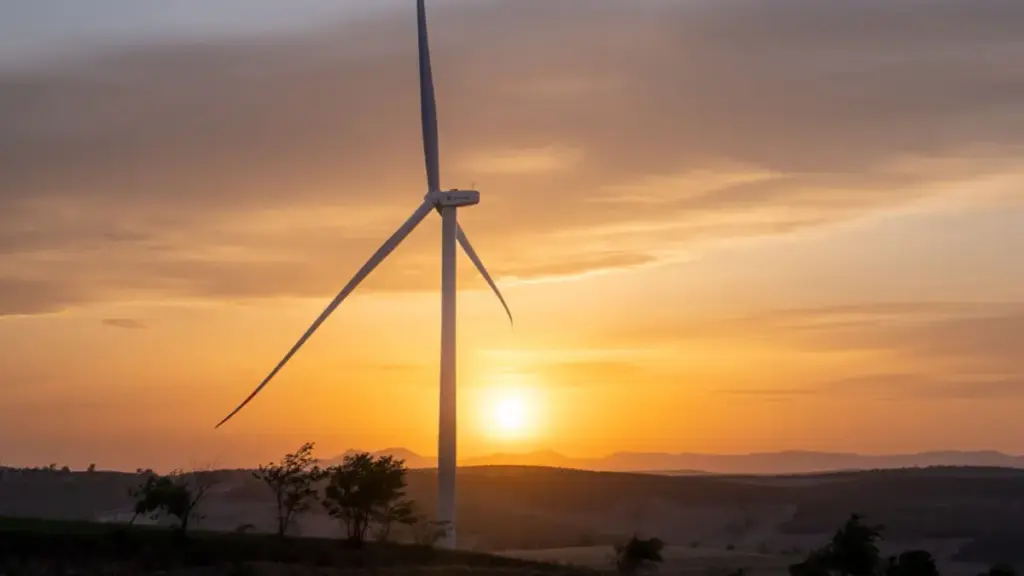
A prime driver of this unstoppable momentum is Envision Energy, a renewables titan making its second appearance on our list. Envision’s operational footprint is staggering: the company has successfully installed over 100 gigawatts of wind power worldwide, alongside more than 50 gigawatt-hours (GWh) of advanced battery storage. However, much like a growing cohort of Chinese clean-tech enterprises facing a fiercely saturated domestic market, Envision is aggressively looking outward. The company is currently executing wind and storage projects across Germany, Brazil, and Australia, with major developments slated for Vietnam.
Beyond deployment, China is spearheading fundamental technological innovation, most notably in next-generation chemistry. Industry heavyweights and specialized startups alike are locked in a high-stakes race to commercialize solid-state batteries, which promise vastly superior energy density and safety profiles compared to conventional electric vehicle (EV) batteries.
Among them, WeLion New Energy stands out. Last year, WeLion stunned the materials science community by announcing a breakthrough laboratory result: a cell achieving an astonishing 824 watt-hours per kilogram ($textWh/kg$)—more than triple the energy density of standard lithium-ion batteries currently on the market. While bridging the gap between laboratory synthesis and commercial manufacturing remains notoriously difficult, WeLion is actively hedging its bets by deploying semi-solid-state batteries. These hybrid cells offer a viable commercial stepping stone, hitting production lines faster than purely solid-state cells while still delivering a dramatic performance upgrade over legacy lithium-ion technology.
2. Big Tech and the Data Center Power Grab
The United States contingent on our 2026 list is notably lean, featuring just three domestic companies. Intriguingly, two of them have received transformative financial and strategic boosts directly from Silicon Valley behemoths desperate to secure round-the-clock power for their proliferating data centers. (The third US firm, Brimstone, is carving out a vital niche in the politically sensitive critical minerals and cleaner cement sector).
Chief among these tech-backed pioneers is Fervo Energy, a company pioneering next-generation geothermal power. By adapting horizontal drilling and hydraulic fracturing techniques pioneered by the oil and gas industry, Fervo has unlocked the ability to tap geothermal heat virtually anywhere, unconstrained by traditional hydrothermal zones. Following a blockbuster initial public offering (IPO) in May that raised $2.2 billion, Fervo is scaling rapidly with a definitive target: bringing one gigawatt of next-generation geothermal capacity online by the end of 2030.
Simultaneously, X-energy is rewriting the nuclear playbook by developing helium-cooled small modular reactors (SMRs). The inherent modularity and diminutive physical footprint of these reactors afford unprecedented operational flexibility. X-energy is currently collaborating with Amazon on a 320-megawatt reactor cluster in Richland, Washington, designed to feed clean power directly into regional infrastructure. Beyond tech campuses, X-energy holds a landmark agreement with chemical giant Dow to deploy its SMR technology directly at an industrial manufacturing plant early in the next decade, signaling a promising path forward for heavy industrial decarbonization.
3. Fortifying the Grid: The Unstoppable Rise of Energy Storage
As wind and solar generation flood grids worldwide, the imperative for robust, flexible energy storage has surpassed even the most aggressive projections from a few years ago.
Form Energy returns to our watch list for the third time, celebrated for its iron-air battery technology designed to provide cheap, multi-day, long-duration energy storage. Form is currently constructing an enormous 30-gigawatt-hour project destined to help power a Google data center. When fully operational across its phased rollout between 2028 and 2031, it is projected to be the largest battery storage installation on Earth by capacity.
Meanwhile, Energy Dome is deploying an ingenious mechanical-chemical hybrid approach: storing grid energy via compressed carbon dioxide. This thermodynamic storage method is already proving more cost-effective than lithium-ion batteries for long-duration applications exceeding 10 hours. Energy Dome has rapidly transitioned from its pre-commercial phase covered by MIT Technology Review in 2022 to active global expansion, with a pipeline exceeding 30 gigawatt-hours of plants worldwide—including a landmark project with Google in Ireland slated to go online in 2028.
Addressing the impending tidal wave of spent electric vehicles, Moment Energy is tackling the circular economy head-on. By 2030, an estimated one million EV batteries will reach the end of their automotive utility. Moment Energy’s Vancouver, British Columbia facility repurposes these retired automotive packs into robust, containerized backup power units for commercial and industrial grid support.
Official Statements and Industry Insights
The transition from early-stage venture concept to deployed industrial reality has elicited strong perspectives from industry leaders and analysts tracking the 2026 cohort.
"The energy transition is no longer constrained by our ability to invent clean technologies; it is constrained by our ability to build, finance, and integrate them at an unprecedented civil-engineering scale. The companies commanding our attention in 2026 are those that have successfully bridged the chasm between the laboratory bench and the multi-gigawatt deployment site."
— Senior Energy Editor, MIT Technology Review
Corporate partners fueling this surge echo the sentiment. Reflecting on the multi-billion-dollar investments pouring into geothermal and advanced nuclear infrastructure, technology procurement executives have emphasized that reliable, firm clean power is the singular operational bottleneck for the next decade of digital and industrial growth. Without breakthroughs in iron-air storage, compressed CO2 systems, and next-gen geothermal, corporate net-zero commitments risk stalling out against physical grid limitations.
Future Outlook: Navigating the Road Ahead
The climate tech landscape of 2026 is undeniably complex. Macroeconomic pressures, regulatory shifts, and fierce international competition mean that not every startup featured on our watch list will achieve commercial ubiquity. The path of hardware innovation is fraught with capital-intensive hurdles, supply chain bottlenecks, and regulatory friction.
Yet, looking toward the horizon, there is profound cause for optimism. The convergence of artificial intelligence and green energy has catalyzed an unprecedented influx of private capital and engineering talent into the sector. Technologies that were once dismissed as overly esoteric—such as helium-cooled nuclear reactors, iron-air storage, and compressed gas thermodynamics—are actively transitioning from blueprints into steel, concrete, and operational code.
As these companies scale their operations over the remainder of the decade, they will fundamentally reshape the architecture of global energy. They are not merely offering incremental improvements; they are building the indispensable infrastructural bedrock of a resilient, decarbonized global economy.
This article is adapted from The Spark, MIT Technology Review’s flagship weekly climate and energy newsletter. To receive deep-dive reporting, expert analysis, and exclusive industry insights directly in your inbox every Wednesday, sign up for the newsletter here.



