Executive Overview
As global energy demands surge under the dual pressures of extreme weather events, data center proliferation, and a historic transition toward vehicle electrification, traditional electrical grids face unprecedented strain. To avert rolling blackheads, avoid multi-billion-dollar infrastructure upgrades, and accelerate the integration of renewable energy sources, energy markets are turning to a decentralized solution: the Virtual Power Plant (VPP).
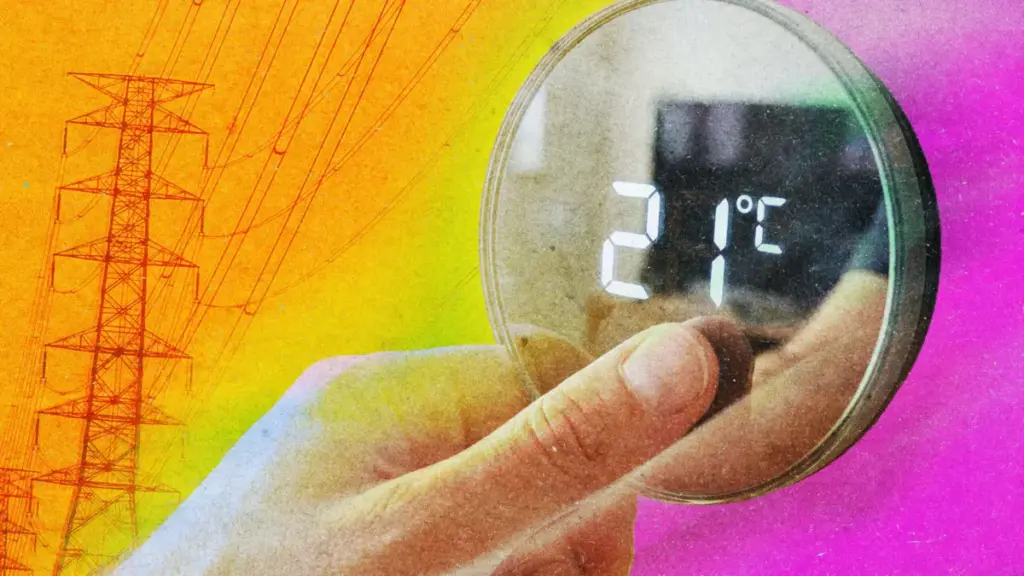
Far from being a single physical facility with towering smokestacks or colossal turbines, a VPP is an invisible, software-orchestrated network of everyday household devices. By linking millions of smart thermostats, electric-vehicle (EV) chargers, home battery storage systems, and rooftop solar arrays, utilities and grid operators can dynamically command these assets to reduce or shift their electricity consumption during peak demand hours.
The collective impact of these minor, automated adjustments is profound. When aggregated across hundreds of thousands—or even millions—of homes, VPPs operate with the scale and reliability of a traditional peaking power plant. Yet, they achieve this without burning fossil fuels. For consumers, participation offers a compelling value proposition: lower monthly utility bills, substantial cash bonuses, and direct involvement in community decarbonization. However, navigating the ecosystem requires an understanding of hardware compatibility, data privacy considerations, and the limits of household energy flexibility.
This comprehensive report explores the mechanics of virtual power plants, examines their explosive growth across the United States, analyzes expert perspectives on grid stability and equity, and provides a definitive guide for homeowners looking to participate.
Detailed Chronology: From Niche Demand Response to Mainstream Grid Infrastructure
The conceptual architecture of the virtual power plant did not emerge overnight. It is the product of decades of evolution in energy markets, consumer electronics, and software engineering.
Early Foundations: Demand Response and Manual Curtailment (Late 20th Century to 2010s)
Long before the term "virtual power plant" entered the consumer lexicon, grid operators utilized "demand response" programs. These early initiatives were predominantly targeted at industrial and commercial consumers—large factories or manufacturing plants that agreed to scale back operations during periods of peak grid stress in exchange for discounted electricity rates.
For residential customers, options were crude. Utilities deployed rudimentary load-control switches on central air conditioners, allowing remote shutoffs during peak summer heatwaves. These programs were rigid, lacked granular control, and frequently irritated consumers who experienced sudden, unannounced losses of climate control.
The Smart Home Revolution and Software Orchestration (2010s to 2020)
The proliferation of smart-home technology in the 2010s revolutionized grid management. The introduction of Wi-Fi-connected thermostats, such as those from Nest and Ecobee, laid the groundwork for bidirectional digital communication between utilities and residences.
Concurrently, specialized software companies—such as EnergyHub—emerged to bridge the gap between legacy utility infrastructure and modern consumer hardware. These platforms enabled utilities to aggregate disparate smart devices into cohesive portfolios. Rather than wholesale power cutoffs, algorithms could execute subtle, imperceptible tweaks to home climate settings.
Exponential Growth and Big Tech Investment (2020 to Present)
The 2020s have witnessed a dramatic acceleration in VPP adoption, driven by the rapid uptake of electric vehicles and home energy storage systems like the Tesla Powerwall. By 2023, the United States boasted more than 500 active VPP programs.
The landscape shifted significantly when major technology conglomerates entered the ecosystem. Most notably, companies like Google began investing heavily in VPP technology, leveraging artificial intelligence and machine learning to optimize power flows—increasingly to offset the staggering electricity consumption of modern AI data centers. Recent estimates indicate that upwards of 4 million U.S. households with smart thermostats alone are now enrolled in some form of VPP or demand-flexibility program.
Supporting Context & Metrics: How VPPs Scale and Where They Stand Today
To understand the economic and operational mechanics of virtual power plants, one must examine the metrics driving their adoption, the geographic distribution of programs, and the financial incentives offered to participants.
The Economics of Aggregation: How Small Actions Add Up
Individually, the power adjustment executed in a single home during a VPP event is negligible. Delaying an EV charge by thirty minutes or allowing a smart thermostat to drift upward by two degrees over an hour reduces a household’s load by just a few kilowatts.
However, as Seth Frader-Thompson, CEO and co-founder of EnergyHub, points out, aggregation changes the equation entirely. "When you put it together at the scale of hundreds of thousands, or millions, it has a pretty profound impact," Frader-Thompson explains. At scale, this distributed curtailment yields a megawatt-level response equivalent to "firing up a power plant"—without the associated capital expenditure, construction delays, or carbon emissions.
Financial Incentives for Participants
Utilities incentivize enrollment through a mix of upfront bonuses and ongoing rewards. According to industry data compiled by EnergyHub and allied software providers:
- Smart Thermostat Programs: Typically feature an initial sign-up bonus ranging from $50 to $150, supplemented by annual rewards of $25 to $50.
- Home Batteries and EV Chargers: Because these assets possess significantly larger electrical capacities, annual savings and performance payments can scale into the hundreds or thousands of dollars, particularly in markets with time-of-use pricing or dynamic wholesale energy rates.
Geographic Distribution and Program Maturity
VPP programs are not distributed evenly across the United States. Penetration is highest in regions characterized by stressed electrical grids, supportive regulatory frameworks, and high densities of flexible consumer technologies. Leading markets include:
- California: Driven by aggressive renewable energy mandates and frequent grid emergencies managed by the California Independent System Operator (CAISO).
- Texas: Spurred by the unique dynamics of the ERCOT deregulated market, where extreme weather events create severe price volatility.
- New England and the Mid-Atlantic: Supported by regional transmission organizations (such as PJM and ISO-New England) that actively value demand-side resources in capacity markets.
Official Statements & Expert Perspectives: Balancing Grid Benefits with Market Risks
While the operational promise of VPPs is immense, industry experts and regulatory bodies emphasize that implementation must be executed carefully to prevent unintended economic consequences and protect consumer rights.
The Regulatory View: Avoiding Perverse Incentives
Severin Borenstein, faculty director of UC Berkeley’s Energy Institute at Haas and a member of the board of governors of the California Independent System Operator, acknowledges the immense potential of VPPs while offering a cautionary perspective on program design.
"If we do it well, I think it can really be a benefit," Borenstein notes, pointing out that successful VPP deployment helps utilities avoid expensive grid infrastructure upgrades and emergency conservation measures.
However, Borenstein warns that poorly designed programs introduce market inefficiencies. If a utility fails to accurately predict baseline consumer behavior, it risks paying VPP participants for curtailing energy they never intended to use in the first place. Such predictive errors can inadvertently drive up electricity rates for nonparticipating consumers who shoulder the fixed costs of these subsidies.
The Sociological and Economic Divide
Equity remains a critical consideration in the expansion of VPPs. Dr. Sanya Carley, a professor at the University of Pennsylvania and faculty director of the Climate Center for Energy Policy, highlights that participation requires a baseline level of domestic flexibility that not all households possess.
"Some households simply do not have the flexibility to engage in one of these programs," Carley explains. Individuals working night shifts, families with intensive caregiving responsibilities or delicate health needs, and lower-income households who are already aggressively conserving energy to manage utility bills have little margin to allow automated adjustments to heating, cooling, or charging rates during peak periods.
Furthermore, the most lucrative VPP programs—those involving home battery storage systems and electric vehicles—require significant capital outlays to purchase the underlying hardware. This dynamic creates a barrier to entry, potentially concentrating the financial benefits of VPP participation among wealthier demographics unless utilities implement targeted equity programs, such as subsidized smart-device distributions for low-income communities.
The Data Privacy Debate
As VPPs scale, the data required to operate them has attracted scrutiny from digital rights organizations. EV and battery programs continuously gather metrics regarding charging status, schedule, and power draw, while smart thermostat platforms log occupancy patterns and household routines.
The Electronic Frontier Foundation (EFF) has raised concerns that such granular data could be harvested to infer private domestic behaviors—such as sleep schedules, travel habits, and appliance usage—and potentially distributed beyond utilities to third-party software vendors or device manufacturers.
Conversely, industry leaders maintain that data collection is strictly bounded. Joseph Vellone, CEO of ChargeScape, emphasizes that EV data collection focuses narrowly on "the physics and the energy of the asset itself." Echoing this, Frader-Thompson notes, "It doesn’t really matter what any one customer is doing. It matters what the average customer is doing," framing the data usage as anonymous, aggregated, and functionally limited to grid optimization.
Future Outlook: The Evolution of Grid-Integrated Assets
Looking ahead, the horizon of virtual power plants extends far beyond simple demand reduction. While the majority of consumer VPPs currently operate on a "demand response" model—meaning they temporarily throttle consumption without actively exporting stored home energy back to the grid—battery-to-grid (B2G) and vehicle-to-grid (V2G) programs are rapidly emerging.
In these advanced configurations, a homeowner’s EV or stationary battery not only charges during off-peak, renewable-rich hours but also discharges power back into the local distribution grid during critical peaks, commanding top-tier market compensation. As automaker adoption of bidirectional charging hardware increases, VPPs will transition from passive load-shedding tools into active, bi-directional power reservoirs.
Ultimately, the future of the energy system relies on transforming passive consumers into active grid participants. As Frader-Thompson observes:
"There are not that many things that you can do that directly contribute to decarbonizing the electric supply, or to improving affordability, or to improving reliability, and this is just a clearly effective way to do that. And you get paid for it."
Actionable Guide: How to Evaluate, Find, and Enroll in a Virtual Power Plant Program
For homeowners looking to monetize their smart devices and contribute to grid resilience, navigating the VPP ecosystem requires a structured approach. Here is a step-by-step guide to determining whether a VPP is right for you.
Step 1: Check Device Compatibility and Utility Offerings
The types, brands, and models of supported home hardware vary wildly across different utility territories.
- Search Wisely: Do not restrict your search exclusively to the exact phrase "virtual power plant." Utilities often use alternative nomenclature. Search your utility provider’s website along with terms such as demand response, peak rewards, connected solutions, battery storage, smart thermostat rewards, managed charging, or bring your own device (BYOD).
- Check Manufacturer Portals: Seth Frader-Thompson notes that many consumers discover these programs directly through hardware apps. Check the companion app for your smart thermostat, EV, or home battery system, or watch your email for announcements from the device manufacturer.
- Understand Enrollment Mechanics: Enrolling is often frictionless—frequently executed via a digital form, a third-party partner page, or a single click within an automotive or smart-home app, as noted by ChargeScape’s Joseph Vellone. However, eligibility rules can be hyper-specific, hinging on exact inverter brands, vehicle trims, or specific utility rate structures.
Step 2: Assess Your Household’s Energy Flexibility
Before committing, evaluate whether your daily routine can accommodate automated interventions by an external entity:
- Evaluate Your EV Habits: If your electric vehicle remains plugged in for twelve hours overnight but requires only two hours of charging to reach capacity, shifting those charging windows will be completely invisible to you.
- Analyze Battery Limitations: Home battery programs can be highly lucrative, but you must understand how frequently the utility will cycle your equipment, how much backup energy is reserved for emergency blackouts, and whether increased cycling impacts hardware warranties.
- Consider Lifestyle Constraints: If your household operates on irregular schedules, accommodates medical equipment, or requires strict climate control throughout the day, participating in aggressive curtailment programs may cause undue friction.
Step 3: Read the Fine Print and Understand Opt-Out Rules
A hallmark of a consumer-friendly VPP is the right to opt out.
- Verify whether the program allows you to easily override utility interventions—such as temporarily boosting your thermostat when hosting guests, initiating an immediate EV charge prior to an unexpected road trip, or securing your home battery reserve ahead of an approaching storm.
- Investigate data-sharing policies to ensure you are comfortable with how device usage metrics and operational schedules are handled by the utility and software intermediaries.
Step 4: Weigh the Financial and Community Value
Compensation models vary drastically. Payments may arrive as upfront sign-up bonuses, recurring bill credits, discounted hardware purchases, free EV charging credits, or performance-based export payments.
Evaluate the offer not merely by its top-line financial payout, but by the transparency of its control parameters, the ease of its opt-out mechanisms, and how effectively it aligns with your personal and community sustainability goals. Your home may never feature a smokestack or turbine, but with the right smart devices integrated into a virtual power plant, it can proudly function as a vital, distributed building block of the modern electrical grid.