Executive Overview
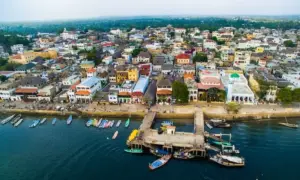
For decades, a fine layer of rust-red dust has coated the windows, roofs, and fishing trawlers of Saldanha Bay. Situated along the sheltered waters of South Africa’s West Coast, roughly 140 kilometres north of Cape Town, this deep-water natural harbour was transformed in the 1970s from a quiet, maritime-dependent village into one of the continent’s major industrial nodes. Since the opening of the Sishen-Saldanha railway and bulk export facility, more than one billion tonnes of iron ore have been extracted from the Northern Cape hinterland and shipped through this bay to global markets.
Today, Saldanha Bay stands at the precipice of an even more radical transformation. Under a sweeping national initiative known as Operation Phakisa, the South African government aims to re-engineer the region into the country’s primary oil and gas servicing and logistics hub. This strategy has already seen more than 95 percent of the ocean territory along South Africa’s nearly 3,000-kilometre coastline mapped and carved into concessions for offshore oil and gas exploration.
The government’s blueprint envisions an aggressive ramp-up of marine hydrocarbon extraction, aiming to drill 30 exploration wells over a ten-year period. Officials project that these efforts could unlock an average output of 370,000 barrels of oil and gas equivalent per day over a 20-year production cycle.
However, this ambitious vision is meeting unprecedented resistance. A growing coalition of local fishing communities, indigenous groups, environmental law organizations, and civil society actors is rising up to oppose the petrochemical drive. Opponents argue that decades of heavy industrial pollution from iron ore handling have already compromised the region’s environmental health, and that surrendering the marine ecosystem to the oil and gas industry threatens traditional livelihoods, marine biodiversity, and South Africa’s international climate commitments.
As legal challenges mount and public consultations turn contentious, Saldanha Bay has become the focal point of a national debate: can South Africa industrialize its ocean economy through fossil fuels without sacrificing its coastal communities and ecological heritage?
+-----------------------------------------------------------------------------------+
|                        OPERATION PHAKISA: OCEAN ECONOMY TARGETS                   |
+-----------------------------------------------------------------------------------+
|  COASTLINE COVERAGE      | Over 95% of ~3,000 km coastline mapped for oil & gas   |
|  EXPLORATION GOAL        | 30 offshore exploration wells within 10 years          |
|  PRODUCTION ESTIMATE     | 370,000 barrels of oil/gas equivalent per day (20-yr)  |
|  SALDANHA BAY ROLE       | Primary oil & gas logistics, repairs & servicing hub  |
|  PARALLEL SECTORS        | Marine transport, aquaculture, ocean tourism           |
+-----------------------------------------------------------------------------------+
Detailed Chronology: The Evolution of a Maritime Frontier
The Industrial Shift (1970s–2010s)
Historically, Saldanha Bay’s economic lifeblood was dictated by the rich, nutrient-dense waters of the Benguela Current upwelling system. Artisanal fishing, commercial trawling, and fish processing sustained generations of coastal families. This paradigm shifted dramatically in the mid-1970s with the construction of the Orex Line— an 861-kilometre heavy-haul rail link designed to move iron ore from the mines of Kathu in the Northern Cape directly to Saldanha Bay’s newly constructed deep-water port facilities.
While the port drove national export revenues, it introduced chronic environmental burdens. Windborne hematite dust became a permanent feature of local life, staining infrastructure and raising concerns over air quality and marine sedimentation. Despite these impacts, Saldanha’s port infrastructure laid the foundation for heavy industrial expansion, culminating in the establishment of the Saldanha Bay Industrial Development Zone (SBIDZ) in 2013.
The Inception of Operation Phakisa (2014)
In July 2014, the South African government launched Operation Phakisa ("phakisa" meaning "hurry up" in Sesotho). Modeled on Malaysia’s "Big Fast Results" methodology, the program was designed to unblock economic bottlenecks and fast-track development in strategic sectors, with the "Oceans Economy" designated as a flagship focus area.
       1976                     2013                    2014                    2020s
--------|------------------------|-----------------------|------------------------|--------
Sishen-Saldanha Rail      Saldanha Bay IDZ        Operation Phakisa       Offshore Grid Shift
& Port Operations Begin   Proclaimed              Launched by Govt.       Legal Battles & Opposition
(Iron Ore Exports)        (Industrial Hub)        (Oceans Economy)        (Offshore Exploration)
The Oceans Economy stream identified four primary growth pillars:
- Marine Transport and Manufacturing (focused on ship repair, building, and port logistics).
- Offshore Oil and Gas Exploration.
- Aquaculture Development.
- Marine Protection Services and Ocean Governance.
Under the oil and gas stream, the Department of Mineral Resources and Energy (DMRE) prioritized rapid resource assessment. By granting exploration rights and reconnaissance permits to international energy conglomerates, the state effectively opened up vast swathes of the Exclusive Economic Zone (EEZ)—from the mouth of the Orange River on the Atlantic border with Namibia, past the Cape of Good Hope, to the subtropical waters of KwaZulu-Natal along the Indian Ocean.
The Shift to Offshore Hydrocarbons (2014–Present)
As international energy majors acquired exploration blocks across South Africa’s offshore basins, Saldanha Bay was designated as the ideal support facility. Thanks to its deep-water access, existing rail links, and proximity to Atlantic exploration blocks, the port was chosen to host rig repair yards, supply vessel quays, fuel storage facilities, and hazardous waste handling stations.
Concurrently, seismic survey vessels began mapping the ocean floor using high-decibel airgun arrays. These exploration activities triggered intense public backlash, leading to grassroots resistance, legal interventions, and street demonstrations along coastal towns across the country.
Supporting Context & Technical Metrics
Operational Scale and Target Benchmarks
To understand the scope of Operation Phakisa’s oil and gas strategy, the initiative’s targets must be evaluated alongside the physical characteristics of South Africa’s ocean space.
+-----------------------------------------------------------------------------------+
|                OFFSHORE HYDROCARBON STRATEGY & ECOLOGICAL PROFILE                 |
+-----------------------------------------------------------------------------------+
| EEZ Mapping Reach        | ~95% of South Africa's offshore EEZ waters mapped/zoned  |
| Drilling Target          | 30 deep-water exploration wells over a 10-year window    |
| Anticipated Output       | 370,000 barrels per day equivalent over a 20-year span    |
| Marine Biodiversity      | Benguela Current Upwelling System (High Productivity)     |
| Legacy Infrastructure    | >1 Billion Tonnes of Iron Ore exported via Saldanha Port  |
+-----------------------------------------------------------------------------------+
The scale of this proposed industrialization contrasts sharply with the ecological value of the surrounding waters. Saldanha Bay opens into Langebaan Lagoon, a designated Ramsar site of international importance protected for its intertidal mudflats, seagrass beds, and resident bird populations.
Furthermore, the West Coast marine corridor falls within the Benguela Current Large Marine Ecosystem (BCLME). Driven by strong prevailing winds that pull nutrient-rich deep water to the surface, the BCLME is one of the most productive marine ecosystems in the world, supporting major commercial fisheries, coastal mariculture (including oyster and mussel farming in Saldanha Bay), and endangered marine life such as the African penguin and various cetacean species.
The Double-Edged Sword of Industrialization
Proponents of Operation Phakisa argue that South Africa cannot afford to leave its offshore natural resources unexploited, particularly given the country’s severe energy crisis and high unemployment rates.
                    INDUSTRIAL & ECONOMIC AMBITIONS
                                  │
         ┌────────────────────────┴────────────────────────┐
         ▼                                                 ▼
OFFSHORE ENERGY HUBS                             PARALLEL SECTORS
 ── 30 Deep-Water Exploration Wells               ── Aquaculture Expansion
 ── 370k Barrels/Day Target                       ── Marine Transport & Repair
 ── Petrochemical Logistics at Saldanha           ── Coastal & Eco-Tourism
         │                                                 │
         └────────────────────────┬────────────────────────┘
                                  │
                                  ▼
                    ENVIRONMENTAL & SOCIAL CONFLICTS
 ── Cumulative Toxic Load (Iron Dust + Petrochemical Spills)
 ── Acoustic & Disruption Threats to Fisheries & BCLME
 ── Grassroots & Legal Resistance from Coastal Communities
Critics, however, point out inherent contradictions within Operation Phakisa itself. The policy simultaneously tasks the ocean with supporting extractive fossil fuel industries alongside eco-sensitive sectors like aquaculture and ocean tourism. Environmental analysts emphasize that a major oil spill in the rough waters of the South Atlantic could inflict irreversible damage on the aquaculture farms inside Saldanha Bay, devastate local fisheries, and cripple the regional tourism economy.
Stakeholder Perspectives and Official Statements
The Government and Industry Position
Government officials and energy advocates maintain that offshore natural gas serves as a crucial "transition fuel" necessary to stabilize South Africa’s national grid as the country seeks to move away from aging coal-fired power stations.
Spokespersons for the Department of Mineral Resources and Energy and Transnet Port Terminals highlight the economic potential of transforming Saldanha Bay into a dedicated oil and gas services hub:
"The Oceans Economy represents an unexploited resource capable of generating hundreds of thousands of jobs and contributing billions of rands to national Gross Domestic Product. Unlocking our offshore gas potential is essential for securing energy sovereignty, powering domestic industry, and driving economic growth in historical coastal towns."
Port authorities emphasize that Saldanha’s deep natural channel provides a strategic advantage for deep-water rig repairs and logistics servicing that few other ports in Sub-Saharan Africa can match. From their perspective, expanding from bulk iron ore handling into oil and gas servicing is a logical, value-adding evolution of existing industrial infrastructure.
The Voice of Local Communities and Small-Scale Fishers
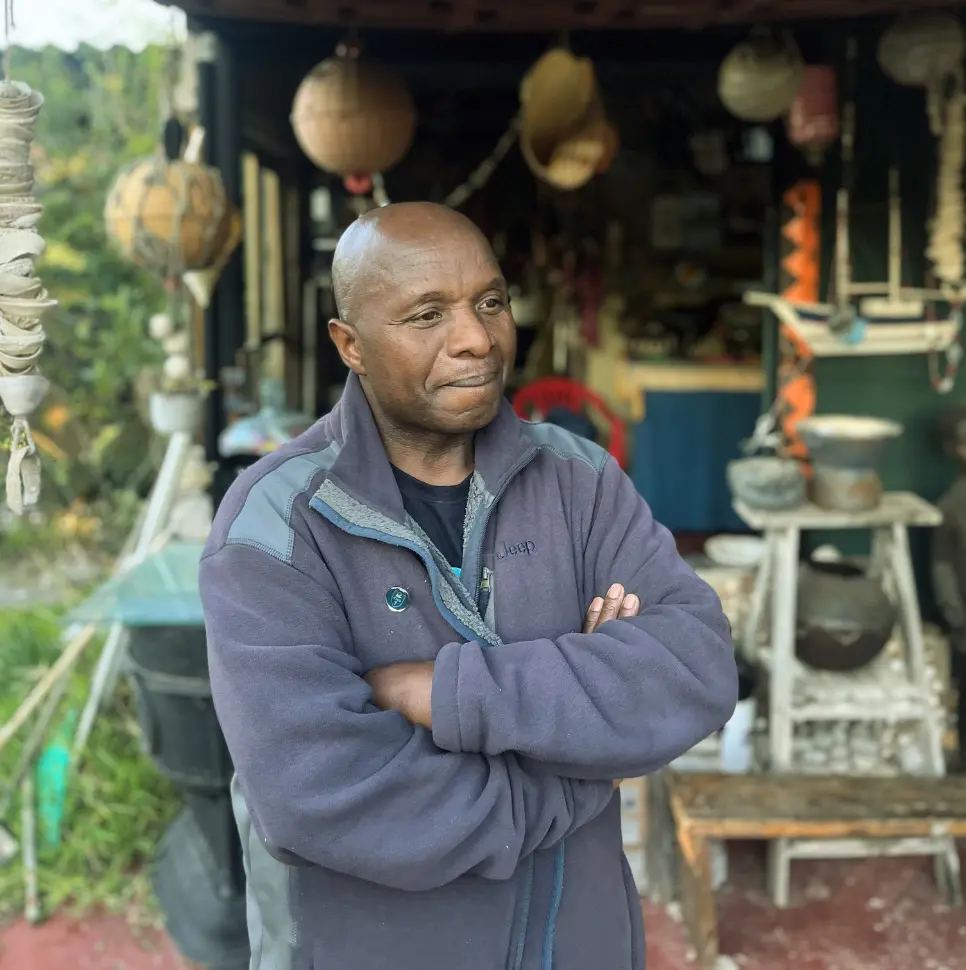
For the artisanal fishers of Saldanha Bay and neighboring West Coast villages like St Helena Bay, the prospect of offshore oil fields and increased shipping traffic represents an existential threat to their traditional way of life.
Community leaders express deep frustration over what they describe as top-down decision-making and superficial public consultation processes. Having lived alongside the red iron dust for nearly half a century, many locals view the oil and gas strategy as another layer of industrial pollution forced upon them.
Carmelita Mostert, a local community activist and representative of traditional fishing families, shared her concerns:
"We have lived with the red dust covering our homes, our laundry, and our lungs for decades. Now they want us to welcome oil slicks, underwater noise, and petrochemical factories into our bay. The sea has fed our families for generations. If they destroy the water, they destroy our culture, our heritage, and our livelihoods."
Small-scale fishers emphasize that marine seismic surveys—which utilize high-intensity sonic pulses to map sub-sea geology—disrupt fish behavior, driving stocks away from traditional fishing grounds and reducing catches for local communities.
+-----------------------------------------------------------------------------------+
|                        STAKEHOLDER PERSPECTIVES AT A GLANCE                       |
+-----------------------------------------------------------------------------------+
| STAKEHOLDER           | CORE PRIORITY            | KEY ARGUMENT                   |
+-----------------------+--------------------------+--------------------------------+
| Dept. of Mineral      | Energy Sovereignty &     | Gas serves as a necessary      |
| Resources & Energy    | Economic Growth          | transition fuel to fix grid.   |
+-----------------------+--------------------------+--------------------------------+
| Transnet & Port       | Industrial Infrastructure| Saldanha is uniquely suited    |
| Development Zones     | Optimization             | for deep-water marine services.|
+-----------------------+--------------------------+--------------------------------+
| Small-Scale Fishers   | Traditional Livelihoods  | Hydrocarbon extraction threatens|
| & Local Residents     | & Public Health          | marine life & heritage.        |
+-----------------------+--------------------------+--------------------------------+
| Legal & Civil Society | Environmental Rights &   | Projects violate constitutional|
| Organizations         | Climate Commitments      | rights and climate targets.    |
+-----------------------+--------------------------+--------------------------------+
Civil Society and Legal Challenges
Environmental law organizations, including the Centre for Environmental Rights (CER), The Green Connection, and Oceans Not Oil, have launched extensive legal challenges against offshore exploration permits across South Africa.
Legal experts argue that mapping over 95 percent of the coastline for oil and gas exploration violates Section 24 of the South African Constitution, which guarantees every citizen the right to an environment that is not harmful to their health or well-being, and obligates the state to pursue ecologically sustainable development.
Neville van Rooy, Green Development Coordinator at The Green Connection, highlighted the legal and environmental risks:
"Mapping almost our entire coastline for fossil fuel extraction while the world faces a catastrophic climate crisis is fundamentally flawed. Our coastal communities rely on healthy oceans. Pushing ahead with offshore drilling risks catastrophic environmental harm, ignores the legal requirement for meaningful consultation, and directly undermines South Africa’s international commitments to reduce greenhouse gas emissions."
Recent legal precedents have bolstered these arguments. Landmark judgments in South African courts have set aside exploration rights granted to multinational energy firms after judges found that companies failed to adequately consult affected communities and had ignored the cumulative climate and socio-economic impacts of offshore drilling.
Future Outlook and Strategic Implications
The Intersection of Energy Transition and Policy Conflicts
The contestation over Saldanha Bay highlights a central contradiction in South Africa’s economic and environmental policy. On the global stage, South Africa has secured billions of dollars in pledges through the Just Energy Transition Partnership (JETP) to decommission coal plants and invest in renewable energy infrastructure. Domestically, however, energy policy continues to push for aggressive expansion of gas and oil infrastructure.
                  SOUTH AFRICA'S DUAL ENERGY TRAJECTORY
                                    │
         ┌──────────────────────────┴──────────────────────────┐
         ▼                                                     ▼
GLOBAL CLIMATE COMMITMENTS                            DOMESTIC HYDROCARBON PUSH
 ── Just Energy Transition Partnership (JETP)           ── Operation Phakisa Oceans Strategy
 ── Decarbonization Targets & Coal Exit                ── Offshore Exploration across 95% of EEZ
 ── Renewable Energy & Green Hydrogen Investments      ── Saldanha Bay as Oil & Gas Logistics Hub
         │                                                     │
         └──────────────────────────┬──────────────────────────┘
                                    │
                                    ▼
                        FUTURE PATHWAYS FOR SALDANHA
 ── Continued Litigation & Project Delays (Risk of Stranded Assets)
 ── Shift Toward Green Hydrogen & Offshore Renewable Infrastructure
 ── Heightened Regulatory Scrutiny & Mandatory Community Consent
As a result, Saldanha Bay sits at a critical crossroads. The future of the region’s ocean economy will likely be defined by three key dynamics:
- Protracted Legal Battles: Environmental groups and coastal communities will continue to challenge offshore exploration permits in court. Future oil and gas developments will face rigorous judicial review, strict requirements for meaningful public consultation, and compulsory assessments of cumulative ecological impacts.
- The Threat of Stranded Assets: As global financial institutions shift capital away from fossil fuels and toward green technologies, large-scale offshore gas infrastructure projects face increasing risk of financial obsolescence. Infrastructure built for oil and gas servicing at Saldanha Bay could turn into costly stranded assets if global energy demand shifts rapidly toward renewables.
- Alternative Economic Pathways: Activists and environmental economists advocate for a pivot toward sustainable marine economies. Given Saldanha’s exceptional wind and solar resources, deep-water port, and existing rail infrastructure, the region is uniquely positioned to become a green hydrogen and renewable energy servicing hub, rather than a focal point for hydrocarbon logistics.
Conclusion
Saldanha Bay’s journey from a quiet fishing village to an iron ore export hub—and now to a contested focal point for offshore oil and gas—reflects the complex choices facing developing nations in an era of climate change. As red iron dust continues to settle on the shores of the West Coast, the battle over the future of South Africa’s oceans will determine whether Saldanha Bay becomes a legacy petrochemical hub or a pioneer of a sustainable, community-centered ocean economy.