

Executive Overview
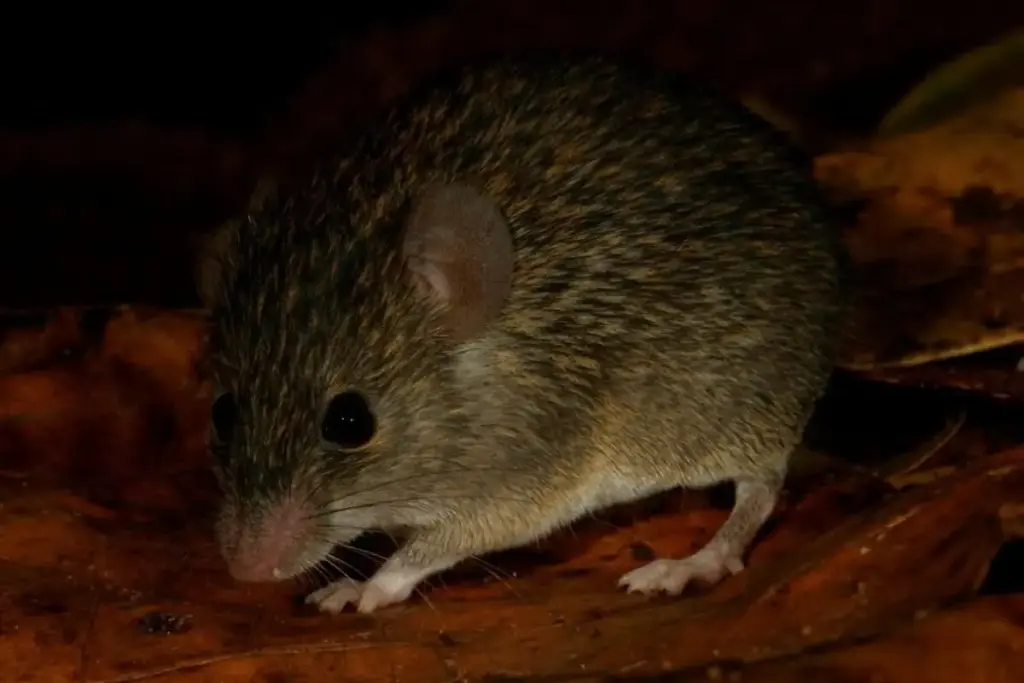
In the misty shadows of the Knuckles Mountain Range in central Sri Lanka, where jagged peaks pierce the tropical skies and emerald forests bleed into terraced paddy fields, a decades-old biological mystery has finally been solved. Science has officially welcomed a new mammal to its ranks: Mus dumbara, commonly known as the Dumbara spiny mouse.
First captured in March 2004 along the precarious boundary dividing agricultural land from dense forest in the village of Puwakpitiya, two tiny, enigmatic female mice baffled researchers. They resembled Mayor’s mouse (Mus mayori), an endemic highland species, yet possessed distinct morphological deviations—chiefly in tail length and cranial architecture. Standard rodent baits like peanut butter proved completely ineffective on these elusive creatures, forcing field researchers to adapt by using local culinary intelligence: pieces of burnt coconut.
It has taken more than twenty years of meticulous morphological study, modern genetic sequencing, and arduous field expeditions to confirm what researchers long suspected. Published in the journal ZooKeys, the formal description of Mus dumbara expands Sri Lanka’s inventory of native murid rodents to 16 species, six of which are found nowhere else on Earth. Yet, this long-awaited discovery also sounds a sobering alarm. Known from only a single valley within a UNESCO World Heritage site, the Dumbara spiny mouse faces severe, compounding pressures from habitat fragmentation, agricultural encroachment, and climate change, leaving conservationists to question whether this newly minted species is already sliding toward extinction.
Detailed Chronology: A Two-Decade Quest for a Phantom Rodent
The story of Mus dumbara began not in a sterile laboratory, but in the humid, cooling dusk of a Sri Lankan evening in early 2004. Suyama Boyagoda, then a Ph.D. student researching local shrews (and now head of the Department of Zoology at the Postgraduate Institute of Science, University of Peradeniya), teamed up with evolutionary biologists Madhava Meegaskumbura and Mohammed Bahir to survey the small terrestrial mammal communities fringing the northern edge of the Knuckles Mountain Range—regionally recognized as the Dumbara mountains.

The field team deployed standard small-mammal trapping protocols: drift fences designed to funnel ground-dwelling fauna into pitfall traps, alongside box-style Sherman live traps. Initially, they baited the traps with peanut butter, the global standard for rodent surveys. The local mice, however, ignored it entirely. Adapting to local ecological instincts, the researchers pivoted to pieces of burnt coconut, a scent profile familiar to the agrarian mosaic of the region.
The pivot worked. On March 11, 2004, a pitfall trap yielded a small mouse unlike any standard regional specimen. Six days later, a second female was captured in a baited trap. Measuring no larger than a child’s palm, both specimens featured a fulvous-gray pelage laced with spiny guard hairs and a slender, naked tail significantly longer than their head-and-body length.
Despite these initial anomalies, the trail quickly went cold. Driven by a desire to secure additional specimens and understand population dynamics, Boyagoda returned to Puwakpitiya in 2014 and 2015. Over the course of these follow-up expeditions, researchers invested a staggering 1,900 trap-nights using identical methodologies in the exact same micro-habitats. Not a single matching mouse was found.
For twenty years, the specimens sat in scientific limbo. It was only through exhaustive anatomical comparisons—revealing fingernail-thin skulls and a distinct supraorbital ridge above the eye socket—paired with rigorous DNA barcoding that the truth emerged. Genetic analysis revealed an astonishing 11.7% genetic divergence between Mus dumbara and its closest phylogenetic relatives in Sri Lanka, Mus fernandoni and Mus mayori. On that genetic and morphological bedrock, Mus dumbara was finally erected as a species new to science.

Supporting Context & Metrics: The Biological Crucible of the Knuckles Range
To understand why Mus dumbara evolved into a distinct species, one must examine the evolutionary geography of the Indian subcontinent and its satellite island. Sri Lanka and India’s Western Ghats form a unified, globally recognized biodiversity hotspot. During Pleistocene glacial periods, temporary land bridges across the shallow Palk Strait periodically connected the island to the Indian mainland. However, these connections were transient, allowing waves of migration followed by long periods of geographic isolation.
This isolation acted as an evolutionary crucible, particularly within Sri Lanka’s wet-zone and montane forests, where micro-climates foster extraordinary rates of endemism. While amphibians, reptiles, and freshwater crabs have seen a renaissance of taxonomic discoveries over the last few decades, mammalian discoveries remain rare. Large mammals are easily spotted and cataloged, while small terrestrial mammals—cryptic, nocturnal, and often superficially similar—frequently escape notice.
Within this landscape, rodents occupy vital ecological roles that belie their unassuming, often pest-aligned public reputations. Small mammals form the foundation of forest food webs, serving as a critical prey base for apex avian predators like the black eagle (Ictinaetus malaiensis), alongside various owls, snakes, and mammalian carnivores. Without them, trophic stability collapses.
Yet, metric realities highlight the fragility of these systems. Mus dumbara belongs to the subgenus Pyromys and is currently known from a single isolated valley in the Knuckles Mountain Range. This narrow distribution creates extreme vulnerability. The Knuckles Range, though designated as a UNESCO World Heritage site, is not an impenetrable fortress. Forest margins are constantly nibbled away by road construction, agricultural land clearance, and the creeping expansion of highland plantations.

+--------------------------------------------------------------------------+
|                       SRI LANKAN RODENT DIVERSITY                        |
+----------------------------------+---------------------------------------+
| Total Rat and Mouse Species      | 16                                    |
+----------------------------------+---------------------------------------+
| Endemic Species (Found nowhere   | 6                                     |
| else on Earth)                   | 3                                     |
+----------------------------------+---------------------------------------+
| Key Spiny Mouse Species          | M. dumbara, M. fernandoni, M. mayori  |
+----------------------------------+---------------------------------------+
| Genetic Divergence of M. dumbara | >11.7% from closest relatives         |
+----------------------------------+---------------------------------------+
Official Statements and Expert Perspectives
The formal description of Mus dumbara, co-authored by Suyama Boyagoda, Madhava Meegaskumbura, and Kithsiri Manamendra-Arachchi, highlights deep systemic gaps in tropical mammalian research.
"The Dumbara spiny mouse looks elusive," lead author Suyama Boyagoda remarked, reflecting on the immense difficulty of recapturing the animal after its initial discovery. She noted that restricted elevational ranges combined with modern pressures create a volatile survival equation: "Given the limited information currently available, these pressures could be compounded by climate change, which may reduce the availability of suitable habitat and potential refuges."
Co-author Madhava Meegaskumbura, an evolutionary biologist at Guangxi University in China who collected the first specimen alongside Mohammed Bahir, emphasized the historical bias in tropical field biology.
"In recent decades, scientists have described numerous new species of frogs, lizards, and freshwater crabs. Mammals, however, have produced comparatively few such discoveries, partly because they tend to be larger and more readily detected," Meegaskumbura said. He warned that until extensive surveys prove otherwise, Mus dumbara must be treated with cautious urgency: "The species may occur in other forest fragments that have not been surveyed, or survive at very low densities, or may have experienced a decline since the first specimens were collected."

Echoing these concerns, Sampath Goonatilake, a small-mammal researcher with IUCN Sri Lanka who was not directly involved in the study, pointed to the structural challenges facing mammalogists in South Asia.
"Very little research has been carried out on Sri Lanka’s small mammals, and several important gaps remain, where we need extensive island-wide surveys to understand their distributions and habitat associations," Goonatilake stated. He identified institutional and financial barriers as primary culprits: "Studying small mammals is demanding and expensive, as researchers may have to spend weeks or even months in forest habitats to obtain enough samples, creating substantial logistical and fieldwork costs."
Furthermore, Goonatilake highlighted a severe shortage of up-to-date field identification guides, which stunts local academic interest. "One of the biggest needs is a comprehensive taxonomic revision, using both classical taxonomy and modern phylogenetic approaches, to clarify the identity, classification, and evolutionary relationships of the species we currently recognize."
Future Outlook: Protecting the Unseen Wilderness
The unearthing of Mus dumbara is simultaneously a triumph for Sri Lankan taxonomy and a stark reminder of how much biodiversity remains undocumented in plain sight. As human populations expand and climate disruption accelerates, the margins between human agriculture and wild forests are tightening, squeezing specialized endemics into ever-smaller ecological islands.

Moving forward, safeguarding species like the Dumbara spiny mouse requires a paradigm shift in conservation prioritization. Charismatic megafauna—such as leopards and elephants—frequently capture public sympathy and secure large-scale funding, but ecosystem health relies equally on the quiet, subterranean labor of rodents, shrews, and insects.
Experts agree that addressing these blind spots will demand sustained, collaborative funding frameworks. Comprehensive island-wide research programs spanning classical morphology, field trapping, and cutting-edge genomic sequencing will cost millions of rupees, necessitating robust partnerships between Sri Lankan universities, government bodies, local museums, and international conservation agencies.
Until such resources are mobilized and broad surveys are conducted across the island’s remaining wet-zone and montane fragments, Mus dumbara stands as both a fragile symbol of evolution’s ingenuity and a cautionary tale. It is a ghost from the Dumbara valley—found once, lost to follow-up for twenty years, and now introduced to a world that must act quickly to ensure it does not vanish forever.



