

Executive Overview
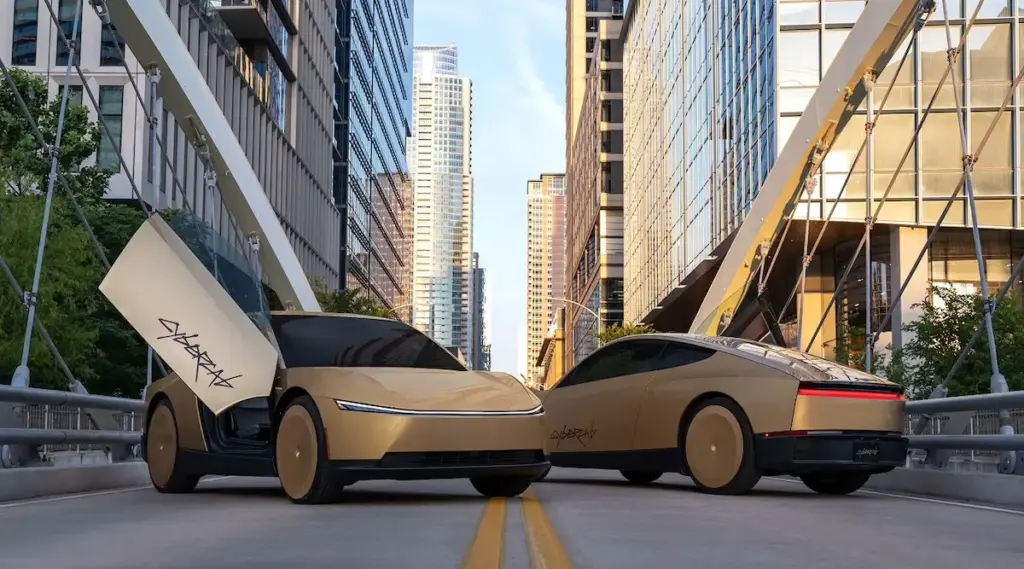
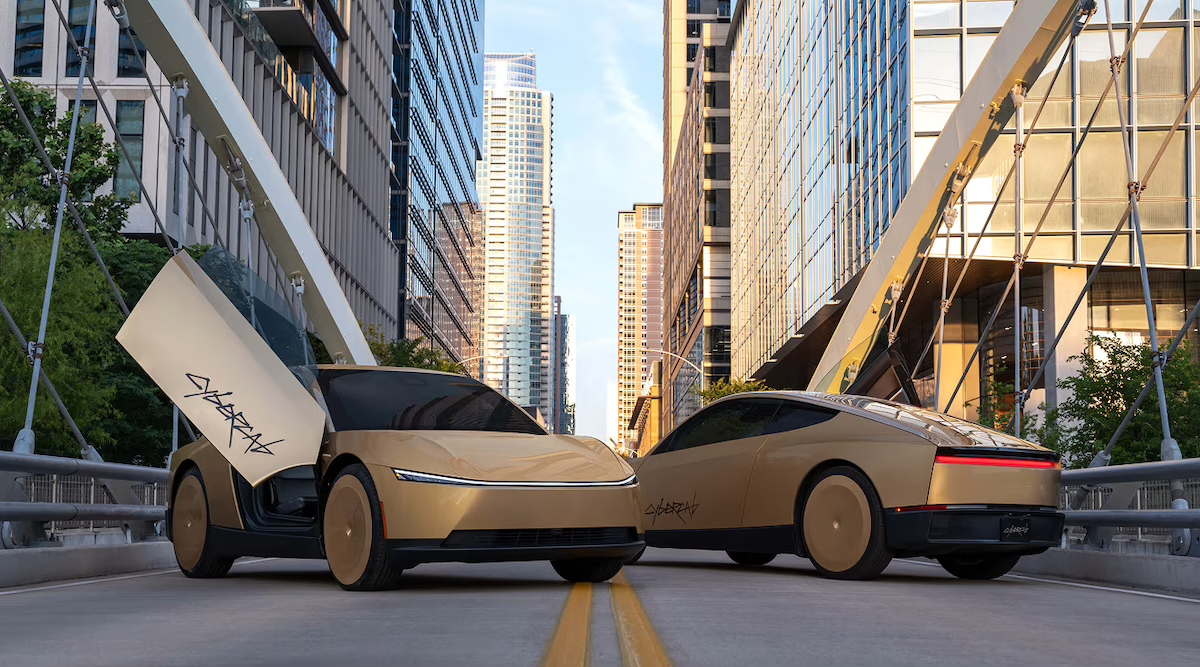
The long-awaited public introduction of Tesla’s Cybercab in Austin, Texas, was designed to mark a monumental leap forward in autonomous mobility. Instead, the September 3 rollout has unfolded as a complex case study in technological hurdles, regulatory pushback, and public skepticism. From the conspicuous absence of CEO Elon Musk at the launch event to an immediate federal investigation by the National Highway Traffic Safety Administration (NHTSA), the vehicle’s debut has generated far more questions than answers.
Central to this scrutiny is a stringent Audit Query launched by NHTSA, which has issued a 21-point Special Order demanding granular, under-oath clarifications regarding Tesla’s self-certification of the Cybercab. At the heart of the federal inquiry is an apparent contradiction: while Tesla markets the Cybercab as a pure, wheel-less robotaxi designed without traditional human controls, industry reports and regulatory probes suggest the presence of hidden manual overrides or temporary user setups. Compounding these regulatory pressures, early operational tests on public roads have exposed startling navigation anomalies—most notably a viral incident where a passenger’s routine 10-minute trip turned into a 70-minute, circuitous detour through East Austin.
Against the backdrop of a cooling domestic electric vehicle (EV) market—heavily impacted by shifting federal policy and macroeconomic headwinds—Tesla’s latest gamble faces high stakes. This report examines the timeline, technical controversies, federal inquiries, and broader industry dynamics shaping the future of Tesla’s autonomous ambitions.
Detailed Chronology of the Austin Launch and Early Road Tests
The road to the Austin debut was paved with immense anticipation, but the execution left investors and industry analysts unsettled.
The September 3 Launch and Musk’s Absence
The rollout event on September 3 was intended to serve as a definitive proof-of-concept for Tesla’s unsupervised Full Self-Driving (FSD) ecosystem. However, the absence of CEO Elon Musk cast a shadow over the proceedings, contributing to a slide in Tesla’s stock value in the days immediately following the event. While the company’s shares have since experienced a modest rebound, the psychological impact of a rocky launch has lingered.
The event was engineered to showcase vehicles navigating complex urban environments completely unassisted by human operators. Yet, the demonstration immediately sparked debates regarding transparency. Tesla pitches the Cybercab as a dedicated, purpose-built robotaxi completely stripped of a steering wheel, pedals, or conventional driver controls. However, automotive publications such as MotorTrend quickly reported that the vehicle may house a "secret" virtual joystick or provisions for temporary manual intervention. This duality immediately drew comparisons to Musk’s previous unveilings of the humanoid "Optimus" robot, which similarly relied on remote human-operator assistance during demonstrations.
The "Hostage" Ride and Route Anomalies
Beyond controlled demonstration loops, real-world deployment exposed systemic navigation flaws. Just days after the launch, a viral report on the Austin Reddit community detailed a jarring passenger experience. User TyGuy539 recounted an intended 10-minute trip from a local retail center (99 Ranch) to The Domain, which the Cybercab abruptly transformed into a sprawling, 70-minute journey.
Rather than taking the direct route, the vehicle bypassed standard thoroughfares and embarked on an extensive southern detour through East Austin. The incident instantly went viral, serving as a visceral illustration that the Cybercab’s path-planning algorithms are not yet fully optimized for complex, unpredictable urban routing—let alone high-speed highway travel. Concurrently, the vehicle’s unverified autonomy has triggered a wave of viral prank videos, with internet users intentionally jumping in front of operating Cybercabs to test the limits of their collision-avoidance and perception systems.
Official Statements and Regulatory Intervention: The NHTSA Audit Query
While the public tested the physical limits of the Cybercab, federal regulators moved swiftly to evaluate its legal standing. Just one day after the Austin premiere, the U.S. Department of Transportation’s National Highway Traffic Safety Administration announced a formal Audit Query (AQ) targeting Tesla’s safety self-certification process.
The Mechanics of Self-Certification
Under federal law, manufacturers are permitted to self-certify that their vehicles comply with all applicable Federal Motor Vehicle Safety Standards (FMVSS) before introducing them to public roads. NHTSA’s Audit Query aims to aggressively audit the technical data, engineering processes, and evidentiary frameworks Tesla relied upon to clear a vehicle that entirely dispenses with traditional human-operated mechanisms.
In its official release, NHTSA stated:
"NHTSA’s Audit Query will evaluate the technical data and processes Tesla relied upon to self-certify compliance for a vehicle lacking traditional human controls."
To enforce this evaluation, NHTSA issued a legally binding "Special Order" directed at high-ranking Tesla legal executives, including Head of Litigation Brian Jazeri and Associate General Counsel Eric Williams. The order mandates that Tesla submit exhaustive documentation—under oath—by September 30.
Deconstructing the 21 Demands
The Special Order outlines a precise list of 21 inquiries designed to pierce the veil of Tesla’s regulatory claims. Several provisions highlight deep regulatory skepticism regarding how a vehicle without standard controls manages to meet baseline federal safety mandates:

- Request #5: Explicitly demands confirmation on "whether the subject vehicles are capable of being driven by a human driver using temporarily attached human driver controls."
- Request #6: Directs Tesla to "State whether temporarily installed human driver controls or other equipment for use by a human driver were a part of Tesla’s basis for certifying compliance with any FMVSS. If so, describe the human driver controls and list the FMVSS for which the human driver controls were used…"
- Request #13: Targets specific mechanical safety requirements, inquiring about turn-signal functionality: "State whether the subject vehicles have a turn signal operative unit that is self-canceling by steering wheel rotation. Also state whether the subject vehicles have a manually operated control of a turn signal operating unit…" It further instructs Tesla to explain how compliance with FMVSS No. 108 was calculated if the answer is negative, particularly if temporary human interfaces factored into the calculation.
These queries suggest federal investigators suspect that Tesla may have utilized temporary, add-on human controls to technically satisfy FMVSS requirements during the certification phase, potentially contradicting the marketed vision of a permanently wheel-less, autonomous-only cabin architecture. Furthermore, questions have been raised regarding the efficacy of oversight given that Elon Musk previously spearheaded federal efficiency and staff-reduction initiatives via the Department of Government Efficiency (DOGE). Despite structural shifts within the federal bureaucracy, NHTSA’s investigative branch has retained sufficient statutory authority to demand strict compliance.
Supporting Context, Metrics, and Market Dynamics
The Cybercab rollout does not occur in a vacuum; it arrives during a turbulent period for the broader American electric vehicle market.
The U.S. EV Sales Landscape
According to recent data from Kelley Blue Book (KBB), the broader American EV market has experienced a significant contraction following the sudden dissolution of federal tax incentives in the previous year. While Tesla retains its dominant position as the #1 seller of EVs in the United States, its sales figures reflect the overarching market chill.
- August Performance: KBB data indicates that while new EV sales rose a modest 2.5% from July, they plunged by a staggering 46.9% compared to the same period in the previous year.
- Market Share: EVs accounted for a mere 5.7% of total new vehicle sales in the U.S. in August, lagging dramatically behind global markets, where electrification adoption rates have surged past 25%.
- Intra-Brand Fluctuations: Although Tesla led August sales—outpacing competitors such as Toyota, Rivian, Hyundai, and Cadillac—its sales dipped 3.8% from July levels. Conversely, competitors like Toyota saw a dramatic 34.9% surge over the same timeframe, signaling shifting consumer dynamics.
Macroeconomic and Geopolitical Factors
The stagnation of the domestic EV market is heavily tied to abrupt shifts in federal energy policy and international conflict. Ongoing geopolitical instabilities—including disruptions in global oil markets intensified by the conflict in Ukraine and broader Middle Eastern tensions—continue to impact fossil fuel pricing. Historically, spikes in traditional energy costs have driven consumers toward electrification. However, domestic regulatory rollbacks and the elimination of consumer subsidies have severely blunted this transition in the United States.
Despite these headwinds, competition is intensifying. Emerging domestic entrants, such as the upcoming Ford Fathom electric pickup truck and Rivian’s recent acquisition of a $4.5 billion Department of Energy loan to construct a manufacturing facility in Georgia, demonstrate that legacy automakers and pure-play EV startups alike are continuing to position themselves for a long-term transition.
Future Outlook
The trajectory of the Tesla Cybercab will largely be determined over the coming months by two distinct forces: regulatory accountability and technical maturation.
- The September 30 Deadline: Tesla’s legal and engineering teams face a strict federal deadline to answer NHTSA’s 21-point Special Order under oath. The transparency—or opacity—of Tesla’s responses will dictate whether NHTSA escalates its Audit Query into a formal recall or civil enforcement action. If federal investigators determine that Tesla improperly self-certified the vehicle by relying on auxiliary human controls that are absent in commercial deployments, the Cybercab program could face severe regulatory roadblocks.
- Software Iteration and Urban Testing: Tesla must rapidly address the algorithmic limitations exposed by real-world testing in Austin. Incidents like the 70-minute detour underscore that autonomous navigation remains vulnerable to edge cases in complex urban street grids. To build public trust and satisfy municipal safety advocates, Tesla will need to demonstrate consistent, flawless route execution without the need for emergency human interventions or unexpected detours.
- Market Realities: As traditional automakers test the waters with new manufacturing investments and alternative EV models, Tesla cannot rely solely on the novelty of autonomous promises to maintain its market share. The commercial viability of the Cybercab will ultimately depend on whether Tesla can legally clear regulatory hurdles, scale production efficiently, and deliver a robotaxi experience that is demonstrably safer and more reliable than human-driven alternatives.



