Executive Overview
As the global community faces unprecedented ecological challenges, the digital preservation of our planet’s biological history has never been more critical. Enter the Biodiversity Heritage Library (BHL)—the world’s largest open-access digital literature repository for biodiversity literature and archives. Operating as a decentralized powerhouse of natural history and botanical information, BHL recently announced a pivotal structural expansion designed to safeguard its future.
In a decisive move following its transition into an independent, community-governed global consortium, the BHL Members’ Council has officially welcomed Amanda Boczar and Leora Siegel to two newly created positions on its Executive Committee. Boczar steps into the role of BHL’s inaugural Strategic Development Officer, while Siegel takes her place as the committee’s first Member-at-Large.
Formally approved by BHL members in June 2026 and enacted in July, these strategic appointments arrive at a monumental crossroads for the consortium. Having recently migrated to a distributed operational model with administrative backing from the Council on Library and Information Resources (CLIR), BHL is actively crafting its next strategic roadmap. By bolstering financial oversight, accelerating fundraising capabilities, and expanding representation to include affiliate institutions, these new governance structures are poised to propel BHL into a resilient and self-sustaining era.
Detailed Chronology: A Transformative Era for BHL Governance
To understand the weight of these appointments, one must examine the rapid and deliberate evolution of BHL’s operational framework over recent years.
The Prelude to Independence (2024)
For years, the vast architectural and logistical machinery of the Biodiversity Heritage Library operated under tightly knit institutional umbrellas. However, the shifting tides of digital information management and the growing demand for borderless, open-access science necessitated a structural metamorphosis. A major milestone occurred in June 2024 during the BHL Annual Meeting in Chicago, hosted by the Chicago Botanic Garden. Here, member institutions began seriously strategizing around long-term independence, operational sustainability, and community-driven models that could insulate the library from institutional volatility.
The Technical and Administrative Pivot (January – June 2026)
The groundwork for BHL’s current structural era cemented rapidly in early 2026. In January 2026, the University of South Florida (USF) Libraries officially joined BHL not only as a member institution, but also as a critical strategic partner for the consortium’s technical infrastructure.
Shortly thereafter, BHL completed its landmark administrative transition to a distributed operational model housed within the Council on Library and Information Resources (CLIR). This move granted the consortium unprecedented operational flexibility, allowing it to act as a truly independent, global entity.
Recognizing that autonomy requires robust internal governance, the BHL Members’ Council voted in June 2026 to create two entirely new leadership positions: Strategic Development Officer and Member-at-Large. Because official amendments to the BHL Bylaws must undergo formal ratification at an Annual Meeting, these roles were established provisionally for the interim period, with full ratification slated for the 2027 BHL Annual Meeting.

Induction and Committee Integration (July 2026 – Present)
By July 2026, Amanda Boczar and Leora Siegel officially assumed their posts on the BHL Executive Committee. Their integration was celebrated across the international library science community as a masterstroke of inclusive leadership, merging technical acumen, financial oversight, and deeply rooted community representation. Today, both leaders are heavily embedded in shaping BHL’s future, co-leading strategic planning writing groups dedicated to collection development, discovery, and operational sustainability.
Supporting Context & Metrics: The Anatomy of Modern Biodiversity Stewardship
To fully appreciate the scope of Boczar and Siegel’s new roles, one must examine the staggering scale of the Biodiversity Heritage Library and the unique vulnerabilities facing open-access digital repositories today.
The Scope of BHL
- Global Reach: BHL serves as a centralized consortium uniting natural history libraries, botanical libraries, and research institutions from around the globe. It provides free, public access to centuries of published literature documenting Earth’s biodiversity.
- Massive Digital Collections: Encompassing millions of pages of digitized historical text—ranging from 15th-century taxonomic treatises to contemporary ecological field notes—BHL is an irreplaceable foundational resource for modern taxonomists, conservation biologists, historians, and climate scientists.
- The Technical Challenge: Maintaining petabytes of high-resolution imagery, searchable text, and persistent identifier infrastructures requires immense, continuous financial investment and cutting-edge technical partnerships, such as BHL’s collaboration with the University of South Florida Libraries.
Why Strategic Development is Imperative
Historically, digital humanities and open-access scientific archives have relied heavily on fluctuating institutional grants, philanthropy, and government funding. As BHL transitions into an independent global consortium under its CLIR administrative home, achieving long-term financial sustainability is the ultimate hurdle.
The creation of the Strategic Development Officer role directly addresses this vulnerability. By embedding proactive financial oversight, grant-seeking strategies, and coordinated fundraising priorities directly into the Executive Committee, BHL is building an institutional armor capable of weathering shifting economic climates.
Bridging Members and Affiliates
Equally important is the creation of the Member-at-Large position. Within BHL’s ecosystem, institutions are bifurcated into Members and Affiliates. Historically, governance pathways heavily favored full member institutions. By opening the Member-at-Large position to staff from both Member and Affiliate organizations, BHL has democratized its leadership pipeline. This ensures that smaller or specialized institutions—such as botanical gardens and specialized research stations—have a direct voice at the highest levels of executive decision-making.
Meet the Leaders: Profiles in Digital Stewardship
The success of any organizational restructuring depends entirely on the caliber of the individuals chosen to pilot it. In Amanda Boczar and Leora Siegel, the BHL Executive Committee has gained two extraordinary visionaries whose professional backgrounds mirror the precise needs of the consortium.
Amanda Boczar: Inaugural Strategic Development Officer
Amanda Boczar serves as the Associate Director of Digital Initiatives at the University of South Florida Libraries. Since 2020, Boczar has been a driving force behind the digital curation of Florida’s unique environmental and natural history collections.
Her relationship with BHL deepened significantly when USF joined the consortium in January 2026. Demonstrating immediate dedication, Boczar plunged headfirst into consortium-wide initiatives, currently co-leading the Collection Development and Discovery strategic planning writing group alongside Emily Benton of the University of Illinois Urbana-Champaign.

In her new capacity as Strategic Development Officer, Boczar will spearhead financial oversight, fundraising campaigns, and development initiatives on behalf of the Executive Committee. Working in tandem with the BHL Secretariat, she will target emerging grant landscapes to secure vital funding streams. Reflecting on her appointment, Boczar shared:
"I have been working with digital collections related to Florida’s environment and natural history since 2020 and have always looked to BHL as a model for global outreach and community. After USF joined BHL as both a member and a strategic partner for its technical infrastructure in January 2026, I knew I wanted to really dive in and make the most of the opportunity. It has been such a privilege to engage with the other members and affiliates, and I am very honored to have been selected for this new role to help sustain the organization for many more years to come."
Leora Siegel: The First Member-at-Large
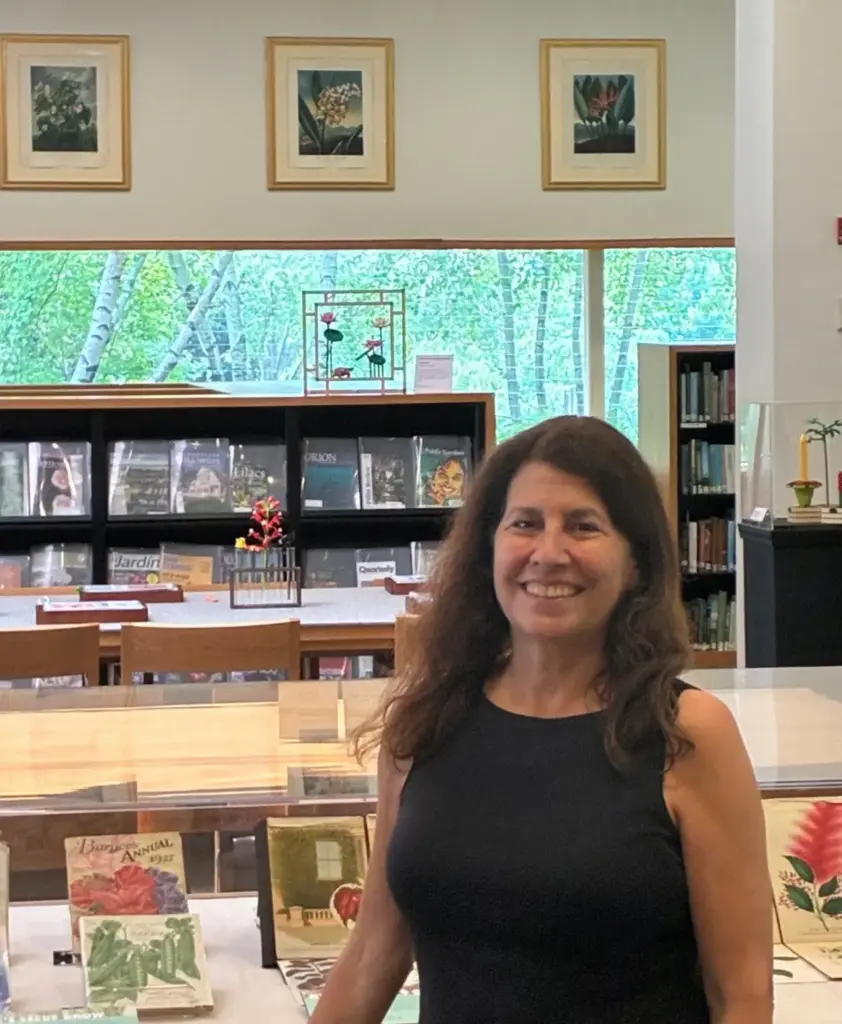
Leora Siegel brings decades of prestigious library leadership to her new post as Member-at-Large. As the Senior Director of the Lenhardt Library at the Chicago Botanic Garden—a long-standing BHL Affiliate institution—Siegel is a respected authority in botanical information stewardship and collaborative digital library frameworks.
Siegel’s administrative footprint within BHL is profound. In 2024, she successfully co-hosted the BHL Annual Meeting in Chicago, welcoming international colleagues to the Chicago Botanic Garden and shaping the core programming of the event. Currently, she lends her expertise to BHL’s strategic planning as an active member of the Operational Sustainability writing group.
As Member-at-Large, Siegel will provide flexible cross-committee support, spearhead special projects, and act as a vital conduit for affiliate representation. Her appointment establishes an invaluable mentorship pathway, allowing talented professionals from affiliate institutions to gain high-level executive experience. Siegel noted:
"Through collaborations with BHL colleagues over the past 10 years as an Affiliate member, and witnessing BHL’s amazing growth and development, I’m honored to serve on the Executive Committee and contribute as BHL becomes fully independent."
Official Statements and Leadership Perspectives
The international biodiversity community has greeted these structural updates with overwhelming enthusiasm. The expansion of the Executive Committee represents a maturing organization capable of strategic foresight and adaptive governance.
Richard Wragg, Vice Chair of the BHL Executive Committee and Head of Library and Archives at the Natural History Museum, London, emphasized the strategic importance of these appointments during a recent address to the consortium:

"We are delighted to welcome Amanda and Leora to the Executive Committee. Leora will be well known to many in the BHL community and, coming from an Affiliate institution, brings both extensive experience and new perspectives to the Committee. Amanda joins us with a wealth of ideas and previous successes in a role that is vital to BHL’s long-term sustainability. With the expansion of the Executive Committee complete, and the addition of two such capable colleagues, we are now well placed to secure a bright and stable future for BHL."
Wragg’s remarks underscore a central truth of modern consortium management: diversity of institutional background paired with specialized functional roles creates a resilient leadership matrix. By pairing Boczar’s financial and development wizardry with Siegel’s institutional equity and community outreach acumen, BHL has fortified its administrative core against future uncertainties.
Future Outlook: A Collaborative Horizon for Open Knowledge
As the Biodiversity Heritage Library looks toward its upcoming formal ratification milestones at the 2027 Annual Meeting, the organization stands as a beacon of what international, open-science collaboration can achieve.
The successful transition to an independent global consortium housed administratively within CLIR, combined with the structural empowerment of the Executive Committee through the additions of Boczar and Siegel, signals a maturing digital ecosystem. No longer merely an archive of the past, BHL is actively engineering its own future—one defined by financial self-reliance, technical innovation, and inclusive global governance.
For researchers cataloging endangered species, historians tracking historical climate shifts, and citizens passionate about the natural world, these administrative developments guarantee that the boundless pages of Earth’s biological heritage will remain open, accessible, and protected for generations to come.
To discover more from the Biodiversity Heritage Library, explore their digital collections online, or subscribe to their official blog to receive the latest updates on global biodiversity research straight to your inbox.