

Executive Overview
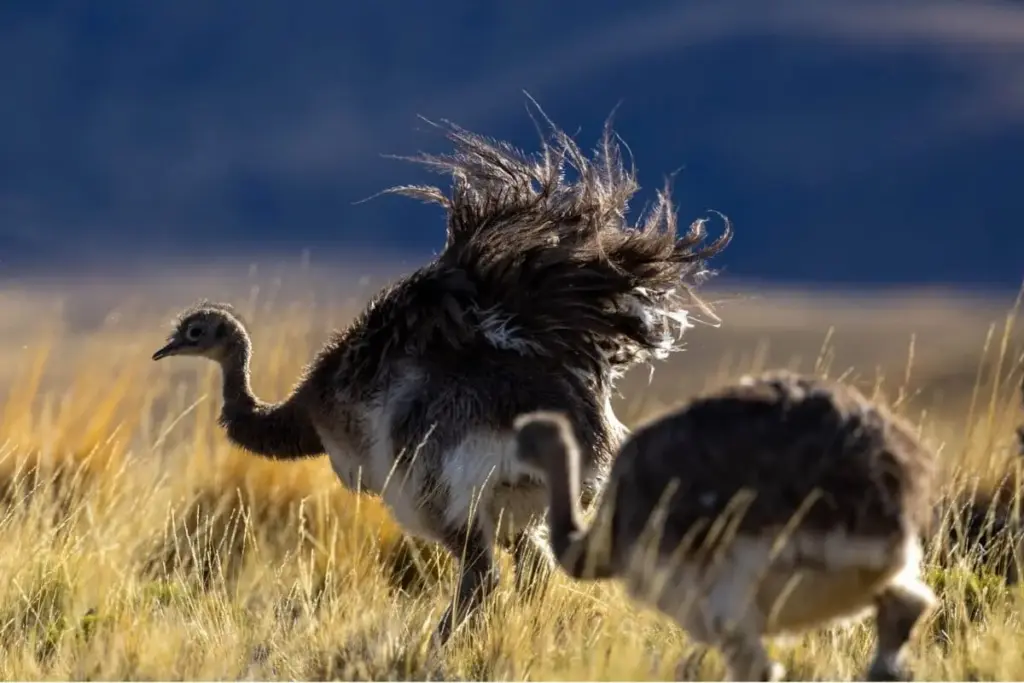
In the sweeping, wind-scoured expanses of Chile’s Patagonia National Park, a quiet ecological renaissance is underway. For more than a century, the Chacabuco Valley—once a sprawling commercial venture dominated by intensive sheep and cattle ranching—bore the scars of human industrialization. Miles of barbed-wire fencing fragmented the ancient steppe, choking native migration routes, degrading the soil, and driving indigenous species to the brink of local extinction. Among the most vulnerable victims of this landscape-scale transformation was the Darwin’s rhea (Rhea pennata), a flightless, elegant bird uniquely adapted to the harsh conditions of the southern cone. By the early 2000s, surveys estimated that only 11 to 15 individuals remained in the area, rendering the species functionally extinct in the valley.
Today, the tide is turning thanks to one of South America’s most ambitious rewilding initiatives. Spearheaded by Tompkins Conservation and the Rewilding Chile Foundation—which acquired the former ranchlands to establish Patagonia National Park—land managers have torn down thousands of kilometers of fences, allowing the land to breathe once more. At the heart of this recovery effort is a dedicated, women-led team of rangers operating out of the park’s Rheas Reproduction Center.
In April 2026, Mongabay’s reporting team traveled deep into the park to document a critical milestone in this multi-year restoration project: the preparation and release of 13 Darwin’s rheas back into the wild. Facing fierce Patagonian gales, opportunistic apex predators like pumas, and the delicate logistical challenge of habituating captive-bred birds, these rangers spend 365 days a year guarding, feeding, and studying a species they affectionately call the "gardeners of the steppe." This comprehensive feature explores their journey, the mechanics of the rewilding process, the ecological stakes of bringing back a keystone species, and the profound philosophical lessons embedded in this conservation triumph.
Detailed Chronology: Anatomy of a Rewilding Release
The journey to release 13 Darwin’s rheas into Patagonia National Park is not an isolated event; it is the culmination of a rigorous, year-long protocol managed by field experts who know every inch of the Chacabuco Valley.
Phase One: Captive Management and Acclimation
The process begins long before release day inside the Rheas Reproduction Center, where rangers monitor breeding pairs and nurture successive generations of chicks. According to veteran rangers who have spent a decade stationed at the facility, preparing a cohort for the wild requires intensive, round-the-clock stewardship.
Once selected for a release cohort, the birds undergo a mandatory two-month acclimation period. During this phase, rangers strictly limit human contact to prevent the birds from becoming habituated, while simultaneously ensuring that nutrition and body condition peak. "We make sure the animals which are being released are in the best possible condition—good nutrition, good body condition," notes a senior ranger at the reproduction center.
Security is another constant preoccupation. Patagonia National Park is home to healthy populations of pumas (Puma concolor), the valley’s apex predator. Rangers maintain rigorous vigilance around the corrals, utilizing specialized fencing designed with outward-facing angles to drastically reduce the possibility of pumas clearing the barrier by jumping.
Phase Two: Pre-Release Monitoring and Environmental Assessment
In the weeks leading up to April 2026, the team shifted its focus from the breeding pens to the open steppe. Utilizing a network of strategic camera traps, rangers track natural rhea movements, identifying historical migration pathways and documenting the presence of wild chicks born in previous seasons. These surveys confirm that earlier cohorts are successfully integrating, reproducing, and navigating the vast home ranges characteristic of the species.
However, nature rarely accommodates human schedules. In the days immediately preceding the release, the primary adversary was the weather. The Chacabuco Valley is infamous for its mercurial microclimates, where sudden temperature drops and gale-force winds can spell disaster for newly liberated animals.
"Our biggest concerns are the environmental conditions on release day," explained a team lead. "We’re in an area where winds are very strong, and we have drastic temperature changes." Standing near a cluster of roaming guanacos (Lama guanicoe), the team assessed potential drop zones. Because rheas frequently share ecological space with guanacos, observing where these large native camelids congregated provided a natural indicator of favorable habitat conditions.
Phase Three: The Transport and Liberation
On the morning of the release, tension hung thick in the air. Handling wild, flightless birds requires extreme precision to minimize stress and prevent physical injury. Rangers worked in synchronized pairs, gently guiding the birds into custom transport boxes.
"We get stressed about stressing them," admitted one ranger. "We don’t want to harm them when we put them in the transport boxes."
Transported to a carefully chosen site within the steppe—within sight of grazing guanacos—the crated birds were lined up. With a countdown—Three, two, one. Go.—the crate doors swung open.
What followed was an extraordinary moment of quiet triumph. Eschewing the panicked flight biologists sometimes fear, the 13 rheas stepped out onto the native grasses with remarkable composure. Within minutes, the birds began actively grazing, exploring their new surroundings, and bonding as a cohesive social unit.
"It was a very emotional moment. It was super calm," reflected a ranger. "We immediately saw them grazing, eating, and for us, that’s a very good sign. They explored and are already kilometers and kilometers away."
Supporting Context & Metrics: The Ecological Stakes
To understand the magnitude of the April 2026 release, one must examine the baseline from which Patagonia National Park has evolved.
A Century of Fragmentation
For over a hundred years, the Chacabuco Valley was managed primarily for sheep and cattle production. This pastoral economy required a rigid spatial grid, erected through thousands of kilometers of wire fencing. These barriers did more than partition real estate; they disrupted the evolutionary architecture of the Patagonian steppe. Large herbivores like guanacos and flightless birds like Darwin’s rheas were blocked from traditional seasonal migration routes, exposing them to overgrazing pressures, poaching, and habitat compression.
By the mid-2010s, the localized population of Darwin’s rheas had plummeted to an alarming threshold of just 11 to 15 individuals. Without intervention, ecological extinction in the valley was a near certainty.
Tompkins Conservation and Rewilding Chile
The turnaround began when Tompkins Conservation—founded by the late visionary outdoor philanthropists Doug and Kristine Tompkins—purchased the expansive Chacabuco cattle ranch. Working alongside the Chilean government and the Rewilding Chile Foundation, the organization transformed the private estate into a protected national park, eventually donating the land to the state.
The cornerstone of this rewilding philosophy is active ecological restoration. Unlike traditional conservation, which merely protects what is left, rewilding actively repairs broken ecosystems by reintroducing keystone species and removing anthropogenic infrastructure. The foundation embarked on an aggressive campaign to dismantle thousands of kilometers of internal fencing, immediately reconnecting the landscape and allowing native fauna to reclaim their historical ranges.
The Rhea as the "Gardener of the Steppe"
Why focus so intensely on a flightless bird? According to field researchers, the Darwin’s rhea is a textbook example of a keystone species—an organism that exerts a disproportionate effect on its environment relative to its abundance.
Rangers frequently refer to the rhea as the "gardener of the steppe." Dietary analyses and field observations of rhea droppings have revealed a vast array of intact native seeds passing through their digestive tracts. As these birds traverse vast home ranges, they act as primary seed dispersers for native flora, revitalizing plant diversity and stimulating vegetative growth across the arid plains.
Furthermore, the recovery of the rhea serves as an indicator of broader systemic health. Over the past decade, rangers have noted an increase in chick survival rates, more frequent natural interactions between rheas and guanacos, and the return of complex trophic dynamics that had been dormant for generations.
Official Statements and Field Perspectives
The success of the Patagonia National Park rewilding initiative rests squarely on the shoulders of interdisciplinary professionals, educators, and field rangers who view their work not merely as a job, but as an ethical imperative.
A senior ranger who has spent a decade managing the Rheas Reproduction Center emphasized the profound generational patience required for ecological healing:
"These changes take time. After more than a century of ranching, you can’t expect people to understand that the park has to be protected in just 10, 20 years… Releasing wildlife is an emotion you can’t really explain. You feel it from deep inside."
The philosophical dimensions of the work extend beyond biology. Observing the complex social structures of the released birds—where the collective group always supersedes individual interests—offered a humbling mirror for human behavior:
"What matters most to them is the group, not the individual," a ranger noted. "I think that’s an important lesson for us as humans who have always believed ourselves to be so superior."
Educational outreach is also woven directly into the park’s mission. Recognizing that the future of conservation relies on local investment, the park regularly hosts student groups. A local science teacher accompanying the release cohort highlighted the transformative power of experiential education:
"As a science teacher, we thought it was very important for students to come visit a National Park, where conservation actions as powerful as a release are carried out." By witnessing firsthand the return of the rhea, the next generation of Chileans is learning to value living landscapes over extractive ones.
Future Outlook
As the dust settles over the Chacabuco Valley following the April 2026 release, the 13 newly liberated Darwin’s rheas are already ranging far across the open plains, integrating seamlessly with existing wild populations. Yet, the work in Patagonia National Park is far from finished.
The Rewilding Chile Foundation continues to monitor the health, spatial distribution, and reproductive success of the rhea cohorts using advanced telemetry and camera-trap arrays. While immediate threats like puma predation are mitigated through specialized fence engineering and round-the-clock ranger patrols, long-term survival will depend on regional connectivity—ensuring that protections extend beyond park boundaries into the broader Patagonian ecosystem.
The return of the rhea demonstrates that damaged landscapes can heal when given the space and stewardship to do so. By removing the physical barriers of the past and returning key ecological actors to the soil, Patagonia National Park stands as a global beacon for modern rewilding—proving that nature, when invited back, knows exactly how to rebuild its home.



