Executive Overview
In the high-stakes, high-volume environment of modern entertainment venues, mass gatherings generate staggering amounts of waste. From single-use plastic cups and food wrappers to cardboard containers and organic food scraps, venues like Gillette Stadium in Foxborough, Massachusetts, have long struggled with the logistics of waste management. Traditional sorting models—often reliant on manual labor or massive, centralized Materials Recovery Facilities (MRFs)—frequently falter when faced with the chaotic, highly mixed waste streams of major sports games, global soccer tournaments, and blockbuster music concerts.
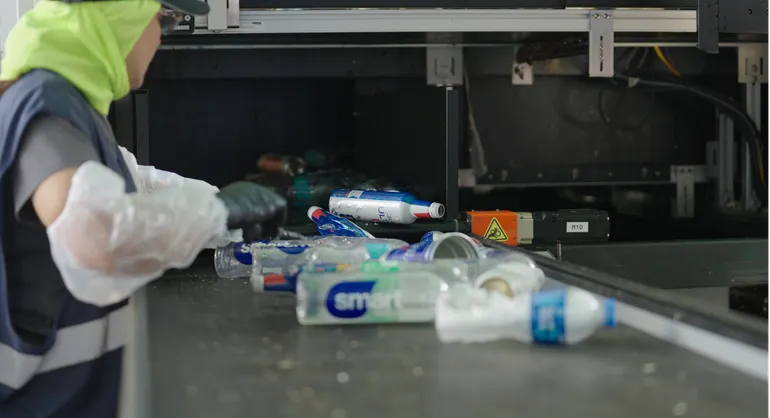
Enter rStream, an innovative AI-powered robotics sorting company co-founded by Ethan Walko and Ian Goodine. By deploying a trailer-based, computer-vision-driven waste sorting system directly to Gillette Stadium’s loading docks, rStream is rewriting the playbook on corporate sustainability. Achieving an astonishing 99% accuracy rate, the technology automates the separation of recyclables, compostable materials, and general trash, eliminating the hazardous and inefficient task of manual hand-sorting.
This partnership is not merely an isolated environmental pilot; it is the proving ground for a paradigm shift in how urban centers, transit hubs, and transient-heavy public spaces approach the circular economy. Backed by a recent $1.25 million grant from the U.S. Department of Energy’s Remade Institute and gearing up for the release of its fifth-generation compact system, rStream is expanding its footprint. As regulatory pressures tighten, LEED certification requirements become more stringent, and global organizations like FIFA demand aggressive sustainability benchmarks, automated on-site sorting is rapidly transitioning from a corporate nice-to-have to an absolute operational necessity.
Detailed Chronology: From Concept to Gillette Stadium
The journey of rStream’s integration into Gillette Stadium—home to the New England Patriots and a host of international soccer and entertainment events—reflects a meticulous, multi-year progression of engineering, auditing, and strategic collaboration.
Laying the Groundwork (2023–2024)
The foundation for the rStream and Gillette Stadium partnership was laid well before the first robotic arm began sorting materials. In 2023, the stadium’s operations team commissioned and completed a comprehensive, full-facility waste audit. This deep-dive analysis revealed significant inefficiencies in the venue’s existing waste stream handling and crystallized a singular institutional goal: drastically increase the on-site waste diversion rate.
Understanding that standard recycling protocols would fall short of their ambitious targets, the operations team connected with rStream. Throughout 2024, engineers and operational leaders worked in tandem to design a custom recycling and waste diversion solution tailored to the specific physical architecture and high-throughput demands of a major sports arena.
Deployment at the Loading Docks
Rather than overhauling the stadium’s internal waste infrastructure or transporting unsorted refuse off-site to a distant MRF, rStream engineered a localized, mobile approach. The company deployed a specialized trailer-based system positioned directly at the stadium’s loading docks. This strategic placement integrated seamlessly with existing operational workflows, sitting right alongside the facility’s standard waste compactors and managed in coordination with Win Waste, the stadium’s contracted waste hauler.
Real-World Testing and the World Cup Stage
Once operational, the system faced rigorous stress tests. During a recent string of seven major stadium events, the rStream technology successfully processed and sorted 479,000 individual recyclable objects.
This capability was further tested during high-profile international matches, including soccer games held as part of major global tournaments over the summer. FIFA actively encouraged venues like Gillette Stadium to adopt aggressive waste-reduction goals. By utilizing rStream’s computer vision to process the dense, mixed refuse generated by tens of thousands of cheering fans, Gillette Stadium was able to meet these international sustainability directives seamlessly, proving the system’s viability under intense, real-world pressure.
Supporting Context & Metrics: The Mechanics of AI Sorting
To understand why rStream’s technology represents a quantum leap forward in environmental engineering, one must examine the limitations of legacy recycling infrastructure and the specific metrics driving the company’s success.
The Problem with Traditional MRFs
Traditional recycling relies on massive, centralized 40-ton-per-hour Materials Recovery Facilities. While effective for municipal curbside collection programs over vast geographic areas, these industrial monoliths are utterly unsuited for dynamic, localized environments like airports, college campuses, and stadiums.
As co-founder Ethan Walko explained in an interview with Waste Dive, these large-scale facilities simply cannot be justified in lower-resource or geographically constrained areas. The sheer volume of material required to feed a 40-ton-per-hour facility does not exist regionally, making the capital expenditure economically unviable. Furthermore, transporting massive volumes of unsorted, heavy waste over long distances incurs a steep carbon footprint that undercuts the very point of recycling.
Precision Computer Vision and Custom Site Models
rStream bypasses these macroeconomic hurdles by bringing the sorting facility directly to the source in a micro-footprint format. The company’s proprietary system relies on advanced computer vision—AI-powered cameras that instantly analyze objects entering the waste stream based on visual characteristics, material type, and structural properties.
Crucially, rStream does not rely on a one-size-fits-all algorithm. Recognizing that waste composition varies wildly depending on the venue—a concert crowd consumes different packaging than a soccer crowd or an airport terminal—the company builds custom vision models for each specific site.
- “Our vision models are specific to sites because although you have the same general categories of waste, you’ll always have differences in terms of the exact materials,” Walko noted.
- By tailoring the neural networks to local refuse, rStream achieves a staggering 99% accuracy rate.
Quantifiable Impact and the "Digital Record"
Beyond merely separating materials into recyclables, compostables, and trash, rStream’s technology acts as a data collection engine. Every item processed is logged, creating a comprehensive "digital record" of each event.
This data generation is transformative for venue managers. Modern corporate sustainability is no longer governed solely by altruism; it is deeply tied to rigorous regulatory compliance, regional environmental mandates—such as those enforced by the Massachusetts Department of Environmental Protection (MassDEP)—and green building standards like LEED certification through the U.S. Green Building Council.
By providing verifiable, hyper-detailed metrics on waste diversion weights and material types, rStream equips venues with the exact documentation required to secure certifications, satisfy municipal audits, and prove compliance to regulatory bodies.
Official Statements and Industry Perspective
The commercial viability and cultural urgency of rStream’s technology are underscored by leaders across the sports, entertainment, and waste-tech sectors.
John Flaherty, Senior Vice President of Operations at Kraft Sports + Entertainment (owner of Gillette Stadium), emphasized the operational and environmental dividends of the partnership in a public statement:
"This partnership with rStream helps us manage waste more responsibly and efficiently while creating a better working environment for our staff and providing data that helps us continuously improve our operations."
The collaboration has similarly served as an invaluable incubator for rStream’s internal development. Ian Goodine, Co-founder and CEO of rStream, highlighted the systemic philosophy driving their engineering approach:
"We are not just dropping a robot on the loading dock. We are giving the building a smarter way to run one of its toughest operations."
The Shift to "Table Stakes" Sustainability
The pressure on stadiums to clean up their environmental act is increasingly driven from the top down and the bottom up. Major musical touring acts, including Coldplay and Billie Eilish, have made rigorous, verifiable sustainability practices central to their global tours, forcing venues to adapt or lose out on lucrative bookings.
Ethan Walko contextualized this shifting market dynamic:
"Big public venues like a stadium might have revenue opportunities tied to those [sustainability] requirements… So now you’re starting to evaluate this on a whole new axis of, ‘Oh, okay, our sorting program is actually unlocking all these huge opportunities, and if we’re not doing it, but every other stadium is, then we’re kind of falling behind.’ So it’s almost table stakes now at this point."
Future Outlook: Scaling Beyond the Stadium
Buoyed by early successes and fresh capital, rStream is looking far beyond the loading docks of Foxborough. The company’s recent receipt of a $1.25 million grant from the U.S. Department of Energy’s Remade Institute, announced earlier this month, provides a robust financial runway to accelerate its research, development, and market expansion.
Tackling the Airport Transit Challenge
In the coming months, Walko and Goodine plan to pivot a significant portion of their operational focus toward commercial airports. Transportation hubs present some of the most logistically complex waste streams in the modern economy.
- “Millions of people are traveling through the large ones every single year,” Walko observed. “There’s dining areas, there’s single-use materials and a variety of people coming from different backgrounds. When you get that transient population of folks, it’s really difficult to communicate recycling rules effectively, and I think that’s where we want to be able to bring automation to address that confusion and help to make sure materials are being handled accurately.”
Because travelers are perpetually rushed and unfamiliar with local municipal recycling ordinances, contamination rates in public bins at airports and transit centers are historically catastrophic. Deploying rStream’s automated, AI-driven sorting systems behind the scenes promises to intercept contaminated streams and dramatically boost true material recovery without relying on consumer behavioral changes.
The Horizon: Fifth-Generation Compact Systems
Looking further ahead toward 2027, rStream is preparing to launch the fifth iteration of its sorting technology. While the current setup relies on a robust, trailer-based architecture perfectly suited for stadium loading docks, the upcoming model represents a significant engineering pivot.
The fifth-generation system is designed to be significantly smaller and more compact, shedding the trailer format entirely. This miniaturization is intentional, aimed at unlocking broader market scalability.
- “That’ll help it be scalable across more markets, whereas the current one is really tailored towards the stadiums,” Walko explained.
By shrinking its physical footprint while retaining its 99% accuracy rate and advanced computer vision capabilities, rStream is positioning itself to infiltrate tighter commercial real estate spaces, smaller regional venues, universities, and localized waste ecosystems that have historically been locked out of the robotics revolution.
As regulatory demands mount, consumer expectations shift, and climate accountability becomes a baseline metric of corporate governance, rStream’s blend of localized AI robotics and data-driven sustainability offers a clear glimpse into the future of waste management.