Executive Overview
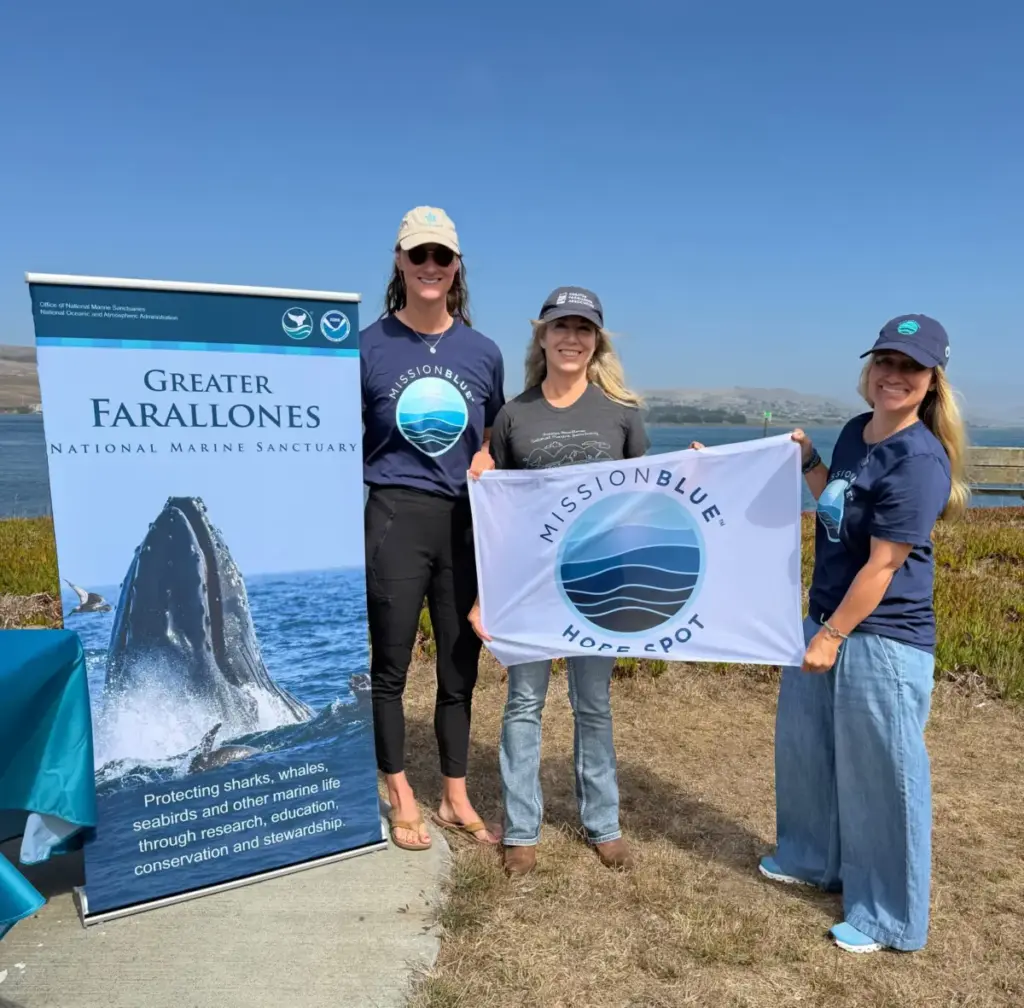
Along the fog-shrouded expanses of the central California coast, the intersection of human endurance and marine conservation has forged a powerful new alliance. In recent weeks, the waters off Bodega Bay—a historic fishing haven and ecologically fragile sanctuary—have found themselves at the epicenter of a statewide conversation concerning ocean preservation. Shannon McIntyre Rake of the international marine conservation organization Mission Blue recently appeared on KTVU to shed light on these critical local ecosystems. Her appearance followed a high-profile visit from Bay Area native and elite endurance swimmer Catherine Breed, who is undertaking an unprecedented 900-mile open-water odyssey along the entire length of the California coastline.
Breed’s historic journey is far more than a physical test of human capability; it is a floating platform designed to amplify the voices of grassroots environmentalists, marine biologists, and community organizations working tirelessly to safeguard the Pacific Ocean. By stopping in distinct coastal communities from the Oregon border down to the Mexican boundary, Breed is drawing public attention to localized marine protected areas (MPAs), sustainable fisheries, and the compounding threats of climate change, industrial runoff, and habitat degradation.
At the heart of this movement sits Bodega Bay, a marine habitat of immense biological significance. Renowned for its cold, nutrient-rich upwellings driven by the California Current, the region supports a sprawling web of marine life, ranging from endangered humpback whales and buoyant kelp forests to vital seabird colonies and commercially vital fisheries. However, these waters face mounting pressures from warming ocean temperatures, ocean acidification, and shifting human use patterns.
This report provides a comprehensive examination of the intersection between Catherine Breed’s epic swim and Mission Blue’s ongoing conservation initiatives in Bodega Bay. Through a detailed chronology of events, supporting contextual metrics regarding the health of California’s marine ecosystems, official statements from key stakeholders, and an investigative look into the future outlook of West Coast marine management, this article explores how endurance athletics and marine science are converging to protect one of the world’s most dynamic aquatic frontiers.
Detailed Chronology: The Convergence of Endurance and Conservation
To understand the current mobilization in Bodega Bay, it is necessary to trace the sequence of events that brought endurance swimming and high-level marine advocacy into direct alignment along the Northern California coast.
Phase I: The Genesis of the 900-Mile Swim
The seeds of Catherine Breed’s historic journey were planted months prior to her first stroke in open water. As a Bay Area native with a lifelong affinity for the Pacific, Breed recognized that traditional conservation campaigns often struggled to capture the public imagination in an era dominated by digital noise and fragmented media cycles. Drawing on her background as an elite competitive swimmer, she conceived a bold proposition: to swim the entire 900-mile length of the California coast, exposing herself to the raw elements, cold water temperatures, unpredictable currents, and marine wildlife while physically connecting the state’s diverse coastal habitats.
The primary objective of the expedition was not merely athletic endurance, but community engagement. Breed planned her route to intersect with critical marine ecosystems and grassroots organizations that have spent decades fighting for local environmental protections. Each stop along her itinerary was meticulously coordinated with regional marine stewards, indigenous groups, and conservation non-profits to highlight specific regional challenges—ranging from kelp forest collapse in the north to urban runoff and habitat fragmentation in the south.
Phase II: Arrival and Immersion in Bodega Bay
As Breed’s support vessel navigated the rugged waters of Sonoma County, her journey reached a critical milestone upon reaching Bodega Bay. Characterized by its dramatic headlands, churning tides, and rich marine biodiversity, Bodega Bay represents a microcosm of the broader struggles facing the California current system.
During her stopover in the region, Breed engaged directly with local researchers, marine advocates, and members of the local fishing community. The visit underscored the ecological fragility of the area. Bodega Bay is home to the University of California, Davis, Bodega Marine Laboratory, a premier research facility that has monitored the health of the local marine ecosystem for decades. Breed’s swim past these waters served as a visual reminder of the interconnectedness of the California coastline; pollutants, warming trends, and ecological shifts in one region inevitably cascade into others.
Phase III: The KTVU Broadcast and Amplifying the Message
Capitalizing on the media attention generated by Breed’s passage through Sonoma County, Mission Blue’s Shannon McIntyre Rake joined KTVU for a live segment to discuss the broader implications of the swim and the organization’s specific conservation priorities in Bodega Bay.
The television appearance served as a vital bridge between the physical feat of the swim and the policy-driven, grassroots work required to enact lasting environmental change. During the interview, Rake articulated how individual actions, community-led monitoring, and institutional protections must work in tandem to secure the future of marine habitats like Bodega Bay. By bringing the conversation to a major regional news platform, Mission Blue and Breed successfully shifted public focus from passive appreciation of the ocean to active engagement in its defense.
Supporting Context & Metrics: The Ecological Significance of Bodega Bay
To fully grasp why advocates like Shannon McIntyre Rake and Catherine Breed are focusing national and regional attention on Bodega Bay, one must examine the ecological architecture of the region and the quantifiable threats facing it.
The Dynamics of the California Current Ecosystem
Bodega Bay is situated within the California Current Large Marine Ecosystem, one of only four major eastern boundary current systems in the world. Driven by winds and the Earth’s rotation, upwelling events push nutrient-dense, cold, and carbon-rich deep water to the surface. These upwellings fuel massive blooms of phytoplankton, forming the base of a remarkably complex and productive food web.
- Biodiversity Hotspots: The waters surrounding Bodega Bay support dense populations of marine mammals, including California sea lions, harbor seals, Pacific white-sided dolphins, and migratory gray and humpback whales.
- Avian Abundance: The rugged headlands and offshore rocks provide nesting grounds for numerous seabird species, such as the common murre, tufted puffin, and various species of cormorants and gulls.
- Kelps and Invertebrates: Subtidal rocky reefs support extensive kelp forests—vital underwater ecosystems that act as nurseries for juvenile fish and sequester significant amounts of carbon.
Quantifying the Threat: Climate Change and Anthropogenic Pressures
Despite its ecological richness, Bodega Bay is increasingly vulnerable to anthropogenic stressors. Recent scientific assessments underscore the urgency of the conservation work highlighted by Mission Blue:
- Ocean Acidification: Due to the nature of local upwelling systems, the waters off Bodega Bay are naturally prone to lower pH levels. However, global carbon emissions have exacerbated this trend, threatening calcifying organisms such as Dungeness crab larvae, red abalone, and local oyster populations whose shells struggle to form in acidic waters.
- Marine Heatwaves: The persistent recurrence of marine heatwaves—colloquially known as "The Blob"—has severely disrupted local temperatures. These thermal anomalies have decimated bull kelp forests along the Northern California coast, leading to a catastrophic trophic cascade where herbivorous purple sea urchins have proliferated unchecked, overgrazing the remaining kelp habitat.
- Fisheries Pressure: Commercial and recreational fisheries, including iconic species like salmon and Dungeness crab, face mounting pressures from fluctuating stock sizes, regulatory adjustments, and shifting migration patterns driven by water temperature increases.
Official Statements and Perspectives
The synergy between athletic endurance and scientific advocacy has generated commentary from various stakeholders committed to marine stewardship.
Mission Blue’s Perspective
Shannon McIntyre Rake’s engagement with media outlets like KTVU highlights Mission Blue’s core philosophy: that effective ocean conservation requires a combination of top-down policy measures and bottom-up community mobilization. Founded by legendary oceanographer Dr. Sylvia Earle, Mission Blue champions the designation of "Hope Spots"—special places that are scientifically identified as critical to the health of the ocean.
"When we look at a place like Bodega Bay, we are not just looking at a picturesque stretch of coastline; we are looking at a living, breathing engine of marine biodiversity," Rake noted during her advocacy efforts. "When athletes like Catherine Breed use their platforms to bring visibility to these waters, it reminds the public that our oceans are not infinite. They require active, intentional stewardship from every level of society—from local fishermen and marine researchers to everyday citizens watching from home."
The Athlete’s Voice
Catherine Breed has consistently emphasized that her 900-mile journey is not about personal glory, but about elevating the organizations that have dedicated their lives to protecting marine life. Swimming through changing tides, stinging jellyfish, and frigid waters has given her an intimate, visceral understanding of the ocean’s vulnerability.
"Every mile of this coastline tells a different story," Breed reflected during her passage through Northern California. "In some areas, you see thriving kelp forests and robust protections; in others, you see the unmistakable scars of climate change and human impact. Stopping in communities like Bodega Bay allows us to connect the dots. It shows people that the health of the ocean right outside their window is directly linked to the health of the entire Pacific."
Future Outlook: The Path Forward for Bodega Bay and California Waters
As Catherine Breed continues her historic trek southward and Mission Blue presses forward with its conservation initiatives, the focus must inevitably shift toward long-term policy, community resilience, and adaptive management. The challenges facing Bodega Bay are emblematic of the broader planetary crisis confronting marine environments, yet they also offer a blueprint for proactive solutions.
1. Strengthening Marine Protected Areas (MPAs)
California has established a sophisticated network of Marine Protected Areas designed to safeguard marine life and habitats. However, the long-term efficacy of these zones depends on rigorous enforcement, continuous ecological monitoring, and adaptive management strategies that account for shifting species distributions driven by climate change. Future efforts in Bodega Bay will likely focus on expanding community-based monitoring programs to track how local fish populations and kelp recovery efforts respond to existing protective measures.
2. Investing in Kelp Forest Restoration
Given the collapse of bull kelp forests along the Northern California coast, restoration initiatives are no longer optional; they are imperative. Collaborative efforts involving academic institutions like UC Davis, state agencies, local tribes, and non-profit organizations are currently exploring innovative restoration techniques, including targeted urchin removal and the cultivation of heat-tolerant kelp strains. Scaling these pilot projects will be critical to restoring the structural integrity of Bodega Bay’s nearshore ecosystems.
3. Fostering Public Engagement and Grassroots Advocacy
Perhaps the most enduring legacy of initiatives like Breed’s 900-mile swim and Mission Blue’s media outreach is the cultivation of an informed, engaged citizenry. By demystifying marine science and bringing conservation narratives into mainstream media channels, organizations can inspire broader public participation in coastal preservation. Whether through reducing single-use plastics, participating in beach cleanups, or supporting science-based marine policies, the actions of local communities remain the ultimate line of defense for the Pacific.
Conclusion
The intersection of Catherine Breed’s epic 900-mile swim and Mission Blue’s dedicated advocacy in Bodega Bay represents a modern paradigm in environmental conservation. By marrying physical endurance with rigorous marine science and accessible storytelling, these efforts have successfully renewed public interest in the protection of California’s coastal waters.
As Bodega Bay navigates the compounding pressures of a changing climate, ocean acidification, and habitat disruption, the resilience of its ecosystems will rely heavily on the continued collaboration of scientists, activists, athletes, and local communities. Through sustained vigilance and proactive stewardship, there remains profound hope that the rich biodiversity of Bodega Bay will endure for generations to come.
To learn more about Mission Blue’s ongoing conservation initiatives in Bodega Bay and to watch the full interview with Shannon McIntyre Rake, visit the KTVU online video archive.