

Executive Overview
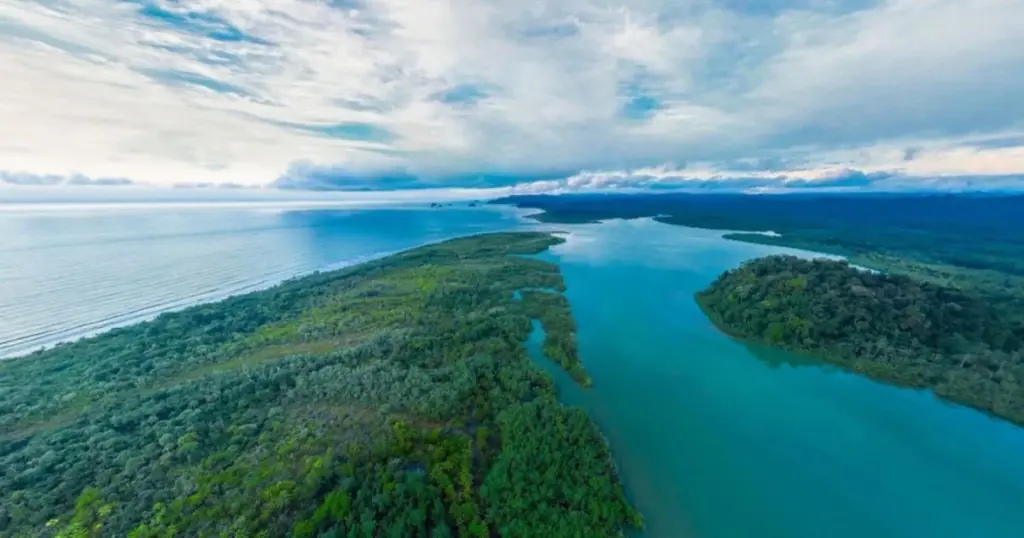
In a monumental victory for marine conservation in the Caribbean Sea, the Colombian government officially expanded the Acandí, Playón and Playona Wildlife Sanctuary by nearly 63,000 hectares. This sweeping regulatory milestone, finalized in May 2026, expands the total protected zone to more than 89,000 hectares. More importantly, it extends formal legal protections to the vital offshore coral reefs of the Capurganá and Cabo Tiburón Hope Spot for the very first time.
For nearly two decades, local grassroots leadership, persistent community advocacy, and rigorous scientific monitoring have shielded the northern Chocó region from environmental degradation. This newly minted "triple protection" framework—bolstered by the 2024 UNESCO Man and Biosphere designation of the Darién North of Chocó as a Marine Biosphere Reserve and the 2026 National Parks System expansion—caps off a remarkable campaign. It unites terrestrial nesting grounds, nearshore marine nurseries, and deep-water coral ecosystems under a single, cohesive conservation umbrella.
At the heart of this triumph is a synergy between international conservation heavyweights—such as Mission Blue and the local NGO Foundation ICRI Colombia (ICRI)—and dedicated local champions. By linking long-term citizen science with high-level governmental policy, the region has transformed from a localized conservation project into a global blueprint for community-led ocean stewardship. As climate pressures mount across the wider Caribbean, this expansion offers a beacon of resilience, proving that localized action can scale into enduring, systemic legislative reform.
Detailed Chronology: From Grassroots Vigilance to National Policy
The path toward securing the waters of northern Chocó was neither short nor straightforward. It required sustained dedication, institutional patience, and an unwavering commitment from local stakeholders who understood that protecting their marine environment meant securing their cultural and economic future.
2008–2015: The Genesis of Community Monitoring and Resistance
The foundational bedrock of the Capurganá and Cabo Tiburón Hope Spot was laid in 2008. Long before government agencies recognized the ecological significance of these waters, local fishers, divers, and community organizations initiated grassroots monitoring programs. Recognizing the rapid depletion of artisanal fisheries and the precarious state of migratory marine life, these pioneers began tracking reef health and documenting nesting trends.
Operating under the auspices of citizen science, community members recorded critical baseline data that later proved indispensable. During these early years, local leaders forged alliances with regional NGOs, slowly building an undeniable body of evidence showing that the coral reefs of northern Chocó possessed a rare, high-level resilience to warming ocean temperatures and anthropogenic stressors.
2016–2023: Mobilizing Science and Expanding the Hope Spot
Armed with nearly a decade of empirical data, conservationists sought broader recognition to amplify their local efforts. This phase was defined by the formal designation of Capurganá and Cabo Tiburón as an official Mission Blue Hope Spot. Designated in close collaboration with Foundation ICRI Colombia, this status cast an international spotlight on the region’s remarkably resilient reefs and its importance as a critical corridor for threatened marine life.
During this period, leadership solidified under figures like Nohora Galvis, director of the International Coral Reef Observatory (ICRO). Galvis and her coalition worked tirelessly to bridge the gap between traditional artisanal fishers and academic researchers. They systematically dismantled the false dichotomy between ecological preservation and human livelihoods, demonstrating that protecting the reefs directly benefited local fisheries through the phenomenon of marine spillover.
2024: International Recognition through the Biosphere Reserve
The momentum generated by local advocacy reached international halls of power in 2024. The UNESCO Man and the Biosphere (MAB) Programme officially declared the Darién North of Chocó as a Marine Biosphere Reserve.
This international designation acknowledged the region’s unique ecological intersection—where the dense tropical jungles of Central and South America meet the biodiversity-rich waters of the Caribbean. While the Biosphere Reserve designation provided a prestigious framework for sustainable development and regional planning, local advocates knew that binding, enforceable national legislation was still required to protect the offshore reefs from industrial pressures, overfishing, and unchecked tourism.
May 2026: The Culmination—Achieving "Triple Protection"
The decades-long struggle reached its zenith in May 2026. The Colombian government formally expanded the Acandí, Playón and Playona Wildlife Sanctuary by nearly 63,000 hectares.
This administrative stroke of the pen achieved what conservationists had termed "triple protection":
- Terrestrial and Nearshore Security: The historic preservation of sea turtle nesting beaches.
- Regional Integration: The 2024 UNESCO Marine Biosphere Reserve status governing sustainable regional use.
- Marine Ecosystem Safeguarding: The 2026 National Parks System expansion incorporating the deep offshore coral reefs and critical foraging grounds.
By pushing the sanctuary’s total footprint past 89,000 hectares, Colombia delivered a masterclass in how bottom-up community campaigns can successfully rewrite national environmental policy.
Supporting Context & Metrics: The Ecological Significance of Northern Chocó
To understand why the expansion of the Acandí, Playón and Playona Wildlife Sanctuary is a cause for international celebration, one must examine the staggering ecological metrics embedded within the Capurganá and Cabo Tiburón Hope Spot.
A Sanctuary for Endangered Sea Turtles
The coastal waters and sandy beaches of northern Chocó represent one of the most vital nesting and developmental zones in the wider Caribbean basin. The region supports critical habitats for four distinct species of sea turtles, all of which face severe conservation threats globally:
- Leatherback Turtles (Dermochelys coriacea): Long-term monitoring protocols running continuously since 2008 have charted positive nesting trends for these oceanic giants, defying the grim downward trajectories seen in other parts of their range.
- Hawksbill Turtles (Eretmochelys imbricata): Heavily targeted historically for their shell, these critically endangered reptiles rely on the rich sponge beds of Chocó’s coral reefs for foraging.
- Green Turtles (Chelonia mydas): Juveniles utilize the shallow seagrass beds and reef flats as crucial developmental nurseries.
- Loggerhead Turtles (Caretta caretta): Frequently observed utilizing the pelagic corridors and benthic feeding grounds within the extended sanctuary boundaries.
Coral Resilience in an Era of Climate Crisis
Coral reefs across the globe are currently buckling under the weight of marine heatwaves, ocean acidification, and coral bleaching events. However, the reefs sheltered within the Capurganá and Cabo Tiburón Hope Spot have consistently exhibited remarkable resilience.
Scientists attribute this resilience to unique local oceanographic conditions, upwelling currents, and the high genetic diversity of surviving coral colonies. By expanding the sanctuary to include these offshore reefs, Colombia has safeguarded crucial climate refugia—ecosystems that possess natural adaptations to withstand thermal stress. These reefs act as genetic banks that can potentially seed degraded areas across the southern Caribbean as ocean temperatures continue to rise.
Revitalizing Artisanal Fisheries
A frequent criticism leveled against marine protected areas by local communities is that they restrict traditional ways of life. In northern Chocó, however, the opposite has occurred. By incorporating fishers into the scientific monitoring and management framework from day one, the conservation project has fostered a culture of shared stewardship.
Data collected over the past eighteen years demonstrates a measurable recovery in artisanal fisheries. Spillover effects from the fully protected core zones have increased fish biomass in adjacent permissible fishing areas, proving that rigorous conservation directly supports local food security and coastal economies.
Official Statements and Leadership
The success of the Chocó marine expansion is a testament to the power of collaborative leadership, bridging the gap between local communities, scientific institutions, and national governance.
Nohora Galvis and the International Coral Reef Observatory (ICRO)
At the epicentre of this policy breakthrough is Nohora Galvis, Mission Blue Hope Spot Champion and Director of the International Coral Reef Observatory (ICRO). Galvis has spent years on the ground, orchestrating the complex coalition of fishers, recreational divers, academic researchers, and municipal authorities necessary to build an unassailable scientific case for protection.
Reflecting on the milestone, Galvis emphasized the multi-layered nature of the victory:
"The expansion of the Acandí, Playón and Playona Wildlife Sanctuary is the culmination of a vision that local communities have held for generations. For too long, we protected only the sand where the turtles crawl ashore while leaving the very waters where they feed—and the intricate coral reefs that sustain our entire marine web—unprotected. Today, thanks to years of tireless citizen science and government partnership, we have bridged that gap."
Mission Blue’s Global Perspective
Dr. Sylvia Earle’s foundation, Mission Blue, has championed the Capurganá and Cabo Tiburón Hope Spot as a shining example of its core philosophy: that localized action creates global impact.
In official statements celebrating the May 2026 expansion, Mission Blue leadership highlighted the initiative as a masterclass in modern conservation strategy. By elevating local leaders, seamlessly integrating rigorous scientific data with community-led action, and translating a shared vision into permanent legislative policy, the Chocó model demonstrates how conservation can succeed even in geopolitically complex coastal regions.
Future Outlook: Challenges and Opportunities Ahead
While the May 2026 expansion of the Acandí, Playón and Playona Wildlife Sanctuary represents a historic triumph, conservationists and government officials emphasize that the real work begins now. Designing a park on paper is vastly different from managing it in the water.
Enforcement and Surveillance
Spanning over 89,000 hectares of complex coastal and marine terrain, the expanded sanctuary faces significant logistical challenges regarding surveillance and enforcement. Illegal, unreported, and unregulated (IUU) fishing, along with illicit maritime trafficking routes in the Darién Gap region, pose persistent threats to the integrity of the marine park.
Future initiatives will require scaling up technological solutions—such as satellite monitoring, acoustic hydrophones, and community-led ranger patrols—to ensure that the legal protections granted on paper are rigorously enforced in the water.
Climate Adaptation and Scientific Monitoring
As global carbon emissions continue to alter marine chemistry, maintaining the thermal resilience of Chocó’s coral reefs will require continuous, adaptive management. The long-term citizen science monitoring protocols established in 2008 must be expanded and adequately funded to track shifts in coral health, fish stock recruitment, and sea turtle nesting success under future climate scenarios.
A Blueprint for the Wider Caribbean
Perhaps the most significant aspect of the Chocó expansion is its replicability. Across the Caribbean Basin, coastal communities are locked in similar struggles to protect their marine resources from tourism development, overfishing, and climate degradation.
The successful convergence of grassroots advocacy, NGO support (via Foundation ICRI Colombia and Mission Blue), international recognition (UNESCO), and national legislation (the Colombian National Parks System) provides a tested, scalable template. By proving that local fishers and global scientists can write environmental policy hand-in-hand, the Capurganá and Cabo Tiburón Hope Spot has lit a torch that other nations would do well to follow.
To learn more about the Capurganá and Cabo Tiburón Hope Spot and to view the official documentary footage detailing this conservation milestone, explore the interactive ArcGIS StoryMap and official video resources provided by Mission Blue.



