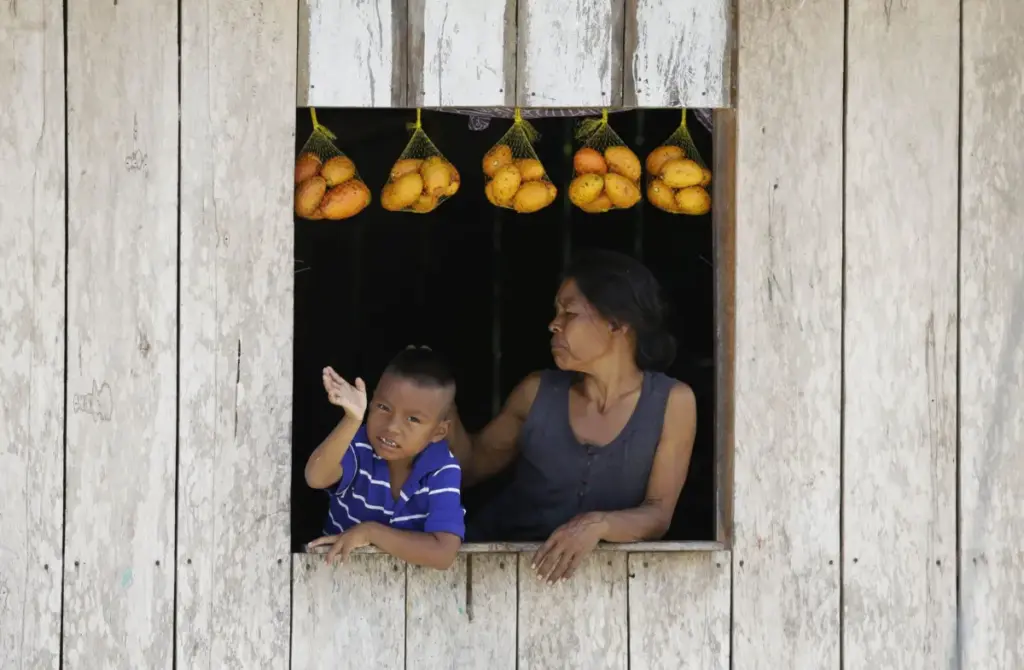
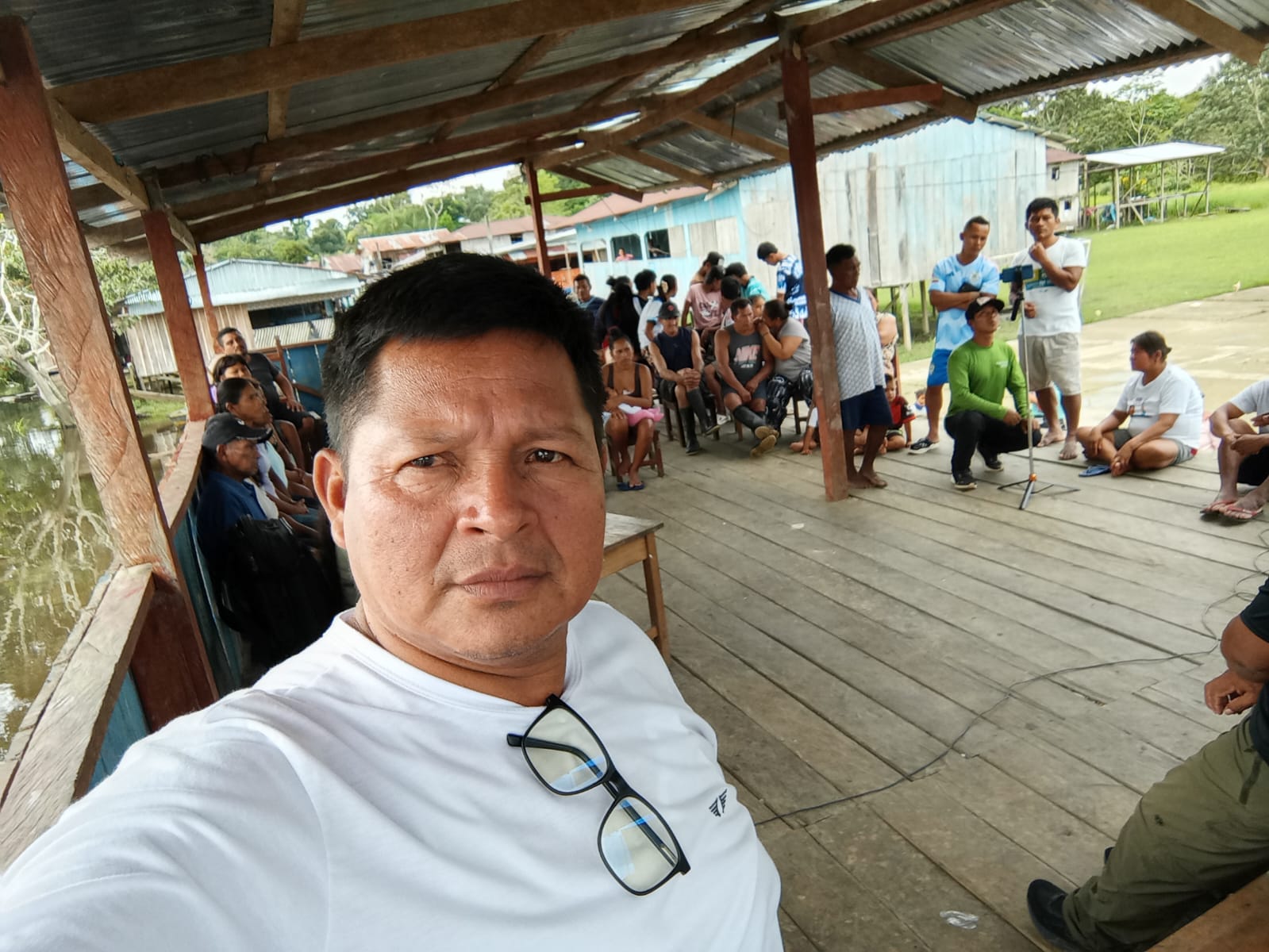
Deep within the remote lowland rainforests where the borders of Peru, Colombia, and Brazil converge, a quiet catastrophe is unfolding. The Ticuna and Yagua Indigenous peoples, who have served as stewards of the Amazon’s riverbanks and floodplains for generations, now find themselves trapped in the crosshairs of transnational organized crime. Driven by a complete absence of state presence and infrastructure, illicit drug trafficking networks, illegal gold-mining operations, and timber cartels have embedded themselves deep within Indigenous territories.
According to Francisco Hernández Cayetano, president of the Federation of Ticuna and Yagua Communities of the Lower Amazon (FECOTYBA), between 60% and 70% of the forests within these vulnerable communities have suffered severe deforestation. The encroachment of illicit coca cultivation and chemical-heavy cocaine production has poisoned vital waterways, devastated fish populations, and normalized child labor. Most alarming is the institutionalization of substance abuse among Indigenous youth, who are increasingly forced into illicit labor due to a desperate lack of legal economic alternatives.
Amid this compounding crisis, Indigenous leaders are refusing to remain passive. FECOTYBA has spearheaded a historic cross-border mobilization, uniting Ticuna communities across Peru, Colombia, and Brazil to demand accountability from national parliaments, protect isolated Indigenous groups, and reclaim their ancestral lands from the grip of armed factions.
Detailed Chronology: The Escalation of the Tri-Border Crisis
The descent of the Amazon tri-border area into a hub of transnational crime did not happen overnight. It is the result of decades of institutional neglect, shifting geopolitical dynamics in the drug trade, and the exploitation of porous national boundaries.
Early Decades: Traditionally, the remote triple-frontier zone—anchored by towns like Leticia (Colombia), Tabatinga (Brazil), and Santa Rosa (Peru)—remained isolated, relying heavily on traditional subsistence living, fishing, and small-scale forestry. State oversight was minimal, leaving vast stretches of rainforest unmonitored.
The Expansion of Illicit Crops (2010s): As eradication efforts intensified in other parts of South America, coca cultivation and clandestine laboratories shifted deeper into remote Amazonian river basins. Cartels and armed factions—including dissidents of the Revolutionary Armed Forces of Colombia (FARC) and Brazil’s Comando Vermelho (CV)—identified the tri-border region as an ideal logistics corridor for moving drugs, precursor chemicals, gold, and timber.
The Rise of Environmental and Social Decay (2020–2022): Armed groups began encroaching directly onto Indigenous communal lands. The introduction of illegal alluvial mining along waterways like the Atacuari River accelerated deforestation. Concurrently, families facing acute economic precarity began relying on coca harvesting, introducing substance abuse and dropping school attendance rates among Ticuna children.
The Historic 2023 Drought: A severe, unprecedented climate-induced drought struck the Peruvian Amazon, isolating over 130 Indigenous communities. Rivers dried up, fish stocks collapsed, and vulnerable populations were forced to consume contaminated water, sparking widespread health crises.
The Formation of the Cross-Border Platform (2024–Present): Recognizing that national borders hindered coordinated responses, FECOTYBA organized a landmark cross-border Ticuna congress. Leaders from Peru, Colombia, and Brazil established an 18-member platform to unify legislative demands, combat misinformation campaigns by anti-Indigenous groups, and pressure respective governments to safeguard basic human rights and territorial sovereignty.
Supporting Context & Metrics: Crime, Environment, and the PIACI
The gravity of the Amazon tri-border crisis is underscored by alarming empirical data and independent security reports. A 2024 study by the International Crisis Group categorized the tri-border intersection of Peru, Colombia, and Brazil as a critical hotspot for transnational crime, highlighting how weak governance directly fuels violence, environmental degradation, and human rights abuses against Indigenous populations.
Deforestation and Ecocide
60% to 70% Deforestation Rate: In many communities represented by FECOTYBA, up to 70% of the forest canopy has been degraded or entirely cleared to clear space for illicit coca fields, landing strips, and processing camps.
Chemical Contamination: The cocaine production process relies on toxic chemicals (such as kerosene, sulfuric acid, and calcium oxide) that are dumped directly into narrow forest streams (quebradas). This chemical maceration kills off fish populations—the primary protein source for the Ticuna people—and poisons drinking water supplies.
Threats to Uncontacted Peoples (PIACI)
The crisis extends beyond settled communities, posing an existential threat to Indigenous Peoples in Isolation and Initial Contact (PIACI). Ticuna communities form a vital protective buffer within the 16-million-hectare (39.5-million-acre) Yavari-Tapiche Territorial Corridor initiative spanning Peru and Brazil.
However, conservation efforts face aggressive pushback. Front groups—such as the National Organization of Special Justice for Indigenous, Native and Peasant Peoples (ONAJECPIN)—have launched systematic misinformation campaigns in remote villages, falsely claiming that conservation corridors are a land-grab conspiracy by NGOs. These tactics, financed by external timber and mining interests, seek to undermine community-led sanitary cordons and open pristine reserves to exploitation.
Climate Vulnerability
The compounding pressures of illicit economies and environmental degradation are severely magnified by climate change. Following the historic 2023 drought, experts warn of recurring climate extremes under El Niño patterns. Without potable water infrastructure or functional healthcare access, isolated communities remain highly susceptible to malaria, gastrointestinal infections, and respiratory illnesses.
Official Statements and Leadership Perspectives
Francisco Hernández Cayetano, speaking in an exclusive interview with conservation media, offered a sobering assessment of how the drug trade has altered the social fabric of his people:
"Our concern is very strong because most of the communities—almost 60 to 70% of the forests—are deforested due to drug trafficking. This causes certain problems, for example, children working in the [coca] fields, as well as women. It’s hitting us hard, especially the Ticuna youth."
Hernández emphasized that the crisis has transcended simple criminality, becoming a normalized, institutionalized survival mechanism due to the complete withdrawal of the state:
"It’s become somewhat institutionalized; it’s almost normal for families, and that worries us because we want the [criminals] to leave, and the State has also abandoned this part of the border. It further complicates the situation because if the State invested more in short, medium and long-term productive projects, then things would change."
Addressing the identity of the actors behind the ecological destruction, Hernández clarified that outsiders—not the Indigenous inhabitants—are driving the devastation:
"Today, we are seeing illegal mining coming in from the Atacuari River area. Drug trafficking is linked to all sorts of illegal activities… These are mostly people from Colombia, and also people from the high Andes who have come from the Peruvian highlands. They are the ones who have deforested. The Ticuna people themselves don’t do the deforestation; it’s outsiders who come to do these illegal activities."
Future Outlook: A Cross-Border Path Forward
Despite the overwhelming challenges posed by armed cartels, bureaucratic indifference, and aggressive disinformation campaigns, FECOTYBA and its partners are charting a proactive roadmap for survival and resistance.
Legislative Integration: The newly formed 18-member Ticuna cross-border platform—comprising six representatives each from Peru, Colombia, and Brazil—is formalizing its legal status. Throughout the year, delegations plan to present policy agreements directly to the national parliaments of all three countries, demanding guaranteed social services, basic infrastructure, and clean water systems.
Strengthening PIACI Protections: Grassroots networks are doubling down on community education to counteract disinformation spread by entities like ONAJECPIN. By reinforcing sanitary cordons and monitoring river corridors, Indigenous patrols aim to shield uncontacted groups from illegal loggers and miners.
The Demand for Sustainable Alternatives: Indigenous leaders maintain that military intervention alone will not solve the tri-border crisis. True stability requires long-term state investment in legal economic opportunities, education, and healthcare, ensuring that families are no longer forced to choose between starvation and participating in the illicit drug economy.
As the Amazon faces an increasingly volatile climate future, the resilience of the Ticuna and Yagua nations serves as both a shield for the world’s largest rainforest and a stark reminder of the human cost of global narcotics demand.