
Executive Overview
In a legislative showdown that reverberated across agricultural and environmental circles, the United States Senate narrowly voted down a high-stakes amendment to the Farm Bill in early August. Spearheaded by Senator Cory Booker (D-N.J.), the proposed legislative fix aimed to restore a crucial legal recourse for American consumers, farmers, and agricultural workers: the right to sue pesticide manufacturers for failing to warn the public about the documented, severe health risks associated with their chemical formulas.
The amendment was defeated entirely along party lines, underscoring a deep political divide over corporate accountability, federal preemption, and public health. This legislative pushback was not born in a vacuum. It was a direct, urgent response to a monumental Supreme Court decision issued earlier this summer—a ruling that effectively handed major agrochemical conglomerates a legal shield, stripping states of their authority to enforce labeling laws that demand cancer warnings beyond federal baselines.
As lawmakers slam the door on statutory remedies, public health advocates and environmental non-profits are pivoting to alternative avenues of resistance. Notably, the Center for Biological Diversity has filed an emergency petition demanding that the Environmental Protection Agency (EPA) step into the vacuum and mandate cancer warnings on dozens of widely used, hazardous agricultural chemicals. With hundreds of active pesticide ingredients officially linked to cancer by federal agencies—yet still legally applied across millions of acres of American farmland—the collision course between corporate immunity and public safety has reached an unprecedented boiling point.
Detailed Chronology: From Courtrooms to the Capitol
To understand the current crisis surrounding pesticide liability, one must trace the rapid sequence of legal and legislative events that unfolded across the summer of 2026.
The Catalyst: The Supreme Court Decision
The legal earthquake that triggered Senator Booker’s legislative intervention occurred in June 2026, when the U.S. Supreme Court delivered a landmark ruling that upended decades of state-level consumer protection. The high court’s decision reversed a lower-court judgment from the Missouri Court of Appeals. That state-level court had previously upheld a $1 million verdict awarded to John Durnell, a Missouri resident who developed non-Hodgkin’s lymphoma after two decades of heavy exposure to Roundup, the ubiquitous glyphosate-based herbicide manufactured by Bayer (which acquired Monsanto in a historic, multi-billion-dollar merger).
The crux of the Supreme Court’s reversal relied on the legal doctrine of federal preemption. The justices ruled that the Federal Insecticide, Fungicide, and Rodenticide Act (FIFRA)—the primary federal statute governing pesticide regulation—prohibits individual states from imposing labeling or packaging requirements that are "in addition to or different from" those mandated by the federal government.

In practical terms, the ruling stripped states of their sovereign right to enact stricter consumer protection laws or demand supplemental health warnings on commercial products sold within their borders. Legal scholars immediately recognized the decision’s sweeping implications: chemical manufacturers could no longer be held liable under state "failure-to-warn" tort laws for omitting cancer warnings, provided their labels complied with federal standards established by the EPA.
Senator Booker’s Legislative Intervention
Recognizing the devastating consequences of the Supreme Court’s ruling for everyday citizens, Senator Cory Booker introduced an emergency amendment to the upcoming Farm Bill. The statutory fix was designed to narrow or clarify federal preemption rules, explicitly preserving the right of individuals—particularly cancer victims, farmers, and commercial applicators—to seek damages in state courts when chemical corporations failed to disclose known carcinogenic risks.
"This Supreme Court decision handed giant chemical corporations a free pass when their toxic products make people sick," Senator Booker warned during debates on the Senate floor. He argued that the ruling effectively granted these entities "permanent immunity from lawsuits about their failure to warn people about the known health risks of their products."
Despite impassoned pleas from consumer advocates and labor organizations, the amendment faced fierce opposition from industry lobbyists and their congressional allies. When the final tally was cast in early August, the amendment was defeated strictly along party lines. The failure of the legislative measure left plaintiffs with severely clipped legal wings, unable to challenge inadequate warning labels in state courts.
Supporting Context & Metrics: The Human Toll and Regulatory Blind Spots
While corporate legal teams celebrated the Supreme Court’s preemption ruling and the subsequent defeat of the Farm Bill amendment, public health experts and environmental scientists painted a starkly different picture—one defined by elevated cancer rates, systemic regulatory inaction, and invisible chemical exposures in America’s heartland.
The Burden on Rural and Agricultural Communities
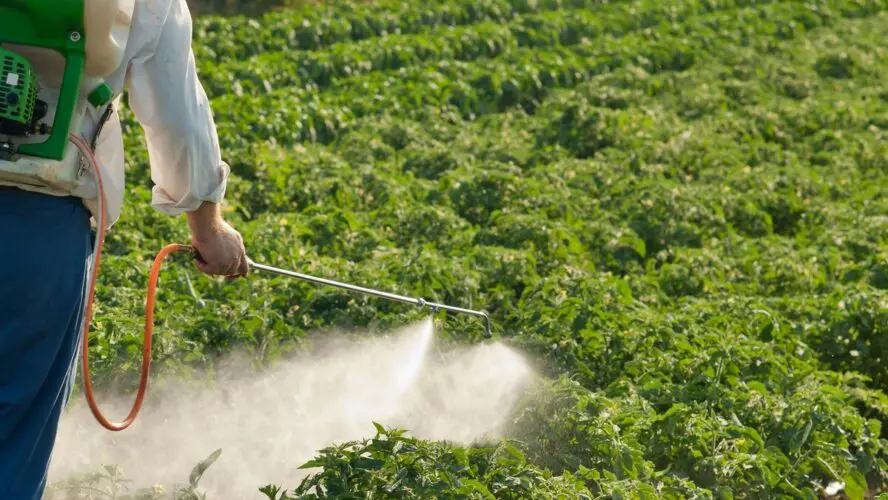
The human cost of pesticide exposure is disproportionately borne by those who live and work in agricultural communities. Farmers, farmworkers, commercial pesticide applicators, and rural residents experience significantly higher rates of specific cancers compared to the general U.S. population. These populations absorb chronic, low-dose exposures through direct application, airborne drift, and contaminated local water supplies.
For decades, common-law tort suits served as a vital accountability mechanism, forcing multi-national chemical conglomerates to pay compensation to victims while uncovering internal documents that often proved companies knew about health hazards long before informing the public. With state-level failure-to-warn lawsuits effectively neutralized, critics argue that a critical deterrent against corporate negligence has been eradicated.
The EPA’s Carcinogenic Catalog
According to documentation cited in recent emergency petitions by environmental organizations, the scope of pesticide-linked carcinogenesis is staggering. Federal evaluations have identified 199 active pesticide ingredients that possess proven links to cancer.
Alarmingly, of those 199 hazardous substances, 124 remain actively registered for use in the United States today, applied to food crops, residential lawns, and commercial agricultural fields without any mandatory disclosure of their carcinogenic profiles to the end-user or consumer.
Notable examples of hazardous chemicals currently under intense scientific scrutiny include:
- Mancozeb: A widely utilized agricultural fungicide that peer-reviewed toxicological studies have linked to an increased risk of ovarian cancer among female agricultural workers and rural residents.
- Carbaryl: A prominent organophosphate insecticide whose chronic exposure has been associated with elevated risks of developing stomach and esophageal cancers.
- Glyphosate: The active ingredient in Roundup, which has spawned tens of thousands of lawsuits nationwide linking long-term exposure to non-Hodgkin’s lymphoma.
Despite mounting peer-reviewed evidence published in toxicological journals, federal labeling requirements have routinely lagged behind independent scientific consensus, leaving applicators unprotected and unaware of the silent risks they face in the field.
Official Statements and Counter-Perspectives
The ideological war over pesticide labeling and corporate liability has created a deeply polarized ecosystem of stakeholders, ranging from industry representatives to grassroots environmental defenders.
The Environmental Advocates Push Back
Frustrated by congressional inertia and judicial setbacks, non-profit organizations have mobilized to pressure executive regulatory bodies. In July, the Center for Biological Diversity launched a strategic offensive by filing an emergency legal petition demanding that the EPA use its existing administrative authority to mandate clear, prominent cancer warning labels on all pesticide products containing known carcinogens.
Nathan Donley, Environmental Health Science Director at the Center for Biological Diversity, did not mince words when criticizing the federal government’s historic lethargy.

"It’s more important than ever for the EPA to finally start requiring pesticide companies to put cancer warnings on products the agency itself has linked to cancer," Donley stated. "We’re asking for something ridiculously easy. Just warn the public of the serious health risks the EPA already knows about. In other words, do your job."
Environmental advocates maintain that even if federal preemption blocks state-level lawsuits, the EPA holds independent administrative power under FIFRA to update labeling guidelines and force manufacturers to tell the truth about their products’ toxicological impacts.
The Agrochemical Industry Defense
Conversely, trade associations representing chemical manufacturers and large-scale agricultural enterprises maintain that uniform federal regulation is essential for maintaining stability in the food supply chain and avoiding a chaotic patchwork of conflicting state-level mandates.
Industry proponents argue that subjecting federally approved products to fifty different state standards would create an unworkable economic burden, stifling innovation and driving up food prices. They contend that the EPA—rather than individual state courts driven by tort litigation—is the appropriate scientific body equipped to evaluate complex risk-benefit analyses regarding agricultural chemicals.
The EPA’s Official Stance
Caught between aggressive environmental petitions and intense agricultural lobbying, the Environmental Protection Agency has maintained a cautious, non-committal posture. Responding to inquiries regarding the Center for Biological Diversity’s emergency petition, an EPA press office representative issued a brief, boilerplate statement:
"As with all petitions, EPA will evaluate the incoming petition."
Whether this bureaucratic evaluation will translate into substantive regulatory changes or whether it will languish in administrative review remains one of the most pressing questions for public health advocates.

Future Outlook: Where Do Consumers and Workers Go From Here?
As the dust settles on the defeated Farm Bill amendment and the fallout from the Supreme Court’s preemption ruling continues to unfold, the landscape of agricultural health and safety is undergoing a profound structural shift.
With judicial avenues all but closed and legislative fixes blocked by partisan divides in Congress, the immediate future of pesticide reform will likely pivot on three main fronts:
- Administrative Pressure: Non-profit legal groups will continue to file emergency petitions and potential lawsuits against the EPA, attempting to force the agency’s hand through the Administrative Procedure Act. If the EPA refuses to act on known carcinogens, environmental lawyers may challenge those denials in federal appellate courts.
- Market-Driven Shifts: As consumer awareness regarding pesticide risks increases, market demand for organic produce and regenerative agricultural practices may exert indirect pressure on agrochemical giants. Retailers and food conglomerates could increasingly demand chemical-free or low-pesticide supply chains to protect their own brand reputations.
- State-Level Innovation: While direct failure-to-warn lawsuits are currently stymied by federal preemption, legal scholars are actively exploring alternative state-level regulatory frameworks—such as groundwater protection acts, worker safety standards, and zoning ordinances—that might withstand judicial scrutiny without violating FIFRA’s packaging preemption clauses.
The battle over pesticide accountability is far from over. While chemical conglomerates have secured a temporary upper hand in the courts and legislative chambers, the persistent, vocal demands of public health advocates, combined with the undeniable reality of rising cancer rates in agricultural communities, ensure that the debate over corporate transparency and right-to-know protections will remain at the forefront of national discourse.