Executive Overview
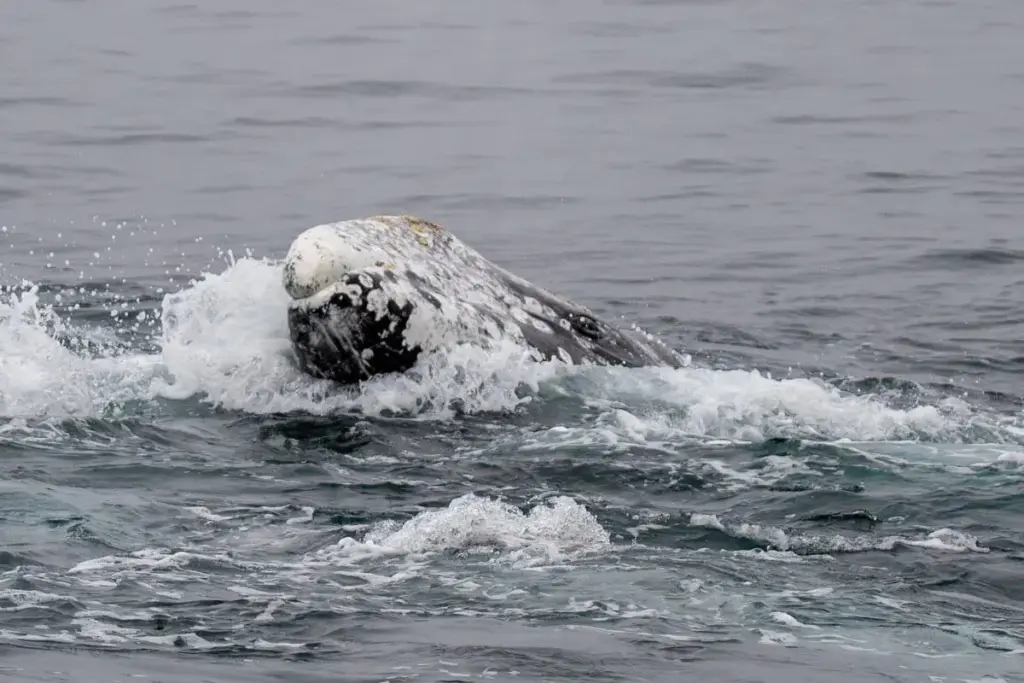
In a decisive escalation of an ongoing ecological battle, a coalition of prominent environmental organizations has officially served a notice of intent to sue the United States National Marine Fisheries Service (NMFS). The impending legal action targets the federal agency for its failure to act on a petition filed in 2025 demanding emergency protections for the Eastern Pacific gray whale (Eschrichtius robustus) under the United States Endangered Species Act (ESA).
Once heralded as one of modern conservation’s most resounding success stories, the Eastern Pacific gray whale population is now experiencing a sudden, catastrophic collapse. Data from conservation groups and independent scientific monitors reveal that the population has plummeted by nearly 30% in just a four-year window. Between 2019 and 2023, numbers dropped from an estimated 20,500 individuals to a fragile 14,526.
Under federal law, the NMFS—a division of the National Oceanic and Atmospheric Administration (NOAA)—was legally bound to publish a 12-month finding on the 2025 relisting petition by August 24, 2026. When that deadline passed with absolute silence from the agency, environmental advocates took action. The lawsuit highlights systemic enforcement delays within federal wildlife management under the Trump administration and underscores a broader, terrifying reality: without immediate, federally mandated interventions, one of the ocean’s most charismatic and culturally significant species could face total extinction within a generation.
Detailed Chronology of a Conservation Crisis
To understand the urgency of the current legal challenge, one must examine the historical trajectory of the Eastern Pacific gray whale—a creature that has repeatedly found itself at the mercy of human industrialization, international policy, and now, rapid planetary warming.
The Whaling Era and Historic Recovery
For centuries, gray whales were heavily targeted by commercial whaling fleets. Intensive hunting drastically reduced their numbers, pushing the species toward the brink of functional extinction by the early-to-mid 20th century. However, the implementation of international whaling bans, paired with domestic safeguards, provided a lifeline.
When the Endangered Species Act was passed in 1973, it offered a powerful legal framework to shield recovering populations. Bolstered by these robust protections, the Eastern Pacific gray whale staged a remarkable comeback. By 1994, the population had rebounded sufficiently for federal regulators to declare the species a conservation triumph, removing it from the ESA’s threatened and endangered lists. For nearly three decades, marine biologists and conservationists pointed to the gray whale as living proof that dedicated environmental policy could reverse anthropogenic damage.
The 2019–2023 Mortality Event
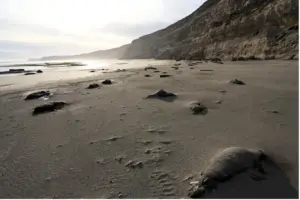
That hard-won optimism began to fracture in 2019. Marine scientists and federal researchers noted an alarming spike in strandings along the migration corridor stretching from Mexico’s Baja Peninsula up to the waters of Alaska. This surge in dead whales prompted NOAA to declare an Unusual Mortality Event (UME).
Subsequent population counts laid bare the grim reality of the UME. While the population sat at a healthy 20,500 whales in 2019, successive annual surveys showed relentless declines. By 2023, the census hit 14,526. Independent nonprofits, including Public Employees for Environmental Responsibility (PEER), highlighted that roughly 30% of the entire population had vanished in an astonishingly brief four-year span—a rate of decline that caught the scientific community completely unawares.
The 2025 Relisting Petition and Broken Deadlines
Recognizing that the gray whale was sliding backward into perilous territory, a coalition of environmental groups formally petitioned the NMFS in 2025. The petition requested immediate consideration to relist the Eastern Pacific gray whale under the ESA, which would legally obligate the federal government to draft recovery plans, designate critical habitats, and enforce stricter protections against anthropogenic stressors.
According to statutory guidelines under the ESA, the NMFS is required to review such petitions and publish a comprehensive 12-month finding within a year of receipt—meaning a formal decision was mandated by August 24, 2026. When that date came and went without a published finding or formal explanation from the agency, the legal threshold for a citizen lawsuit was triggered. On August 20, 2026, the legal framework for the lawsuit was finalized, setting the stage for a high-stakes courtroom showdown.
Supporting Context and Metrics: Understanding the Drivers of Collapse
While the historical legacy of commercial whaling created a genetic bottleneck, scientists emphasize that today’s catastrophic die-off is driven by a toxic mix of contemporary pressures—chiefly, the rapid, compounding effects of Arctic climate change, alongside localized marine hazards.
+-------------------------------------------------------------+
|          EASTERN PACIFIC GRAY WHALE POPULATION SHOCK        |
+-------------------------------------------------------------+
|  2019 Population Estimate  ~~~~~~~~~~~~~~~~~~>  ~20,500     |
|  2023 Population Estimate  ~~~~~~~~~~~~~~~~~~>  ~14,526     |
|  Total Four-Year Loss      ~~~~~~~~~~~~~~~~~~>  Nearly 30%  |
+-------------------------------------------------------------+
Climate Change and the Arctic Food Web Disruption
Unlike other marine mammals facing threats primarily from localized pollution or overfishing, gray whales are deeply tied to the health of the Arctic ecosystem. Every summer, these marine mammals migrate thousands of miles north to feed voraciously on benthic amphipods—small, shrimp-like crustaceans living in the muddy sediments of the Bering, Chukchi, and Beaufort seas. They store this thick layer of blubber to sustain themselves through their long southern migration and breeding season.
However, rapid warming in the Arctic—occurring at nearly four times the rate of the rest of the planet—has fundamentally destabilized this delicate marine food web. Sea ice is retreating earlier and forming later, water temperatures are spiking, and the abundance and nutritional quality of benthic prey have plummeted.
Biologists monitoring the situation note that the whales are quite simply starving. Emaciated gray whales washing ashore frequently display empty stomachs and severe muscle wasting. Unable to secure sufficient caloric intake in their historic Arctic feeding grounds, the whales are failing to accumulate the energy reserves necessary to survive migration, reproduction, and disease resistance.

Anthropogenic Hazards: Ship Strikes and Entanglements
Compounding the nutritional crisis are the ever-present dangers posed by human maritime activities. As gray whales hug the coastlines during their grueling 10,000-mile round-trip migration—one of the longest of any mammal on Earth—they must navigate some of the busiest shipping lanes and commercial fishing grounds in the world.
- Vessel Collisions: High-speed container ships, cargo vessels, and commercial ferries routinely cross paths with migrating pods. Despite localized pilot projects—such as experimental slow-speed zones in San Francisco Bay designed to help vessels avoid marine life—ship strikes remain a persistent, often fatal hazard.
- Gear Entanglements: Fixed-gear fisheries, particularly those targeting Dungeness crab and sablefish, deploy miles of vertical lines and heavy buoys in coastal waters. Whales traveling through these zones frequently become hopelessly tangled, leading to exhaustion, starvation, or severe propeller and line injuries.
Official Statements and Institutional Responses
The failure of the federal government to meet its statutory deadlines has drawn sharp rebukes from environmental leaders, while federal agencies have retreated behind bureaucratic walls of silence.
Environmental Leaders Sound the Alarm
The decision to pursue legal action reflects a deep-seated frustration among conservation groups who view the current administration’s foot-dragging as a direct violation of environmental law.
"The Trump administration has once again broken one of the nation’s bedrock environmental laws — the ESA — by failing to respond to our August 2025 petition to list gray whales under the Act," stated Rick Steiner, founder of Oasis Earth, in a scathing press release. "NOAA’s own science shows the gray whale population to be in grave danger due to Arctic climate change and other threats, and the government is now required to afford the whales all additional protections provided by the ESA."
The existential timeline facing the species was further underscored by Mark J. Palmer, associate director of the International Marine Mammal Project.
"The sudden collapse of the gray whale population has come as a shock," Palmer remarked. "This catastrophic decline may result in the loss of the entire population in as soon as 10 years if current conditions continue. Listing the species is an important step in marshalling support for the grays."
Federal Silence and the Bureaucratic Stance
In light of the impending legal challenge, media outlets, including Mongabay, reached out to the National Oceanic and Atmospheric Administration—the parent agency overseeing the National Marine Fisheries Service—to demand an explanation for the delayed finding.
When pressed for comment regarding the statutory deadline violation, NOAA spokesperson Michael Milstein offered a brief response via email:
"Our policy is not to comment on litigation matters."
This refusal to engage publicly on the merits of the delay has only fueled suspicions among conservationists that political considerations or industry lobbying are superseding ecological science within federal management circles.
Future Outlook: What Lies Ahead for the Gray Whale?
As the environmental coalition prepares to file its formal complaint in federal court, the immediate future for the Eastern Pacific gray whale hangs in a precarious balance.
The Legal Battleground
If the courts rule in favor of the plaintiffs, the NMFS will be legally compelled to expedite its review of the 2025 petition and issue a formal finding. Should the agency acknowledge the science and grant candidate or endangered status to the gray whale, it would trigger a mandatory federal response:
- Critical Habitat Designation: Areas vital for feeding, nursing, and migration would receive stringent federal safeguards.
- Inter-Agency Consultation: Federal projects—ranging from offshore energy leasing to coastal dredging—would require rigorous consultation to ensure they do not jeopardize the species’ survival.
- Enhanced Mitigation for Fisheries and Shipping: Regulators could mandate mandatory speed restrictions for vessels in migration corridors and require modified or ropeless fishing gear in high-risk zones.
A Race Against Time in a Warming Ocean
Even with immediate legal protection, the structural drivers of the crisis remain immense. A stroke of a judge’s pen or a federal agency listing cannot instantly cool the Arctic waters, restore benthic amphipod populations, or halt global climate trends.
Marine scientists emphasize that while ESA listing is a vital, non-negotiable legal baseline, saving the gray whale will ultimately require an unprecedented integration of localized marine spatial planning, international climate action, and adaptive fisheries management. Without these comprehensive measures, humanity risks watching helplessly as one of the ocean’s most magnificent survivors slips quietly into extinction.