

Executive Overview
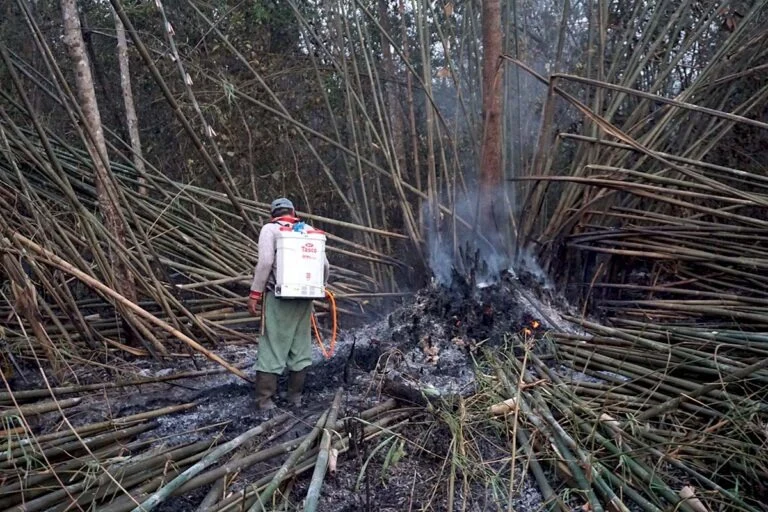
The dry, brittle brush of South Sumatra’s rubber plantations crackled with an ominous urgency as flames swept through Talang Turunan Gajah on September 5. For 30-year-old Sumanti, the emergency began with a frantic motorcycle ride past dying groves and unanswered phone calls. "The fire is already approaching our land," she cried out, her voice cracking with the weight of impending ruin. Within minutes, her family mobilized, abandoning all else to encircle the advancing wall of fire with 35-liter fertilizer sprayers and whatever water they could haul from a partially dried-out swamp.
Sumanti’s struggle is not an isolated incident. Across Indonesia, an intensifying El Niño weather phenomenon has triggered a severe wildfire crisis, turning vast swathes of Sumatra and Borneo into tinderboxes. The crisis bears a chilling resemblance to the catastrophic 2015 Southeast Asian wildfire disaster—an event fueled by a strong El Niño and positive Indian Ocean Dipole (IOD) that drove Indonesia’s daily carbon dioxide emissions past those of the entire U.S. economy and contributed to more than 100,000 premature deaths across the region. Today, transboundary haze has once again drifted into Malaysia and Singapore, prompting urgent health advisories.
Yet, deep within the customary territories of South Sumatra, a quiet resilience persists. While industrial monocultures and commercial oil palm plantations face severe scrutiny for their role in spreading the infernos, smallholder rubber tappers like Sumanti are fighting back. Drawing on centuries-old Indigenous practices of water management, fire control, and community-driven mutual aid, these local guardians are working desperately to protect not only their fragile livelihoods, but also the ecological stability of a region threatened by modern extractive economics.
Detailed Chronology: The Battle for Talang Turunan Gajah
The morning of September 5 began like any other in the remote hamlet of Tempirai, located in the Penukal Abab Lematang Ilir (PALI) Regency of South Sumatra province. However, weeks of unrelenting drought had drained the local ecosystems, lowering water tables and turning subterranean peatlands and surface vegetation into ideal fuel for runaway fires.
The First Wave of Panic
At approximately midday, Sumanti noticed plumes of dark smoke billowing near her family’s rubber smallholding. Realizing that local emergency services were unreachable—with phone lines jammed or calls left unanswered—she sprang into action. Racing her motorcycle down narrow dirt tracks flanked by vulnerable rubber trees, she sounded the alarm to anyone within earshot.
By the time she reached her relatives, the fire had advanced dangerously close to their primary source of income. Rejecting passive despair, the family of four mobilized a makeshift firefighting unit. Using 35-liter (9-gallon) agricultural sprayers normally reserved for dispersing soil fertilizers, they began a grueling, back-breaking routine. For over two hours, they scrambled back and forth between their plots and a partially dried-out swamp, hauling heavy loads of water to drench the brush.

Reinforcements Arrive
Despite their tireless efforts, the flames continued to crackle through the dry bamboo and undergrowth. The turning point arrived when three local men rushed to the scene carrying a 15-horsepower water pump and a heavy-duty discharge hose. Powered by a community-funded diesel pool, the pump transformed a desperate bucket-brigade defense into an organized suppression effort.
By late afternoon, the combined forces of family and community members successfully subdued the blaze. As the smoke cleared, Sumanti stood amidst the charred perimeter of her property, exhausted yet relieved. Her family’s smallholding had survived—a stark contrast to the fate suffered by their neighbors just 24 hours prior.
A Neighbor’s Devastation
On September 4, a fast-moving wildfire swept through the neighboring 2-hectare (5-acre) smallholding managed by 41-year-old Hendra. Unlike Sumanti’s plot, Hendra’s rubber trees were entirely consumed by the flames.
"We’ve lost hundreds of millions of rupiah," Hendra lamented, counting losses equivalent to thousands of dollars. "Now we’re forced to plant new trees—and wait five years for them to produce again."
For smallholders living on the margin of subsistence, a five-year recovery window is an economic death sentence. With latex production already plummeting across Tempirai due to the protracted drought—dropping from a weekly average of 80 kilograms (176 pounds) down to a mere 30 kilograms (66 pounds)—the fires represent an existential threat to the region’s rural economy.
Supporting Context & Metrics: Anatomy of an Ecological Crisis
To fully grasp the magnitude of the current crisis in South Sumatra, one must examine the intersection of modern agricultural expansion, climate anomalies, and historical land-use patterns.

The El Niño Catalyst and Transboundary Haze
The recurrence of severe land and forest fires in Indonesia is heavily dictated by climate oscillations. The current El Niño cycle has suppressed seasonal rainfall, extending the dry season well beyond its normal boundaries and turning wetlands, forests, and degraded lands into explosive fuel beds.
The consequences extend far beyond local property damage. Winds have carried thick, toxic haze across the Malacca Strait, blanketing parts of Malaysia and Singapore in hazardous smog. This transboundary pollution has triggered immediate public health concerns, particularly for vulnerable populations such as children and the elderly.
The scale of carbon emissions released by these fires recalls the ecological catastrophe of 2015. During that year, uncontrolled burning on carbon-rich peatlands caused Indonesia’s daily greenhouse gas emissions to temporarily eclipse the entire economic output of the United States. Epidemiological studies later estimated that the resulting air pollution contributed to more than 100,000 premature deaths across Indonesia, Malaysia, and Singapore.
Rubber Versus Oil Palm: Vulnerability and Fire Resilience
A critical point of tension highlighted during Mongabay’s field investigations in Tempirai is the stark contrast in fire vulnerability between traditional rubber agroforests and industrial oil palm plantations.
Rubber trees (Hevea brasiliensis) are exceptionally sensitive to fire. When flames sweep through a rubber smallholding, the heat quickly scorches the living tissues beneath the delicate bark. This thermal shock destroys the tree’s vascular system, halting its ability to circulate water and nutrients, resulting in rapid mortality.
Conversely, oil palms (Elaeis guineensis) exhibit a higher degree of physical resilience to low-intensity fires. Their vascular bundles are distributed throughout the trunk rather than concentrated in a vulnerable exterior layer, allowing many palms to survive scorching that would prove fatal to rubber trees.

According to Ibrahim, a 56-year-old Tempirai community elder, this physiological disparity has fostered deep social and ecological divisions within the region. "The wildfires have been rampant since the early 2000s, when the oil palm plantations arrived," Ibrahim noted. Pointing out that industrial and smallholder oil palm cultivation has expanded rapidly into both mineral soils and carbon-dense peatlands, he emphasized: "It’s impossible for people growing rubber to burn the land. Our livelihoods depend on keeping these trees alive."
Field surveys conducted on September 6 in traditional Musi Indigenous territories—such as Talang Tanjung Eran and Talang Sebetung—corroborated this assertion. Mongabay researchers found zero burned areas within the small rubber holdings of Talang Sebetung, an isolated community accessible only via a 1.5-hour boat journey during the wet season. Here, residents rely entirely on rubber tapping, subsistence farming, and seasonal fishing in Lake Sebetung.
However, with Lake Sebetung and local water wells almost entirely dried up, residents like 42-year-old Edi Sukari fear the worst. "Everything is dry, so if it catches fire, of course it’s going to go," Edi warned. "If a fire breaks out here, we’re finished—so right now, fire is our enemy. If the dry season lasts until October or November, we could be facing a water crisis."
Ancient Wisdom: Water Management and Controlled Burns
While modern regulations have instituted sweeping bans on the use of fire for land clearing—policies that date back in various forms to the 1980s—indigenous communities have long maintained a sophisticated, nuanced relationship with fire and water.
Historically, smallholders in Tempirai utilize controlled burns to prepare the ume, the community’s traditional crop-growing zones. However, unlike industrial operations that apply fire indiscriminately or during peak drought conditions, traditional farmers practice burning strictly in stages and only during the seasonal transition phases (typically ahead of planting seasons in October or November). Furthermore, mandatory firebreaks are constructed, and burning is restricted to daylight hours under constant supervision. If shifting winds or erratic weather patterns present any hazard, the fires are extinguished immediately.
This deep-rooted understanding of hydrology and fire management is not a recent innovation. Ryllian Chandra, a water policy researcher at Raden Fatah State Islamic University in Palembang, points to historical evidence inscribed in stone over 1,300 years ago.

"Long ago, water management can be seen in the Talang Tuwo inscription, established by the ruler of the Srivijaya Kingdom," Chandra explained. Dating back to 684 C.E. and written in Old Malay, the inscription documents the creation of sacred green parks and the meticulous engineering of ponds, canals, and dams under King Sri Jayanasa.
According to Chandra, these ancestral methods for regulating water tables near human settlements have been progressively eroded by the rise of industrial monoculture plantations and extractive economic behaviors. Restoring this traditional ecological knowledge, he argues, is vital to mitigating both severe dry-season water shortages and catastrophic wildfires.
Official Statements and Community Perspectives
As institutional firefighting resources remain stretched thin across vast rural landscapes, local communities have been forced to rely on self-organization and grassroots solidarity.
-
Sumanti, Rubber Smallholder:
"The fire is already approaching our land… We didn’t wait for help because no one answered the phone. We had to use our own sprayers and haul water from the swamp just to keep the trees from burning down."
-
Hendra, Rubber Farmer (Victim of Sept. 4 Fire):

"We’ve lost hundreds of millions of rupiah. Now we’re forced to plant new trees—and wait five years for them to produce again."
-
Sadikin, Local Resident and Equipment Owner:
"There aren’t any firefighters here. When there’s a fire in the trees here, the people work together. We pool our money to buy diesel for the water pump because if we don’t save our land ourselves, nobody else will."
-
Ibrahim, Tempirai Community Elder:
"The wildfires have been rampant since the early 2000s, when the oil palm plantations arrived. It’s impossible for people growing rubber to burn the land. If there are indications of strong winds, the fire has to be extinguished immediately. Most importantly, burning is carried out during the day so it’s visible."
-
Ryllian Chandra, Water Policy Researcher, Raden Fatah State Islamic University:

"Methods for regulating water near human settlements, passed down through the generations, risked being lost amid the rise of industrial plantations and monocultures, potentially contributing to wildfires and worsening water crises during the dry season. It’s vital to restore this knowledge amid the growth of extractive economic behaviors."
Future Outlook: A Race Against Time
As the dry season drags on into its critical final months, the outlook for South Sumatra’s rural communities remains perilous. Meteorological forecasts indicate that El Niño-induced dry conditions will continue to exert pressure across Indonesia, keeping fire risk exceptionally high throughout Sumatra and Borneo.
The juxtaposition between industrial extractive models and traditional agroforestry highlights a profound policy challenge for the Indonesian government. While national and regional authorities continue to enforce strict zero-burning edicts and deploy mobile firefighting units, enforcement gaps in remote areas leave smallholder communities dangerously exposed.
Experts and community leaders emphasize that long-term mitigation cannot rely solely on punitive bans or reactive emergency responses. Instead, a sustainable future depends on:
- Integrating Indigenous Knowledge: Incorporating historical water-management frameworks—reminiscent of the Srivijaya era—into regional spatial planning and watershed restoration projects.
- Peatland and Hydrological Restoration: Re-wetting degraded peatlands and protecting remaining natural water sources (paye) that serve as critical ecological firebreaks.
- Empowering Local Infrastructure: Providing rural hamlets like Tempirai with decentralized firefighting equipment, reliable communication networks, and financial support for community-led prevention programs.
Until systemic reforms are fully realized on the ground, families like Sumanti’s will remain on the frontline—relying on diesel pumps, fertilizer sprayers, and generational solidarity to defend their trees against an increasingly volatile climate future.



