

BODEGA BAY, CA — On Sunday, August 9, 2026, the rugged, windswept coastline of Bodega Bay will welcome a unique kind of maritime conqueror. Former NCAA champion, U.S. National Team swimmer, and legendary open-water endurance athlete Catherine Breed will arrive in this iconic Northern California fishing community as part of her monumental Swim California expedition. Her mission: a grueling, 900-mile human-powered trek down the entire length of the Golden State’s coast.
Yet, as Breed emerges from the chilly Pacific waters at Westside Regional Park and Campground, her historic endeavor will take on a deeper, collective purpose. Her arrival marks a high-profile pause to celebrate the Greater Farallones Hope Spot—a world-renowned marine sanctuary that stands as a living testament to what collective environmental stewardship, rigorous science, and long-term conservation policies can achieve when nature is given the space and time to heal.
At 4:00 p.m. that afternoon, Breed will headline a major community gathering alongside conservation heavyweights Mission Blue, the Greater Farallones Association, and Blue Frontier. Open to the public, the event will explore the transformative power of marine protection, highlighting how resilient coastal ecosystems can serve as blueprints for climate and ecological survival.
Executive Overview: The Intersection of Endurance and Environmental Activism
Endurance swimming is inherently an act of solitary determination. To stare down miles of open ocean, braving frigid temperatures, unpredictable currents, and marine wildlife, requires an extraordinary psychological and physical threshold. For Catherine Breed—whose decorated open-water resume boasts historic record-breaking swims across Lake Tahoe, Monterey Bay, and the English Channel—the open sea is both a arena and a classroom.
However, Swim California was never designed to be merely a test of physical limits. From its inception, the 900-mile expedition was envisioned as a floating mobile stage to spotlight the unsung heroes of California’s coastline: the grassroots activists, field scientists, volunteers, and policy advocates fighting to preserve the state’s marine habitats.
As Breed navigates the Greater Farallones National Marine Sanctuary, she is swimming through one of the most ecologically rich and rigorously protected marine environments on Planet Earth. Here, decades of proactive conservation—ranging from volunteer beach monitoring to innovative bull kelp forest restoration—have allowed vulnerable marine life, including rockfish populations and towering kelp forests, to exhibit remarkable resilience in the face of broader climatic crises.
By tying her athletic feat to the global Mission Blue Hope Spots initiative, Breed is bridging the gap between raw physical endurance and urgent environmental mobilization. The message of the Bodega Bay stop is clear: human connection must precede conservation. Before communities can be mobilized to protect their coasts, they must first understand, experience, and fall in love with them.
Detailed Chronology: Anatomy of a Historic Maritime Expedition
To understand the magnitude of Catherine Breed’s arrival in Bodega Bay, one must examine the logistical and physical anatomy of Swim California. Spanning 900 miles of diverse, dynamic, and often treacherous Pacific coastline, the expedition is structured around key regional stops designed to amplify local conservation narratives.
- The Genesis and Early Milestones: Launched to draw a direct line between the health of coastal communities and the vast Pacific ecosystem, Swim California utilizes real-time tracking via the Zero Six Zero Tracker and premium documentation by exclusive media partner Allez! Sports. Early legs of the journey, such as the widely praised coverage of Humboldt County’s coastal guardians, established a tone of investigative journalism mixed with environmental storytelling.
- Entering the Sanctuary Waters: As Breed pushes southward into the Greater Farallones National Marine Sanctuary, her route takes her past some of the most meticulously studied and monitored coastlines in North America. This region—stretching from San Mateo up to Mendocino County—is a crucible of marine science. Every mile swum corresponds to waters watched over by generations of citizen-science volunteers, such as the Greater Farallones Association’s Beach Watch program.
- The Bodega Bay Milestone (August 9, 2026): Reaching Bodega Bay represents a critical psychological and geographical midpoint in the expedition. At Westside Regional Park and Campground, the physical exhaustion of open-water swimming will temporarily yield to community engagement. The event serves as a focal point where scientists, policy experts, ocean advocates, and local residents can converge.
- The Multi-Format Media Rollout: Throughout the journey, Allez! Sports is capturing the expedition through a comprehensive series of video features, social media deep-dives, and weekly dispatches. This multimedia approach ensures that the localized victories of Bodega Bay and the Greater Farallones are broadcasted to a national and international audience, cementing the sanctuary’s status as a global benchmark for marine management.
Supporting Context & Metrics: The Ecological Significance of Greater Farallones
To fully appreciate the celebration in Bodega Bay, one must examine the extraordinary ecological machinery operating just beneath the surface of the Greater Farallones National Marine Sanctuary (GFNMS).
Just beyond San Francisco’s Golden Gate lies a marine ecosystem of global significance. The GFNMS encompasses an area of breathtaking biological productivity, driven by a rare convergence of oceanographic phenomena:
- Upwelling Dynamics: Deep, nutrient-rich waters are continuously churned up to the sunlit surface by a complex interplay of seafloor contours (bathymetry), regional ocean currents, and persistent coastal wind patterns.
- The Trophic Cascade: This solar-and-nutrient energy injection triggers massive micro-blooms of microscopic phytoplankton. These organisms form the foundational base of the marine food web, nourishing dense swarms of zooplankton.
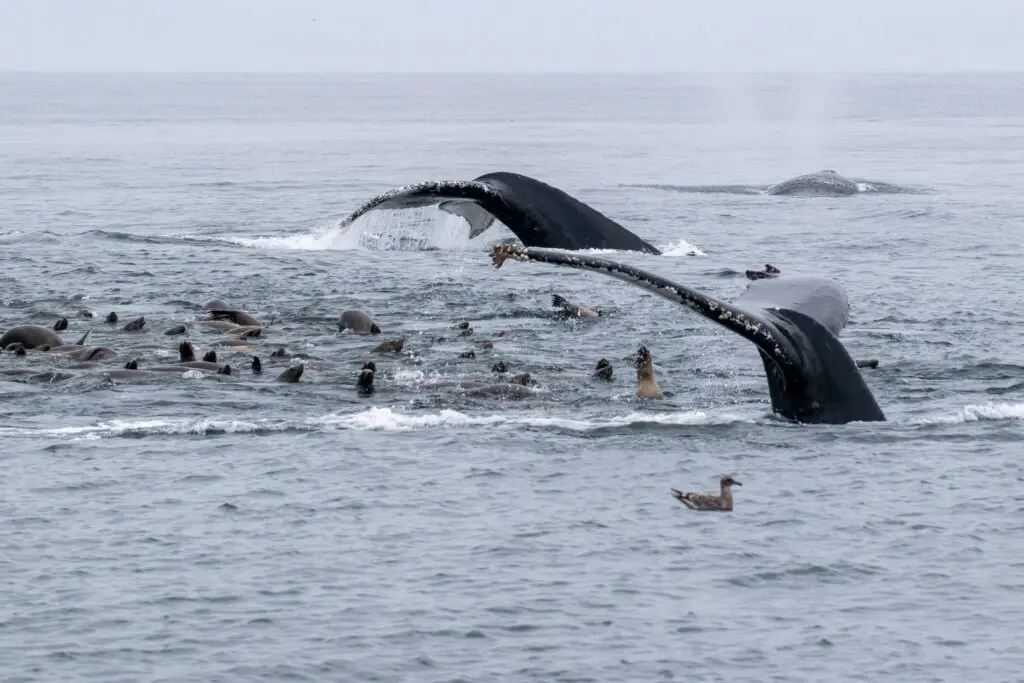
- Megafauna Abundance: The thriving zooplankton populations act as an all-you-can-eat buffet for an astonishing array of marine life, including commercially vital fish species, countless seabirds, harbor seals, sea lions, migrating cetaceans (such as humpback and blue whales), and apex predators like great white sharks.
Resilience Amid Crisis:
In recent years, California’s coastal ecosystems have faced unprecedented stressors, most notably marine heatwaves (such as "The Blob") and devastating ecological disruptions like the over-grazing of bull kelp forests by purple sea urchins. However, within the protected boundaries of the Greater Farallones Hope Spot, targeted restoration efforts—spearheaded by organizations like the Greater Farallones Association—have demonstrated that structured ecological intervention works. By actively restoring bull kelp habitats and maintaining rigorous baseline science, the sanctuary has helped vital marine species maintain a degree of climate resilience unseen in unmanaged waters.
Official Statements: Voices from the Forefront of Ocean Protection
The collaborative ethos driving the Bodega Bay event is best articulated by the leaders steering these conservation efforts:
"One of the most hopeful things we can learn from Bodega Bay is that when we protect the ocean and give it room to recover, nature can respond," said Catherine Breed. "Mission Blue connects this extraordinary place to a global movement, Greater Farallones Association brings the science, education, and stewardship to life, and Blue Frontier helps turn that knowledge into public action. Together, they demonstrate exactly what Swim California is about: connecting people to the ocean and celebrating the communities working every day to protect it."
"Catherine Breed’s Swim California journey is a powerful celebration of the people and places working to protect our shared ocean," noted Shannon McIntyre Rake, Senior Hope Spots Program Manager at Mission Blue. "As she swims through the Greater Farallones Hope Spot—and several other Hope Spots along the California coast—she is helping connect these extraordinary marine ecosystems and the communities committed to their care. Hope Spots remind us that meaningful ocean protection begins with local leadership, grows through collaboration, and can inspire action far beyond any one coastline."
"Every mile of Catherine’s journey through the Greater Farallones National Marine Sanctuary tells a story of conservation," stated Monika Krach, Executive Director of the Greater Farallones Association. "She’ll swim past beaches monitored by generations of Beach Watch volunteers, through waters where we’re restoring bull kelp forests, and in one of the world’s most productive marine ecosystems. We’re proud to help share the stories of the people and partnerships working to protect this extraordinary place."
Event Details: Join the Movement in Bodega Bay
For community members, environmental advocates, and sports enthusiasts wishing to witness history and participate in the dialogue, the Bodega Bay gathering is open to the public.
- 📍 Location: Westside Regional Park and Campground, 2400 Westshore Road, Bodega Bay, CA 94923
- 📅 Date & Time: Sunday, August 9, 2026, at 4:00 p.m. PST
- 🎟️ RSVP & Registration: Free public registration is available via Eventbrite.
Future Outlook: Legacy of the Swim California Expedition
As Catherine Breed pushes past Bodega Bay and continues her southward journey toward the conclusion of her 900-mile Odyssey, the ripples of Swim California will extend far beyond the immediate media cycle.
The expedition is actively redefining how modern environmental campaigns operate. By leveraging elite endurance sports as a vehicle for grassroots education, Swim California proves that ecological advocacy does not have to exist in academic isolation; it can be visceral, public, and deeply inspiring.
The success of the Greater Farallones Hope Spot serves as a beacon for what is possible along the entirety of the Pacific Rim. If local communities, empowered by organizations like the Greater Farallones Association, Mission Blue, Blue Frontier, and Sea Dreamers, can successfully steward a marine environment of this scale through decades of anthropogenic and climatic pressure, then expansion of marine protected areas elsewhere is not merely an idealistic dream—it is an achievable blueprint for planetary survival.
About the Organizing and Partner Organizations
- Catherine Breed: Former NCAA champion, U.S. National Team swimmer, and internationally recognized open-water athlete with record-breaking swims across Lake Tahoe, Monterey Bay, and the English Channel.
- Mission Blue®: Founded by legendary oceanographer Dr. Sylvia Earle, Mission Blue inspires public action and supports global communities in protecting Hope Spots—places scientifically identified as critical to the health of the ocean.
- Greater Farallones Association: The nonprofit partner to the Greater Farallones and Cordell Bank National Marine Sanctuaries, supporting foundational science, immersive education, and innovative restoration from San Mateo to Mendocino County.
- Blue Frontier: Builds solution-oriented citizen engagement by connecting grassroots leaders, scientists, policymakers, and storytellers to protect oceans, coasts, and dependent human and wild communities.
- Sea Dreamers: A nonprofit dedicated to connecting women to the ocean through adventure, education, and community, fostering lifelong commitments to marine conservation.
- Allez! Sports: A global women’s sports media company producing original series, documentaries, and live programming at the intersection of sport and culture, serving as the exclusive media partner for Swim California.
Follow the Journey
- Official Website: Swim California
- Live Tracker: Zero Six Zero Tracker
- Instagram: @catherine.breed
- Video Content: Swim California Trailer | Episode 1: The Guardians of Humboldt
Media Contact:
William Rinehart
Swim California Press Secretary
📧 Email: [email protected]
📱 Phone: 415.840.4168



