

Executive Overview
The global transition toward a decarbonized economy—anchored by the explosive growth of electric vehicles (EVs), renewable energy infrastructure, robotics, and advanced artificial intelligence hardware—relies heavily on a fragile, highly concentrated supply chain. At the epicenter of this vulnerability are rare earth permanent magnets, indispensable components for high-efficiency traction motors and wind turbine generators. For decades, the extraction and processing of these critical minerals have been dominated by foreign entities, leaving Western manufacturing acutely vulnerable to geopolitical tensions, trade restrictions, and supply shocks.
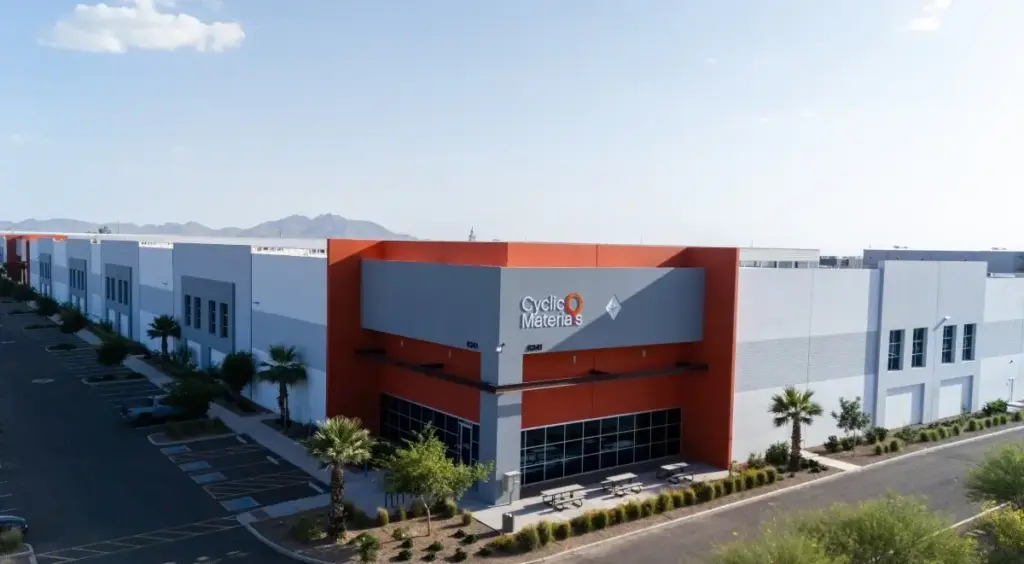
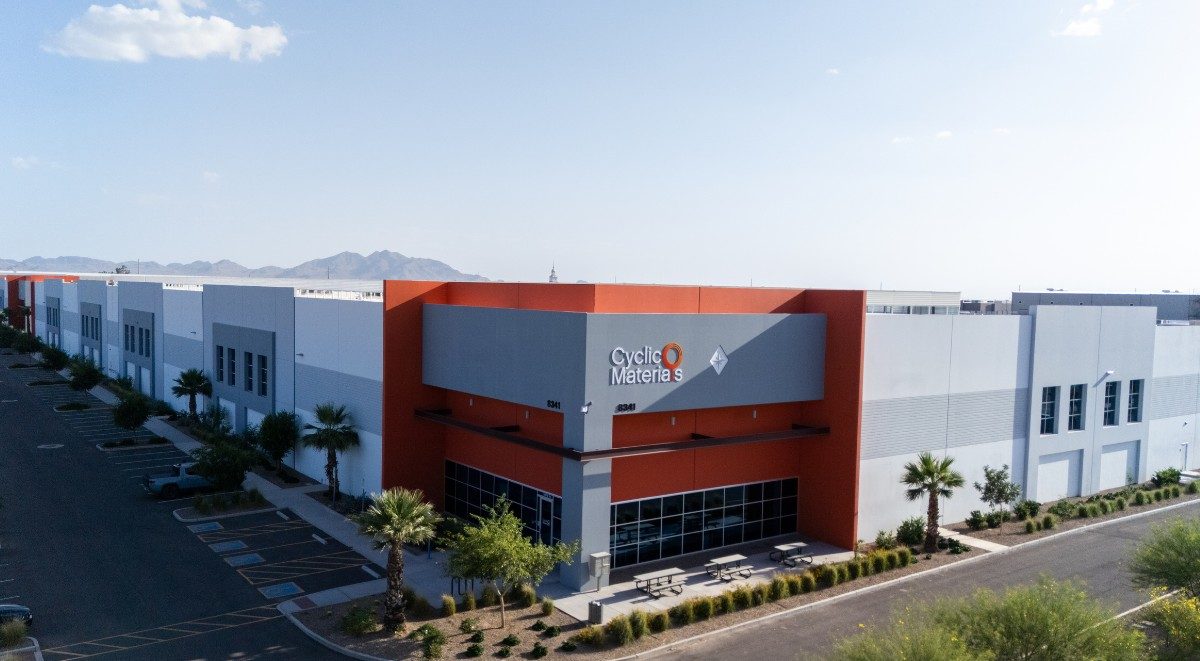
In a landmark development for domestic critical mineral infrastructure, Cyclic Materials has officially opened its first commercial-scale rare earth magnet recycling facility in Mesa, Arizona. Completed in a rapid 17-month window following its initial announcement, the state-of-the-art plant represents a major milestone in establishing an independent, circular supply chain within the United States. Capable of processing up to 25,000 metric tons of magnet-bearing, end-of-life products annually, the facility utilizes the company’s proprietary MagCycle technology to mechanically extract and recover valuable metals.
With over 7,000 metric tons of magnet-bearing material already delivered and processing underway, the Mesa plant is poised to begin commercial shipments to domestic customers. As global demand for rare earth elements is projected to triple by 2035, this facility—alongside Cyclic Materials’ broader multi-year infrastructure roadmap—offers a crucial blueprint for how advanced recycling can fortify North American manufacturing independence.
Detailed Chronology: From Concept to Commercial Reality
The launch of the Mesa facility is the culmination of meticulous engineering, strategic partnerships, and rapid industrial execution. The timeline of this project underscores the urgency with which private enterprises and industrial stakeholders are moving to close critical gaps in the domestic supply chain.
The Genesis and Announcement
The journey toward the Mesa, Arizona facility began nearly two years ago when Cyclic Materials formally announced its intentions to scale its proprietary recycling technology to an industrial level. Recognizing the immense bottleneck facing North American original equipment manufacturers (OEMs)—who struggle to secure consistent access to neodymium, dysprosium, and other critical rare earth elements—the company set out to build a plant that could bridge the gap between waste electronics and high-tech manufacturing.
Rapid Construction and Engineering Milestones
True to its aggressive infrastructure timeline, Cyclic Materials successfully completed the construction and commissioning of the Mesa plant just 17 months after the initial project announcement. This swift turnaround is particularly noteworthy within the heavy industrial and chemical processing sectors, where permitting, supply chain delays, and regulatory hurdles often push facility openings out by years. The successful deployment of the plant marks the first commercial-scale implementation of the company’s proprietary MagCycle architecture.
Securing the Feedstock: The ERI Partnership
A recycling facility of this magnitude requires a reliable, high-volume pipeline of feedstock. Cyclic Materials solved this challenge through a series of strategic supply agreements, most notably a landmark deal struck in July with national electronics recycler ERI. This partnership unlocks vast streams of electronic waste—ranging from discarded consumer electronics to decommissioned industrial machinery—ensuring that the Mesa plant has a steady influx of rare-earth-bearing material to process.
Operational Launch and First Deliveries
Operational momentum at the Mesa plant has accelerated rapidly. According to corporate disclosures, more than 7,000 metric tons of magnet-bearing material have already been delivered to the Arizona site. Processing operations are fully underway, and the company has announced that its inaugural commercial shipments of rare earth magnet concentrate—marketed under the trade name Mag-Xtract—alongside recovered copper, aluminum, and steel, will be dispatched to US customers.
Supporting Context & Metrics: The Geopolitical and Economic Imperative
To fully understand the significance of Cyclic Materials’ Mesa facility, one must examine the macroeconomic realities of the global critical mineral landscape. The intersection of surging demand, geopolitical concentration, and environmental necessity creates a compelling narrative for domestic recycling.
The Tripling Demand Crisis
According to comprehensive industry projections cited by Cyclic Materials, global demand for rare earth elements is on track to triple by the year 2035. This unprecedented surge is not driven by a single sector, but rather by the simultaneous expansion of several high-growth industries:

- Automotive: The mass electrification of passenger and commercial fleets requires millions of high-torque, permanent-magnet synchronous motors.
- Renewable Energy: Offshore and onshore wind turbine generators depend on rare earth magnets to convert kinetic wind energy into electrical power efficiently.
- Artificial Intelligence and Computing: The explosive buildout of AI data centers requires advanced hardware, robotics, and precision cooling systems that incorporate specialized magnetic components.
- Defense and Aerospace: Guidance systems, radar arrays, and propulsion technologies rely heavily on secure, uncompromised supplies of critical minerals.
The Geopolitical Bottleneck
Despite this surging demand, the supply chain for rare earth elements remains dangerously centralized. A vast majority of the world’s mining, separation, and magnet-production capabilities are concentrated in China. This imbalance leaves Western manufacturers vulnerable to export quotas, sudden trade embargoes, and geopolitical friction.
When foreign suppliers restrict access to critical minerals, production lines across the automotive and renewable energy sectors face immediate headwinds. Building a domestic recycling infrastructure serves as an essential economic shock absorber, ensuring that critical materials can be harvested from domestic waste streams rather than imported from geopolitically volatile regions.
Technological Innovation: The MagCycle Process
Traditional rare earth extraction and refining are notoriously energy-intensive and environmentally hazardous, often involving toxic chemical baths and massive strip-mining operations. Cyclic Materials’ proprietary MagCycle technology offers a radically cleaner, more efficient alternative.
The process utilizes advanced mechanical separation techniques to isolate permanent magnets from discarded end-of-life products without the heavy environmental footprint associated with primary mining. At the Mesa facility, this technology yields Mag-Xtract—a high-purity rare earth magnet concentrate—alongside industrial commodities such as copper, aluminum, and steel. By recycling these materials, manufacturers can achieve significantly lower carbon footprints while securing compliance with stringent environmental, social, and governance (ESG) standards.
Official Statements and Industry Perspective
The opening of the Mesa facility has drawn praise from industry leaders, environmental advocates, and economic policymakers alike, all of whom recognize the plant’s role in reshaping the North American industrial base.

Ahmad Ghahreman, CEO and founder of Cyclic Materials, emphasized the strategic importance of the facility during the launch event:
"Cette installation provides new capacity for the US to retain resource-rich products domestically and construct a resilient rare earth supply chain. Cyclic is rapidly closing critical gaps in the domestic supply chain as we expedite our rare earth and critical mineral infrastructure development across the United States."
Industry analysts have similarly lauded the development. By transforming end-of-life electronics and industrial machinery into valuable manufacturing inputs, Cyclic Materials is demonstrating that the circular economy is no longer a theoretical concept, but a commercially viable industrial reality. The ability to intercept valuable metals before they end up in landfills not only mitigates environmental waste but also insulates domestic manufacturers from the wild price fluctuations of the global commodity markets.
Future Outlook: Scaling the Circular Economy
While the opening of the Mesa, Arizona facility marks a monumental leap forward, it is merely the first phase of a much broader infrastructure strategy being deployed by Cyclic Materials.
The South Carolina Expansion
Building upon the success of the Mesa plant, Cyclic Materials has already set its sights on the East Coast. The company is actively developing a massive recycling campus in South Carolina, with an official opening targeted for 2028. Unlike the Mesa facility—which primarily focuses on mechanical separation and the production of magnet concentrate—the upcoming South Carolina campus is designed to integrate both magnet recovery and advanced rare earth refining at a single, centralized site.

This holistic approach will allow Cyclic Materials to deliver finished, battery- and motor-grade rare earth oxides directly to US manufacturing plants, further shortening the supply chain and reducing reliance on overseas processing facilities.
The Road Ahead for Domestic Manufacturing
As regulatory frameworks in the United States and Europe increasingly incentivize domestic sourcing—such as through the provisions of the Inflation Reduction Act—companies that pioneer circular supply chains will hold a distinct competitive advantage.
The success of Cyclic Materials in Mesa proves that private enterprise can rapidly deploy critical infrastructure to meet the demands of the clean energy transition. By proving that end-of-life wind turbines, electric vehicles, and consumer electronics can serve as the mines of the future, Cyclic Materials is helping to secure a resilient, self-sustaining industrial future for North America.



