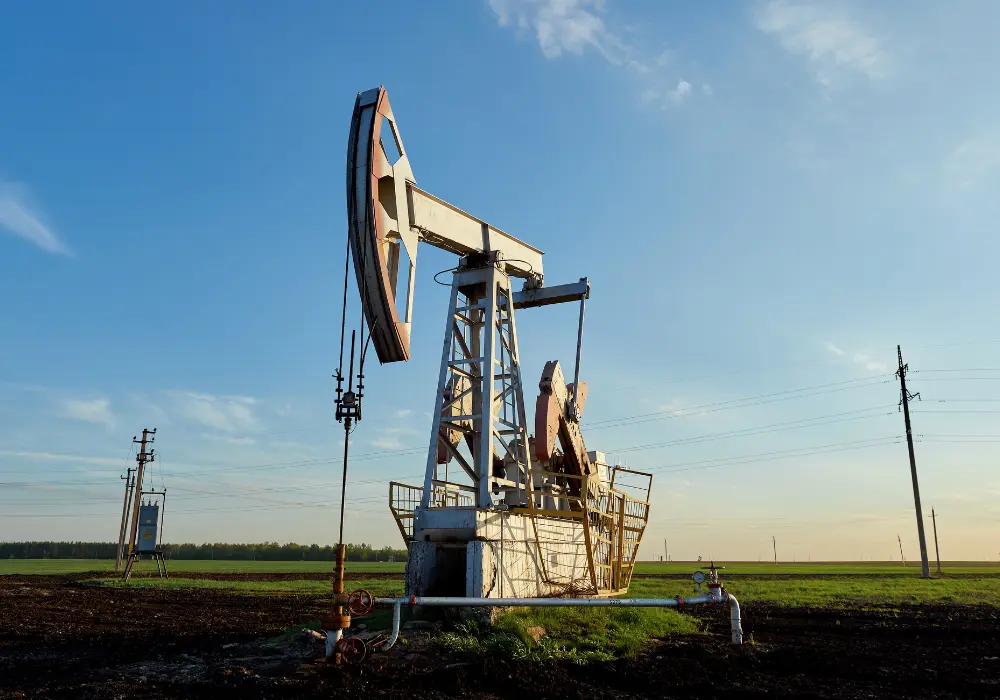
Executive Overview
The global energy landscape is undergoing a profound structural transformation, defined not by booming production and wildcat exploration, but by an unwavering corporate commitment to financial restraint. Over a recent two-week reporting window covering the spring quarter, major international oil companies (often referred to as supermajors) announced jaw-dropping financial windfalls. ExxonMobil pulled in a staggering $14.5 billion, Chevron recorded $12 billion—its highest quarterly profit in corporate history—and Shell posted $9.8 billion, more than doubling its earnings from the same period a year prior.
These extraordinary profits are the direct byproduct of severe geopolitical supply constraints and military conflict in the Middle East. With the critical Strait of Hormuz effectively blockaded amid escalating hostilities involving the United States, Israel, and Iran, traditional maritime oil pathways have been disrupted. Suppliers have been forced to reroute shipments over land and through constrained pipeline networks. The resulting supply shortages, combined with tight international refining capacity and soaring logistics costs, have sent crude oil and retail gasoline prices surging.
Yet, rather than plowing these windfalls back into aggressive exploration or rushing to develop untapped reserves, energy executives are exercising unprecedented restraint. Eschewing the historic "drill, baby, drill" ethos that once characterized the American and global oil patch, corporate boards are prioritizing "capital discipline." Rampant production growth has definitively given way to tightened operational budgets, leaner balance sheets, and historically massive payouts to shareholders.
This corporate posture has triggered a high-stakes collision between the energy industry and political leadership. Despite aggressive executive branch signaling, sweeping federal land lease sales, and public scolding over rising fuel costs, energy giants have remained largely indifferent to political appeals. For Wall Street and the modern oil executive, cash generation and shareholder returns reign supreme over national supply campaigns, leaving consumers to foot the bill while reshaping the geopolitics of modern energy security.
Detailed Chronology
To fully understand how the energy sector arrived at this historic inflection point, it is necessary to examine the cascading events and strategic shifts of recent years and months.
The Spring 2026 Earnings Shock
The trajectory of the current market was laid bare during the spring earnings reporting cycle. For years, financial analysts anticipated that 2026 would be a weak financial year for the energy sector, driven largely by projections of a global supply glut. Instead, geopolitical flashpoints intervened. The closure and effective blockading of the Strait of Hormuz strangled roughly 10% of global upstream production capacity.
Rather than viewing this shortfall as a mandate to drill, companies utilized existing inventories and refining assets outside the Middle East to capture top-dollar margins. ExxonMobil reported a net income of $14.5 billion for the quarter, while Chevron reached an all-time corporate high of $12 billion. Shell’s $9.8 billion haul cemented a trend where supply constriction yielded exponentially higher financial returns than volume growth ever could.
The Political Push and Corporate Wall
As retail gasoline prices climbed through the spring and early summer of 2026, the political fallout was immediate. The Trump administration, banking on its core policy platform of "unleashing" domestic and international energy production, attempted to galvanize the oil majors.
- January 2026: Following the detention of Venezuelan leader Nicolás Maduro, the administration assured the public that U.S. oil majors would aggressively move to secure and develop Venezuela’s vast heavy oil reserves. However, corporate players remained deeply wary, treating the market with extreme selectivity.
- Spring 2026: The federal government opened up new domestic public lands and federal tracts—including controversial lease sales in Alaska’s Arctic National Wildlife Refuge (ANWR)—for oil and gas development. The industry response was lukewarm at best, reflecting minimal capital allocation toward speculative domestic expansion.
- August 2026: With American motorists bleeding cash at the pump, President Donald Trump publicly accused oil companies of "making too much money" off the back of the Iran war. Despite the high-profile rhetorical pressure, the administration found itself entirely unable to compel corporations to significantly scale up drilling.
The Legacy of Past Crashes
The roots of this restraint trace back to the painful market lessons of the previous decade. During the fracking boom of the 2000s and early 2010s, executive compensation was explicitly tied to production growth. Investors poured cheap capital into the sector, fueling a relentless drive to pump more oil regardless of market saturation.
This hyper-growth strategy ultimately triggered devastating market corrections:
- 2014: A Saudi Arabia-led coalition of oil-producing nations flooded global markets with crude, precipitating a severe price crash that wiped out profit margins and stranded high-cost assets.
- 2020: The COVID-19 pandemic paralyzed global travel and economic activity, sending oil demand off a cliff and briefly pushing futures prices into negative territory.
These consecutive shocks deeply soured Wall Street on the traditional growth-at-all-costs model. Institutional investors demanded a fundamental pivot: capital expenditure budgets were slashed, debt was paid down, and companies were instructed to deliver steady, reliable dividends and share buybacks rather than chasing unproven reserves. By 2026, this hard-learned discipline had become institutionalized.
Supporting Context & Metrics
The quantitative reality of the modern energy market illustrates a stark divergence between historical behavior and current corporate strategy.
Rig Counts and Capital Allocation
According to data compiled by energy technology firm Baker Hughes, domestic drilling activity—measured by the active U.S. rig count—ticked up only marginally over the summer months. This minor recovery occurred exclusively as a direct reaction to the price spikes engineered by the Middle East conflict. As of mid-year, the active rig count had barely clawed its way back to parity with the previous year’s levels, falling far short of the explosive activity seen during past geopolitical crises.
Financial analysis conducted by the Institute for Energy Economics and Financial Analysis (IEEFA) highlights a structural shift in how international oil companies weather market volatility. Historically, during periods without acute price spikes, oil majors routinely relied on corporate debt issuance to sustain massive dividend payouts to Wall Street, as operational revenues alone were insufficient to cover both capital expenditures and shareholder distributions. Today, however, supply shocks like the conflicts in Ukraine and Iran have provided a high-margin cash cushion, allowing companies to fund shareholder returns organically while maintaining strict debt discipline.
Climate and Transition Implications
The ironclad grip of capital discipline has introduced complex, often contradictory implications for the global climate transition:
- Stifled Renewable Investments: In their quest to trim excess spending and maximize free cash flow, most oil supermajors have systematically dialed back their exploratory clean energy expenditures. With few exceptions—such as France’s TotalEnergies, which has maintained its focus on renewables despite headwinds—traditional oil majors have deprioritized long-term green capital projects in favor of high-yield, short-term hydrocarbon cash generation.
- Methane Abatement Incentives: Paradoxically, capital discipline may accelerate certain low-hanging environmental fixes. Because drilling new wells carries high capital costs and execution risks, companies are increasingly incentivized to optimize existing producing assets. This includes capturing and reselling fugitive natural gas leaks from active oil fields, turning what was once waste into a marketable revenue stream.
- Accelerating EV and Clean Energy Adoption: By keeping oil production tightly constrained and maintaining elevated prices at the pump, the industry’s disciplined approach inadvertently reinforces the economic viability of alternatives. High gasoline prices have sustained consumer demand for electric vehicles (EVs) and renewable energy systems, coinciding with a documented spike in Chinese solar panel and EV exports to global markets.
Official Statements
The disconnect between political objectives and corporate financial strategy has been underscored by candid admissions from top industry executives and financial analysts.
Articulating the mindset of the industry’s leadership, ExxonMobil CEO Darren Woods addressed financial analysts during a July earnings call, as reported by the Wall Street Journal:
"While we didn’t anticipate the current situation, we were prepared for it. Despite the temporary loss of approximately 10 percent of our upstream production, we delivered exceptional financial results."
Similarly, Chevron Chief Financial Officer Eimear Bonner confirmed in a July interview with Bloomberg that market tailwinds and geopolitical pressures did not alter the company’s internal roadmap:
"We did not change any of our plan."
Weighing in on the impotence of political signaling in the face of market realities, Clark Williams-Derry, an energy finance analyst at the Institute for Energy Economics and Financial Analysis, observed:
"Oil and gas companies respond more to financial incentives than they do to political signaling. They’re going to be looking at their finances first rather than politicians’ demands." Williams-Derry added bluntly, "At least for now, production of oil is no longer the way executives are getting paid. What matters is their ability to generate cash."
Tom Ellacott, senior vice president of corporate research at energy consultancy Wood Mackenzie, emphasized the durability of this corporate mindset in a July press release:
"What is perhaps most telling about the corporate response to the turbulent forces impacting the oil and gas sector is just how little changed [in 2026]. Capital discipline has proved more durable than either the bears or bulls expected."
Future Outlook
As the global economy navigates the lingering disruptions of the 2026 energy shocks, the long-term viability of capital discipline faces critical stress tests.
Market research firms like Wood Mackenzie have warned that an extended period of under-investment carries a hidden long-term hazard: a "production cliff edge." If international oil companies remain overly disciplined and fail to invest in replacement reserves, they risk falling structurally behind global demand. Over time, this could erode their market share, handing vital leverage to nationally owned oil companies—such as Saudi Arabia’s national oil conglomerate—and fundamentally reshaping the geopolitics of Western energy security.
Furthermore, analysts note that the current iteration of capital discipline may ultimately prove cyclical. No publicly traded corporation can afford to manage its assets into permanent structural decline; eventually, organic reserve replacement and measured production growth will become operational necessities.
For political leaders and policymakers, however, the immediate lesson is stark. The modern oil and gas sector no longer functions as an instrument of state-level energy independence or an elastic valve designed to cushion consumers from geopolitical shocks. Instead, it operates as a ruthlessly efficient cash-generation machine. Until the fundamental incentives governing executive compensation and shareholder returns are rewritten, political demands for higher output will continue to crash harmlessly against the unyielding fortress of Wall Street’s capital discipline.