

Executive Overview
The global energy transition is no longer a theoretical exercise confined to academic laboratories or policy white papers. It is a high-stakes, capital-intensive race defined by surging industrial demands, geopolitical realignments, and an unprecedented convergence between the technology sector and heavy industry. This week, the editorial team at the MIT Technology Review released its highly anticipated 2026 Climate Tech Companies to Watch list. This annual compilation serves as a barometer for the most promising, disruptive, and viable advancements in climate and energy technology worldwide.
Analyzing the selections for 2026 reveals a distinct shift in the global climate landscape. Rather than celebrating generalized environmental ambitions, this year’s roster highlights hyper-focused commercial execution. Three overarching themes dominate the 2026 cohort:
- The absolute dominance of China in renewable manufacturing, grid scale, and next-generation battery chemistry.
- The insatiable energy appetite of Big Tech’s data centers, which are single-handedly breathing life into advanced nuclear and next-generation geothermal energy markets in the United States.
- The maturation of long-duration and alternative energy storage, proving that the intermittency challenges of wind and solar are rapidly meeting scalable, creative engineering solutions.
As the world grapples with escalating power demands driven by artificial intelligence, cloud computing, and industrial electrification, the companies featured on the 2026 watch list offer a blueprint for how humanity might successfully power the future without compromising the planet.
Detailed Chronology of the 2026 Climate Tech Landscape
The trajectory of climate technology over the past half-decade has transitioned from venture capital speculation to heavy-infrastructure deployment. Tracing the developments that led to the 2026 landscape highlights how quickly the sector has evolved.
The Rise of Chinese Renewables and Battery Hegemony (2020–2026)
For years, energy analysts have pointed out China’s unmatched scale in renewable energy infrastructure. By 2026, this dominance has cemented the nation as the undisputed center of the global climate and energy tech universe. China commands the world’s largest and most sophisticated electrical grid, integrating massive quantities of wind and solar power at a velocity that continues to outpace international projections.
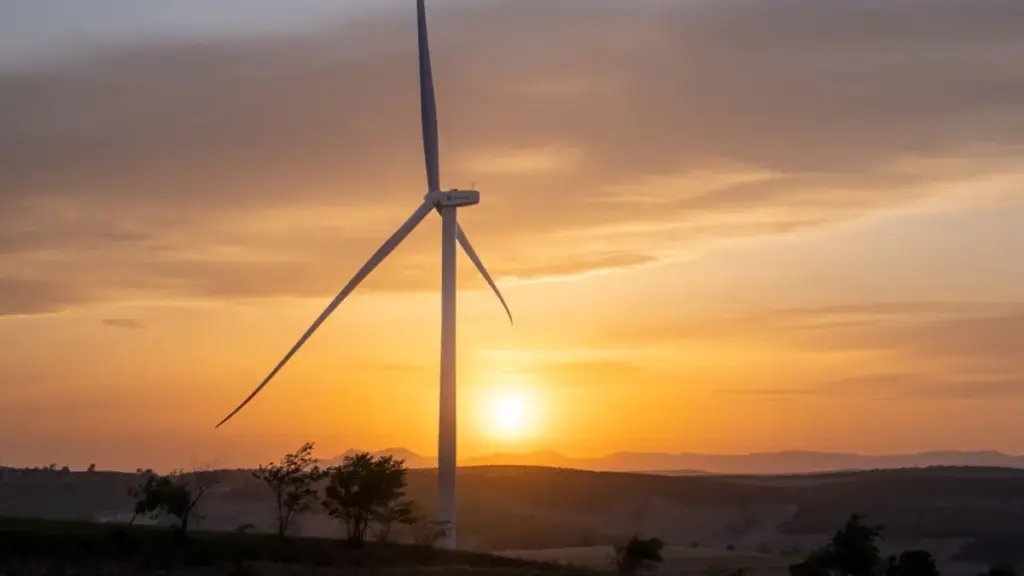
A prime example of this momentum is Envision Energy, a renewables titan making its second appearance on the MIT Technology Review watch list. Envision has installed more than 100 gigawatts of wind power globally, complemented by over 50 gigawatt-hours of advanced battery storage. Facing a domestically saturated market, Envision and its peers have aggressively expanded abroad. The company currently manages major clean energy projects across Germany, Brazil, and Australia, with upcoming initiatives slated for Vietnam.
Concurrently, Chinese innovators are leading the charge in advanced battery chemistries. The global race toward solid-state and semi-solid-state batteries—coveted for their superior energy density and safety profiles compared to traditional lithium-ion cells—is largely being paced by Chinese firms. WeLion New Energy stunned the research community by achieving a remarkable laboratory result of 824 watt-hours per kilogram, yielding more than three times the energy density of standard EV batteries in circulation today. While translating lab breakthroughs into scalable manufacturing remains notoriously difficult, WeLion is actively deploying semi-solid-state batteries, bridging the gap between theoretical chemistry and commercial reality far faster than purely solid-state alternatives.
The Big Tech-Energy Nexus in the United States (2024–2026)
While international markets—particularly China—lead in raw manufacturing capacity, the United States cohort on the 2026 watch list reflects a different, highly specialized dynamic: the existential energy demands of the artificial intelligence boom. Of the three US-based companies featured this year, two have received monumental strategic boosts from major technology conglomerates desperate to secure clean, reliable, round-the-clock power for hyper-scale data centers.
The first of these disruptors is Fervo Energy, a pioneer in next-generation geothermal power. By borrowing horizontal drilling and hydraulic fracturing techniques from the oil and gas sector, Fervo has unlocked the ability to harness geothermal energy virtually anywhere, independent of naturally occurring hydrothermal vents. Following a successful public debut in May that raised $2.2 billion in its initial public offering, Fervo is marching toward an ambitious target: bringing one gigawatt of operational geothermal power to the grid by the end of 2030.
The second US innovator capitalizing on the data center surge is X-energy, which is commercializing helium-cooled small modular nuclear reactors (SMRs). Nuclear energy has experienced a remarkable renaissance, driven by tech giants seeking carbon-free baseload power. X-energy’s reactors offer unprecedented modular flexibility. The company is currently collaborating with Amazon to develop a 320-megawatt reactor cluster in Richland, Washington. Beyond tech infrastructure, X-energy is eyeing heavy industry applications, securing a landmark partnership with Dow to deploy its SMR technology at a chemical manufacturing facility early in the next decade.
(Note: The third US company on the list, Brimstone, tackles the industrial decarbonization crisis by pioneering a single-stop industrial process for producing cleaner cement alongside critical minerals, directly addressing another massive political and environmental hot button.)
The Evolution of Long-Duration Energy Storage (2022–2031)
The proliferation of wind and solar generation has exposed a critical vulnerability in modern electrical grids: intermittency. Without robust, long-duration energy storage (LDES), renewable buildouts hit an architectural ceiling. Over the past four years, the energy storage market has surged past even the most optimistic forecasts.
Form Energy, making its third appearance on the watch list, is tackling this challenge head-on with its proprietary iron-air batteries. Designed to deliver cheap, multi-day energy storage, Form Energy is currently constructing a massive 30-gigawatt-hour project destined to power a Google data center. When fully operational across its phased rollout between 2028 and 2031, it is projected to be the largest battery installation in the world by capacity.
Parallel to iron-air technology, Energy Dome has pioneered a novel approach using compressed carbon dioxide to store grid-scale energy. Having been tracked by energy analysts since its pre-commercial phase in 2022, Energy Dome has rapidly scaled its operations. Its CO2-based storage systems are significantly cheaper than traditional lithium-ion batteries for discharge durations exceeding 10 hours. The company now boasts a pipeline of over 30 gigawatt-hours of plants worldwide, highlighted by an upcoming facility in Ireland developed in partnership with Google, slated to go online in 2028.
Addressing the lifecycle of the clean energy transition, Moment Energy is confronting the looming mountain of spent electric vehicle batteries. Projections indicate that over one million EV batteries will reach the end of their primary automotive life by 2030. Operating out of a specialized facility in Vancouver, British Columbia, Moment Energy repurposes these decommissioned automotive packs into robust, containerized backup power units for industrial and grid applications.
Supporting Context and Metrics
To fully comprehend the structural shifts highlighted in the MIT Technology Review 2026 list, one must examine the macroeconomic and technical metrics underpinning these companies:
- Energy Density Breakthroughs: WeLion’s laboratory milestone of 824 Wh/kg represents a paradigm shift from current commercial lithium-ion cells, which typically hover between 250 and 300 Wh/kg. If successfully commercialized at scale, this leap will exponentially increase electric vehicle ranges while shrinking battery footprints.
- Geothermal Capitalization: Fervo Energy’s $2.2 billion IPO in May underscores Wall Street’s growing appetite for alternative baseload generation technologies that can bypass the traditional, lengthy permitting cycles associated with conventional energy projects.
- Unprecedented Storage Scale: Form Energy’s 30-gigawatt-hour project for Google illustrates the sheer volume of storage required to sustain modern digital infrastructure. To put this in perspective, 30 GWh is enough energy to power millions of homes for multiple days during a renewable generation shortfall.
- Global Wind and Storage Footprint: Envision Energy’s cumulative deployment of 100+ gigawatts of wind power and 50+ gigawatt-hours of battery storage places it among the elite tier of industrial manufacturing giants shaping the 21st-century energy economy.
Official Statements and Industry Insights
The release of the 2026 Climate Tech Companies to Watch list has sparked widespread commentary across the energy and technology sectors regarding the intersection of industrial policy, technological innovation, and corporate strategy.
Industry analysts emphasize that the relationship between Big Tech and climate tech has fundamentally altered the venture capital landscape. No longer dependent solely on government subsidies or traditional green grants, climate tech startups are securing direct corporate purchase power agreements (PPAs) and multi-billion-dollar infrastructure investments from companies like Amazon, Google, and Microsoft.
Furthermore, geopolitical observers note that China’s export-driven clean tech strategy is forcing Western economies to either accelerate their own domestic innovation pipelines or risk complete reliance on foreign supply chains for wind turbines, solar panels, and advanced battery cells. The emphasis on next-generation nuclear and advanced geothermal in the United States reflects a strategic pivot toward domestic, dispatchable power sources that cannot be easily disrupted by international trade bottlenecks.
Future Outlook: Navigating the Road to 2030 and Beyond
As the global community looks toward critical climate milestones at the close of the decade, the outlook for climate technology is marked by a complex duality of immense promise and sobering realism.
The path forward will not be without friction. Supply chain constraints, geopolitical trade tensions, regulatory hurdles, and the sheer capital intensity of heavy industrial deployment present ongoing challenges. However, the companies highlighted in the MIT Technology Review 2026 watch list demonstrate that innovation is actively outpacing inertia.
By tackling the hardest-to-abate sectors—such as cement production, heavy-duty energy storage, industrial heat, and continuous data center power—these firms are moving beyond incremental carbon reductions. They are constructing the foundational architecture of a resilient, decarbonized global economy. While 2026 has brought its share of economic headwinds and market corrections, the technologies taking root today ensure that the trajectory of human progress continues to bend toward a sustainable, electrified future.



