

Executive Overview
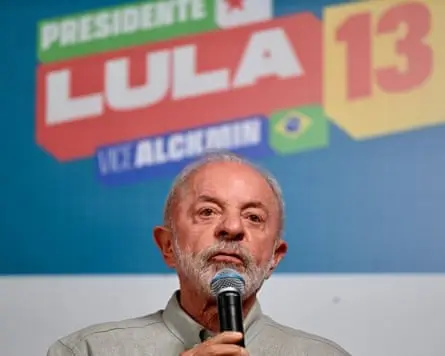
The future of the Amazon rainforest—and by extension, the stability of the global climate system—hangs precariously in the balance. Following the first round of Brazil’s presidential election in October 2026, Flávio Bolsonaro, the far-right son of imprisoned former president Jair Bolsonaro, has secured a commanding 47% of the vote. He edges out incumbent progressive leader Luiz Inácio Lula da Silva, who captured 44.2%. As Brazil races toward an intense October 25 runoff, the political momentum favors the Bolsonaro dynasty, setting off alarms across the international scientific and environmental communities.
To global observers, the election presents a stark binary choice: the continuation of Lula’s administration, which has slashed Amazonian deforestation by nearly 50%, or a catastrophic return to the unchecked environmental degradation witnessed under the senior Bolsonaro. Yet, this global anxiety stands in stark contrast to domestic sentiment within Latin America’s largest, richest, and most biodiverse democracy. For millions of Brazilian voters, the existential threat to a globally vital ecosystem is overshadowed by immediate economic aspirations, shifting cultural and religious landscapes, and deep-seated frustrations with the traditional political establishment.
The potential victory of Flávio Bolsonaro threatens more than just a rollback of environmental protections. It signals the consolidation of "Bolsonarism," a hardline political movement deeply aligned with agribusiness, resource extraction, and transnational right-wing geopolitics. With Bolsonarists already capturing legislative seats and controlling the vast majority of Amazonian state governments, a Bolsonaro victory could push the rainforest past its definitive ecological tipping point—transforming a carbon sink into an irreversible carbon emitter—while simultaneously testing the resilience of Brazilian democratic institutions.
Detailed Chronology: The Shock First Round and the Rise of a Dynasty
The trajectory of the 2026 presidential election was fundamentally altered on Sunday, October 5, 2026, when preliminary results from the first round of voting stunned political analysts. Flávio Bolsonaro, a federal senator whose political identity is inextricably linked to his father’s legacy, outperformed expectations to capture 47% of the national vote. Incumbent President Luiz Inácio Lula da Silva trailed slightly behind with 44.2%, failing to secure an outright majority and forcing the contest into an unpredictable runoff scheduled for October 25.
This electoral shockwave represents a remarkable rehabilitation for the Bolsonaro family name. Only a year prior, in September 2025, Brazil’s Supreme Court found former President Jair Bolsonaro guilty of orchestrating a military coup and attempting to dismantle democratic rule, sentencing him to a lengthy prison term. Rather than neutralizing the family’s political capital, the imprisonment galvanized a radicalized right-wing base. Flávio Bolsonaro’s campaign platform explicitly promised to pardon his father and grant him a high-ranking position within a new administration, effectively offering voters a dual-executive model rooted in authoritarian nostalgia.

Simultaneously, concurrent legislative and gubernatorial elections cemented the rise of Bolsonarism across Brazil. In the Amazonian state of Pará, Daniel Santos—a candidate fined $275,000 for authorizing the illegal destruction of 280 hectares of native forest—rode the nationalist wave to victory, promising to erase environmental penalties. Across the nine states comprising the Brazilian Amazon, Bolsonarists secured control of seven statehouses, with an eighth hanging in the balance. In the national legislature, the Bolsonaro family expanded its footprint: Flávio’s brother Carlos and mother-in-law Michelle were elected to the Senate, while another brother and an uncle captured seats in the Chamber of Deputies.
These results left environmental champions devastated. Former Environment Minister Marina Silva lost her bid for the Senate, and Joenia Wapichana, the former director of Brazil’s Indigenous affairs agency (Funai), failed to secure a congressional seat. Out of 57 Indigenous candidates running nationwide, only two emerged victorious, underscoring a severe disconnect between domestic voter priorities and the preservation of native lands.
Supporting Context & Metrics: Deforestation, Religion, and Geopolitics
The Ecological Ledger and the Agribusiness Lobby
The urgency surrounding Flávio Bolsonaro’s lead is grounded in empirical precedent. During Jair Bolsonaro’s four-year presidential term, Amazonian deforestation surged by 59.5%, resulting in the destruction of approximately two billion trees. Flávio has demonstrated an identical ideological commitment to dismantling environmental oversight. As a lawmaker, he championed a 2019 legislative bill designed to strip landowners in the Amazon of mandatory native vegetation conservation quotas. His 2026 presidential manifesto omitted any mention of the climate crisis, focusing instead on courting predatory landowners, illegal miners, and speculative land grabbers.
This deregulatory push is amplified by the sheer dominance of Brazil’s agribusiness sector. Decades of economic policy have transformed small-scale farmers and rural workers into industrial agricultural entrepreneurs heavily dependent on expansive land use. While Lula’s Workers’ Party successfully lifted millions out of poverty and fostered a culture of consumption and entrepreneurship, it inadvertently created a constituency that chafes against environmental regulations. Subsidized farmers now overwhelmingly back the political right, viewing conservation laws not as a planetary necessity, but as bureaucratic impediments to economic growth.
The Rise of US-Style Pentecostalism
Beyond economic shifts, the cultural fabric of Brazil is undergoing a profound transformation that directly impacts environmental politics. Traditional Catholicism, historically aligned with ecological stewardship and liberation theology, is rapidly being supplanted by US-style Pentecostalism, particularly in remote regions like the Amazon.
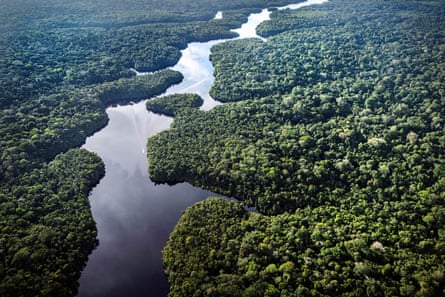
Many evangelical preachers promote a theological framework centered on prosperity gospel—encouraging followers to pursue earthly wealth and material success as markers of divine favor. This worldview often stands in stark opposition to the conservationist ethos championed by Indigenous groups and international scientists, framing the exploitation of natural resources as a legitimate exercise of dominion rather than a threat to creation.
Geopolitical Realignments and "Trumpism" in the Global South
Brazil’s electoral shift does not occur in a vacuum; it is part of a broader global resurgence of far-right populism characterized by the rejection of planetary boundaries in favor of aggressive resource extractivism. Over the preceding two years, Donald Trump’s return to power in the United States saw the systematic dismantling of American environmental regulations and an assertive foreign policy treating Latin America as an exclusive sphere of influence.
The Bolsonaro family has actively courted this transnational ideological network. Jair Bolsonaro has publicly saluted the United States flag, while his son Eduardo lobbied Washington to impose punitive tariffs on Brazilian citizens to retaliate against the government for imprisoning his father. Brazilian intelligence agencies have repeatedly warned of foreign interference aimed at swaying the nation’s democratic processes, aligning Brazil’s domestic political battles with a wider US-China geopolitical struggle over critical energy resources and raw materials.
Official Statements and Campaign Rhetoric
The ideological divides defining the runoff are starkly reflected in the rhetoric emanating from both camps.
Flávio Bolsonaro has framed his campaign as a crusade for national sovereignty and economic liberation, positioning environmental regulations as tools of foreign neo-colonialism designed to hold Brazil back. In campaign appearances, he has doubled down on his pledge to reverse what he terms the "ideological policing" of the Amazon, promising unrestricted access for mining and agricultural expansion. Addressing his base, Bolsonaro declared:
"We will no longer allow the productive sectors of our country to be shackled by pencil-pushers in Brasília or international NGOs who care more about trees than they do about the prosperity of Brazilian families."
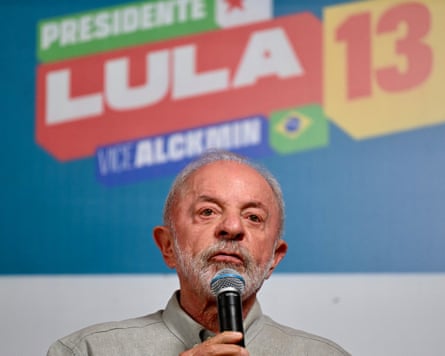
Conversely, the Lula campaign has issued grave warnings regarding the existential stakes of the election. Operating under the banner of democratic defense and environmental stewardship, Lula’s camp has emphasized the devastating international consequences of a Bolsonarist resurgence. High-ranking officials within the current administration point to the nearly 50% reduction in deforestation achieved over the last four years as proof of what is politically possible when political will meets institutional enforcement.
At a recent campaign rally in São Paulo, senior coalition figures warned that a victory for Flávio Bolsonaro would effectively grant impunity to environmental criminals. A campaign spokesperson stated:
"This election is not merely a contest between two political parties; it is a referendum on our national survival. To invite the Bolsonarists back to power is to sign a death warrant for the Amazon, for our Indigenous communities, and for the democratic pact that took generations to build."
International bodies and climate scientists have similarly raised their voices. Following the first-round results, a coalition of global climate researchers issued an open letter warning that the Amazon is rapidly approaching a "tipping point," beyond which the rainforest will naturally transition into a degraded savanna ecosystem, releasing vast stores of carbon into the atmosphere and disrupting weather patterns across South America.

Future Outlook: The October 25 Runoff and Beyond
As Brazil hurtles toward the October 25 runoff, the mathematical and political realities heavily favor the challenger. Historically, no candidate leading after the first round of a Brazilian presidential election has ever lost the subsequent runoff. Furthermore, the majority of eliminated candidates from the fragmented first-round field represent conservative and right-wing platforms; their voter bases are widely expected to consolidate behind Flávio Bolsonaro.
While Lula retains a narrow path to victory if he can successfully mobilize the millions of abstaining voters and disaffected moderates, the institutional hurdles facing a potential second Lula administration would be immense. Even prior to the election, a conservative-dominated Congress had systematically worked to weaken environmental protections. With Bolsonarists capturing a supermajority of Amazonian governorships and expanding their legislative footprint—bolstered by family members entering the Senate and Chamber of Deputies—any progressive executive would face a hostile state apparatus. Moreover, the ongoing instability within the Supreme Court, which has historically served as the final institutional check against unbridled land grabbing and corporate expansion, leaves governance deeply vulnerable.
The implications extend far beyond Brazilian borders. Should Bolsonaro triumph on October 25, the institutional safeguards protecting Brazil’s biomes will likely collapse. The consequences will be felt globally: accelerated biodiversity loss, the silencing or displacement of traditional and Indigenous peoples, and an unmitigated disaster for the global climate trajectory.
Voters in Brazil may yet alter course—either in the voting booth on October 25 or through the constitutional mechanisms of future elections. Yet, as the window to avert catastrophic climate tipping points rapidly closes, the burning question remains: for how much longer will democratic systems retain the capacity to correct course before the damage becomes irreversible? If the Amazon falls, it may take the democratic foundations of Brazil down with it.



