

Executive Overview
A quarter of a century after it first captivated global audiences and revolutionized natural history filmmaking, the BBC’s groundbreaking Blue Planet franchise returns for a historic third installment. Set to air on the BBC this autumn, Blue Planet III promises to venture further into the unexplored recesses of the Earth’s marine ecosystems than any previous expedition. Produced by the renowned BBC Natural History Unit in Bristol in collaboration with Plimsoll Productions, the six-part series represents the culmination of nearly four years of arduous, high-risk marine fieldwork.
At the helm of the narration once again is Sir David Attenborough. Having celebrated his centenary earlier this year, Attenborough’s continued stewardship of the franchise offers a profound sense of continuity and gravitas. Speaking at a high-profile global launch event in London’s Piccadilly Circus—where towering digital billboards transformed the bustling intersection into an immersive underwater spectacle—Attenborough reflected on his enduring journey with the series. "When I narrated the first Blue Planet series, it didn’t occur to me that I would be narrating a third series in my centennial year," he remarked.
The new season arrives at a critical juncture for planetary health. Utilizing cutting-edge underwater cinematography, manned submersibles, autonomous drones, and ultra-sensitive remote camera systems, the production team has captured never-before-seen animal behaviors and documented fragile, rapidly changing ecosystems. From sun-drenched tropical reefs to the absolute blackness of the ocean trenches, Blue Planet III aims to bridge the gap between scientific discovery and public consciousness.
Beyond its visual achievements, the production boasts an elite creative pedigree. Legendary film composer Hans Zimmer and Bleeding Fingers Music return to score the series, joined by pop artist Jade Thirlwall of Little Mix fame, who co-wrote the original companion track, Into The Deep (Seas Cry). Together, this multi-disciplinary coalition of scientists, filmmakers, musicians, and broadcasters has crafted an opus designed not merely to educate, but to fundamentally alter humanity’s emotional relationship with the global ocean.
Detailed Chronology: A Four-Year Odyssey Beneath the Waves
The genesis of Blue Planet III dates back nearly half a decade, evolving from initial conceptual discussions within the BBC Natural History Unit into a logistical marathon across the world’s major water bodies.
Phase 1: R&D and Technological Mobilization (2022)
Following the widespread critical and environmental impact of Blue Planet II—which famously shifted global consumer attitudes toward single-use plastics—producers faced an immense challenge: how to elevate the standard of underwater storytelling. Pre-production began in early 2022, focusing on the deployment of next-generation optical technology capable of operating in extreme pressures and near-zero light conditions.
Engineers and marine biologists spent months designing specialized low-light camera rigs, long-range acoustic monitoring buoys, and stabilization gimbals for surface drones. These tools were essential for capturing behaviors in volatile environments, such as the turbulent rip currents of tropical archipelagos and the hyper-saline basins of the deep sea.

Phase 2: Global Expeditions and Deep-Sea Dives (2023–2024)
Over the next two years, film crews embarked on dozens of targeted expeditions spanning the Atlantic, Pacific, Indian, and Arctic oceans. Manned submersibles descended thousands of meters below the surface into the bathypelagic and abyssopelagic zones—regions where sunlight never penetrates.
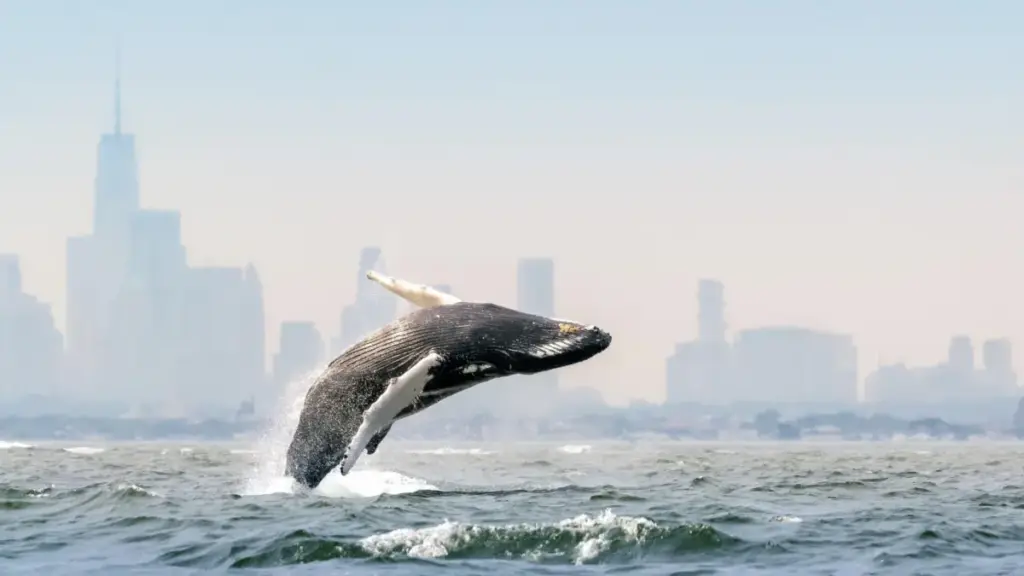
During these submersible dives, operators encountered astonishing adaptations in marine life, recording complex bioluminescent displays, previously unknown hydrothermal vent communities, and rare apex predator interactions. Simultaneously, shallow-water teams tracked migratory megafauna, utilizing drone technology to monitor the complex social structures of humpback whales, pods of dolphins, and vast pelagic fish shoals.
Phase 3: Post-Production, Scoring, and Sonic Architecture (2025)
By early 2025, the focus shifted from acquisition to curation and scoring. Terabytes of raw footage were meticulously edited down into six cohesive, narrative-driven episodes. In tandem with the visual edit, Hans Zimmer and the team at Bleeding Fingers Music began composing the orchestral landscape.
The process required an intricate synthesis of symphonic grandeur and minimalist tension, mirroring the vastness and intimacy of the ocean. The inclusion of Jade Thirlwall for the promotional single Into The Deep (Seas Cry) further expanded the project’s cultural footprint, bridging classical natural history scoring with contemporary pop advocacy.
Phase 4: Global Premiere and Public Reveal (Late 2025)
The public campaign officially commenced on Tuesday in London. Piccadilly Circus served as the canvas for a massive digital activation, broadcasting high-definition footage from the series across its famous wraparound screens. This public spectacle signaled the official countdown to the autumn broadcast premiere, generating widespread anticipation across international media outlets.
Supporting Context & Metrics: The Scale of Blue Planet III
To comprehend the magnitude of Blue Planet III, one must examine the intersection of broadcasting history, environmental urgency, and advanced marine engineering.
| Metric / Detail | Description |
|---|---|
| Franchise Milestone | Marks 25 years since the premiere of the original Blue Planet (2001). |
| Production Duration | Approximately 4 years of filming, R&D, and post-production. |
| Series Structure | A 6-part episodic run airing on the BBC this autumn. |
| Key Technologies | Manned submersibles, low-light remote cameras, aerial drones, acoustic sensors. |
| Creative Collaborators | Narrated by Sir David Attenborough; Score by Hans Zimmer & Bleeding Fingers Music; Original song by Jade Thirlwall. |
| Production Hubs | BBC Natural History Unit (Bristol) & Plimsoll Productions. |
The evolution of underwater filmmaking over the past quarter-century has been nothing short of revolutionary. When the first series aired in 2001, deep-sea exploration was severely constrained by lighting requirements that often altered or disturbed natural animal behaviors. Modern ultra-high-sensitivity sensors now allow cinematographers to film in near-total darkness using ambient bioluminescence, providing an authentic window into a world that early oceanographers could only imagine.

Furthermore, the logistical footprint of modern wildlife filmmaking has grown increasingly sophisticated. Crews operating in remote marine protected areas worked in strict compliance with international conservation guidelines, ensuring that the pursuit of imagery did not disrupt fragile spawning grounds or migration corridors.
Official Statements: Voices from the Production
The release of the extended trailer and the London launch event prompted reflection from the key architects behind the series, emphasizing a shared philosophy of conservation through wonder.
Sir David Attenborough
Reflecting on his return to the franchise during his centennial year, Attenborough emphasized the unyielding mystery of the seas:
"When I narrated the first Blue Planet series, it didn’t occur to me that I would be narrating a third series in my centennial year. We will venture even further than ever before… The ocean is an endlessly fascinating place. We will uncover life that is more surprising, more intelligent, and even more precious than we ever realised. We will discover the extraordinary relationship we have with the ocean. One that has never been more important to understand."
Hans Zimmer
Composer Hans Zimmer, whose musical contributions have defined modern natural history television, described the project as a defining moment in his career:
"I think everybody who comes to Blue Planet comes to it with the knowledge that it is something that changes the world by making you fall in love. It’s not something where you’re being lectured or cajoled about things, but it’s something that just shows you how spectacular and beautiful our world truly is. How we need to preserve it and how we need to love it, and how whatever we love, we need to treat with great kindness and great respect."
Jade Thirlwall
Pop artist and lifelong conservation advocate Jade Thirlwall expressed her gratitude for being invited to contribute to the sonic landscape of the series:

"I’ve been a huge fan of the franchise for as long as I can remember, and Sir David Attenborough is a true hero. Being part of Blue Planet III in this way feels incredibly special and a real privilege."
Future Outlook: The Legacy and Impact of Marine Broadcasting
As Blue Planet III prepares to enter living rooms across the globe this autumn, its cultural and ecological ambitions extend far beyond traditional television ratings. The previous installments demonstrated that high-end natural history programming possesses a unique catalytic power—capable of inspiring legislative action, altering corporate supply chains, and shifting public discourse on climate change and marine conservation.
The oceans currently face unprecedented cumulative pressures, including ocean acidification, warming sea surface temperatures, overfishing, and deep-sea mining exploration. By illuminating the sophisticated behaviors of deep-dwelling cephalopods, the intricate social networks of cetaceans, and the fragile resilience of coral architectures, Blue Planet III seeks to foster an intimate bond between humanity and the marine biosphere.
In an era defined by environmental anxiety, the series offers a deliberate antidote: radical, unadulterated awe. As Sir David Attenborough aptly noted, understanding our profound relationship with the ocean has never been more urgent. Through the lens of the BBC Natural History Unit and the voices of its legendary creators, Blue Planet III stands ready to remind humanity of what is at stake in the darkest, most beautiful depths of our world.



