

Executive Overview
The United States energy storage landscape reached a historic milestone in the second quarter of 2026, recording its most prolific deployment period to date. According to a landmark market report published jointly by Benchmark Mineral Intelligence and the Solar Energy Industries Association (SEIA), the US grid absorbed an unprecedented 20.2 gigawatt-hours (GWh) of new battery storage capacity between April and June of this year. To put this into perspective, this single-quarter injection of power capacity is more than enough to supply the average daily electricity needs of approximately 700,000 American homes, underscoring the rapid transformation of the nation’s electrical grid.
This staggering performance has significantly elevated annual projections. Analysts now estimate that the United States is on a firm trajectory to install a cumulative 71 GWh of battery storage capacity throughout the entirety of 2026. If realized, this figure will represent a robust 20% year-over-year increase compared to 2025.
The primary catalysts behind this relentless expansion are twofold: a sustained, global drop in battery hardware manufacturing costs and an escalating, critical need for grid-level flexibility. As millions of megawatts of intermittent renewable energy sources—specifically utility-scale solar farms and onshore wind turbines—are continually integrated into transmission networks across the country, energy storage has graduated from a supplementary luxury to an absolute operational necessity. Batteries provide the foundational backbone required to smooth out generation curves, prevent renewable curtailment, and maintain grid stability when weather conditions fluctuate.
However, beneath the headline-grabbing national figures lies a complex, bifurcated market. While massive utility-scale installations and commercial operations are shattering historical records, the residential sector is navigating a distinct contraction. Regulatory shifts, expiring federal incentives, and evolving industrial supply chains are reshaping how and where American energy storage is deployed.
Detailed Chronology: How Q2 2026 Rewrote the Energy Storage Playbook
To understand the sheer magnitude of the second quarter of 2026, it is necessary to examine how the domestic energy storage market has evolved over the past several years. For much of the early 2020s, battery deployment grew steadily but cautiously, throttled by pandemic-era supply chain bottlenecks, lingering lithium carbonate price volatility, and complex interconnection queues at regional transmission organizations (RTOs).
By late 2024 and throughout 2025, however, these macroeconomic headwinds began to subside. Cell manufacturing lines scaled up globally, particularly in Asia, driving down the capital expenditure requirements for large-scale energy storage systems (BESS). By the time Q1 2026 transitioned into Q2, a massive backlog of shovel-ready utility projects synchronized their completion timelines to capitalize on emerging regulatory windows and seasonal peak-demand periods.
The defining characteristic of the second quarter was the sheer concentration of capital and hardware deployed in a matter of weeks. The quarter was propelled forward by a wave of massive, "gigascale" infrastructure projects—installations engineered to deliver over one gigawatt-hour of storage capacity per individual site.
"It really came down to a handful of big projects," explains Shan Tomouk, energy storage and energy lead for Benchmark Mineral Intelligence. These mega-installations were primarily brought online in key energy markets characterized by high renewable penetration and aggressive decarbonization mandates, such as the Electric Reliability Council of Texas (ERCOT), the California Independent System Operator (CAISO), and select regional nodes within the PJM Interconnection.
Simultaneously, the commercial sector experienced its own structural awakening during the quarter. Behind-the-meter (BTM) applications—traditionally dominated by residential rooftop solar owners seeking backup power—saw their growth vectors pivot sharply toward the enterprise sector. Driven by the explosive proliferation of artificial intelligence, cloud computing, and digital infrastructure, corporate data centers emerged as the dominant growth engine within the commercial BTM category. Facing unprecedented electricity demand and strict corporate sustainability targets, data center operators deployed massive localized battery banks during Q2 to ensure uninterrupted power availability and mitigate localized grid congestion.
Supporting Context & Metrics: Decoding the Numbers
A granular look at the data reveals profound shifts in market composition, capital flows, and technological dependencies. The 20.2 GWh brought online in Q2 2026 is not distributed evenly across consumer segments; rather, it highlights a stark divergence between utility-scale titans and residential installations.
Utility-Scale Domination
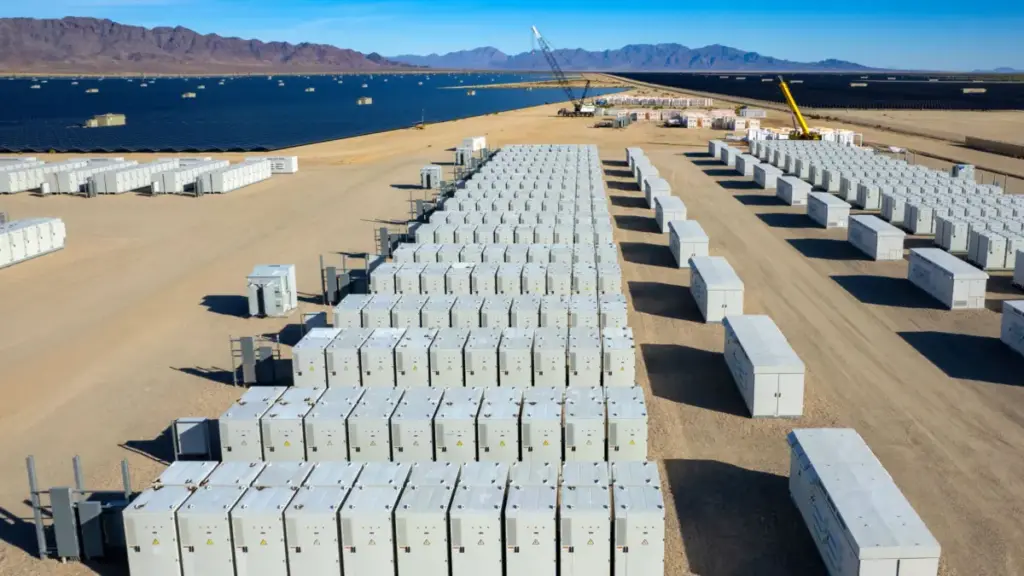
Utility-scale systems formed the bedrock of the record-breaking quarter. Out of the total 20.2 GWh deployed, utility-grade infrastructure accounted for the overwhelming majority. This dominance was anchored by the activation of seven distinct gigascale battery installations during the three-month period. These projects are characterized by multi-acre plots packed with containerized lithium-ion battery blocks, high-voltage inverters, and sophisticated thermal management systems capable of discharging hundreds of megawatts of electricity onto high-voltage transmission lines within milliseconds.
The Commercial Surge and Data Center Hegemony
Within the behind-the-meter ecosystem, commercial and industrial (C&I) projects showed remarkable resilience and growth. Data centers alone accounted for approximately 75% of all new commercial-sector battery installations in Q2 2026. This trend reflects a broader macroeconomic reality: modern hyperscale data centers require gigawatt-scale power footprints that local distribution utilities often struggle to supply instantly. Consequently, tech enterprises and data center developers are increasingly co-locating energy storage systems—and in some cases, dedicated clean generation assets—directly at their facilities.
The Residential Slump
Conversely, the residential storage sector faced severe headwinds. Home installations—typically smaller lithium-ion battery packs installed in garages or basements to store rooftop solar power or provide emergency backup during grid outages—are projected to drop by a striking 16% over the course of 2026 compared to the previous year.
This downturn is primarily structural rather than demand-driven. The expiration of key federal tax credit mechanisms specifically targeted at residential installations at the end of 2025 stripped away the financial cushion that made home batteries economically viable for many middle-class consumers. While non-residential and utility-scale tax credits largely survived legislative pruning, the residential segment was left exposed to high upfront capital costs. Industry analysts, however, view this as a temporary valley; structural growth is widely anticipated to resume as hardware prices continue their long-term downward trajectory and as state-level incentives step in to fill the federal void.
Macroeconomic Positioning
Despite the residential dip, the broader energy storage sector remains the envy of the wider industrial economy. "This is one of the strong sectors in the US," notes Isshu Kikuma, an energy storage analyst at BloombergNEF. While other manufacturing and infrastructure verticals grapple with fluctuating interest rates and sluggish demand, the inexorable march toward grid decarbonization ensures a perpetual, high-volume pipeline for battery technology.
Official Statements & Industry Perspectives
The convergence of record deployments, regulatory adjustments, and supply chain realignments has prompted leading market observers and policy experts to reevaluate the trajectory of the American power grid.
Shan Tomouk of Benchmark Mineral Intelligence emphasized that while the quarterly headline figure of 20.2 GWh is awe-inspiring, it is vital to acknowledge the micro-level dynamics that made it possible. "It really came down to a handful of big projects," Tomouk reiterated, pointing to the structural importance of gigascale engineering feats. These projects require years of meticulous planning, complex permitting processes, and multi-million-dollar capital outlays, making their successful synchronization in Q2 2026 a testament to the maturation of the US energy storage development community.
Addressing the contraction in the residential space, Tomouk offered a reassuring long-term view. The drop in home battery installations "happened largely because a tax credit that helped subsidize home battery systems ended in 2025," he explained. However, market fundamentals remain sound, and Tomouk projects that home installations will mount a robust recovery by the end of the decade as consumer familiarity grows and alternate financing models mature.
Meanwhile, BloombergNEF’s Isshu Kikuma underscored the critical role that energy storage plays in maintaining macroeconomic and industrial confidence. In an era where energy security is increasingly conflated with national security, the ability to dispatch gigawatts of power on demand acts as an economic insurance policy.
Furthermore, trade associations such as the Solar Energy Industries Association (SEIA) have leveraged the Q2 report to advocate for a stable, predictable policy environment. Industry leaders stress that as the United States attempts to decouple its critical energy infrastructure from foreign supply chains, federal and state lawmakers must maintain robust policy support to bridge the gap between foreign dependency and domestic manufacturing self-sufficiency.
Future Outlook: The Road to Domestic Manufacturing and 2030
As the US energy storage market looks beyond the immediate triumph of Q2 2026, the horizon is defined by a singular, overarching transition: the race toward domestic manufacturing and supply chain independence.
For all its record-breaking capacity additions, the American energy storage sector currently operates with a glaring strategic vulnerability. Nearly all of the battery systems coming online across the United States utilize electrochemical cells manufactured in the People’s Republic of China. While a significant portion of these cells are shipped to domestic facilities for final assembly into modular, containerized energy storage systems, the foundational technology—the lithium-ion cell itself—remains overwhelmingly foreign-sourced.
This reliance has become increasingly untenable from both a geopolitical and regulatory standpoint. Federal policy shifts were already pushing the US energy storage industry toward domestic production through targeted trade tariffs. However, the regulatory landscape shifted decisively at the start of 2026. Newly enacted rules tied to clean energy tax credits now mandate that utility and commercial energy storage projects actively limit their reliance on Chinese-imported battery components to qualify for maximum financial incentives.
These mandates have triggered a massive wave of capital expenditure aimed at building out a domestic battery manufacturing ecosystem. Gigafactories are currently under construction across America’s heartland and industrial corridors, designed to produce everything from lithium-iron-phosphate (LFP) cells to advanced solid-state chemistries.
Yet, bridging the gap between legislative ambition and industrial reality will take time. According to Benchmark Mineral Intelligence’s Shan Tomouk, while a massive amount of manufacturing capacity is slated to come online in the US over the next few years, these domestic factories will likely not be able to fully meet surging domestic demand until at least 2030.
This temporal mismatch—where demand drastically outpaces domestic production while foreign imports face stiff tariffs and regulatory penalties—carries distinct economic implications. Analysts warn that battery prices could experience upward tick-ups in the interim as developers scramble to secure compliant, non-Chinese hardware.
Despite these near-term supply chain frictions, the long-term outlook for the US energy storage market is exceptionally bright. The events of Q2 2026 have proven that the physical infrastructure required to support a renewable-dominated grid can be deployed at scale when market incentives and technical necessity align. As domestic gigafactories come online over the remainder of the decade, the United States is poised to transition not only into a leader in energy storage deployment, but a powerhouse in energy storage manufacturing—securing its economic and environmental future for generations to come.



