

Executive Overview
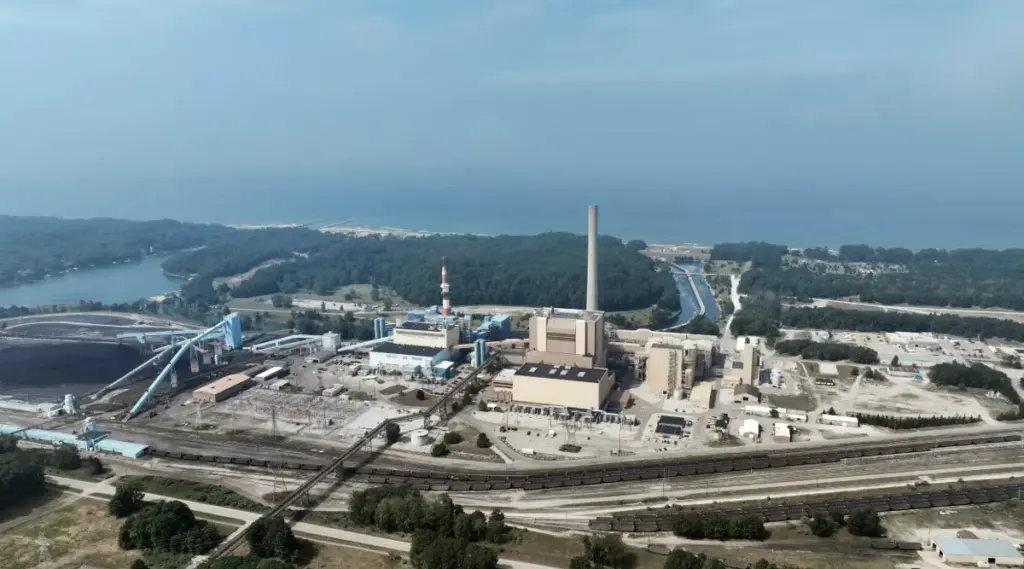
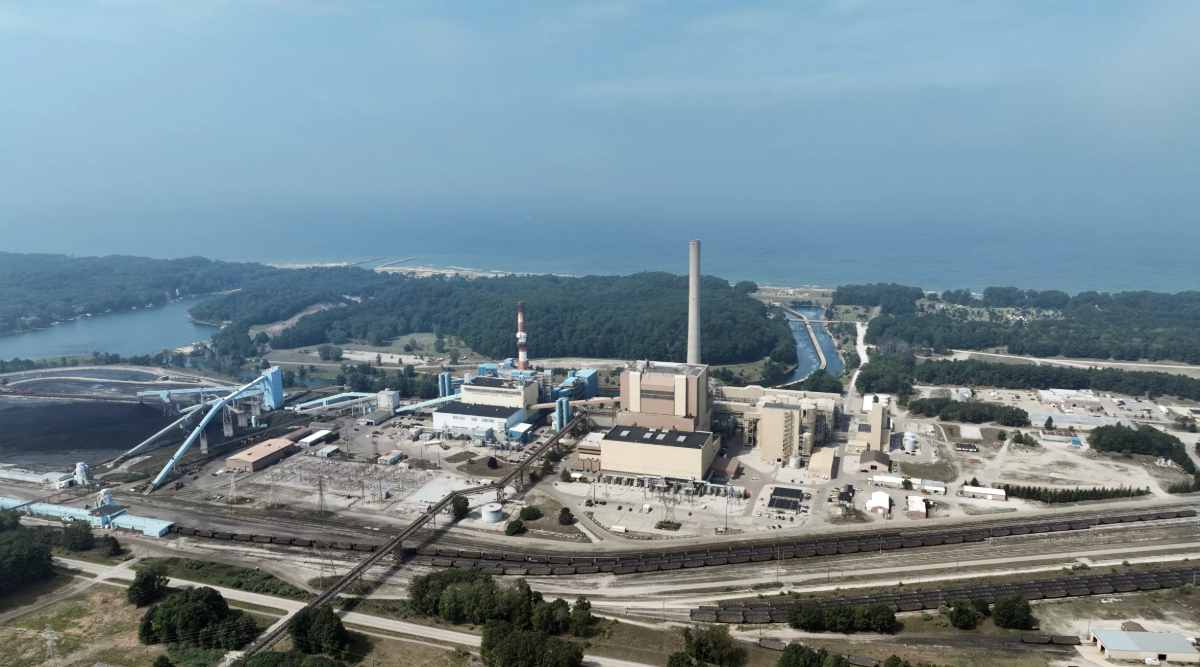
In a landmark legal rebuke of federal executive power, the U.S. Court of Appeals for the District of Columbia Circuit struck down a Department of Energy (DOE) mandate that forced the continued operation of the aging J.H. Campbell coal-fired power plant in West Olive, Michigan. The September 11, 2026 ruling dismantled the federal government’s reliance on Section 202(c) of the Federal Power Act, a little-known statutory provision meant exclusively for genuine, short-term energy emergencies.
Instead, the court found that the administration weaponized this emergency clause to bypass state regulatory bodies, override regional grid operators, and artificially prop up a dying fossil fuel asset. The decision marks a watershed moment in modern energy politics, exposing a systemic playbook to exploit bureaucratic loopholes for political and ideological ends. For ratepayers in the Midwest, however, the legal victory comes after a punishing price tag: more than $248 million funneled into keeping a redundant, unreliable, and carbon-heavy facility online against the explicit wishes of the utilities, state regulators, and independent grid managers responsible for keeping the lights on.
Detailed Chronology: From Market Retirement to Federal Hijacking
The Blueprint for a Clean Energy Transition
Commissioned in 1962 by Consumers Energy, the J.H. Campbell generating station sat on the picturesque eastern shores of Lake Michigan, pumping out up to 1,420 megawatts (MW) of electricity at its peak. For six decades, the three-unit facility served as a foundational source of power for the region, but age, mounting maintenance costs, and a shifting economic landscape eventually caught up with it.
By 2022, Consumers Energy formulated a comprehensive long-term resource plan to shutter the facility. The utility envisioned replacing Campbell’s output with a diversified portfolio of utility-scale solar arrays, methane generation, and advanced battery energy storage systems. This modern configuration promised not only to drastically cut local air pollution and carbon emissions, but also to lower long-term electricity costs for consumers.
The roadmap underwent rigorous vetting. It was reviewed and formally approved by Michigan state utility regulators and subsequently cleared by the Midcontinent Independent System Operator (MISO)—the regional transmission organization managing the electric grid across the lower Michigan peninsula and large swaths of the American Midwest. MISO’s grid planners meticulously verified that the incoming renewable and storage assets would seamlessly match, and ultimately exceed, the reliability and capacity benchmarks established by the retiring coal plant.
The Heritage Foundation’s Time Bomb
The smooth trajectory toward a cleaner grid was derailed by a deliberate strategy hatched during the transition period by political strategist Russell Vought at the Heritage Foundation. While out of federal office, Vought and his allies systematically combed through federal statutes to identify buried mechanisms—essentially administrative time bombs—that could be leveraged by a future executive branch to dismantle environmental regulations and bypass congressional intent.
Among their discoveries was Section 202(c) of the Federal Power Act. Historically designed to empower the federal government to order fossil fuel generators to keep running during brief, catastrophic weather emergencies (such as extreme winter freezes or unprecedented heatwaves), the statute contained no explicit limits on how many times an emergency order could be renewed.
Seizing on this oversight, the administration declared a sweeping “energy emergency” and issued the first of what would become a series of 90-day orders forcing Consumers Energy to keep J.H. Campbell running. When each 90-day window expired, the administration simply redeclared the emergency, repeating the cycle six consecutive times.
The Legal Counteroffensive
Recognizing a direct assault on state sovereignty and established market mechanics, a coalition comprising the states of Michigan, Minnesota, and Illinois, alongside a powerful alliance of environmental and consumer advocacy groups (including Earthjustice, the Sierra Club, the Natural Resources Defense Council, the Environmental Law and Policy Center, the Clean Air Task Force, and the Environmental Defense Fund), filed a multi-state lawsuit against the federal government.
On September 11, 2026, a three-judge panel of the D.C. Circuit Court of Appeals delivered a decisive verdict. Writing for the court, Judge Cornelia Pillard authored an opinion declaring the administration’s persistent invocation of an “energy emergency” to be entirely fictitious. The court reaffirmed a fundamental tenet of American energy regulation: the management of day-to-day power supply, demand fluctuations, and long-term resource planning belongs squarely to state regulators and regional grid operators—not federal bureaucrats acting on political whim.
Supporting Context & Metrics: Unreliability, Ratepayer Pain, and Market Realities
The High Cost of Artificial Life Support
While the administration framed its interference as a vital defense of grid reliability, empirical data from the ground tells a radically different story. According to filings and environmental analyses, the J.H. Campbell facility was not only unnecessary; it was functionally unreliable.
Kathryn McGrath, a communications strategist for Earthjustice’s Clean Energy Program, highlighted the plant’s abysmal performance record during the mandate period:
"Campbell’s output since the 202(c) orders began on May 23, 2025, demonstrates its unreliability and the dangers to grid reliability of relying on old coal plants. For instance, on June 23, 2025, the grid’s most stressed day that summer, Campbell Unit 1 suddenly dropped offline in the middle of the day. Meanwhile, Campbell Unit 2 was already offline that day, had been offline since May 23, and has barely been able to stay online during the entire term of the orders."
Despite generating frequent outages and contributing virtually zero dependable peak capacity during critical summer stress tests, ratepayers across the MISO service area were forced to shoulder the exorbitant financial burden. Keeping the facility functioning against market forces cost ratepayers upward of $248 million in direct out-of-pocket expenses—funds that could have otherwise accelerated the buildout of low-cost wind, solar, and battery storage infrastructure.
The Broader National Picture
The legal battle over J.H. Campbell is far from an isolated incident. The Department of Energy has similarly deployed Section 202(c) emergency directives to block or delay coal plant retirements in Washington, Indiana, and Colorado.
A comprehensive study published by energy consulting firm Grid Strategies estimated that these federal mandates to forcibly retain aging fossil-fuel-burning plants could cost American consumers at least $3 billion per year. Paradoxically, these interventionist tactics have done nothing to save the broader coal industry from structural decline. Despite having powerful political allies pulling executive levers, the U.S. coal sector continues to shed jobs as utilities nationwide rush toward cheaper, cleaner, and more economically efficient renewable energy alternatives.
"Flooding the Zone" as a Governance Strategy
Legal experts note that the administration’s use of Section 202(c) is part of a broader political warfare doctrine often described as "flooding the zone." By weaponizing the inherent procedural friction of the American legal system, the executive branch can issue sweeping, legally dubious orders that take effect immediately. Even though public interest groups and state attorneys general can eventually secure victories in federal court, the judicial review process takes months or years. During that lag time, the administrative mandate achieves its short-term political and economic goals—rewarding favored industries while inflicting maximum friction on clean energy transitions.
A parallel tactic was seen when the Supreme Court struck down specific executive tariffs, only for the administration to pivot the very next day to a different emergency provision to reissue them in nearly identical form. This deliberate loop of litigation and re-issuance tests the structural limits of the separation of powers.
Official Statements and Industry Reactions
The D.C. Circuit Court’s ruling drew sharp praise from legal advocates and environmental organizations who hailed the decision as a critical defense of the rule of law.
Michael Lenoff, Lead Attorney for Earthjustice:

"The court rejected the Department of Energy’s use of emergency authority, and agreed with our interpretation that emergency authority is to be used for actual emergencies, not picking preferred resources or addressing issues that Congress and the law have entrusted states to deal with. The DOE needs to stay in its lane and use its emergency powers only in actual emergencies. Preventing the market-driven retirements of coal plants to advance a coal-friendly agenda is not a proper use of emergency powers."
Kathryn McGrath, Earthjustice Clean Energy Program:
"The court affirmed that the DOE grossly overstepped its authority when it prevented the retirement of the J.H. Campbell coal plant. The court ruled that the Department’s justification for the order—that it can keep a power plant open when there is no imminent need to do so—was unlawful. The management of day-to-day fluctuations in demand and supply belongs to grid operators and utilities, while states and grid operators are ready and able to plan for future long-term demand growth."
Sanjay Narayan, Sierra Club Chief Appellate Counsel:
"Today’s ruling is a victory for families across the Midwest who are tired of paying to keep this old, expensive, and dirty power plant online. Instead of working to lower costs and clean up our air and water, the administration has been pulling out all the stops to try to bolster dirty and expensive fossil fuels—at public expense. This reckless agenda will not succeed. We will continue to hold the Department of Energy accountable to the law, and ensure that the J.H. Campbell plant finally retires as it was scheduled to."
Future Outlook: What the Ruling Means for the Energy Transition
The D.C. Circuit’s decision establishes a crucial legal precedent that will reverberate far beyond the shores of Lake Michigan. By re-establishing firm guardrails around Section 202(c), the judiciary has signaled that the executive branch cannot treat federal statutes as blank checks to override energy markets and sabotage state-level climate targets.
However, energy analysts warn that the battle is far from over. The administration’s playbook relies on relentless administrative maneuvering, and similar emergency orders in other states continue to wind their way through various federal courts. For consumers, the immediate legacy of the J.H. Campbell saga will be the hundreds of millions of dollars wasted on maintaining a ghost coal plant—money that will almost certainly never be refunded by the federal government.
Ultimately, the ruling reinforces an unavoidable economic and technological reality: the transition away from coal toward renewables and storage is governed by the undeniable laws of market economics and engineering physics, not political decree. While federal intervention can temporarily artificially inflate the lifespan of polluting infrastructure, it cannot reverse the inevitable trajectory of a modernizing, cleaner electric grid.



