

Executive Overview
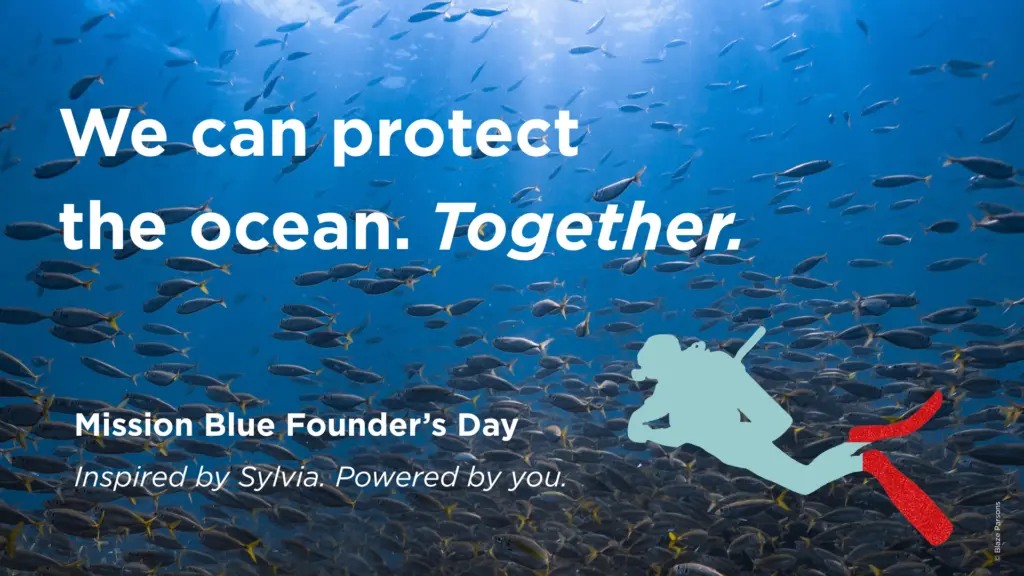
On August 30, international marine conservation organization Mission Blue will inaugurate its first-ever Founder’s Day, establishing a permanent annual tradition dedicated to celebrating the birthday and legacy of its founder, the legendary oceanographer Dr. Sylvia Earle. However, organizers emphasize that this new date on the global environmental calendar is far more than a retrospective tribute to a single pioneering scientist. Instead, Founder’s Day is designed as an active, participatory mobilization event intended to supercharge a decentralized, grassroots movement for planetary ocean health.
For decades, Dr. Earle—affectionately known worldwide as "Her Deepness"—has served as a tireless ambassador for the deep blue, inspiring generations to fundamentally rethink humanity’s relationship with the ocean. Yet, the core philosophy of Mission Blue has never been anchored in the personality cult of an individual; rather, it is rooted in the cascading, compounding impact of collective human action. From Hope Spot Champions rallying local coastal communities to scientists publishing critical marine data, educators integrating marine biology into elementary classrooms, and everyday citizens contributing to grassroots fundraising campaigns, the organization’s driving force is collaboration.
Founder’s Day arrives at a critical ecological juncture. With global marine ecosystems facing unprecedented stressors—ranging from warming ocean temperatures and catastrophic coral bleaching to industrial overfishing and plastic pollution—the launch of this annual tradition aims to transition public awareness into immediate conservation victories. By leveraging the social capital of its supporters, Mission Blue hopes to transform passive admirers of the ocean into active stewards of specific, ecologically vital marine areas known as "Hope Spots."
This comprehensive report examines the genesis of Mission Blue’s Founder’s Day, details the operational mechanics of the global Hope Spot network, analyzes the psychological and structural imperatives behind community-led conservation, and outlines actionable pathways for global citizens to participate in this historic movement.
Detailed Chronology: From Submersible PIONEER to a Global Movement
To understand the weight and significance of Mission Blue’s Founder’s Day, one must trace the extraordinary trajectory of Dr. Sylvia Earle’s life and the institutional evolution of the organization she birthed.
The Early Decades: Pioneering the Depths
Dr. Sylvia Earle’s relationship with the sea began long before the founding of modern marine conservation. In 1970, she led the pioneering Tektite II project, serving as the captain of an all-female team of aquanauts who lived and worked in an underwater habitat 50 feet beneath the surface of the U.S. Virgin Islands for two weeks. This groundbreaking feat brought unprecedented visibility to marine science at a time when the field was overwhelmingly male-dominated.
Throughout the 1970s, 1980s, and 1990s, Earle broke depth records, authored dozens of books, served as the chief scientist of the National Oceanic and Atmospheric Administration (NOAA) from 1990 to 1992, and founded several marine engineering firms. Yet, witnessing the rapid, industrialized degradation of the world’s oceans—coral reefs turning to bleached skeletons, pelagic fisheries collapsing, and vast stretches of the high seas treated as unregulated waste dumps—she realized that scientific research alone was insufficient. The world needed a cultural shift.
The Birth of Mission Blue and the Hope Spot Strategy
In 2009, Dr. Earle won the prestigious TED Prize. The annual award grants the winner "one wish to change the world." Earle’s wish was direct, bold, and visionary:
"I wish you would use all means at your disposal to ignite public support for a global network of marine protected areas; hope spots large enough to save and restore the ocean, the blue heart of the planet."
That single wish catalyzed the creation of Mission Blue, an initiative initially launched under the auspices of the Sylvia Earle Alliance and later operating as a standalone global coalition. The concept of the "Hope Spot" became the cornerstone of Mission Blue’s strategy. Unlike traditional Marine Protected Areas (MPAs), which are often designated strictly by governmental decree—sometimes with little regard for local community needs—Hope Spots are identified based on their scientific ecological value, but they are brought to life through the passion and advocacy of local stakeholders.
The Evolution Toward Founder’s Day
Over the subsequent decade and a half, Mission Blue expanded its network to encompass over 150 Hope Spots spanning every corner of the globe, from the coral gardens of the Coral Triangle to the freezing fjords of the Arctic. However, as the network scaled, leadership recognized a vital strategic need: a unified, recurring moment in the calendar year to galvanize the global community, recruit new advocates, and raise unrestricted capital for grassroots conservation projects.
Thus, the establishment of Founder’s Day on August 30 was conceived. Rather than acting as a static gala or a retrospective award ceremony, Founder’s Day is structured as a decentralized day of action. It is designed to harness the personal networks of Mission Blue supporters—activating families, friends, colleagues, neighbors, and classmates—to create a ripple effect of ocean consciousness that mirrors the spread of a healthy marine ecosystem.
Supporting Context & Metrics: The Science of Hope Spots
To appreciate the gravity of Mission Blue’s mission, one must examine the state of the global ocean and the specific metrics that justify the Hope Spot framework.
The Ecological Baseline
The ocean covers approximately 71 percent of the Earth’s surface, produces over 50 percent of the oxygen in the atmosphere, absorbs roughly 25 percent of all human carbon dioxide emissions, and captures 90 percent of the excess heat generated by global climate change. It is, quite literally, the life-support system of the planet.
Despite these staggering figures, historical marine management has been notoriously lax. For generations, the high seas—which make up nearly half of the Earth’s surface—have operated under the doctrine of mare liberum (the freedom of the seas), leading to unregulated exploitation, destructive bottom-trawling, and rampant plastic pollution. According to scientific assessments, less than 8 percent of the global ocean is currently under any form of legal protection, and only a fraction of that is strongly or fully protected from industrial extractive activities.
How Hope Spots Function
Hope Spots are special places that are critical to the health of the ocean. They may be recognized marine protected areas, but they can also be areas bubbling with unique biodiversity, important carbon sinks like seagrass meadows and mangrove forests, or fragile spawning grounds for endangered marine species.
[Scientific Assessment] ---> [Identification of Ecological Value]
                                      │
                                      ▼
[Community Mobilization] <--- [Hope Spot Designation]
       │
       ▼
[Grassroots Advocacy & Action] ---> [Policy Protection & Restoration]
Crucially, Mission Blue does not impose conservation mandates from the top down. Instead, the organization empowers "Hope Spot Champions"—local scientists, indigenous leaders, fishermen, divers, and educators—who rally their local communities around the marine areas they know and love. This community-centric approach ensures that conservation efforts are culturally relevant, economically sustainable, and fiercely defended by the people who live alongside them.
The Metrics of Impact
- Global Reach: Mission Blue’s network currently includes more than 150 designated Hope Spots worldwide.
- Biodiversity Protection: Hope Spots collectively safeguard critical habitats for whales, sharks, sea turtles, and thousands of endemic fish and coral species.
- Network Effect: By connecting isolated local conservation groups into an international matrix, Mission Blue facilitates the cross-pollination of scientific data, legal strategies, and fundraising best practices across borders.
Official Statements and Leadership Perspectives
The launch of Founder’s Day has drawn enthusiastic commentary from marine scientists, conservation leaders, and global advocates who view the initiative as a timely injection of energy into the environmental sector.
In a foundational statement released ahead of the August 30 launch, Dr. Sylvia Earle reflected on the philosophy driving the new tradition:
"When people know, they care. And when they care, they act. For years, I have traveled the globe and witnessed firsthand the incredible resilience of the ocean, but I have also witnessed the extraordinary power of individuals who refuse to stand by while our blue heart is degraded. Mission Blue has never been about me—it has always been about what happens when that spark of inspiration jumps from one person to another. Founder’s Day is a celebration of that collective spark."
Dr. Earle’s sentiment is echoed by Mission Blue’s executive leadership and operational directors, who emphasize that the modern environmental movement must move away from doom-scryer narratives and toward empowering, actionable solutions.
An institutional spokesperson for Mission Blue noted:
"We live in an era of climate anxiety. People frequently ask us, ‘The ocean is so vast and the problems are so immense—what can one person possibly do?’ Founder’s Day is our direct answer to that question. One person can start a conversation. One person can educate a child. One person can champion a local marine area, launch a peer-to-peer fundraiser, or hold local policymakers accountable. When thousands of individuals take those localized steps simultaneously, systemic global change becomes inevitable."
Furthermore, international Hope Spot Champions have praised the institutional backing that Founder’s Day provides. By synchronizing global mobilization efforts on a single calendar date, local campaigns gain access to international media channels, shared digital toolkits, and a unified narrative that amplifies their local struggles onto the world stage.
Future Outlook: Building a Permanent Legacy of Ocean Stewardship
As Mission Blue prepares to celebrate its inaugural Founder’s Day on August 30, the organization’s leadership is already looking toward the long-term horizon. The establishment of this annual tradition is not a momentary marketing campaign; it is a structural investment in the scaling of the global Hope Spot network.
Strategic Priorities for the Next Decade
- Expanding the Hope Spot Network: Mission Blue aims to aggressively scale the number of designated Hope Spots, with a strategic focus on under-represented marine regions, deep-sea hydrothermal vent fields, and critical high-seas migratory corridors.
- Digital Empowerment and Toolkits: The organization is rolling out comprehensive digital resources that allow any individual—regardless of geographic location—to become an effective ocean advocate. These tools include peer-to-peer fundraising frameworks, educational curriculums for schools, and advocacy templates for contacting government officials.
- Amplifying Indigenous and Local Voices: Future conservation frameworks must respect and integrate traditional ecological knowledge. Mission Blue is deeply committed to elevating indigenous coastal communities as primary stewards of their local marine environments.
How Global Citizens Can Participate
Mission Blue has designed Founder’s Day to be accessible to everyone, regardless of their background, proximity to the coast, or financial standing. The organization outlines several direct ways individuals can engage with the movement:
- Make a Direct Contribution: Financial gifts to Mission Blue directly fund the operational logistics of establishing, monitoring, and defending Hope Spots worldwide, ensuring that local champions have the resources they need to succeed.
- Launch a Peer-to-Peer Fundraiser: Supporters can set up customized fundraising pages linked to the Founder’s Day campaign, mobilizing their friends, family, and colleagues to contribute to ocean conservation in lieu of traditional birthday or holiday gifts.
- Spread the Word: Education is the primary catalyst for change. Sharing Mission Blue’s scientific reports, videos, and documentary content introduces new audiences to the critical realities of ocean health.
- Speak Up for a Special Place: Whether it is a local estuary, a coral reef visited on vacation, or a high-seas sanctuary under threat from industrial fishing, citizens are encouraged to use their voices to advocate for legal protections.
Conclusion
The ocean is the beating heart of our planet, regulating our climate, generating the air we breathe, and sustaining billions of lives. Yet, for too long, humanity has treated it as an infinite sink for pollution and an inexhaustible pantry for extraction.
The launch of Mission Blue’s Founder’s Day on August 30 marks a vital turning point in the fight to reverse this trajectory. Inspired by the visionary life of Dr. Sylvia Earle and powered by the collective energy of global citizens, this new tradition serves as a powerful reminder that saving the ocean is not the exclusive responsibility of governments or elite scientists. It is a shared human obligation.
Inspired by Sylvia. Powered by you. Because protecting the ocean takes all of us.



