July 2026
Executive Overview
The great American backyard chicken boom of the early 2020s has officially run its course, giving way to a sober market correction and a mounting public health reckoning. Driven by unprecedented commercial disruptions, the retail price of a dozen Grade A eggs peaked at an extraordinary $6.22 in March 2025. This historic price spike triggered a wave of panic-buying at hatcheries, transforming millions of suburban lawns into amateur poultry operations. By the start of 2025, an estimated 11 million U.S. households were keeping backyard flocks—nearly double the number recorded in 2018.
However, the economic foundation of this residential farming movement has dissolved. By June 2026, average retail egg prices plummeted to $2.14 per dozen. As commercial supply chains stabilized and the poultry industry recovered from the worst ravages of Highly Pathogenic Avian Influenza (HPAI), the financial incentive for home egg production evaporated.
Today, backyard poultry keepers face an unfavorable economic ledger characterized by high feed costs, steep initial investments, and increasingly stringent local ordinances. More critically, the biological risks of amateur husbandry have intensified. Since 2024, the H5N1 virus has claimed the lives of two U.S. backyard flock owners, while a persistent series of Salmonella outbreaks linked to residential coops has sickened hundreds of people across the country. What began as a popular hedge against grocery store inflation has evolved into a complex lesson in biosecurity, veterinary economics, and the limits of small-scale food production.
Detailed Chronology: The Rise and Fall of the Egg Bubble (2022–2026)
The trajectory of the backyard poultry market over the last four years offers a textbook study in supply-shock economics and consumer panic.
  [Feb 2022: H5N1 Outbreak Begins]
                 │
                 ▼
  [2022–2024: 166M+ Birds Affected; Supply Plummets]
                 │
                 ▼
  [March 2025: Egg Prices Peak at $6.22/Dozen] ──► [Backyard Flocks Double to 11M Households]
                 │
                 ▼
  [Early 2026: Commercial Flocks Recover; Pullet Supply Normalizes]
                 │
                 ▼
  [June 2026: Retail Prices Crash to $2.14/Dozen] ──► [First-Time Chick Sales Collapse]
2022–2024: The Genesis of the Crisis
The disruption began in February 2022 with the arrival of a highly infectious strain of H5N1 avian influenza. Unlike previous localized outbreaks, this pathogen persisted across multiple migratory seasons, decimating both commercial layer operations and wild bird populations. According to the USDA’s Animal and Plant Health Inspection Service (APHIS), the virus eventually affected more than 166 million birds, including chickens, turkeys, ducks, and geese.
As millions of commercial layers were depopulated to contain the virus, supply plummeted. The USDA’s Economic Research Service (ERS) documented a vertical climb in retail egg prices: a 32.2% increase in 2022, followed by an additional 8.5% rise in 2024.
2025: The Peak of the Retail Panic
By the first quarter of 2025, the compounding losses in commercial poultry operations triggered a full-blown consumer crisis. In March 2025, retail egg prices hit their historic peak of $6.22 per dozen.
In response, households turned to self-reliance. Feed and agricultural supply stores reported unprecedented demand, with traditional spring "chick days" selling out by February. Commercial hatcheries saw order volumes surge by 80% or more. The American Pet Products Association reported that the number of households keeping chickens had reached 11 million.
2026: The Great Market Correction
The bubble burst as commercial operations adjusted their biosecurity protocols and repopulated their facilities. In the first quarter of 2026, the USDA logged a sharp decline in new HPAI detections compared to the same period in 2025. Replacement pullets (young female chickens) became widely available, allowing commercial producers to stabilize their flocks.
By May 2026, retail egg prices had fallen 35.2% year-over-year. By June, a dozen Grade A eggs averaged $2.14 nationwide. The USDA’s Economic Research Service currently forecasts a total calendar-year price decline of 30.4% for retail eggs in 2026, with wholesale prices paid to farmers projected to drop by 82.9%. Consequently, the rush of first-time buyers has dried up, leaving hatcheries and feed stores to rely almost entirely on experienced keepers replacing older birds.
Supporting Context & Metrics: The Reality of Backyard Poultry Economics
For suburban families, the decision to raise chickens is frequently justified as a cost-saving measure. However, an empirical breakdown of the startup and operating costs reveals that at 2026 prices, home egg production is rarely profitable.
The Six-Hen Economic Ledger
To understand the financial realities of small-scale poultry keeping, consider the balance sheet of a standard six-hen backyard flock in mid-2026.
| Metric / Cost Category | Low-End Estimate | High-End Estimate | Analytical Context |
|---|---|---|---|
| Annual Egg Production (Flock Total) | 90 dozen | 125 dozen | Based on peak laying years (180–250 eggs per hen annually). |
| Value at June 2026 Prices ($2.14/doz) | $190 | $270 | The market value of conventional eggs produced by the flock. |
| Value at Specialty Cage-Free Prices ($2.65/doz) | $240 | $330 | The value if compared to premium store-bought cage-free options. |
| Value at March 2025 Peak Prices ($6.22/doz) | $560 | $780 | The theoretical savings during the height of the inflation crisis. |
| One-Time Startup Capital Costs | $500 | $2,000 | Includes coop construction, secure run, fencing, feeders, and chicks. |
| Annual Recurring Operating Costs | $250 | $600 | Includes commercial feed, bedding, grit, waterer heaters, and basic supplies. |
Sources: Production data adapted from University of Minnesota Extension; retail pricing sourced from the U.S. Bureau of Labor Statistics (BLS) and the USDA Agricultural Marketing Service (mid-July 2026).
This data reveals a stark reality: at current retail prices, the annual value of the eggs produced ($190 to $270) barely covers the recurring costs of feed and bedding ($250 to $600). It does not recover the initial capital investment of $500 to $2,000 required for a secure, predator-proof coop. While a backyard flock functioned as an effective economic hedge when eggs cost $6.22 a dozen, it operates at a net loss in a normalized $2.14 market.
The Environmental Footprint Myth
A common justification for backyard flocks is their perceived environmental benefit. Early homesteading literature frequently claimed that backyard eggs carry a fraction of the carbon footprint of their commercial counterparts. However, modern life-cycle assessments (LCAs) do not support this claim.
Feed production is the primary driver of an egg’s environmental footprint, accounting for the vast majority of greenhouse gas emissions in poultry systems. Because backyard keepers typically purchase the same commercially formulated feed as industrial operations—but buy it in small, packaged quantities without scale efficiencies—their feed conversion ratios are less efficient.
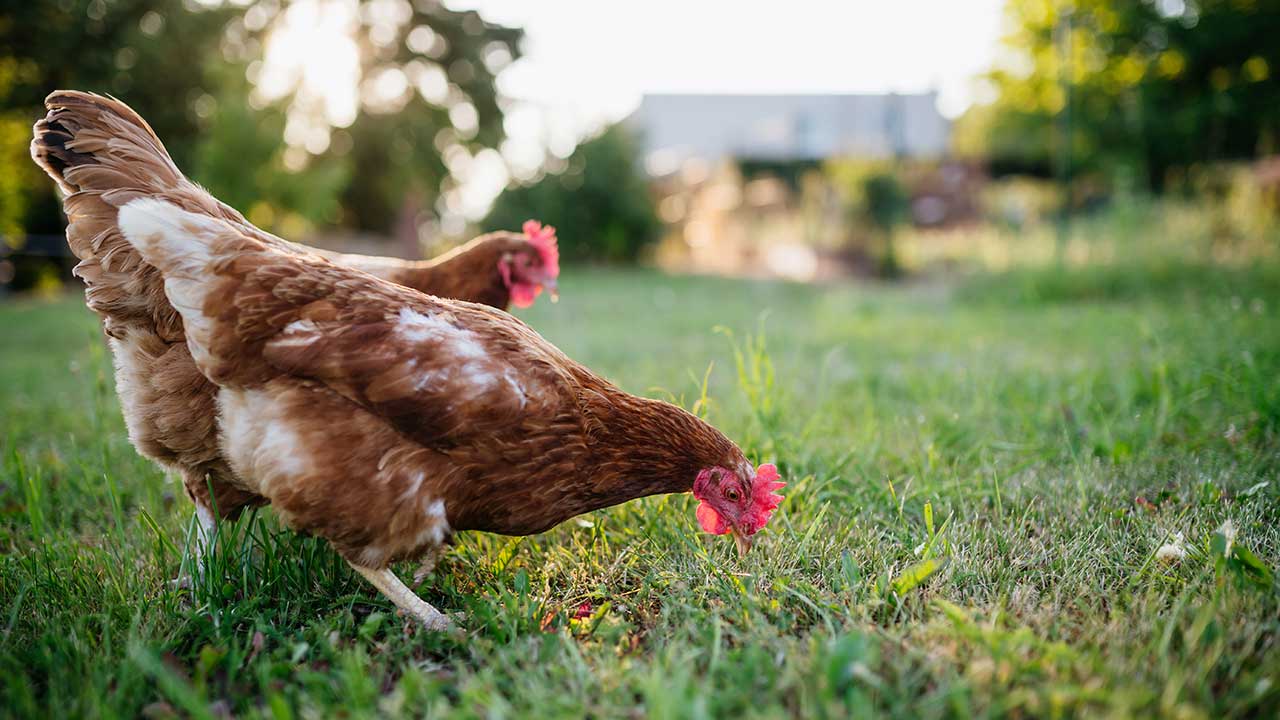
Commercial hens are bred and housed to maximize feed-to-egg conversion, averaging 300 eggs per year on highly optimized diets. Backyard hens lay fewer eggs (180 to 250) for the same relative volume of feed input. This lower efficiency means that, on a per-egg basis, backyard operations often generate higher carbon emissions than modern commercial facilities.
According to global agricultural meta-analyses, poultry products remain a relatively low-impact animal protein, generating approximately 4.7 kilograms of CO2-equivalent per kilogram of eggs, compared to 60 to 99 kilograms for beef. However, the environmental benefits of a backyard flock are localized rather than global, realized primarily through backyard waste diversion (composting chicken manure) and natural pest control.
Official Statements & Public Health Warnings
As backyard flocks multiplied, federal health agencies observed a corresponding rise in zoonotic disease transmission. The two primary biological threats—Highly Pathogenic Avian Influenza (HPAI) and antibiotic-resistant Salmonella—have prompted urgent warnings from the Centers for Disease Control and Prevention (CDC) and the USDA.
                      [Backyard Flock Exposure]
                                 │
         ┌───────────────────────┴───────────────────────┐
         ▼                                               ▼
  [H5N1 Avian Influenza]                       [Salmonella Saintpaul]
   • 71 US human cases since 2024               • 814 cases across 44 states in 2026
   • 3 cases in backyard flock owners           • 201 hospitalizations; 1 death
   • 2 fatalities (LA & WA)                     • Traced to 7 commercial hatcheries
   • High mortality in untreated contact        • Multi-drug resistance detected
The H5N1 Human Toll
While H5N1 is primarily a threat to birds, its transmission to humans has become a critical concern. Since March 2024, federal health officials have confirmed 71 human cases of influenza A(H5) in the United States. While the majority occurred in commercial dairy and poultry workers, three cases were identified in backyard flock owners.
Tragically, two of those three cases were fatal:
- An individual in Louisiana who contracted the virus in early 2025.
- A resident of Washington state who died in November 2025.
In both instances, the individuals had direct, unprotected contact with sick or dying birds in their backyard flocks. While the CDC maintains that the risk of H5N1 to the general public remains low, it warns that the risk is high for individuals who handle infected poultry without appropriate personal protective equipment (PPE).
The Salmonella Epidemic
While avian influenza dominates national headlines, Salmonella infections present a more widespread, systemic challenge. As of July 27, 2026, the CDC is actively investigating eight multistate outbreaks of Salmonella Saintpaul directly linked to contact with backyard poultry.
The metrics of the current outbreak are severe:
- 814 confirmed cases across 44 states and one U.S. territory.
- 201 hospitalizations documented among patients with available medical records.
- One death reported in Washington state.
- 25% of all cases occur in children under the age of five.
Epidemiological tracking reveals a direct link to the commercial supply chain. Among the infected individuals who owned poultry, 84% had purchased their birds since January 1, 2026, primarily from physical agricultural retail stores. Investigators matched the outbreak strains to seven commercial hatcheries. In five states, health inspectors recovered the outbreak strain directly from the cardboard shipping boxes used to transport day-old chicks to retail outlets.
Alarmingly, genetic sequencing of the isolates indicates that several of these Salmonella strains exhibit resistance to common first-line antibiotics, including ampicillin, ceftriaxone, and ciprofloxacin, complicating treatment for severe cases.
The Knowledge Gap: CDC Survey Findings
In May 2026, the CDC published a comprehensive survey in its Morbidity and Mortality Weekly Report (MMWR), analyzing the biosecurity behaviors of 638 backyard flock owners across 48 states. The findings revealed a dangerous disconnect between general awareness and actual practice:
- Awareness: 94% of respondents were aware of avian influenza.
- Hygiene Practices: Only 38% reported consistently washing their hands with soap and water after handling poultry or cleaning coop equipment.
- PPE Usage: Fewer than 15% of respondents wore dedicated footwear or outerwear when entering their coops, meaning pathogens were regularly tracked directly into residential living spaces.
- Physical Contact: Nearly 30% of respondents admitted to kissing or snuggling their poultry, a practice directly linked to facial Salmonella infections.
Future Outlook: The Post-Boom Landscape
As the backyard chicken phenomenon transitions from an inflationary craze into a niche hobby, the industry is entering a period of regulatory and structural maturity.
Municipal Tightening and Preemption Laws
Municipalities are actively rewriting local codes to manage the density of urban agricultural operations. Historically, local ordinances focused on simple prohibitions, such as banning roosters to prevent noise complaints. The focus has now shifted to disease prevention and environmental management.
Many cities have implemented strict flock size limits (typically capped between four and eight birds), mandated setbacks from property lines (ranging from 10 to 50 feet), and established formal registry systems to assist state veterinarians in tracking outbreaks. Simultaneously, several state legislatures have passed agricultural preemption laws that prevent municipalities from banning backyard flocks entirely, establishing a baseline right to small-scale food production while leaving biosecurity enforcement to local health departments.
The Challenge of "Buyer’s Remorse"
The rapid decline in egg prices has left many municipal animal shelters and poultry rescues overwhelmed. Unprepared owners, faced with the realities of caring for aging, non-productive hens (which can live for a decade but lay productively for only two to three years), are increasingly abandoning birds.
Unlike commercial operations, which systematically rotate and depopulate flocks, suburban owners must decide whether to care for unproductive birds as expensive pets, humanely euthanize them, or process them for food—an option that is legally prohibited in many residential zones.
                  [The Backyard Poultry Lifecycle]
                                 │
             ┌───────────────────┴───────────────────┐
             ▼                                       ▼
    [Years 1–2: Peak Production]           [Years 3–10+: Decline]
     • 180–250 eggs/hen/year                • Production drops significantly
     • Offsets basic feed costs             • Hen remains an active consumer of feed
                                            • Owner faces "Buyer's Remorse"
                                            • High rescue shelter abandonment rates
The Path Forward: Biosecurity as a Standard
For those who choose to maintain their flocks, biosecurity is no longer optional; it is a fundamental requirement of modern animal husbandry. The USDA’s "Defend the Flock" program emphasizes that the survival of both backyard and commercial flocks depends on physical separation from wild disease vectors. This requires:
- Enclosed Runs: Eliminating free-range practices in favor of fully covered, wire-mesh runs that prevent contact with wild birds and their droppings.
- Vector Control: Securing feed in rodent-proof containers to avoid attracting wild birds and pests.
- Sanitation Stations: Establishing dedicated footwear and handwashing protocols at the entrance of every residential coop.
Ultimately, the backyard chicken boom of 2022–2025 demonstrated the agility of American households in times of supply chain stress. However, the subsequent correction in 2026 serves as a reminder that localized food production is subject to the same economic, ecological, and biological realities that govern global agriculture. For the modern suburban homesteader, a backyard flock is no longer a simple shortcut to cheap groceries, but a demanding, long-term commitment to animal welfare and public health.