

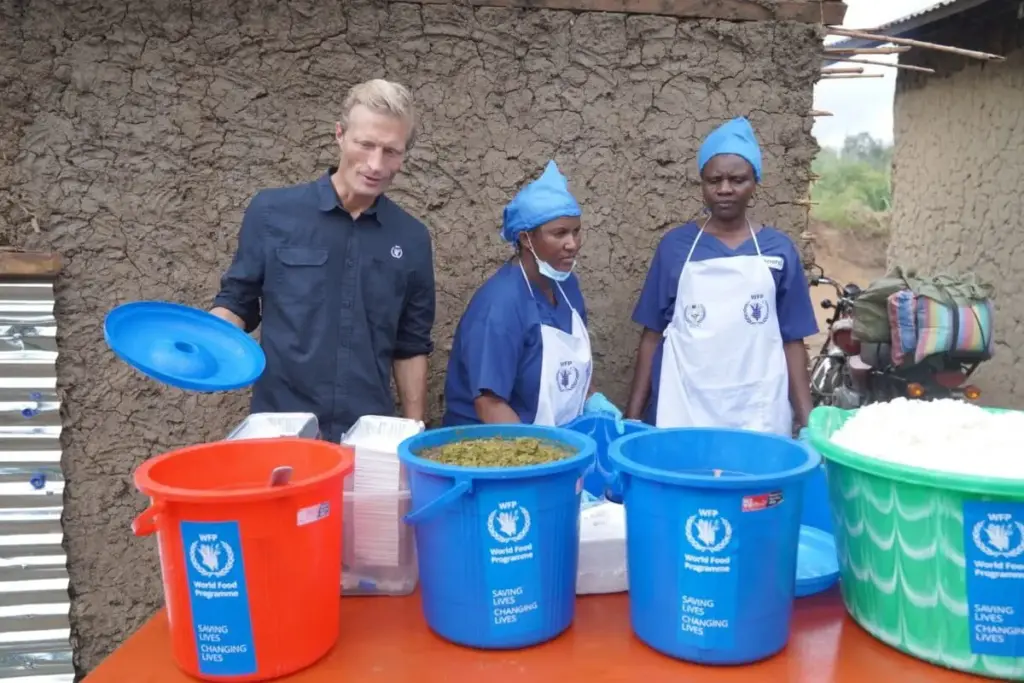
DEMOCRATIC REPUBLIC OF CONGO — A catastrophic convergence of public health emergencies and chronic deprivation is unfolding across the Democratic Republic of Congo (DRC). According to recent figures released by the U.S. Centers for Disease Control and Prevention (CDC), a severe outbreak of the Bundibugyo strain of the Ebola virus has claimed upwards of 3,000 lives, with confirmed cases more than doubling the death toll.
Yet, virologists and epidemiologists agree that the virus is only half the story. Running parallel to this viral onslaught is a staggering food security emergency. Analysts indicate that roughly 26 million people across the region are experiencing acute levels of food insecurity. This widespread hunger acts as a potent multiplier, accelerating the transmission of the pathogen, compounding its lethality, and binding public health and environmental conservation in a desperate struggle for survival.
Executive Overview
The unfolding disaster in the DRC highlights a brutal reality of modern humanitarian crises: infectious diseases do not spread in a vacuum. The synergy between malnutrition and immune suppression creates fertile ground for epidemics to rage out of control. When populations are weakened by persistent hunger, their bodies lose the baseline immunological resilience required to fight off aggressive viral infections.
Compounding the biological vulnerability are the socioeconomic pressures of hunger. Food scarcity drives desperate populations out of quarantined zones in search of sustenance, inadvertently widening transmission networks. Furthermore, the search for survival forces communities deeper into protected wildlife habitats, escalating the risks of zoonotic spillover. This dynamic threatens not only human communities but also critically endangered wildlife populations, including the DRC’s iconic mountain and lowland gorillas.
Addressing this multifaceted emergency requires moving beyond traditional, siloed public health interventions. International bodies, local governments, and conservationists are increasingly recognizing that to defeat Ebola in the DRC, the international community must simultaneously address the root causes of regional hunger and poverty.
Detailed Chronology and On-the-Ground Realities
The Escalation of the Bundibugyo Strain
The current epidemic, driven by the Bundibugyo strain—one of six known species of the Ebolavirus genus—has steadily strained the DRC’s already fragile healthcare infrastructure. While historical outbreaks in Central and West Africa have often captured global headlines, the current crisis stands out due to its intersection with a broader regional food emergency.
As healthcare workers battle to trace contacts and isolate the infected, they face a population whose daily calculus is dominated by a single, overriding priority: finding the next meal.
Hunger as a Vector of Movement
In the epidemiological management of Ebola, containment is paramount. The virus is transmitted primarily through direct contact with the bodily fluids of infected individuals. Consequently, strict isolation and movement restrictions are standard protocols to prevent community spread.
However, food insecurity shatters these containment models. When households exhaust their food supplies, staying indoors or remaining within designated quarantine zones becomes impossible. People are forced to leave their homes, travel to local markets, or venture into neighboring villages in search of food or casual labor. Each displacement event introduces new vectors for transmission, creating complex, hard-to-trace chains of infection that constantly outpace contact tracers.
The Breakdown of Caregiving Structures
Food insecurity also disrupts the micro-dynamics of patient care within families. When a primary breadwinner or caregiver falls ill, dependent children and elderly family members face immediate destitution. In many instances, sick individuals feel compelled to leave isolation centers prematurely—or avoid seeking treatment altogether—to secure provisions for their dependents.
To combat this, organizations like the World Food Programme (WFP) have integrated nutritional support directly into the medical response. By providing systematic food rations to patients’ families and dependent children, humanitarian workers remove the agonizing choice between seeking life-saving medical treatment and feeding one’s family, allowing the sick to rest and recover in isolation.
Supporting Context & Metrics: The Nutritional and Epidemiological Nexus
The Science of Malnutrition and Immunity
The relationship between nutrition and immunological competence is direct and well-documented. Grace Kwakezime Mongame, an emergency nutritionist with the WFP in the DRC, explains that the human body requires substantial nutritional resources to mount an effective defense against pathogens like Ebola.
"Ebola weakens the immune system, making it more difficult for the body to fight the disease and recover once infected," Mongame notes.
When a malnourished body is infected, it lacks the foundational building blocks—such as proteins, micronutrients, and adequate caloric intake—needed to produce antibodies and repair cellular damage. Furthermore, robust nutritional status is essential for optimizing the efficacy of pharmaceutical interventions and supportive care. Without proper nourishment, medications often fail to achieve their optimal therapeutic potential, dragging out recovery times, increasing hospital stays, and driving up mortality rates.
The Scale of Regional Food Insecurity
The baseline conditions fueling this vulnerability are severe. Across the DRC and the broader Great Lakes region, approximately 26 million people currently face acute food insecurity, according to Integrated Food Security Phase Classification (IPC) analyses. Driven by decades of civil conflict, localized displacement, climate shocks, and economic instability, this crisis has eroded the coping mechanisms of rural and peri-urban populations alike.

When an external shock like an Ebola outbreak hits a population already operating on the brink of starvation, the collapse is swift and devastating.
Official Statements and Perspectives
Global leaders and field experts have been vocal about the urgent need to view the Ebola epidemic through a holistic humanitarian lens.
"Hunger and disease are old companions. People weakened by hunger are far more vulnerable to infections."
— Tedros Adhanom Ghebreyesus, Director-General of the World Health Organization
Tedros’s remarks underscore the imperative for a synchronized international response that pairs epidemiological containment with large-scale nutritional support.
The Bushmeat Dilemma: Survival Versus Conservation
One of the most complex challenges in managing zoonotic diseases like Ebola is navigating the human reliance on wild meat, commonly known as "bushmeat." Ebola is a zoonotic pathogen, meaning it naturally circulates in animal reservoirs—most notably fruit bats—and can spill over into humans and other non-human primates through contact with infected blood or tissues, often via hunting and butchering.
Historically, outbreaks have been linked to the consumption of infected forest wildlife. The stakes are profoundly high for conservation: between 2002 and 2003, an estimated 5,000 western lowland gorillas (Gorilla gorilla gorilla) perished from Ebola in the Republic of Congo.
Yet, framing bushmeat consumption merely as a reckless cultural practice ignores the desperate economic realities on the ground. For millions living in and around the DRC’s dense rainforests—including areas near Virunga National Park—wild meat is an irreplaceable source of dietary protein and household income.
"Forest use is often essential for livelihoods, food security, medicine, trade, and survival," notes a recent study published in The Lancet Microbe. The study’s authors caution that public health narratives focusing too narrowly on the risks of bushmeat hunting can become deeply stigmatizing when they are detached from the structural realities of "poverty, insecurity, displacement, and limited alternatives that shape daily decisions."
Dr. Eddy Kambale, head veterinarian for Gorilla Doctors in the DRC, echoes this nuanced perspective. According to Kambale, attempting to halt forest exploitation through punitive measures alone is bound to fail. Instead, the government and international partners must proactively create alternative economic opportunities, sustainable employment, and reliable agricultural practices outside national parks.
"The lives and health of humans and wildlife are interdependent, and losing balance threatens life on the planet," Kambale emphasizes, pointing toward a One Health framework that treats human, animal, and environmental health as a single, indivisible system.
Future Outlook: A Path Toward Resilience
As the DRC continues to grapple with the dual crises of the Bundibugyo Ebola outbreak and mass food insecurity, the path forward demands a fundamental shift in crisis management. Short-term containment strategies—while vital for halting immediate chains of transmission—will remain perpetually vulnerable if underlying structural drivers are ignored.
1. Institutionalizing the "One Health" Approach
Future responses must fully integrate environmental conservation, veterinary medicine, and human public health. Protecting endangered great apes and preventing future zoonotic spillover events requires reducing local communities’ reliance on forest extraction through targeted economic development.
2. Scaling Up Proactive Food Assistance
Humanitarian agencies must be adequately funded to provide preemptive and sustained nutritional support during health emergencies. Treating food security as a core component of disease control will reduce movement-driven transmission, keep families intact, and enhance individual immune response rates.
3. Strengthening Local Healthcare and Agricultural Systems
Building long-term resilience necessitates investing in domestic agricultural capacity within the DRC. By empowering local farmers, stabilizing food supply chains, and fortifying rural clinics, the international community can help insulate vulnerable populations against the compounding shocks of epidemics and famine.
Ultimately, the crisis in the DRC serves as a stark reminder of global interconnectedness. Until hunger and disease are tackled in tandem, vulnerable populations will remain caught in a vicious cycle where a weakened body fights not only a lethal virus, but the agonizing pangs of an avoidable famine.



