


Executive Overview
While the commercial vehicle market in the United States remains largely mired in political resistance and sluggish adoption of medium- and heavy-duty electrification, the landscape across the Atlantic tells a vastly different story. Driven by stringent European Union emissions regulations, enthusiastic public support, and a painful spike in diesel prices—which surged past $6.00 per gallon—Europe is rapidly accelerating its transition to zero-emission freight.
This momentum reaches a crescendo in Hannover, Germany, for the upcoming IAA Transportation show, opening on September 15, 2026. More than 700 exhibitors will descend upon the exhibition halls to showcase an unprecedented lineup of battery-electric commercial vehicles (BEVs). From heavy-duty long-haul tractors and rugged medium-duty work trucks to the nimble delivery vans that form the lifeblood of small businesses, the event highlights a maturing industry.
Yet, the undeniable epicenter of the buzz in Hannover is the European debut of the Tesla Semi, alongside a powerful wave of innovative offerings from legacy European heavyweights, Turkish manufacturers, and an aggressive cohort of Chinese automakers. As logistics operators calculate expenses down to the fraction of a cent per kilometer, the economic and regulatory stars are aligning to make electric commercial transport the default standard for the future of European logistics.

Detailed Chronology and Event Landscape: The Road to IAA 2026
The lead-up to the 2026 IAA Transportation show has been defined by a dramatic shifting of gears across the global automotive sector. In the United States, commercial truck manufacturers have spent much of the past year fighting local and state-level environmental regulations designed to curb fleet emissions. However, macroeconomic realities—punctuated by last week’s soaring diesel prices—are forcing a reluctant reevaluation among American fleet operators.
Conversely, European lawmakers and manufacturers have baked decarbonization directly into their long-term infrastructure and industrial strategies. In a pre-show press conference, Hildegard Müller, President of the German Association of the Automotive Industry (VDA), underscored the stakes. She highlighted the industrial might of the domestic commercial vehicle sector and issued a direct call to policymakers in Brussels and Berlin to safeguard and accelerate the rollout of alternatively powered fleets.
"The commercial vehicle industry is a powerhouse," Müller stated. "It, and the many people working in logistics, keep our country running. The IAA Transportation will showcase the dynamism of our industry. It will once again be a showcase of innovations."

Opening its doors on September 15, 2026, the exhibition is categorized into three core pillars: heavy-duty tractors designed for long-haul and regional freight, medium-duty construction and work trucks, and urban delivery vans.
Heavy-Duty Tractors and Global Competitors
Legacy European giants—including Daimler, MAN, Volvo, and Renault—are bringing their latest generation of electric heavy-duty tractors to the forefront. But European stalwarts are no longer playing on an exclusive home field.
For the first time, Ford’s Turkish heavy commercial vehicle brand, Ford Otosan, is bringing its XXL electric truck lineup to Hannover. Following its initial presentation in Lyon in November 2025, Ford is showcasing its first electric 19- and 26-ton vehicles from the F-Line E series.

At the same time, Chinese manufacturers are aggressively staking their claim in the European market. Sany eTrucks is presenting its e263 e-tractor, slated for commercial availability in Germany starting next June, alongside a broader portfolio of three- and four-axle electric trucks now listed on its European portal. Other Chinese market entrants, such as Sinotruk and SuperPanther, are already producing their electric trucks locally at Steyr Automotive in Steyr, Austria.
The technological ambition on display extends beyond simple electrification. Skyworth Auto is using the stage to unveil the heavy-duty Skyworth Z9, featuring advanced Level 4 autonomous driving capabilities. Other major Chinese brands exhibiting in Hannover include FAW Trucks, Dongfeng, Foton, Farizon, Wisdom Motor, and DeepWay, alongside component giants like CATL, which is debuting next-generation commercial vehicle battery systems.
Supporting Context and Metrics: The Tesla Semi European Debut
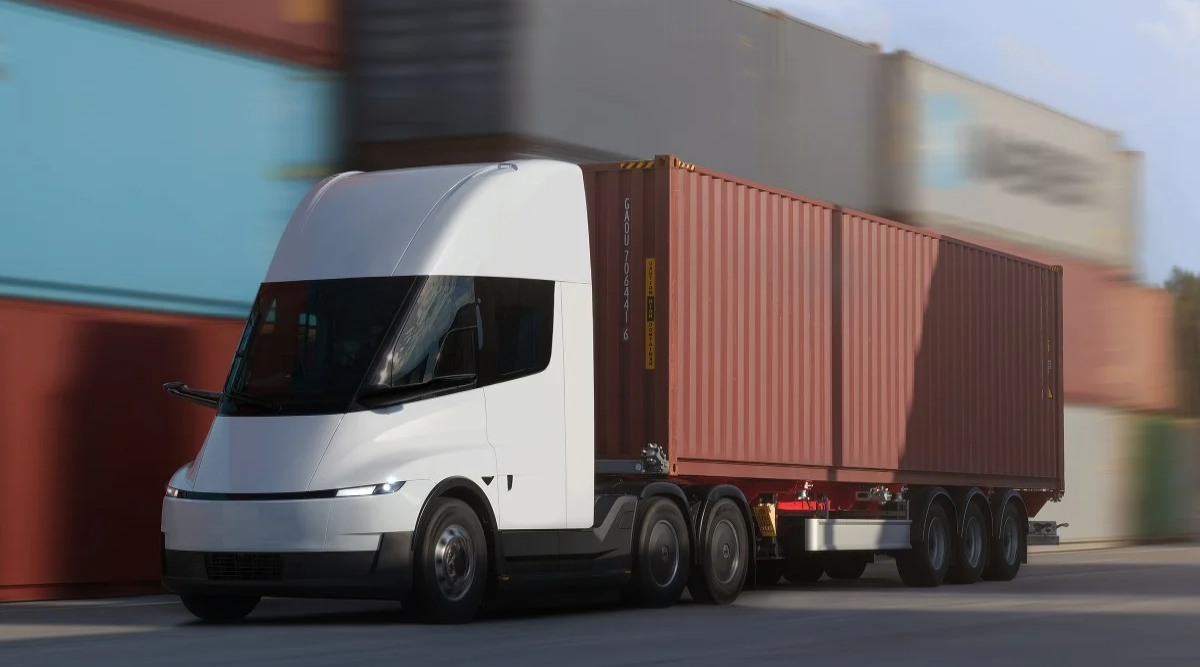
While the sheer volume of international heavy-duty entries is staggering, the primary magnet for industry analysts and attendees alike is Tesla. After months of speculation following its largest European order to date, the Tesla Semi is officially making its European debut at the IAA show.
Specifications and Adaptations
Tesla remains characteristically tight-lipped regarding exact granular specifications, but available data indicates that the European version closely mirrors the architectural DNA of the U.S. Standard Range model, with modifications tailored to comply with European regulatory frameworks.
- Powertrain & Architecture: The European Semi utilizes a tri-motor setup operating across the two rear axles, delivering a combined output of up to 800 kW. It relies on an 800-volt electrical architecture capable of charging speeds up to 800 kW.
- Battery & Energy Consumption: The vehicle incorporates a standard 548 kWh battery pack built using Tesla’s proprietary NCMA cells. Tesla Germany cites an estimated energy consumption rate of 1.0 kWh/km, slightly more efficient than the 1.1 kWh/km benchmark recorded in the United States.
- Performance Dynamics: This efficiency variance is driven by regional operational profiles. In the United States, the Semi operates as a Class 8 vehicle with a maximum gross vehicle weight rating (GVWR) of up to 36.3 metric tons (80,000 lbs) at highway speeds ranging from 88 to 128 km/h. In contrast, European regulations permit a maximum GVWR of 40 metric tons, while highway speeds are strictly capped between 80 and 90 km/h.
Payload vs. Range Strategy
A critical revelation regarding Tesla’s European market entry is its strategic prioritization of payload capacity over raw long-distance range. Standard European cargo trailers differ slightly in weight limits and aerodynamic profiles, prompting Tesla to note that tyre selection, roof fairings, and trailer configurations significantly influence real-world efficiency.
According to Electrive, the European-spec Semi boasts an unladen curb weight of 9.1 metric tons and an electric power take-off rated at up to 25 kW. Rather than maximizing battery size at the expense of cargo capacity—a common pitfall in early heavy-duty EV design—Tesla has opted for a configuration optimized for weight-sensitive logistics.
"Tesla would initially enter the European market with a payload-optimized truck that sacrifices some range for a higher payload capacity," Electrive reports. "Range as a headline argument for everyday suitability quickly loses relevance in logistics operations if it comes at too great a cost to payload."
Megacharging Infrastructure
To support fleet integration, Tesla Germany is heavily promoting its dedicated commercial high-performance charging ecosystem. Engineered specifically for high-utilization commercial applications, the Tesla Megacharger network enables trucks to replenish a substantial percentage of their battery capacity during mandatory short-duration driver rest breaks, ensuring delivery schedules remain uninterrupted.
Official Statements and Industry Insights
Beyond heavy-duty long-haulers, the urban and regional logistics sectors are experiencing a renaissance in van electrification. Manufacturers are rolling out purpose-built, highly versatile platforms designed to slash total cost of ownership (TCO) for small businesses and courier fleets.
- Ford Pro is introducing the all-new battery-electric Transit City, marketed as an exceptionally cost-efficient urban delivery van starting at a net price of €35,990 in its base configuration. It joins Ford’s expanding electrified family, which includes the E-Transit Courier, E-Transit Connect, E-Transit Custom, and the full-size E-Transit.
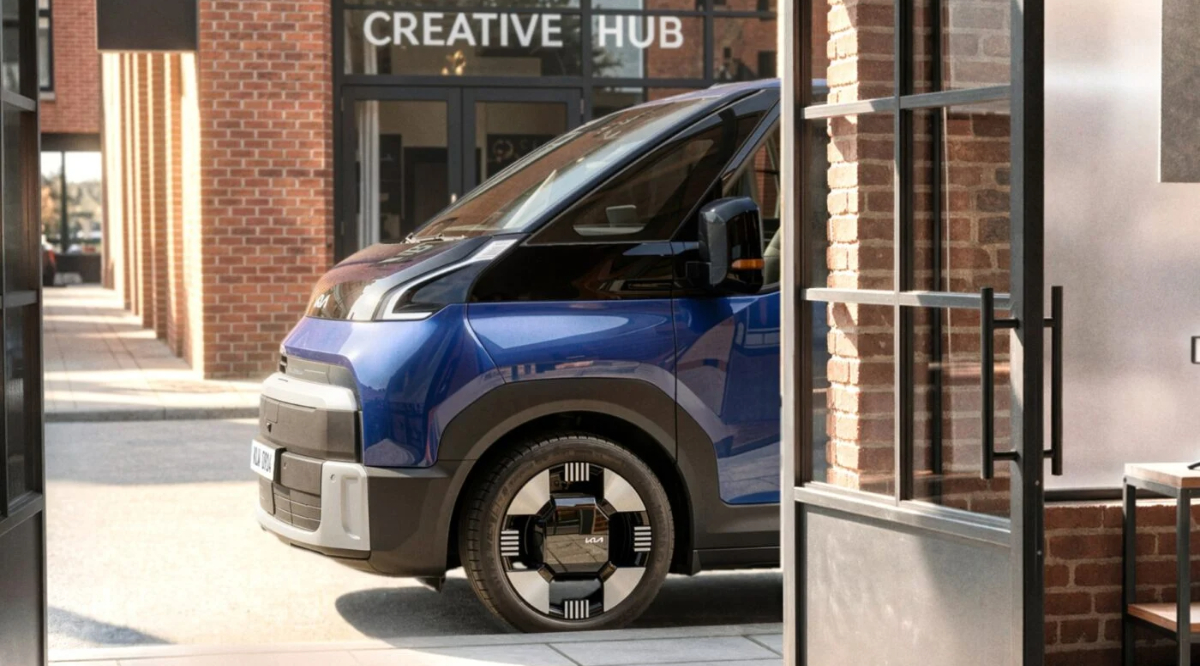
- Kia is hosting the physical public debut of the PV7, a larger sibling to the modular PV5 introduced last year. The PV7 expands interior volume and flexibility to meet evolving commercial requirements across diverse business and lifestyle sectors.
- Stellantis is pulling the cover off its lowest-priced electric van to date: the Smart Compact Van, making its global public premiere in Hannover.
- Volkswagen Commercial Vehicles is showcasing an autonomous-capable variant of the ID. Buzz, equipped with Level 4 self-driving technology intended for automated urban goods delivery—though final cargo unloading remains a manual task for the recipient.
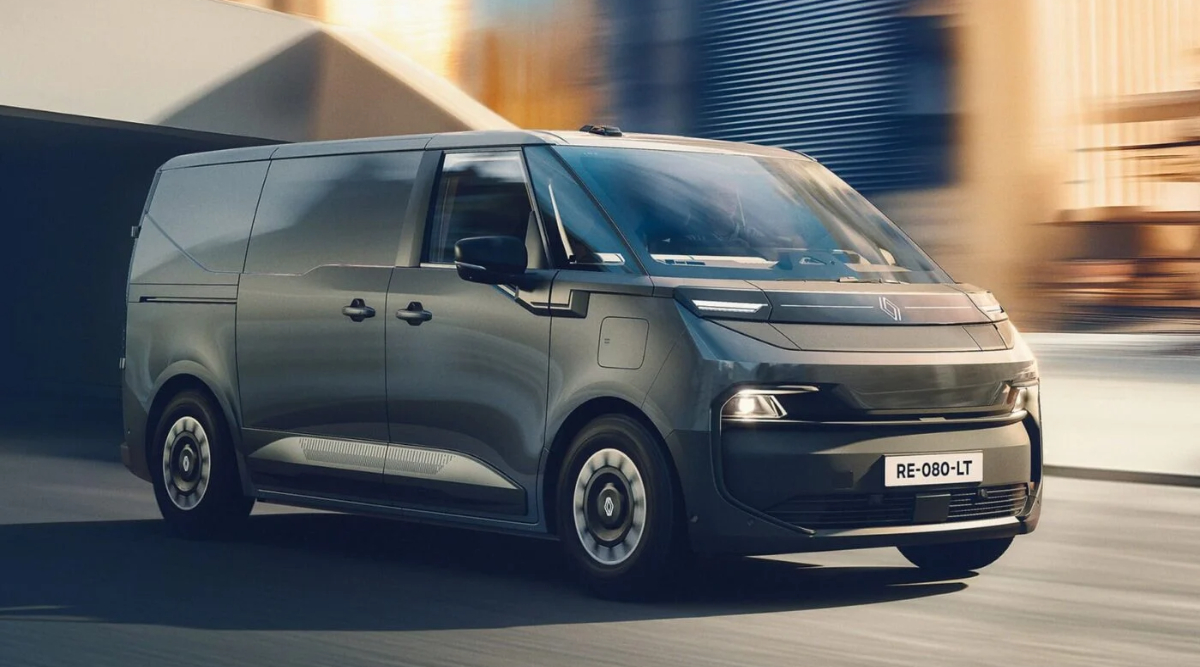
- Renault Trucks is presenting its newly updated Trafic E-Tech, underpinned by an advanced 800-volt platform. The architecture enables DC fast-charging from 15% to 80% in under 20 minutes, yielding a maximum driving range of up to 450 km depending on battery selection.
- Maxus (SAIC) is emphasizing bidirectional charging capabilities, demonstrating how its electric vans support V2L (Vehicle-to-Load), V2H (Vehicle-to-Home), and V2G (Vehicle-to-Grid) functionalities. Fleet operators can utilize the van’s onboard battery to stabilize building energy loads during peak demand or power heavy-duty electric tools for remote service technicians.
Future Outlook: The Inevitable Momentum of Commercial Electrification
The overarching narrative emerging from the 2026 IAA Transportation show is clear: the European market for battery-electric commercial vehicles has transitioned from an experimental niche into an expansive, highly competitive ecosystem.
As geopolitical instability continues to drive fossil fuel price volatility, the arithmetic for fleet managers becomes increasingly stark. In an industry where operating expenses are calculated to the thousandth of a euro per kilometer, the financial data increasingly favors electric propulsion over traditional diesel engines.
While skeptics may view spikes in diesel prices as a temporary disruption, the structural alignment of EU environmental mandates, municipal zero-emission zones, and surging technological maturity suggests that the internal combustion engine’s dominance in European logistics is drawing to a close. Whether through the heavy-duty disruption promised by the Tesla Semi and an influx of advanced Chinese tractors, or the hyper-efficient urban delivery vans from Ford, Kia, Renault, and Stellantis, the wheels of the electric freight revolution are turning—and they are gathering unstoppable momentum.



