In the modern fitness landscape, athletic training programs and longevity protocols are overwhelmingly dominated by the visible: glutes, quadriceps, hamstrings, and core musculature. Millions of hours and billions of dollars are spent optimizing these major muscle groups to improve athletic performance, mitigate joint degeneration, and extend healthspan. Yet, an investigative look into human biomechanics reveals a critical, systemic blind spot at the very base of the kinetic chain: the human foot.
Comprising 26 bones, 33 joints, and an intricate network of 29 intrinsic muscles, the foot serves as the body’s sole point of contact with the earth. It functions not merely as a passive, structural pedestal, but as a highly sophisticated dynamic sensory-motor organ. Despite this, modern lifestyle habits—specifically the ubiquitous use of narrow-toed, heavily cushioned, and structurally rigid footwear—have effectively placed the human foot in a virtual cast. This sensory deprivation and physical immobilization have led to widespread intrinsic muscle atrophy, altered gait mechanics, and a quiet epidemic of ascending joint pathologies, including chronic knee instability, hip misalignment, and lower back pain.
As longevity medicine shifts its focus toward preserving mobility and preventing age-related falls—the leading cause of accidental death among adults over 65—pioneering podiatrists, sports physicians, and biomechanists are sounding the alarm. This report investigates the physiological consequences of neglecting foot health, documents a rigorous 30-day experimental intervention designed to restore intrinsic foot function, analyzes the clinical metrics linking foot strength to lifespan, and outlines the emerging paradigm shift toward functional, minimalist footwear.
Detailed Chronology
The Evolutionary Divergence: How Modern Footwear Crippled the Human Foot
To understand the current crisis in foot health, one must examine the evolutionary history of human locomotion. For hundreds of thousands of years, the human foot evolved to traverse uneven, natural terrain completely barefoot or protected by minimal, highly flexible leather wraps. This environment demanded constant, micro-adjustments from the intrinsic muscles of the foot—such as the flexor digitorum brevis, quadratus plantae, and plantar interossei—which actively maintained the structural integrity of the medial longitudinal arch.
The mid-20th century marked a radical departure from this evolutionary norm. The athletic shoe industry introduced highly cushioned midsoles, rigid arch supports, elevated heels (heel-to-toe drops), and tapered, narrow toe boxes. While marketed as protective and performance-enhancing, these design elements fundamentally altered the gait cycle:
Narrow Toe Boxes: Force the hallux (big toe) into a valgus position (hallux valgus), rendering it incapable of acting as the primary stabilizer during the push-off phase of walking or running.
Excessive Cushioning: Insulates the sole of the foot from the ground, dampening the sensory feedback loop between the thousands of plantar mechanoreceptors and the central nervous system.
Rigid Arch Supports: Act as a physical splint, preventing the natural deformation and recoil of the foot’s arch, which is designed to absorb and store kinetic energy. Over time, this lack of movement leads to disuse atrophy of the intrinsic foot muscles.
Recognizing this systemic vulnerability, an investigative, month-long personal protocol was launched to evaluate whether targeted biomechanical interventions could reverse years of footwear-induced dysfunction. The protocol was structured around four primary pillars: sensory restoration, intrinsic muscle activation, environmental adaptation, and a functional footwear transition.
       WEEK 1                      WEEK 2                      WEEK 3                      WEEK 4
┌─────────────────────────┐ ┌─────────────────────────┐ ┌─────────────────────────┐ ┌─────────────────────────┐
│ • Introduce toe spacers │ │ • Eliminate slippers    │ │ • Begin gym training    │ │ • Full integration of   │
│   (passive splay)       │ │   (barefoot at home)    │ │   in socks/minimalists  │ │   functional footwear   │
│ • Initiate short-foot   │ │ • Eccentric calf raises │ │ • Active lateral agility│ │ • Measurable increase   │
│   exercises             │ │   at standing desk      │ │   drills (pickleball)   │ │   in arch resilience    │
└─────────────────────────┘ └─────────────────────────┘ └─────────────────────────┘ └─────────────────────────┘
Week 1: Passive Splay and Initial Sensory Shock
The intervention began with the introduction of silicone toe spacers worn during periods of evening rest. The objective was to passively restore the natural anatomical alignment of the digits, counteracting decades of lateral compression from narrow shoes.
The initial sessions (lasting 15 to 30 minutes) yielded immediate, uncomfortable feedback. The intermetatarsal ligaments and transverse adductor muscles, chronically shortened by narrow footwear, resisted the outward expansion.
Simultaneously, "short-foot" exercises (or arch domes) were introduced. This exercise requires the individual to pull the ball of the foot toward the heel without curling the toes, thereby actively contracting the abductor hallucis and flexor digitorum brevis. The neurological connection to these muscles was initially weak, demonstrating a mild form of sensory-motor amnesia.
Week 2: Environmental Adaptation and the Elimination of Orthotic Crutches
In the second week, all supportive indoor footwear—including cushioned slippers and orthotic sandals—was eliminated. The home environment became a strictly barefoot zone.
By forcing the bare foot to interact directly with hardwood floors and tile surfaces, the plantar mechanoreceptors were subjected to continuous sensory input.
To build strength, slow, eccentric calf raises (with a 5-second lowering phase) were integrated into daily work routines at a standing desk. These raises were performed with a tennis ball squeezed between the heels to force the activation of the tibialis posterior, a key stabilizer of the medial arch.
Week 3: Gym Training and Biomechanical Auditing
By the third week, the protocol was extended to high-load environments. Standard athletic trainers were abandoned during strength training sessions. Squats, deadlifts, and single-leg lunges were performed either entirely barefoot or in specialized minimalist footwear.
The immediate result was a profound increase in proprioceptive feedback. Without the artificial wobble of thick foam midsoles, the feet could actively "grip" the floor, creating a vastly more stable foundation for heavy lifts.
However, lateral movements (such as those required in pickleball) highlighted the vulnerability of transitioning too quickly; the lateral stabilizers of the ankle and the lateral band of the plantar fascia required careful pacing to avoid overuse strains.
Week 4: Synthesis and Stabilization
By the final week of the experiment, the discomfort of the toe spacers had resolved into a sensation of release. The foot’s resting structure had visibly shifted: the toes exhibited a wider natural splay, and the medial arch demonstrated greater height and resilience under load.
More importantly, the nervous system had adapted; independent movement of the hallux was now possible, signaling the restoration of motor pathways that had lain dormant for years.
Supporting Context & Metrics
The physiological necessity of foot training is supported by clear biomechanical and clinical metrics. To appreciate the scale of this system, one must examine both its anatomical complexity and its profound impact on systemic longevity.
       ANATOMICAL COMPLEXITY OF THE HUMAN FOOT
┌───────────────────────────┬───────────────────────────┐
│          Bones            │          Joints           │
│           26             │            33             │
├───────────────────────────┼───────────────────────────┤
│     Intrinsic Muscles     │      Mechanoreceptors     │
│           29             │          7,000+           │
└───────────────────────────┴───────────────────────────┘
The Sensory-Motor Loop: Plantar Proprioception
The sole of the human foot is one of the most densely innervated parts of the human body, packed with over 7,000 sensory nerve endings known as mechanoreceptors. These receptors (specifically Pacinian corpuscles, Meissner’s corpuscles, and Merkel disks) detect micro-changes in pressure, skin stretch, and vibration.
When a person walks, these receptors transmit real-time telemetry to the brain regarding ground hardness, slope, and friction. The brain processes this data within milliseconds, calculating the precise muscular tension required in the ankles, knees, hips, and core to maintain balance and distribute kinetic force.
When this sensory loop is muffled by thick, cushioned athletic shoes, the brain is effectively forced to operate blindfolded. Deprived of high-fidelity ground feedback, the motor cortex over-compensates by stiffening the lower extremities, altering the knee-joint angle, and relying on larger, less efficient muscle groups to maintain balance. This phenomenon, known as sensory-motor dampening, is a primary driver of chronic joint micro-trauma.
The Metrics of Aging: Gait Speed, Balance, and Fall Risk
In geriatric medicine, gait speed and single-leg balance are widely recognized as powerful predictors of all-cause mortality. As individuals age, a decline in foot muscle volume directly correlates with a reduction in physical capabilities:
Intrinsic Muscle Atrophy: Studies utilizing magnetic resonance imaging (MRI) have demonstrated that older adults with a history of falls have significantly lower intrinsic foot muscle volume and weaker toe flexor strength than their non-falling peers.
Gait Speed Decline: For every 0.1 meter-per-second decrease in gait speed, the risk of mortality in older populations increases by approximately 12%. Weak foot arches and compromised hallux function directly shorten stride length and reduce walking velocity.
The Kinetics of Balance: In a single-leg stance test—a standard benchmark for neurological and physical health—individuals who cannot maintain balance for at least 10 seconds face a significantly higher risk of cognitive decline and physical frailty.
Official Statements and Expert Commentary
Dr. Courtney Conley on Foot Strength and Aging
Dr. Courtney Conley, a chiropractic physician and founder of Gait Happens, is one of the world’s leading clinical voices advocating for the restoration of natural foot mechanics. In her clinical evaluations, Dr. Conley emphasizes that foot strength is not merely an isolated orthopedic concern, but a fundamental pillar of healthy aging.
"We have spent decades treating the foot as a rigid structure that needs to be supported, cushioned, and casted," states Dr. Conley. "This is a profound medical miscalculation. The foot is dynamic. When you put a strong foot in a highly supportive shoe, you are telling those 29 muscles they no longer have to work. They atrophy. And that atrophy doesn’t stay in the foot.
When the foot loses its ability to absorb shock and stabilize, those forces are transmitted directly up the kinetic chain. The knee is forced to hyper-stabilize; the hip loses its internal rotation; the lumbar spine takes on excessive shear force. If we want to solve chronic joint pain and mitigate fall risks in our aging population, we must start by rebuilding the foundation."
Biomechanical Research on Minimalist Footwear
The clinical efficacy of minimalist footwear has transitioned from a fringe athletic theory to a scientifically validated intervention. Peer-reviewed research has demonstrated that transitioning to minimalist footwear can produce measurable, structural changes in the foot:
A landmark study published in Medicine & Science in Sports & Exercise investigated the structural impact of wearing minimalist shoes for daily activities over a six-month period. The researchers found that participants who transitioned to minimalist footwear experienced a 60% increase in intrinsic foot muscle strength, equivalent to the gains achieved through a dedicated, rigorous foot-strengthening exercise program.
Footwear Evaluation: A Comparative Analysis
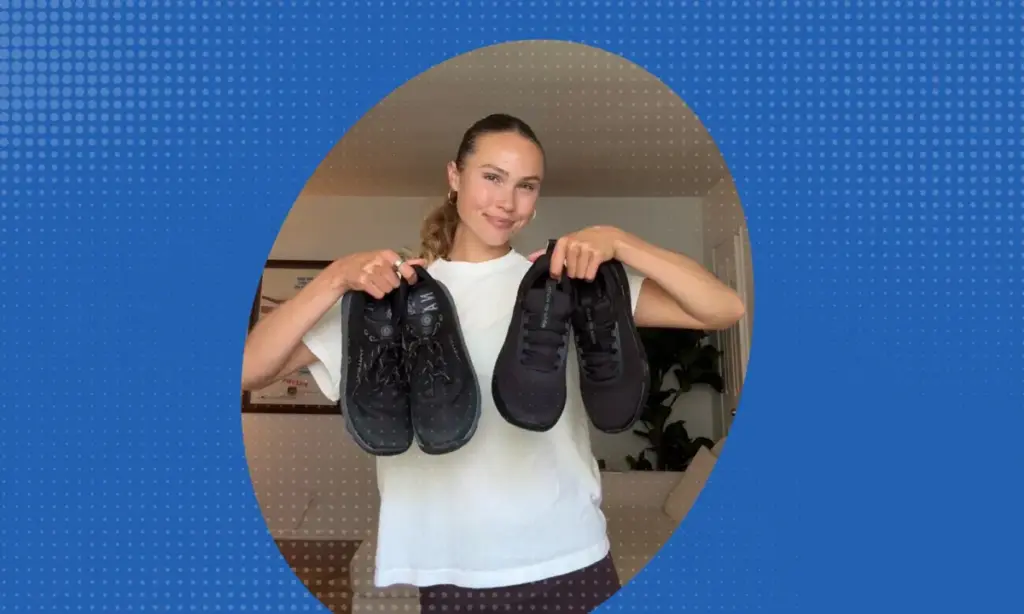
As part of the 30-day intervention, two distinct models of functional footwear were analyzed for their biomechanical utility, design parameters, and real-world performance.
The Astral TR1 Sensi HT represents a uncompromising approach to functional footwear. Designed with a true zero-drop platform (meaning the heel and the forefoot are at the exact same height off the ground), this shoe forces the Achilles tendon and calf muscles to operate at their natural, elongated length.
Design & Materials: Built with highly breathable, natural fibers, the shoe features an ultra-wide toe box that allows the metatarsals to splay fully under load. The outsole is constructed from high-friction, slip-resistant rubber, providing exceptional ground feedback.
Biomechanical Performance: During daily walking and light trail hiking, the Astral TR1 excelled at restoring proprioceptive feedback. The thin, flexible sole allowed the foot to wrap around uneven surfaces, forcing the intrinsic muscles to actively stabilize the body.
Clinical Caveat: For individuals accustomed to a lifetime of high-drop running shoes, the Astral TR1 requires a gradual transition period. A sudden shift to zero-drop can place excessive strain on a shortened Achilles tendon, highlighting the need for incremental exposure.
2. while on earth Move Trainer: The High-Performance Hybrid
The Move Trainer by while on earth represents a highly practical bridge between traditional athletic shoes and pure minimalist footwear. It is engineered for individuals who require functional toe-box geometry but still engage in high-impact, lateral athletic movements where some level of shock absorption is biomechanically advantageous.
Design & Materials: This trainer features a wide, anatomically correct toe box paired with a modest 6mm heel-to-toe drop. The upper is constructed from a durable, supportive knit, and the midsole offers a firmer, highly responsive cushioning compound that does not compromise stability.
Biomechanical Performance: During heavy strength training (squats and lunges) and high-velocity lateral movements (such as pickleball), the Move Trainer offered outstanding performance. The wide toe box allowed the hallux to plant firmly, generating superior torque and lateral stability, while the 6mm drop provided a familiar geometry that reduced stress on the posterior chain during high-impact landings.
Clinical Utility: This model serves as an ideal transition tool for the modern athlete, allowing for safe, high-intensity training while actively encouraging foot strength and digit splay.
Future Outlook
The field of sports medicine, orthopedics, and longevity science is on the cusp of a major paradigm shift regarding foot health. As clinical evidence continues to mount against the over-supportive, over-cushioned footwear of the past 50 years, several key trends are shaping the future of human movement:
               THE EVOLUTION OF FOOTWEAR PARADIGMS
┌────────────────────────────────┬───────────────────────────────┐
│         Old Paradigm           │         New Paradigm          │
├────────────────────────────────┼───────────────────────────────┤
│ • External Orthotics           │ • Intrinsic Strengthening     │
│ • Maximum Cushioning           │ • Sensory Feedback (Ground)   │
│ • Narrow, Aerodynamic Aesthetics│ • Wide, Anatomical Toe Boxes  │
│ • Reactive Symptom Management  │ • Proactive Kinetic Training  │
└────────────────────────────────┴───────────────────────────────┘
The Demise of the Passive Orthotic: While rigid orthotics remain useful for acute, short-term rehabilitation, the long-term clinical consensus is shifting. Rather than permanently bracing a weak arch—which perpetuates muscle atrophy—practitioners are increasingly prescribing "active rehabilitation" programs designed to rebuild the foot’s natural structural integrity.
The Integration of Foot Health into Longevity Medicine: Geriatric and preventative medicine programs are beginning to incorporate barefoot balance testing, toe flexor dynamometry, and gait analysis into standard physical assessments. By identifying foot weakness in a patient’s 30s, 40s, and 50s, clinicians can prevent the catastrophic balance failures that occur in later decades.
The Mainstream Adoption of Anatomical Footwear: The consumer market is witnessing an unprecedented surge in demand for shoes that respect human anatomy. Major athletic brands are facing growing pressure to widen their toe boxes and lower their heel drops, driven by an increasingly educated consumer base that refuses to sacrifice structural health for outdated aesthetic standards.
A Redefined Aesthetic: For decades, narrow, pointed shoes have been associated with formal wear and athletic speed. However, as public awareness of biomechanics grows, the wide, splayed foot is increasingly recognized as the true visual marker of physical vitality, athletic power, and structural resilience.
Ultimately, the human body operates as a single, integrated kinetic system. Every athletic milestone, every longevity target, and every pain-free mile walked in old age relies entirely on the 29 small muscles and 26 bones working silently beneath us. Reclaiming our physical independence, performance, and longevity must begin at the absolute foundation—by freeing our feet and rebuilding them from the ground up.