

By Environmental Science Desk
Published: Special Investigative Report
Executive Overview
Roughly a decade ago, an unprecedented environmental catastrophe unfolded silently beneath the waves of the northeastern Pacific Ocean. A colossal marine heatwave—colloquially dubbed "The Blob"—permanently altered the marine ecosystem, triggering a dramatic, cascading collapse of forage fish and krill populations. These microscopic and small organisms form the absolute bedrock of the marine food chain, and their depletion sent shockwaves upward through apex predators.
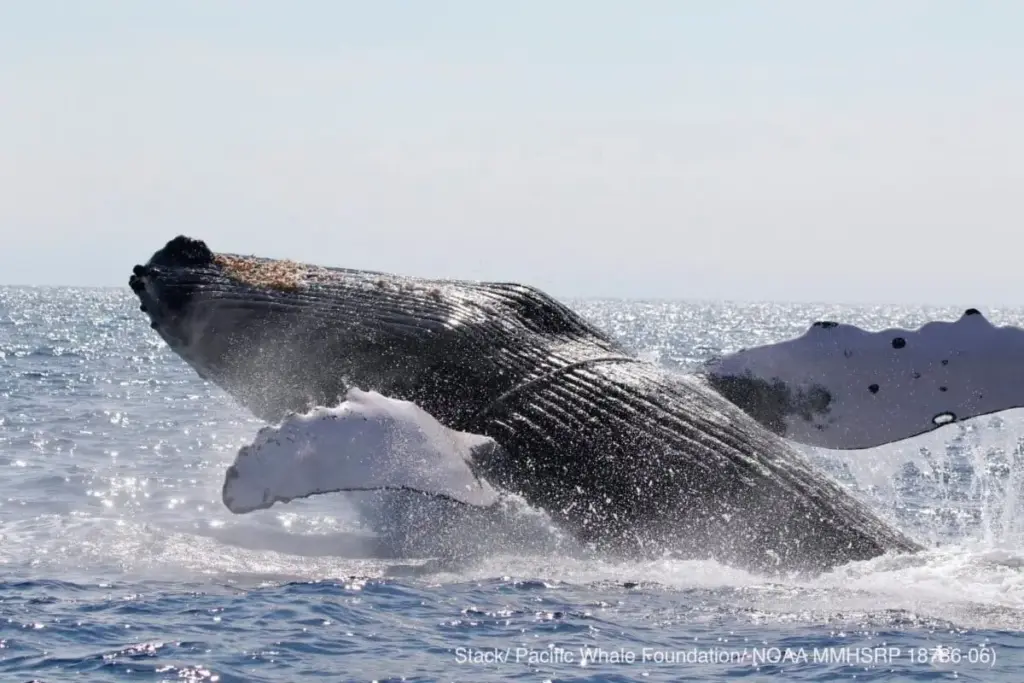
Among the most heavily impacted victims of this invisible crisis was the Hawaiian humpback whale (Megaptera novaeangliae) population. A recent landmark study has revealed that these majestic cetaceans suffered a devastating, precipitous decline in numbers during the 2013–2016 marine heatwave. Years later, despite the passing of the acute phase of that thermal anomaly, the population has failed to recover.
Utilizing an innovative citizen science database involving more than 27,000 photographic records, researchers uncovered staggering statistics: the Hawaiian humpback population plummeted by 37% between the 2014–2015 and 2021–2022 breeding seasons. Adult annual survival rates, historically stable at an impressive 99%, crashed down to an alarming 68% during the height of the heatwave. With the North Pacific now facing yet another compounding cycle of abnormally high sea surface temperatures and severe El Niño events, scientists warn that these marine mammals are locked in a precarious, highly vulnerable state. Today, a population weakened by starvation faces an escalating gauntlet of anthropogenic threats—ranging from deadly commercial fishing gear entanglements and massive ship strikes to pervasive ocean pollution—raising urgent questions about the long-term viability of migratory giants in a rapidly warming world.
Detailed Chronology: The Anatomy of a Thermal Catastrophe
To fully grasp the magnitude of the decline in Hawaii’s humpback whales, researchers had to trace a timeline of environmental disruption that spans thousands of miles, bridging the frigid feeding grounds of the sub-Arctic with the warm, shallow breeding sanctuaries of the tropical Pacific.
The Migratory Cycle and Ecological Dependencies
Humpback whales are legendary long-distance travelers. Their life history is dictated by a rigid seasonal migration pattern:
- Summer Months: The whales congregate in the cold, nutrient-rich waters off Alaska, British Columbia, and the Canadian Pacific. Here, they spend nearly 24 hours a day feeding aggressively, building up thick layers of blubber to sustain them through the upcoming months of fasting. Their primary diet consists of krill and dense schools of small forage fish.
- Winter Months: As autumn turns to winter, the whales embark on a grueling 4,800-kilometer (3,000-mile) journey south to the main Hawaiian Islands. Protected within these warm, shallow waters, they mate, give birth, and nurse their calves. During this period, adult whales subsist almost entirely on their stored energy reserves.
The Rise of "The Blob" (2013–2016)
In late 2013, a persistent ridge of high atmospheric pressure parked itself over the northeastern Pacific, preventing normal winds from cooling the ocean surface. The result was a massive, unprecedented pool of warm water—affectionately and ominously named "The Blob." This marine heatwave raised surface temperatures by several degrees Fahrenheit across vast swaths of the ocean, stretching from Alaska down to California.
The thermal anomaly fundamentally altered the oceanography of the sub-Arctic feeding grounds. Warm water suppresses the upwelling of deep, nutrient-rich currents, starving phytoplankton of the elements they need to bloom. Without phytoplankton, zooplankton and krill populations collapse; without krill and forage fish, seabirds and marine mammals starve.
Documenting the Carnage: The Citizen Science Revolution
Tracking a mobile, open-ocean population of marine mammals across thousands of square miles of ocean is an astronomical logistical challenge. Traditionally, marine biologists relied on exhaustive shipboard surveys and photo-identification expeditions, which were costly and limited in scope.
For this study, researchers circumvented those limitations by turning to Happywhale, a massive, global citizen science platform. The website allows whale-watching enthusiasts, eco-tourists, professional naturalists, and researchers from around the world to upload digital photographs of whale flukes (tail fins).
"Their flukes are a bit like a fingerprint for each individual humpback whale," explained study co-author Shannon Barber-Meyer, formerly with the Pacific Whale Foundation, during a video interview.
By analyzing more than 27,000 individual fluke photos captured between 2002 and 2023 across the main Hawaiian islands, researchers were able to run robust capture-recapture statistical models. These models provided an unprecedented, high-resolution look at demographic shifts within the population over a two-decade period, isolating the exact temporal window of the heatwave’s impact.
Supporting Context & Metrics: Hard Numbers Behind the Decline
The empirical data extracted from the Happywhale photo archive revealed an ecological shock that stunned even seasoned marine biologists. The metrics paint a stark picture of a population pushed to its physiological limits.

Population Demographics and Survival Plummets
- 37% Population Drop: The researchers calculated that the Hawaiian humpback whale population experienced a staggering 37% contraction when comparing the 2014–2015 breeding season to the 2021–2022 season.
- The 99% to 68% Survival Crash: Prior to the onset of the marine heatwave, baseline adult annual survival rates hovered around an exceptionally stable 99%—a hallmark of long-lived marine mammals with few natural predators. However, at the peak of the heatwave, estimated adult survival plummeted to just 68%.
- 5,000 Missing Whales: The final demographic models suggest there were roughly 5,000 fewer humpbacks swimming in the Pacific after the marine heatwave ran its course. While researchers acknowledge that some individuals may have altered their migration paths to seek food in unfamiliar high-latitude regions, the overwhelming consensus points to widespread mortality.
The Unfolding Mortality Event
During the apex of the heatwave between 2014 and 2016, scientists along the North Pacific rim logged an official "Unusual Mortality Event" (UME). Field researchers in Alaska and British Columbia reported encountering emaciated, dying whales that lacked the blubber reserves necessary to survive the winter fast or the grueling southward migration.
"It’s a very precipitous drop, and that’s not something you normally see in adult survival of long-lived mammals," Barber-Meyer noted, emphasizing the anomalous and catastrophic nature of the mortality rates. Long-lived species like cetaceans are evolutionary designed to buffer short-term environmental shocks by relying on longevity, making the sheer scale of adult fatalities an alarming indicator of ecosystem collapse.
Official Statements and Expert Perspectives
The findings have sent ripples through the global marine science community, prompting deep concerns among researchers who monitor other ocean basins and different cetacean species.
The Risk of Future Climate Shocks
John Calambokidis, a renowned research biologist with the U.S.-based non-profit Cascadia Research Collective, was not directly involved in the study but reviewed its implications. In an email interview, Calambokidis stated that the research offers "valuable insights into the potential impacts of future changes" for baleen whales worldwide.
He drew an explicit parallel to other marine mammal populations currently facing similar climate-driven crises. "I’m seeing a similar decline in gray whales (Eschrichtius robustus), driven by changes in conditions in the Arctic including ice loss," Calambokidis noted, pointing to a broader, systemic unraveling of Arctic and sub-Arctic food webs.
Global Vulnerability of Humpbacks
Humpback whales possess a nearly cosmopolitan distribution, living in every major ocean basin on Earth. Their survival strategy depends entirely on the predictable, seasonal pulses of productivity found at the poles, balanced against the warm safety of tropical breeding grounds.
Daniel Palacios, a study co-author based at the Center for Coastal Studies, warned in an electronic correspondence that chronic disruptions to global climate systems could trigger cascading failures across other humpback populations worldwide. If the baseline productivity of polar oceans becomes permanently destabilized by warming waters, melting sea ice, and altered ocean currents, the foundational logic of the humpback migration cycle begins to break down entirely.
Future Outlook: A Precarious Present and a Warming Horizon
As the scientific community digests the long-term implications of the 2013–2016 marine heatwave, the physical reality of the Pacific Ocean offers little breathing room for recovery.
Compounding Thermal Stress
The North Pacific is once again caught in the grip of a powerful marine heatwave, bringing abnormally high sea surface temperatures back to the very regions where humpbacks feed. Concurrently, a robust El Niño cycle in the tropical Pacific has driven background ocean temperatures well above historical averages across vast expanses of the globe. This double-whammy of thermal stress threatens to reignite the food-web disruptions that starved the whales a decade ago before they have even managed to rebuild their baseline numbers.
The Anthropogenic Threat Multiplier
Because the Hawaiian humpback population remains depressed and far below its pre-heatwave carrying capacity, the surviving individuals face an elevated risk from non-climatic human pressures. A smaller, stressed population is inherently more vulnerable to cumulative stressors:
- Commercial Fishing Gear Entanglements: Whales searching harder and wider for scarce food sources frequently cross paths with fixed-gear fisheries, resulting in life-threatening entanglements in pot and trap lines.
- Ship Strikes: As maritime traffic expands across the Pacific, whales navigating coastal shipping lanes face a persistent risk of high-speed collisions with commercial vessels.
- Ocean Noise and Chemical Pollution: Chronic acoustic degradation from industrial shipping, naval sonar, and seismic testing interferes with whale communication and social behavior, while persistent chemical pollutants bioaccumulate in blubber tissues, weakening immune and reproductive systems.
A Call for Dynamic Management
The plight of the Hawaiian humpback whale serves as a stark canary in the coal mine for the Anthropocene ocean. Traditional conservation frameworks—which often rely on static marine protected areas and historical population baselines—are increasingly inadequate in an era of rapid, climate-driven regime shifts.
Protecting these iconic travelers will require a paradigm shift toward dynamic ocean management: real-time monitoring of food-web productivity, highly responsive closures of shipping lanes and fisheries when thermal anomalies strike, and aggressive, global action to curb the greenhouse gas emissions driving the relentless warming of our planet’s blue heart. Without such measures, the ghost of "The Blob" may well become a permanent specter haunting the future of the world’s great whales.



