


Executive Overview
Across the globe, the race to transform our food systems into sustainable, resilient networks is falling dangerously behind schedule. According to a landmark report published recently in Nature Food, progress toward internationally agreed-upon deadlines is moving at a fraction of the speed required to avert catastrophic environmental and humanitarian outcomes.
The research builds upon a decade of international tracking, focusing heavily on the United Nations’ Sustainable Development Goals (SDGs)—a sweeping blueprint adopted by member countries to eliminate global hunger and extreme poverty by 2030—alongside the net-zero emissions targets outlined in the Paris Agreement. For the vast majority of these critical targets, researchers warn that the 2030 deadline is now virtually out of reach.
Led by the Food Systems Countdown Initiative (FSCI), the new study breaks vital new ground by evaluating progress at both global and regional levels. Simultaneously, the authors have launched a public interactive dashboard that maps out how nearly every country performs across roughly 50 core indicators. These metrics range from the affordability of a healthy diet and the availability of fresh produce to agricultural yields and greenhouse gas emissions generated by food production.
The findings paint a sobering picture: while humanity has made incremental strides in localized areas, the overarching trajectory of global food systems remains fundamentally unsustainable. Experts emphasize, however, that missing the 2030 deadline should not be misinterpreted as a license to give up. Instead, scientists and policy analysts are urging a pivot toward realistic, long-term pathways and systemic accountability, shifting the focus from arbitrary target dates to the structural reforms required to secure our collective future.
Detailed Chronology: A Decade of Ambition Confronting Hard Realities
To understand the gravity of the current food systems crisis, it is essential to trace the timeline of international climate and development commitments over the past ten years.
-
2015: The Birth of the 2030 Agenda
United Nations member states overwhelmingly adopted the 2030 Agenda for Sustainable Development, establishing 17 Sustainable Development Goals (SDGs). Among these, Goal 2 (“Zero Hunger”) and associated goals targeting poverty eradication, climate action, and sustainable consumption set an ambitious finish line for the year 2030. Concurrently, the Paris Agreement was forged, committing nations to limit global temperature rises well below 2 degrees Celsius, with net-zero emissions goals slated for mid-century—though many environmental groups and vulnerable nations pushed for aggressive, accelerated action within agri-food sectors much earlier. -
2015–2020: The Fragmented Early Years
During the first half of the decade, tracking food system progress remained heavily siloed. Agricultural agencies monitored crop yields and food security, environmental bodies tracked land use change and greenhouse gas emissions, and health organizations focused on malnutrition. Holistic data frameworks capable of viewing the food system as an interconnected web were largely absent, masking early warnings of stagnation. -
The Early 2020s: The Pandemic and Geopolitical Shocks
The onset of the COVID-19 pandemic, followed closely by supply chain fractures and the war in Ukraine, dealt severe blows to global food security. Inflationary pressures drove the cost of a healthy diet out of reach for hundreds of millions of people, reversing years of hard-fought progress against hunger and poverty and exposing the brittle nature of centralized, globalized food supply chains. -
Present Day: The FSCI Reality Check
Published in Nature Food earlier this month, the Food Systems Countdown Initiative report marks a watershed moment. By evaluating multi-metric progress on both regional and global scales—and coupling these findings with a publicly accessible tracking dashboard—the report forces a hard look in the mirror. It confirms that the 2030 targets for sustainable, low-emission food systems are mathematically unattainable under current trajectories, prompting a necessary global debate on the future of target-driven environmental policy.
Supporting Context & Metrics: Decoding the Food Systems Dashboard
The FSCI report diverges from traditional academic studies by offering unprecedented granularity. Alongside their peer-reviewed paper, the authors launched an interactive online dashboard hosted on the Food Systems Dashboard platform. This tool allows researchers, policymakers, and the public to examine how nearly every country in the world performs across roughly 50 distinct metrics.
Environmental and Climate Metrics Paint a Dire Picture
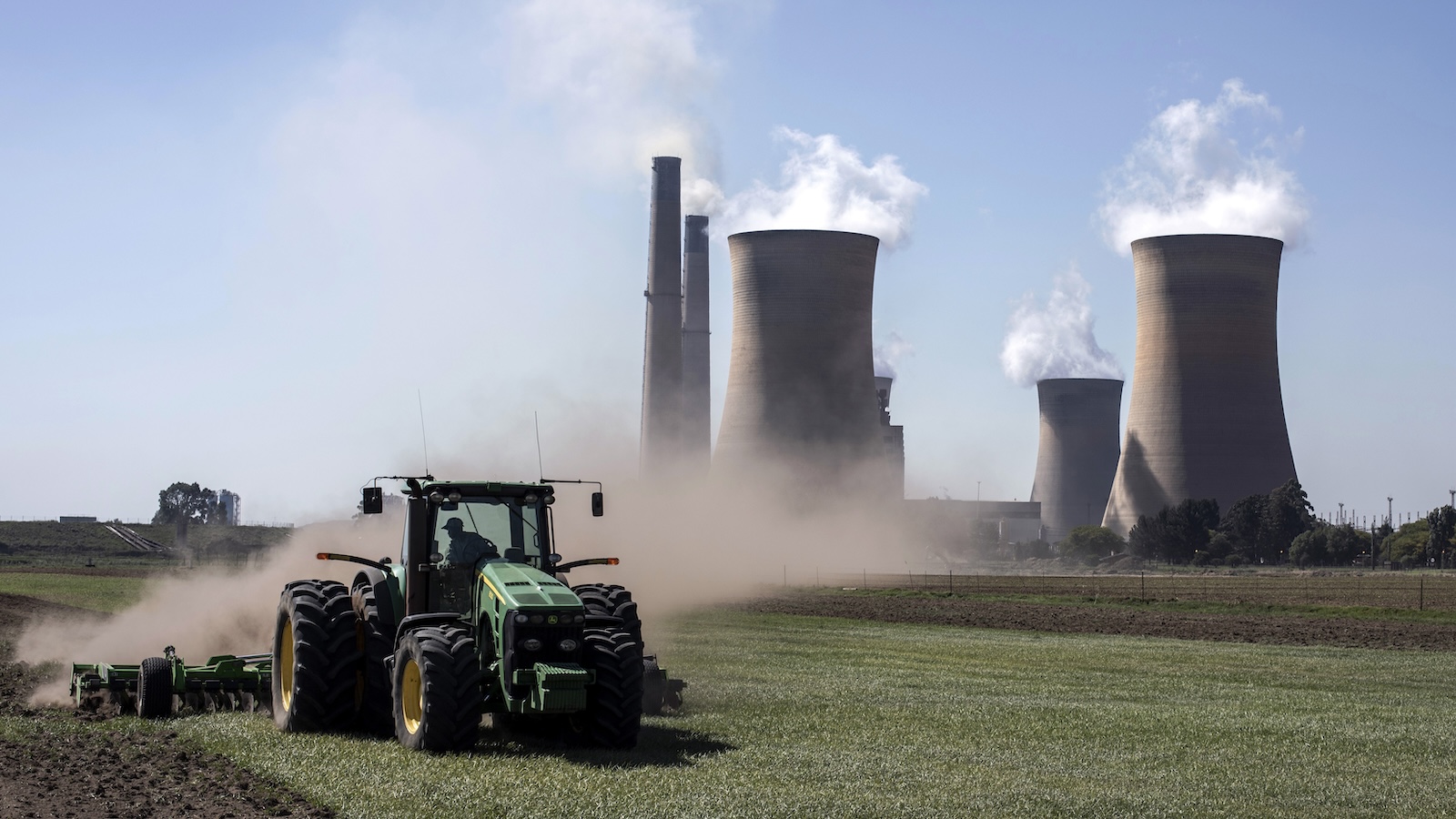
When isolating environmental and climate-related indicators, the data becomes particularly alarming. The research team evaluated how greenhouse gas (GHG) emissions from agri-food systems have fluctuated in recent years by calculating gross emissions as a percentage of each nation’s historical average.
Globally, the trajectory is moving in the wrong direction: upward. According to estimates by the United Nations Food and Agriculture Organization (FAO), agri-food systems account for roughly one-third of all human-generated greenhouse gas emissions. Agricultural production—spanning livestock enteric fermentation, synthetic fertilizer application, rice cultivation, and land-use conversion—represents one of the most stubborn bottlenecks in the global fight against climate change.
The Mathematics of Impossible Targets
The paper calculates that in order to achieve net-zero agri-food emissions by the hard deadline of 2030, every region on Earth would need to accelerate its current rate of decarbonization by approximately 70 percent every single year for the next four consecutive years.
Bianca Carducci, an independent nutrition scientist and lead author of the paper, notes just how disconnected this requirement is from terrestrial reality.
"That kind of movement is absolutely not going to happen," Carducci said. "Most countries probably shift about 5 percent per year on some indicators."
To put this in perspective, achieving a 70 percent annual compounding acceleration in emissions reductions would require an unprecedented economic and technological upheaval across every farming community, supply chain, and agricultural market worldwide.
Official Statements and Expert Perspectives
While the raw data is undeniably grim, the authors and external experts stress the importance of contextualizing these metrics to avoid counterproductive despair.
The Regional vs. Country-Level Paradox
Carducci points out that while regional averages (such as those for the Americas, Africa, or Oceania) show a daunting 70 percent gap, masking localized successes, individual countries may be charting very different courses. Some nations are actively and successfully decreasing agricultural greenhouse gas emissions, proving that localized progress is achievable even when macro-regions lag behind.
Furthermore, Carducci emphasizes the necessity of holistic evaluation. A country might sit tantalizingly close to hitting a specific nutritional target while simultaneously allowing its environmental stewardship to stagnate.
Moving Beyond Binary Success and Failure
This complexity underscores the difficulty of quantifying global sustainability. Michael Puma, a professor at Columbia University’s Climate School who was not involved in the report, cautions against oversimplifying the research into a pass-fail binary.
"It’s not a binary," Puma remarked. "It’s not as simple as success or failure by 2030."
Puma argues that rigid deadlines can sometimes backfire, incentivizing short-term political posturing and superficial "quick fixes" that look good on paper but collapse under long-term environmental and economic stress. Instead of fixating entirely on the calendar date, the focus must shift toward structural design and systemic accountability.
The Web of Interactions
To help stakeholders navigate these complexities, the FSCI report maps out a sophisticated web of interactions connecting all surveyed metrics. Changes in greenhouse gas emissions do not occur in a vacuum; they are directly influenced by variables such as:
- Cropland expansion and land-use conversion
- Agricultural water withdrawals and irrigation efficiency
- Crop and livestock yields
- Commercial and artisanal fisheries management
- Levels of civil society participation and governance
By understanding these feedback loops, policymakers can identify high-leverage entry points. For instance, investing in water-efficient agricultural practices or empowering local farming communities can simultaneously reduce emissions, conserve vital water resources, and improve food security.
Future Outlook: Beyond 2030 and the Roadmap Ahead
One of the most revealing insights of the FSCI study emerges when researchers shift their analytical lens from 2030 to 2050. When evaluated against a mid-century horizon, regions across the globe appear significantly more on track to meet the majority of their core nutrition and environmental goals.
This finding introduces a critical policy dilemma: Does the existence of a more achievable 2050 timeline invite complacency?
Carducci answers with a firm warning. Regional and global leaders, she stresses, "shouldn’t just throw in the towel and say, ‘OK, we’re not going to make it [by 2030] so we don’t really need to do anything for the next four years.’"
The urgency of the climate crisis means that every fraction of a degree warmed, and every ton of methane or carbon dioxide emitted today, locks in compounding damages for future generations. Slowing down now is simply not an option.
Designing Realistic Pathways
Moving forward, the scientific consensus points toward a transition from performative target-setting to the creation of realistic pathways. As Professor Puma notes, the central question is no longer when we hit an arbitrary milestone, but how we systematically reshape the global food economy.
This requires:
- Robust Accountability Frameworks: Establishing transparent, independent auditing mechanisms to track country-level performance without political interference.
- Systemic Integration: Breaking down traditional policy silos so that agricultural, environmental, and public health ministries operate in lockstep.
- Equitable Financing: Directing climate adaptation and mitigation funds directly to smallholder farmers and marginalized agricultural communities in the Global South, who bear the brunt of climate shocks while possessing the least financial recourse.
The verdict delivered by the Food Systems Countdown Initiative is not a death sentence for global sustainability; it is a vital reality check. By letting go of impossible deadlines without abandoning our ultimate ambitions, the international community can reset its compass, utilize advanced data tools like the FSCI dashboard, and build resilient food systems capable of feeding humanity for generations to come.



