Executive Overview
For generations, the vast, emerald-green expanses of Canada’s boreal forests and temperate woodlands have served as a vital ecological anchor for the planet. Functioning as a massive "carbon sink," these ecosystems reliably absorbed billions of tons of atmospheric carbon dioxide, locking it away in living biomass, forest floors, and mineral soils. This natural service played a quiet, indispensable role in mitigating global climate change.
That foundational ecological paradigm has now fundamentally and alarmingly shifted.
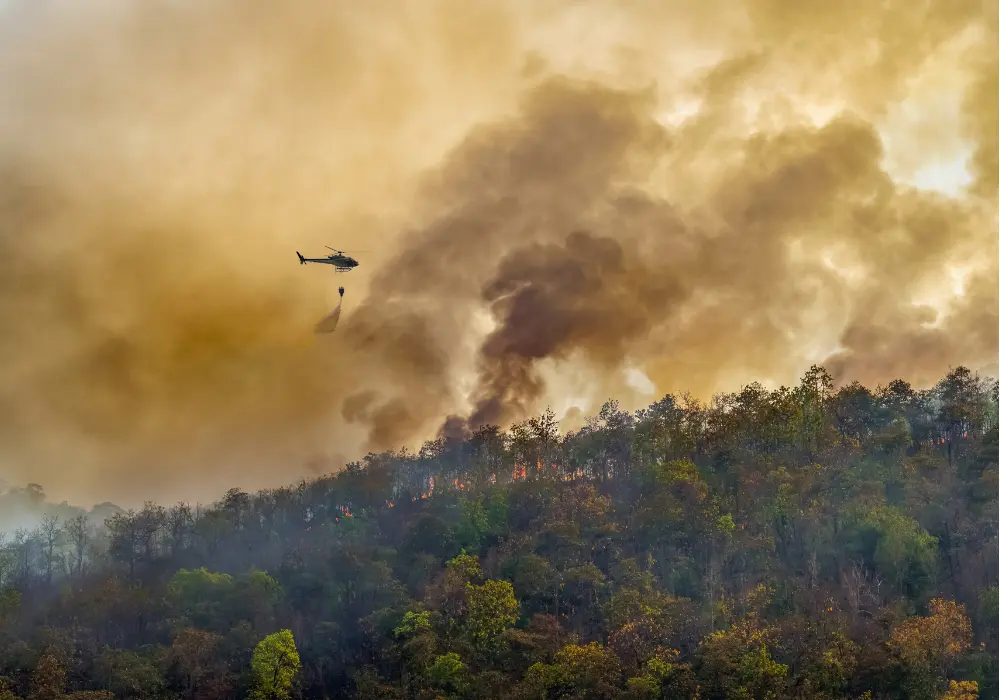
According to a landmark study recently published in the journal Global Change Biology, Canada’s forests have officially crossed a critical ecological Rubicon. Driven by an unrelenting surge in high-intensity wildfires, the immediate carbon emissions released by burning timber and organic matter now consistently outpace the carbon absorbed by recovering and growing vegetation.
The researchers behind the study—utilizing an advanced, highly localized climate modeling framework known as the Canadian Land Surface Scheme Including Biogeochemical Cycles (CLASSIC) model—determined that this transition was years in the making. While natural forest regeneration successfully balanced out fire and human harvesting losses for over a century, a tipping point was reached around 2009. From that year onward, the immediate impacts of landscape disturbances began to systematically overwhelm the recovery-driven carbon sink. By 2021, the cross-over was complete: Canada’s forests officially transitioned from a net carbon sink to a net carbon source.
This development carries profound implications for global climate accounting, international emissions targets, and domestic environmental policy. If current trends hold, Canada’s forestlands will no longer act as a buffer against climate change, but rather as an active accelerator. The resulting emissions threaten to complicate national climate strategies, inflate wildfire suppression and forestry management budgets, and imperil the integrity of sustainable land management practices worldwide.
Detailed Chronology: Tracing the Shift from Sink to Source
To understand the gravity of the recent findings, researchers had to look backward across centuries of ecological history. The study’s authors set out to bridge a persistent knowledge gap left by older, coarser carbon accounting models. To achieve this, they executed a comprehensive historical simulation mapping carbon cycling across Canada’s landscape from the year 1750 through 2023.
The Historical Baseline (1750–2000)
For nearly 250 years, the historical reconstruction shows that Canada’s forest ecosystems functioned reliably as a net carbon sink. The methodology meticulously reconstructed centuries of natural disturbances, including historical wildfire regimes and human timber harvesting, alongside forest regrowth, plant respiration, and "$textCO_2$ fertilization"—the accelerated growth phenomenon triggered by higher ambient concentrations of carbon dioxide in the atmosphere.
During this extensive period, while localized fires and logging routinely released large pulses of carbon, the sheer scale of Canada’s forested landmass allowed it to heal. The volume of carbon captured annually through photosynthesis and locked away by mature and regenerating forests consistently exceeded the carbon released back into the atmosphere by disturbances. This dynamic formed the bedrock assumption of international climate models: that northern forests would indefinitely absorb a significant fraction of anthropogenic industrial emissions.
The Tipping Point (2001–2009)
Cracks in this ancient equilibrium began to show visibly at the dawn of the 21st century. As global temperatures rose—particularly in northern latitudes, which are warming at roughly twice the global average—the frequency, intensity, and geographic footprint of Canadian wildfires began to escalate.
The early 2000s marked a noticeable acceleration in the frequency of severe fire seasons. During this window, the area of forestland impacted by severe disturbance expanded dramatically. The study’s process-based modeling reveals that while historical fires were followed by robust, predictable decades of vegetation recovery, the sheer acreage of disturbed land began to test the ecological limits of the boreal forest.
By 2009, a quiet threshold was breached. The authors note that this was the moment when "the immediate impacts of disturbance have begun to overwhelm the recovery-driven carbon sink in Canadian forests." The math no longer favored the system; the sheer volume of carbon incinerated and released into the atmosphere annually began to eclipse what the surviving and regrowing trees could pull back down from the skies.
The Crossing of the Rubicon (2021)
Though the balance of power shifted in 2009, a lag effect remained as forests attempted to regenerate in a rapidly warming climate. However, compounding pressures—including recurring droughts, insect infestations, and increasingly prolonged fire seasons—severely hampered the ability of central Canadian forests to bounce back.
Ultimately, the cumulative deficit proved insurmountable. The models demonstrate that Canadian forests officially crossed the source-sink transition around 2021. For the first time in modern records spanning roughly a century, the continental landmass of Canada’s forests emitted more carbon than it sequestered on an annual net basis.
When researchers compared the performance of the last 15 years against the broader historical timeline, they concluded that this trend is entirely unprecedented over the last ~100 years. It is not a statistical anomaly or a temporary blip, but a structural shift driven primarily by intense wildfire disturbances concentrated heavily in central Canadian regions, where lower carbon uptake from plant growth slows down the vital process of vegetation recovery.
Supporting Context & Metrics: Inside the Science and the CLASSIC Model
The revelation that Canada’s forests are now a net carbon source is not merely a political talking point; it is the product of rigorous, state-of-the-art geophysical modeling designed to correct the blind spots of previous scientific assessments.
Moving Beyond Legacy Limitations
Historically, estimating national forest carbon budgets was a blunt exercise. Earlier models often relied on generalized global datasets that failed to capture the unique, hyper-specific ecological nuances of the Canadian boreal zone—such as permafrost dynamics, short growing seasons, distinct soil profiles, and localized species adaptations. Furthermore, many legacy models depended heavily on empirical extrapolations, attempting to predict future forest behavior simply by projecting current, short-term observations forward.
To overcome these limitations, the research team deployed the Canadian Land Surface Scheme Including Biogeochemical Cycles (CLASSIC) model.
What Makes CLASSIC Different?
The CLASSIC model represents a major methodological leap forward for several reasons:
- Process-Based Simulation: Rather than relying purely on observational extrapolations, CLASSIC utilizes rigorous, process-based mathematical equations anchored in fundamental scientific laws—such as the laws of energy conservation and thermodynamics. It simulates the actual physiological and physical mechanisms of plant life, soil respiration, and atmospheric exchange.
- Wall-to-Wall Granularity: The study provides what the authors describe as "the first physically coherent wall-to-wall estimates of all major carbon pools and fluxes for Canada." It incorporates hyper-specific geophysical, meteorological, and plant-trait data across every square kilometer of the country’s forested and unforested landscapes.
- Holistic Flux Tracking: The model tracks multiple interacting variables simultaneously: carbon storage in live biomass, dead organic matter, forest floor litter, and mineral soils, alongside fluxes caused by photosynthesis, plant respiration, harvesting, and fire combustion.
Scope and Scientific Boundaries
Transparency is a hallmark of the new study, and the authors are careful to outline the boundaries of their current modeling framework. Notably, the study does not explicitly model peatland carbon cycles, deep soil carbon stocks, or the complex, unique role that vast northern peatlands play in boreal fire emissions.
Boreal peatlands store immense quantities of ancient carbon in waterlogged, organic-rich soils. When severe droughts dry out these peat layers, fires can smolder underground for months, releasing staggering amounts of carbon that are traditionally difficult to capture in above-ground biomass models. Consequently, because peatland emissions are omitted from these specific calculations, the true carbon deficit of Canada’s forest landscapes may actually be even more severe than what the current CLASSIC simulations suggest.
Official Statements and Expert Perspectives
The publication of the study in Global Change Biology has sent ripples through the international climate science and environmental policy communities. For years, national greenhouse gas inventories submitted under international climate frameworks like the Paris Agreement have treated managed forests as reliable domestic sinks, occasionally leveraging them to offset industrial emissions. The new data challenges the validity of relying on unmanaged or semi-managed natural sinks in the face of escalating climate-driven catastrophes.
In their published findings, the study’s authors issue a stark warning regarding the compounding socio-economic and ecological fallout of this transition:
"The resulting rise in forest disturbance would lead to additional emissions, rising wildfire and forestry management costs, and imperil efforts to manage the carbon sink through sustainable land management practices and fire suppression."
The reality of these rising costs is already being felt across provincial and federal jurisdictions. Fire seasons that once followed predictable spring-to-autumn arcs now routinely begin earlier, stretch later, and exhibit explosive behaviors that overwhelm traditional fire suppression tactics.
Independent forest ecologists and climate modelers not directly involved in the study have praised the CLASSIC framework for bringing unprecedented physical rigor to Canadian carbon accounting. However, they emphasize that the policy implications are deeply sobering. Governments can no longer treat natural carbon sinks as permanent, self-maintaining fixtures of the global carbon budget. As the planet warms, the services provided by ecosystems cannot be taken for granted; they must be actively defended, and in many cases, expectations of their capacity must be drastically recalibrated.
Future Outlook: The Cascading Crisis of a Warming Boreal
Looking ahead, the trajectory of Canada’s forest carbon budget is inextricably tied to the broader trajectory of global greenhouse gas emissions and international climate mitigation efforts.
The projections are unambiguous. Climate models consistently indicate that Canadian wildfires will continue to intensify and burn over significantly greater land areas in the decades to come. As global temperatures climb toward and potentially exceed critical thresholds, the conditions that foster catastrophic fire—prolonged droughts, extreme heatwaves, low winter snowpacks, and lightning-frequent thunderstorms—will become the new baseline normal in the boreal zone.
This sets the stage for a dangerous feedback loop:
- Industrial Emissions warm the global atmosphere.
- Warming Temperatures dry out Canadian forests and trigger massive wildfires.
- Wildfires Release billions of tons of stored carbon dioxide directly into the atmosphere.
- Elevated Atmospheric Carbon further accelerates global warming, perpetuating the cycle.
If Canada’s forests remain a net carbon source, national emissions profiles face a severe structural hurdle. Achieving net-zero emissions targets will become exponentially more difficult if the country’s largest natural asset is simultaneously working against national reduction efforts by bleeding carbon into the atmosphere faster than it can recover.
Policy and Management Implications
To confront this unfolding crisis, environmental policy experts argue that traditional reactive approaches—such as investing solely in larger water-bomber fleets and emergency fire suppression—are no longer sufficient. Mitigating the long-term transformation of forests from sinks to sources will require a fundamental paradigm shift in land management:
- Proactive Landscape Management: Shifting resources toward preventative measures, such as controlled prescribed burns, strategic fuel-break creation, and thinning high-risk forest stands near vulnerable communities.
- Ecosystem Resilience: Prioritizing forest management strategies that enhance biodiversity and plant resilience, helping central Canadian forests recover faster from disturbances.
- Accounting Realism: Updating national and international carbon accounting frameworks to account for the permanence-risk of natural climate solutions, ensuring that countries do not rely on carbon sinks that are actively destabilized by climate change.
The message embedded in the CLASSIC model’s data is clear. The era when humanity could rely on northern forests to quietly clean up the atmospheric mess left by industrial fossil fuel combustion is drawing to a close. Canada’s iconic forests are no longer just victims of a changing climate; they have become active participants in its acceleration. Protecting what remains of the boreal sink—and planning for a future where natural landscapes emit more carbon than they hold—is now one of the defining environmental challenges of the 21st century.