

Executive Overview
The global electric vehicle (EV) landscape is experiencing a profound structural realignment. According to fresh data released by Benchmark Mineral Intelligence, worldwide EV sales reached 4 million units in the first quarter of 2026, marking a 3% decline compared to the same period in 2025. While headline figures suggest a cooling momentum, a closer examination of the data reveals a far more complex story—one characterized by stark geographic divergence rather than a uniform market contraction.
While March 2026 provided a much-needed market cushion with 1.75 million global sales—representing a robust 66% rebound over February and a 3% uptick year-over-year—this monthly recovery masks a volatile global chessboard. Europe has firmly established itself as the undisputed growth engine of the international EV transition, smashing records on the back of rising conventional fuel costs, shifting policy incentives, and an aggressive influx of competitive Chinese manufacturing.
Conversely, North America has stumbled significantly, facing a steep 27% year-over-year decline in Q1 alongside major strategic retreats by legacy automakers. Meanwhile, China—the world’s largest and most influential EV market—is grappling with shifting domestic policies, forcing domestic manufacturers to aggressively export overcapacity to foreign markets despite mounting inventory bottlenecks. Outside these traditional powerhouses, Oceania and emerging regions are surging at unprecedented rates, entirely reshaping global trade flows and consumer adoption curves.
This report provides an exhaustive, multi-faceted analysis of the Q1 2026 EV market, examining the macroeconomic triggers, regional policy shifts, and industry strategies steering the future of electric mobility.
Detailed Chronology of Q1 2026
The trajectory of the electric vehicle market throughout the first quarter of 2026 was defined by sharp economic pivots, geopolitical friction, and sudden consumer behavior shifts driven by energy market volatility.
January 2026: A Slow Start and Regional Headwinds
The year commenced under a cloud of regulatory adjustments and post-holiday lulls. In China, the traditional New Year economic slowdown triggered a pronounced dip in domestic consumer demand, compounded by ongoing regulatory transitions regarding government purchase subsidies. North America mirrored this sluggish momentum; the lingering effects of federal EV tax credit restructurings enacted in late 2025 left domestic buyers hesitant, causing Q1 shipments to plummet out of the gate.
However, early indicators in Europe signaled that the region would decouple from the broader global slowdown. Mild regulatory tightening, combined with early ripples of fuel supply anxiety, began shifting consumer calculus away from internal combustion engine (ICE) vehicles.
February 2026: The Depth of the Valley
February traditionally represents a low-volume month for automotive retail, but Q1 2026 underscored deep structural fractures across western markets. North America continued to struggle with stagnant retail foot traffic, prompting major domestic and international original equipment manufacturers (OEMs) to reassess long-term capital expenditure plans.
In Asia, Chinese automakers faced a classic domestic demand ceiling. With domestic inventories swelling, major players accelerated their pivot toward aggressive export strategies, targeting European and emerging international markets to maintain production lines. Yet, these overseas shipments began outpacing localized retail absorption, laying the groundwork for foreign inventory bottlenecks that would materialize later in the quarter.
March 2026: The Great Spring Rebound and Regional Divergence
March acted as a dramatic catalyst, single-handedly rescuing the quarter’s aggregate volume and pushing global sales to 1.75 million units—a 66% spike over February figures. Yet, this rebound highlighted a profound geographic split:
- Europe obliterated historical benchmarks, crossing the symbolic threshold of half a million monthly sales for the first time in history. The UK’s bi-annual vehicle registration plate change acted as a massive commercial accelerant, while escalating geopolitical tensions in the Middle East sparked severe gas price shocks across the continent.
- China experienced a fierce domestic recovery, nearly doubling its February sales volume as post-holiday commercial activity resumed. Nevertheless, structural year-to-date figures remained down 21% compared to 2025.
- North America showed nascent signs of life, surpassing 100,000 monthly EV sales in the US for the first time since the expiration of federal tax incentives in late 2025. However, this recovery was overshadowed by historic strategic retreats by legacy manufacturers who formally scrapped foundational next-generation EV platforms.
- The Rest of the World, specifically Oceania, recorded astronomical growth, fueled by sky-high fuel costs and surging consumer awareness.
Supporting Context & Metrics
To fully comprehend the shifts dictating the 2026 automotive economy, one must analyze the convergence of macroeconomic indicators, geopolitical disruptions, and micro-level consumer psychology.
Europe: The Uncontested Growth Engine
Europe’s stellar Q1 performance—highlighted by a 72% month-over-month and 37% year-over-year surge in March—was largely underwritten by a perfect storm of energy shocks and aggressive pricing strategies by foreign entrants.
The outbreak of conflict involving Iran and broader instability in the Middle East triggered immediate spikes in international crude oil prices. In nations like France, fuel cost acceleration triggered panic-buying and localized supply chain disruptions at traditional filling stations, despite retail supplier caps instituted by energy giants like TotalEnergies. Consumers responded decisively: French battery-electric vehicle (BEV) sales skyrocketed 69% year-over-year in March, vastly outpacing the steady 36% growth observed during January and February.
Similar consumer flight from combustion engines was observed across the continent. Austria, Belgium, Finland, France, Italy, Portugal, and Spain all reported all-time high monthly volumes for BEV registrations. In the United Kingdom, structural changes to vehicle registration plates in March—traditionally a peak sales month—coincided with escalating fuel tariffs, generating record-breaking transactional volume and a 31% year-over-year growth rate.
At the same time, European market dynamics are being radically reshaped by Chinese automotive dominance. In Italy, emerging Chinese manufacturer Leapmotor captured approximately 30% of the entire BEV market share during the first quarter. When accounting for broader Chinese automotive conglomerates operating within the Italian market, their collective footprint approached a staggering 40%, illustrating the profound challenge domestic European legacy brands face in competing on price and technology integration.
China: Domestic Cooling and Export Pressures
China remains the undisputed titan of global EV volume, but Q1 2026 exposed vulnerabilities in its domestic growth model. While March sales doubled relative to February’s post-Lunar New Year slump, cumulative sales for the first quarter remained down 21% year-to-date.

This contraction is primarily driven by policy maturation; as central government subsidies continue to phase down and municipal incentives shift toward strict infrastructure-based models, domestic consumers are exercising greater caution. Faced with domestic saturation, Chinese OEMs have aggressively pursued foreign expansion. However, Benchmark Mineral Intelligence data highlights a growing structural disconnect: export shipments are consistently outpacing localized retail absorption in target international markets, creating overseas inventory backlogs that will likely force aggressive pricing corrections in upcoming quarters.
North America: Policy Headwinds and Strategic Retrenchment
North America endured a harsh quarter, with overall EV sales dropping 27% in Q1 compared to Q1 2025. Both the United States and Canada registered severe volume contractions, a direct hangover from the expiration of primary federal consumer tax credits in the third quarter of 2025.
Despite these headwinds, March offered a glimmer of hope as the US market cleared the 100,000-unit monthly threshold for the first time since the tax credit phase-out, buoyed by climbing domestic gasoline prices.
However, the more significant story in North America is the shifting corporate strategy of traditional automakers. Faced with slower-than-projected near-term adoption curves, capital allocation is undergoing radical pruning. Most notably, Honda officially scrapped the development of its ambitious "Honda 0 Series" EV architecture during the quarter. Simultaneously, the highly anticipated "Afeela" high-end EV models—born out of Honda’s joint venture with tech giant Sony—were officially canceled, signaling a broader industry-wide retreat from high-risk, high-capital electric platform investments in favor of hybrid diversification and capital preservation.
Oceania and Emerging Markets: The Acceleration Curve
While major markets grappled with policy shifts and economic volatility, secondary markets—particularly in the Southern Hemisphere—recorded exponential expansion.
New Zealand emerged as a global standout, with BEV registrations skyrocketing by an astonishing 263% year-over-year in March, locking in an annualized growth rate exceeding 100% for 2026. Australia mirrored this momentum, posting an 89% year-over-year increase in March. Although this represented a minor cooling from the blistering 111% growth rate recorded earlier in the year, it was more than enough to establish an all-time monthly sales record, outperforming previous historic peaks by over 2,000 units.
Fuel economics heavily drove this surge. In the wake of Middle Eastern supply disruptions, retail fuel prices across Oceania climbed by upwards of 20%. The immediate threat to regional fuel security galvanized consumers, permanently shifting household purchasing habits toward locally accessible, grid-independent electric mobility solutions.
Official Statements and Industry Commentary
The structural shifts observed in Q1 2026 have prompted candid evaluations from market analysts, energy economists, and automotive executives.

Caspar Rawles, Chief Data Officer at Benchmark Mineral Intelligence, noted the fragility underlying the headline recovery:
"While March provided a much-needed statistical rebound that prevented a catastrophic Q1 tally, global EV sales dropping 3% year-over-year signals that the transition is no longer a straight upward line. We are witnessing a bifurcated global market where regional energy security, local policy intervention, and aggressive international trade dynamics dictate success far more than generalized consumer sentiment."
European automotive trade associations echoed the sentiment regarding energy price elasticity. In a joint briefing released in late March, Brussels-based transport analysts emphasized that conventional fuel volatility remains the single most effective catalyst for consumer conversion:
"When consumers face immediate, painful increases at the traditional fuel pump, long-term sustainability metrics suddenly align with immediate household economics. Europe’s record-breaking March proves that high fossil fuel prices accelerate EV adoption at a velocity that regulatory mandates alone struggle to achieve."
Conversely, North American manufacturing executives offered a more guarded assessment of corporate strategy. Commenting on the cancellation of foundational EV programs, industry strategists pointed to capital efficiency as the dominant corporate imperative for 2026. A senior North American automotive strategist remarked:
"The market has entered a consolidation phase. Automakers can no longer afford to subsidize speculative next-generation architectures in an environment devoid of federal purchase incentives. Capital is flowing back toward profitability, hybrid hedging, and rigorous cost optimization until consumer adoption curves restabilize."
Future Outlook
As the automotive industry looks past the turbulence of the first quarter toward the remainder of 2026, the global EV market stands at a critical crossroads. The events of Q1 have shattered the assumption of synchronized global growth, replacing it with a complex, multi-speed transition.
Key Trends to Watch for the Remainder of 2026:
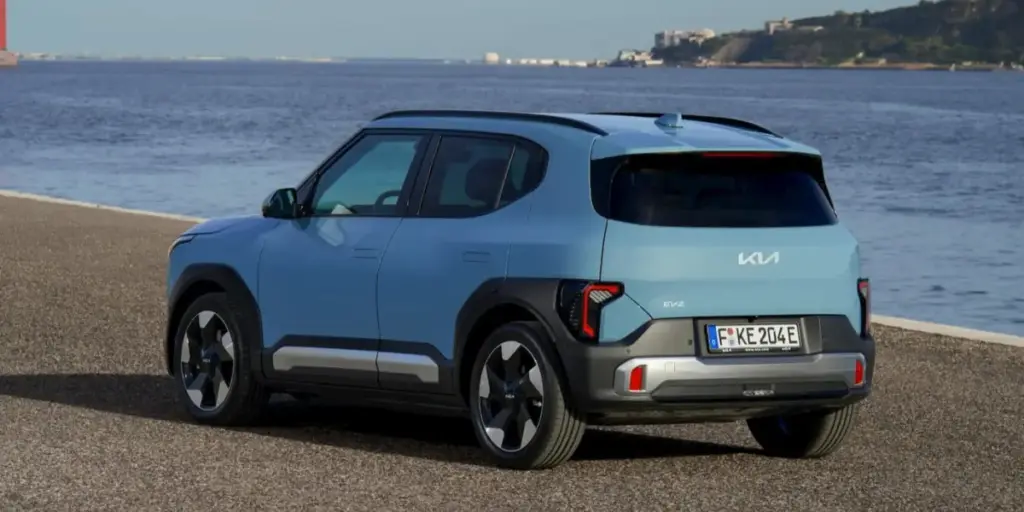
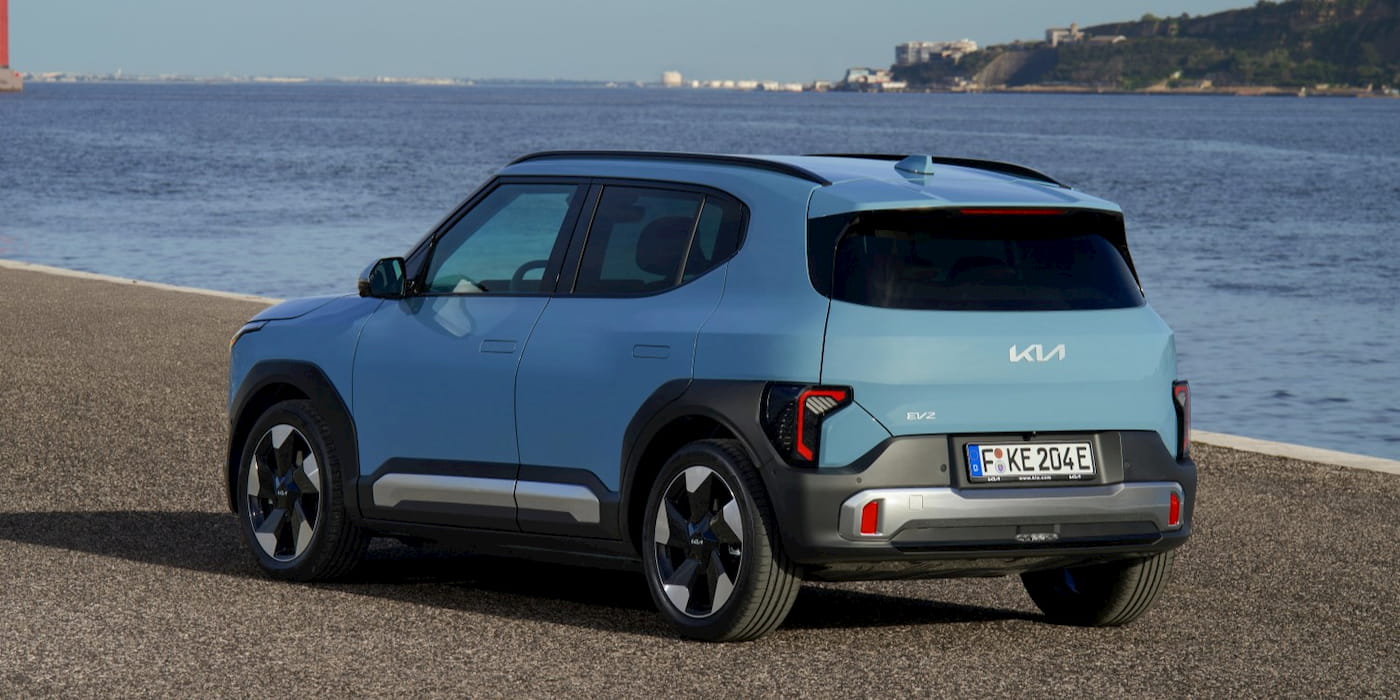
- The European Battleground: Europe will remain the primary theater of competition for global OEMs. With Chinese brands like Leapmotor and its domestic peers capturing up to 40% of key regional markets like Italy, traditional European legacy automakers face immense pressure to accelerate their own affordable EV programs—such as Kia’s upcoming EV2 lineup and comparable offerings from the Volkswagen Group and Stellantis—to defend their home turf.
- Export Pressures and Trade Defenses: As Chinese domestic demand remains soft and overseas inventory overhangs mount, expect heightened protectionist rhetoric and potential regulatory trade barriers from both North America and the European Union. Tariffs, non-tariff trade hurdles, and localized content requirements will likely intensify through the second half of the year.
- North American Product Strategy Realignment: With high-profile cancellations like Honda’s 0 Series and the Afeela project setting a conservative tone, North American manufacturers will likely pivot heavily toward hybrid and plug-in hybrid electric vehicle (PHEV) offerings. This strategy aims to bridge the profitability gap while consumer appetite for pure BEVs digests the post-tax-credit landscape.
- Infrastructure and Energy Integration: The explosive growth witnessed in Oceania and secondary global markets underscores the critical role of domestic energy independence. As consumers increasingly view EVs as a hedge against geopolitical fuel shocks, the integration of bidirectional charging (V2G) and home energy storage solutions—such as localized residential solar arrays managed through platforms like EnergySage—will transition from niche tech features to primary consumer purchase drivers.
Ultimately, the Q1 2026 data demonstrates that the electrification of global transport is neither failing nor frictionless. It is evolving through a turbulent adolescence marked by regional disparities, fierce international competition, and a relentless Darwinian shakeout of corporate strategy.



