

Executive Overview
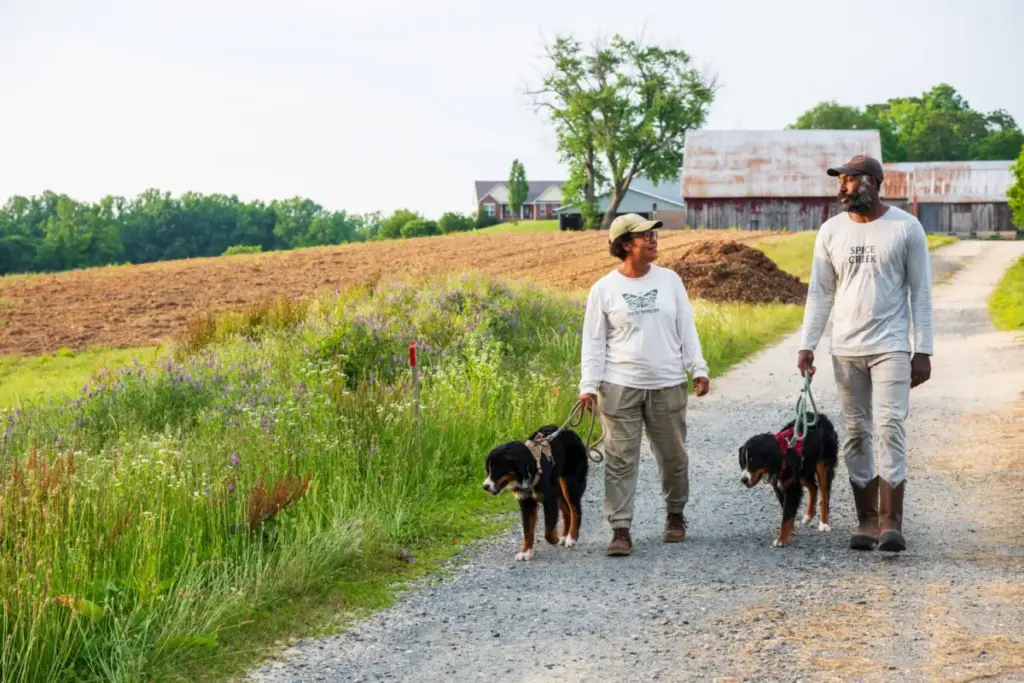
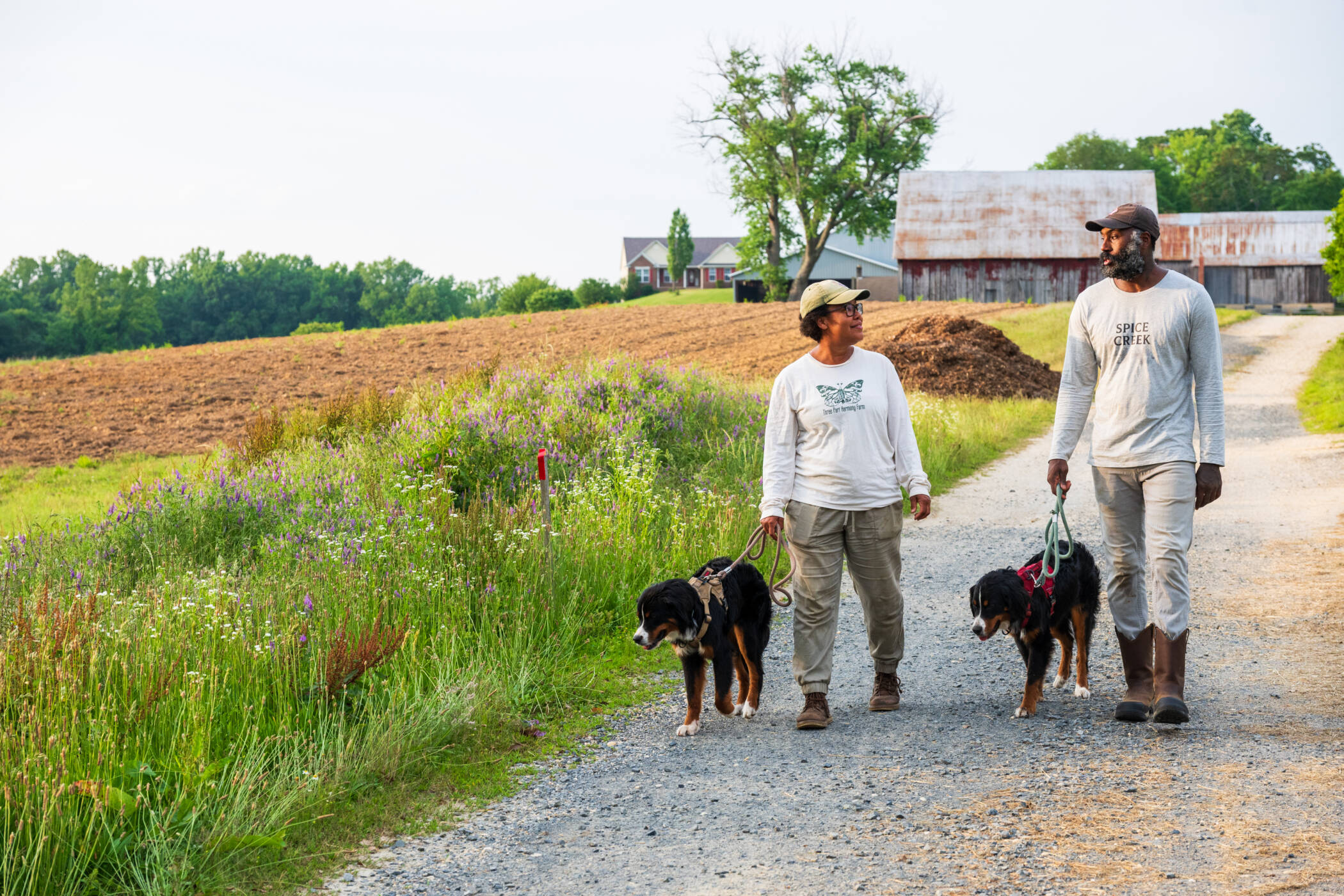
On a steamy, early summer day at Spice Creek Farm in Brandywine, Maryland, tomato plants stretch eagerly toward the sun, demanding structural support to keep their ripening fruit off the soil. D’Real Graham hammers in a wire trellis, working methodically alongside his life partner and co-farmer, Gail Taylor. Nearby, robust peppers and squash bulk up under the humid mid-Atlantic heat, while dense rows of kale and swiss chard reach their absolute productive peak. Weaving between the crop beds are Ruby and Ivy, two exuberant Bernese Mountain dogs who occasionally pause to nibble on leafy greens.
For Taylor, who spent more than a decade successfully cultivating food on a compact, two-acre urban farm in Washington, D.C., 2025 marks a monumental evolution. It is her and Graham’s first full growing season on an expansive, 24-acre rural property located roughly 25 miles southeast of the nation’s capital. Once a conventional tobacco farm operated by generations of the locally prominent Baden family—and bearing the heavy historical weight of having once enslaved 110 people—the land is undergoing a profound metaphysical and ecological transformation.
Today, Spice Creek Farm is the anchor of an ambitious, deeply equitable vision: to reshape regional food systems, heal degraded soils through regenerative organic agriculture, and establish a thriving Black Agrarian Corridor in Southern Maryland. Their pioneering work has not gone unnoticed. The couple’s rapid progress and dedication to social and environmental justice earned them a spot as finalists for the inaugural U.S. Good Farmer Award, a joint initiative by the Rodale Institute and the Davines Group designed to honor agricultural leaders making exceptional contributions to the regenerative movement. With technical assistance from the Rodale Institute consulting team, Taylor and Graham are actively scaling up their operations, proving that ecological stewardship and community empowerment can grow hand-in-hand.
Detailed Chronology: From Policy Desks to Rural Acreage
The path that led Taylor and Graham to the rolling fields of Brandywine was paved with distinct backgrounds, unexpected pivots, and a shared realization that sustainable agriculture offers a tangible way to uplift human lives.
Gail Taylor’s Journey: Policy to the Soil
Gail Taylor spent her formative teenage years near Albany, New York, before pursuing a degree in U.S. foreign policy and Latin America at Syracuse University. Subsequent time spent living and working in Guatemala and Chile exposed her to systemic inequities and grassroots organizing. Seeking a tangible way to create positive change, she returned to the United States and began volunteering in 2005 at Deep Roots Farm, a 200-acre regenerative organic farm in Upper Marlboro, Maryland, managed by Gale Livingstone.
"I was looking for a change from policy work, and farming felt to me like I was having a positive impact for people," Taylor reflects.
By the following season, Livingstone had hired her full-time. As Taylor’s agricultural skills deepened, so did her commitment to bringing fresh, healthy food directly to urban populations. Frustrated by the grueling daily commute from Washington, D.C., out to the farm, Taylor drafted a radical business plan in 2011 to launch a backyard Community Supported Agriculture (CSA) subscription service right from her home in the District.
"Three people offered me the use of their yards to grow food, and I set up a greenhouse in mine to raise seedlings for sale," Taylor recalls. "I rode my bike to each yard on Thursdays to collect the harvest, which I put on my porch for the six CSA members."
Legislative Breakthrough: The D.C. Urban Farming Act
As demand for her produce surged, Taylor sought to scale up by transforming an unused, two-acre plot near Catholic University into a permanent urban farm. However, she quickly hit a brick wall: Washington, D.C., lacked municipal tax exemptions for agricultural land, making commercial leasing prohibitively expensive.
Refusing to accept defeat, Taylor teamed up with pro bono law students from American University to spearhead legislative reform. Her advocacy successfully birthed the District’s landmark 2014 D.C. Urban Farming and Food Security Act. The legislation established vital tax exemptions and authorized the city to lease public land to local growers. Seizing this newly minted opportunity, Taylor launched Three Part Harmony Farm on the site in 2015. By 2024, its meticulously managed 64 beds (each measuring 3 by 100 feet) were yielding an astounding 7,000 pounds of fresh food annually.
D’Real Graham’s Transition: Education to Agriculture
Meanwhile, D’Real Graham was charting his own unique course. Raised in Michigan, Graham originally pursued a career in education, eventually relocating to Washington to work for an educational nonprofit. Like Taylor, he found his way to Deep Roots Farm as a volunteer, seeking an escape from stifling office culture.
"I was ready to pivot from office culture to agriculture, but it was hard," Graham admits. "At first, Farmer Gale only trusted me to weed, but I came to it humbly and was willing to learn."
His humility paid off. By the end of his first year on the farm, Graham was piloting the delivery van and managing Deep Roots’ bustling stalls at three weekly farmers markets. After meeting Taylor at the farm, the two formed a personal partnership, and in 2019, Graham officially joined the team at Three Part Harmony Farm.
Expanding Horizons in Brandywine
With their urban lot operating at maximum capacity, the couple began searching for a larger rural canvas to expand production and actualize their grander vision of a regional food hub. In 2022, they leased the 24-acre Brandywine property to supplement their urban harvest. Recognizing the long-term potential of the land, they secured a lease-to-purchase agreement in December 2023 with crucial financial backing from Dirt Capital Partners, an organization dedicated to funding regenerative organic agriculture.
Supporting Context & Metrics: Remediation, Resilience, and Rodale
Taking over a former tobacco, corn, and soybean farm required immediate and intensive ecological triage. Generations of conventional farming—marked by the relentless pounding of heavy tractors and the application of synthetic herbicides—had severely degraded and compacted the soil.
"The soil was so degraded that we brought in seven truckloads of compost in summer 2022," Graham explains. "We rented a skid steer, and I spent three days spreading the compost."
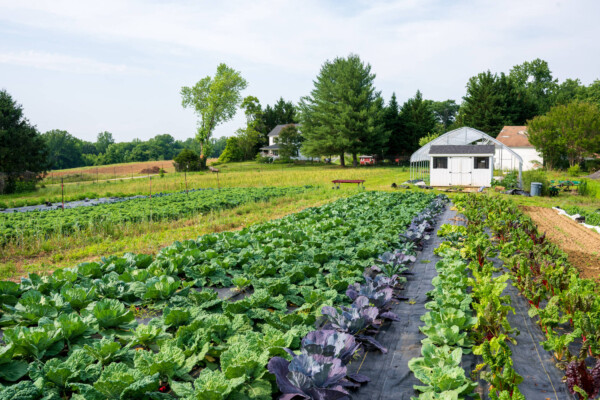
Once the soil chemistry and structure began to recover, the couple installed protective deer fencing, hand-dug initial crop beds, and planted their maiden harvests of sweet potatoes, white potatoes, watermelons, eggplants, and tomatillos. Operations have since scaled significantly. Today, they utilize a walk-behind tractor to carve out new beds, have installed underground water lines for efficient drip irrigation, built a dedicated post-harvest wash station, and erected a small greenhouse.
The Rodale Institute Partnership
To navigate the complex mechanics of scaling up from a small urban plot to a 24-acre rural enterprise, Taylor and Graham partnered with the Rodale Institute consulting team. Kegan Hilaire, Rodale’s small farms and diversified vegetable consultant, has worked closely with the couple, advising them on everything from chicken pasture preparation and livestock fencing to stream conservation and machinery acquisition.
"When farmers begin to scale up, they need to balance their short-term needs for infrastructure and equipment to keep up with their growth, while staying focused on their long-term plans," Hilaire notes. "A walk-behind tractor can get you started, for example, but it’s not going to be enough when you’re working 20 acres. You also need simple infrastructure for post-harvest preparation and storage that can handle the volume you’re harvesting now, while you save for a bigger cooler and processing space."
The Rodale Institute’s nationwide consulting program has historically worked with over 1,000 farmers, helping transition more than 45,000 acres to organic production as part of a larger mission to convert 1 million acres of American farmland to regenerative organic systems. For Spice Creek Farm, this guidance has been indispensable, helping them bridge the gap between grassroots idealism and sustainable, long-term commercial viability.
Farm Facts at a Glance
- Location: Spice Creek Farm, Brandywine, Prince George’s County, Maryland
- Total Acreage: 24 acres
- Active Cultivation: 3+ acres of intensive vegetable crops (continuously expanding)
- CSA Membership: 150 active subscribers (with plans to scale significantly)
- Production Cycle: 48 weeks of continuous food production annually
Official Statements and Visionary Perspectives
The ethos driving Spice Creek Farm extends far beyond commercial crop production; it is anchored in historical reclamation, community solidarity, and generational equity.
Confronting History and Honoring the Land
Researching the property’s past revealed a sobering truth about the land’s history under the Baden family.
"I researched the history of this land, and I learned that 110 people had been enslaved here at one time," Graham shares.
Rather than ignoring this profound historical trauma, the farmers view their work as an act of spiritual and ecological restoration. This philosophy is also reflected in unexpected crops. Alongside traditional market vegetables, the farm is introducing cotton and cowpeas.
"We are growing cotton because we want to learn how to grow it and to restore our community’s relationship to the plant," Graham explains, directly confronting the painful historical associations Black Americans have historically held toward agricultural labor.
Cultivating Community over Competition
Rather than viewing neighboring agriculturalists as competitors, Taylor and Graham are actively stitching together a supportive coalition of growers in Southern Maryland. By coordinating crop rotations and sharing resources with roughly half a dozen nearby farms, they ensure a steady, diverse supply of local food without cannibalizing each other’s sales.
"We think it makes sense to rotate in coordination with each other, so we are serving customers without competing to sell the same products," Graham says, emphasizing the deep value of shared communal meals and mutual understanding.
This collaborative spirit is the foundational bedrock of their ultimate dream: a multi-farm CSA model.

"We’re reactivating what I did in the city, when I set up a multi-farm CSA that provided 270 members with a variety of food from 12 different sources," Taylor explains. "We want to relaunch that idea here, creating important marketing opportunities for other farmers while offering customers the chance to choose to buy from Black farmers, women farmers, and regenerative organic farmers. We believe we can all succeed together."
Future Outlook: Overcoming Challenges and Sowing the Next Generation
As Spice Creek Farm looks toward the horizon, the road ahead is not without obstacles. The agricultural sector writ large has faced systemic labor shortages, driven in part by historical stigmas.
"For many Black and brown people, working in agriculture has negative connotations," Graham notes.
To combat this and attract dedicated hands, the couple is strategically redesigning the property’s living quarters. While one farmworker currently resides in the historic brick roadside house, future plans involve converting a smaller, central white cabin into a permanent home for Taylor and Graham, freeing up the brick house exclusively for employee housing.
Furthermore, recent economic shifts and reductions in federal funding streams for small-scale, organic farms have created fiscal headwinds.
"We didn’t bring a lot of capital to this," Graham admits. "We have depended on grants for funding, and those cuts have had a big impact on us."
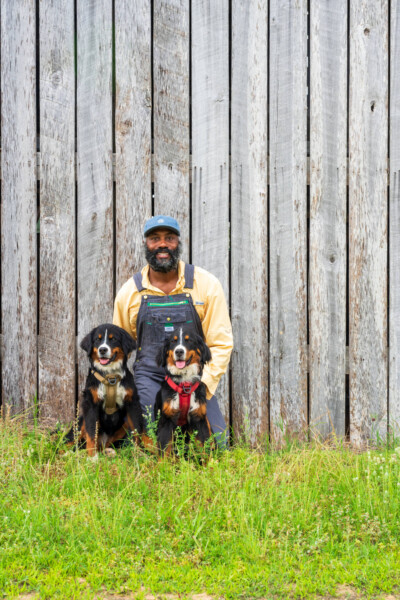
Despite these hurdles, the momentum at Spice Creek Farm remains unstoppable. Plans are underway to introduce pasture-raised chickens—guarded by newly trained livestock guardian dogs Ruby and Ivy—alongside goats to assist with natural pasture clearing. Educational workshops are also in development to teach consumers about soil vitality, nutrition, and food sovereignty.
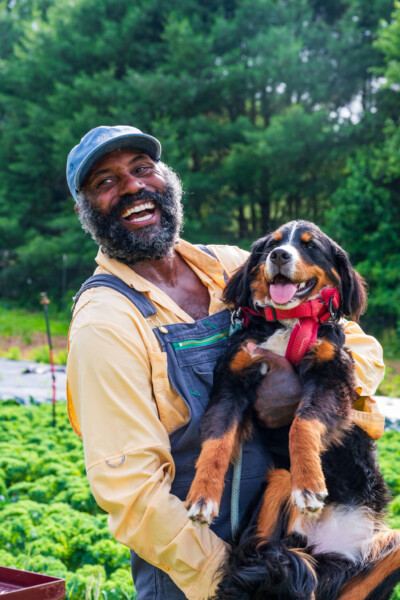
"We aspire to be land stewards as much as farmers," Graham summarizes.
"We wake up every day with the goals of building the soil and producing food that’s good for people," Taylor adds. "We want to get to the point where we can nurture the next wave of beginning farmers."
Through resilient management, deep historical awareness, and an unyielding commitment to community equity, Spice Creek Farm is doing far more than growing vegetables—it is germinating a revolutionary blueprint for the future of American agriculture.



