Executive Overview
The automotive landscape is undergoing a structural transformation. According to the latest comprehensive market estimates released by Kelley Blue Book (KBB) for February 2026, the pricing chasm between electric vehicles (EVs) and internal combustion engine (ICE) vehicles has shrunk to one of the narrowest margins in automotive history. Driven by declining EV transaction costs and simultaneous upward pricing pressure on traditional gas-powered cars, the average price premium for an electric vehicle has plummeted to approximately $6,500.
This convergence is not happening organically. It is being heavily engineered by legacy automakers and new market entrants alike, who are leaning into aggressive incentive strategies to maintain factory throughput and retail momentum. In February, the average EV incentive package expanded dramatically, climbing to 14.2% of the vehicle’s transaction price—more than double the discount rate seen across the broader automotive market.
Yet, this aggressive discounting underscores a complex and paradoxical market reality. While affordability barriers are slowly eroding, overall demand is experiencing turbulent headwinds. The broader EV segment witnessed a sharp year-over-year sales contraction of roughly 26% in February. Even market leader Tesla found itself caught in this crosscurrent, raising its average transaction prices while suffering its lowest monthly sales volume since late 2021. As the industry navigates this high-stakes transition, the February 2026 data serves as a critical diagnostic of an EV market fighting for mainstream adoption amid shifting economic realities.
Detailed Chronology: How February 2026 Redefined Automotive Economics
To understand the gravity of the February 2026 pricing shift, one must examine the cascading timeline of market adjustments that led to this historic convergence.
Late 2025: The Buildup of Inventory Pressures
As the fourth quarter of 2025 drew to a close, manufacturers across the globe faced mounting pressure to meet ambitious climate targets and production quotas. However, consumer adoption rates began to plateau relative to aggressive manufacturing capacities. Dealership lots across North America began accumulating inventory, particularly within the battery-electric segment. Dealerships and manufacturers realized that sticker shock remained the single most formidable friction point preventing fence-sitting buyers from making the leap to electrification.
January 2026: The Opening Salvo
The year kicked off with strategic price corrections. Throughout January, several major automakers initiated preemptive price trims and lease-subsidy programs to clear out remaining model-year inventory. Tesla, known for its volatile and reactive pricing models, initiated adjustments that pushed baseline expectations lower across the sector. Industry analysts watched closely as the gap between gas and electric vehicles began to narrow, though the full extent of the market’s reaction would not become clear until the short trading month of February.
February 2026: The Historic Convergence
February marked the crystallization of these trends. Kelley Blue Book’s data for the month revealed a dynamic push-and-pull:
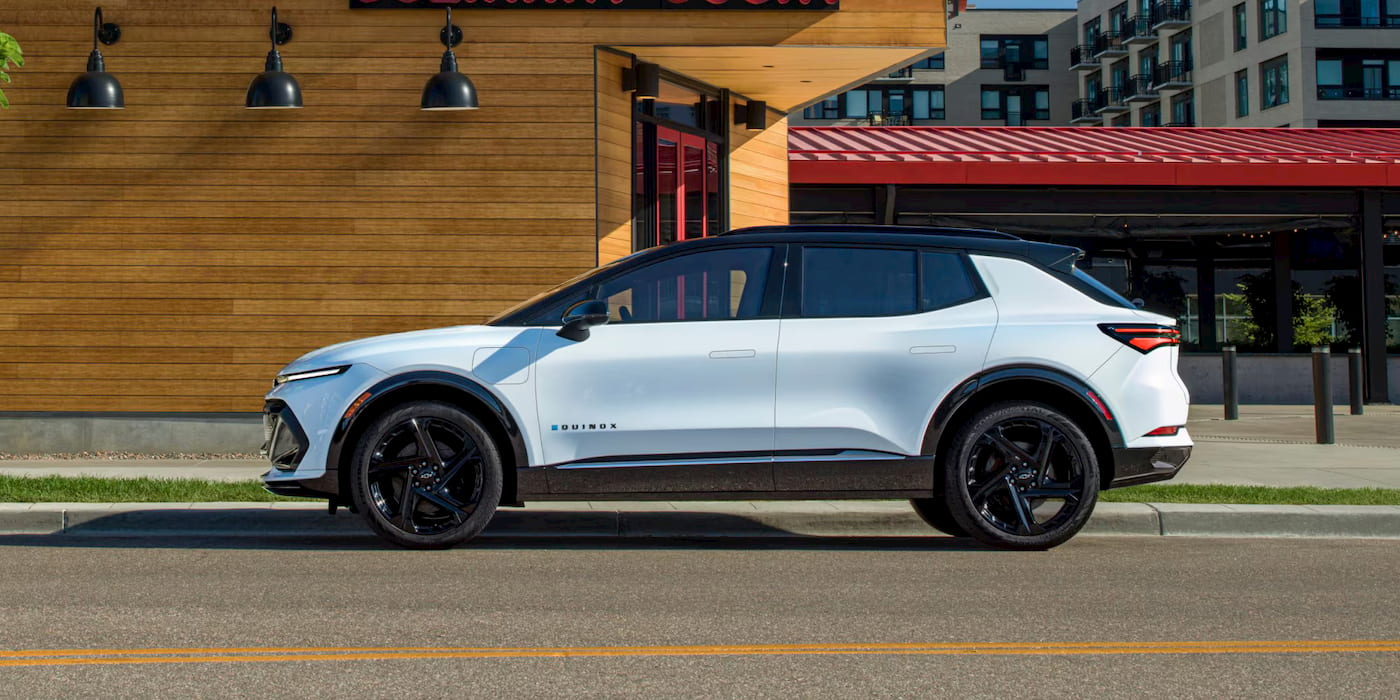
- The EV Downward Drift: The average transaction price (ATP) for a new EV settled at $55,300. This represented a 1.4% decrease compared to February 2025 and a 0.6% sequential drop from January 2026.
- The ICE Upward Creep: Conversely, traditional gas-powered vehicles saw marginal price increases driven by steady demand, incremental feature additions, and persistent supply chain cost adjustments.
- The Resulting Gap: The mathematical difference between buying an average new EV and an average new ICE vehicle narrowed to roughly $6,500. For fleet managers, families, and budget-conscious consumers, the total cost of ownership (TCO)—factoring in lower operational and maintenance costs—makes this narrow sticker-price gap increasingly negligible.
Supporting Context & Metrics: Dissecting the Numbers
The macro-level narrative of price convergence is supported by granular data points that reveal how manufacturers are attempting to engineer demand through financial engineering and aggressive discounting.
The Anatomy of EV Incentives
The most striking metric from the February 2026 KBB report is the surge in manufacturer and dealer incentives.
| Metric | February 2026 Data | Comparison / Context |
|---|---|---|
| Average EV Transaction Price (ATP) | $55,300 | Down 1.4% YoY; down 0.6% MoM from January |
| Price Gap (EV vs. ICE) | ~$6,500 | One of the smallest gaps recorded in automotive history |
| Average EV Incentive Package | 14.2% of transaction price | Up from 12.4% in previous periods |
| Broader Market Incentive Average | ~7.1% (Estimated) | EV incentives are more than double the total market average |
| Tesla Average Transaction Price | $53,821 | Up 3% year-over-year |
| Estimated Tesla Monthly Sales | ~38,500 units | Down 8.9% YoY (Lowest monthly volume since late 2021) |
| Broader EV Segment Sales Decline | ~26% year-over-year | Reflects broader cooling across non-Tesla EV portfolios |
The fact that EV incentives have climbed to 14.2% demonstrates that list prices alone are no longer sufficient to clear inventory. Dealerships are relying heavily on cash-back offers, 0% APR financing promotions, and heavily subsidized lease programs—particularly targeting federal tax credit loopholes that apply to commercial leases—to pull buyers into showrooms.
Tesla’s Divergent Strategy: Higher Prices, Lower Volume
While legacy automakers and EV startups aggressively slashed effective prices via incentives, market heavyweight Tesla executed a counter-intuitive strategy.
Tesla’s average transaction price rose to $53,821 in February 2026, marking a 3% increase year-over-year. This upward tick suggests a shifting product mix—potentially favoring higher-trim Model Y variants, Cybertruck deliveries, or refreshed vehicle architectures that command a premium—rather than broad-based price gouging.
However, this pricing resilience came at a cost to volume. KBB estimates indicate that Tesla sold approximately 38,500 vehicles in the United States in February, representing an 8.9% decline year-over-year. More critically, this figure marks Tesla’s lowest monthly sales volume domestically since late 2021.
Despite this contraction, Tesla’s brand loyalty and operational efficiencies allowed it to weather the storm better than many competitors. While the broader EV segment suffered a staggering 26% year-over-year sales drop in February, Tesla’s 8.9% decline—though painful—proves it retains a resilient core consumer base, even as broader market headwinds take a heavy toll on rival manufacturers.

Official Industry Statements & Expert Analysis
The tectonic shifts in February 2026 have prompted swift commentary from industry analysts, market researchers, and automotive executives.
Automotive economists point out that the automotive sector is caught in a classic "crossing the chasm" dilemma. Early adopters—those willing to pay a heavy green premium—have largely purchased their vehicles. The remaining mass-market consumer base is highly sensitive to macroeconomic indicators, interest rates, and upfront sticker prices.
"We are witnessing a forced maturation of the electric vehicle market," noted a senior automotive market strategist in a recent industry briefing. "For years, automakers could rely on novelty and early-adopter enthusiasm to command high margins. Now, as production scales up, they are forced to confront mainstream market realities. Price parity isn’t just a marketing goal anymore; it’s a survival metric."
Furthermore, financial analysts tracking the KBB data emphasize that the massive injection of incentives—averaging over 14%—is a double-edged sword. While it successfully lowers the barrier to entry for consumers and prevents catastrophic inventory stagnation on dealership lots, it compresses profit margins for automakers who have poured tens of billions of dollars into retooling factories for electrification.
Dealer associations have similarly reported that consumer hesitation is heavily influenced by financing costs. With interest rates remaining elevated compared to the ultra-low era of the early 2020s, high-value purchases require substantial manufacturer subsidies to make the monthly payments palatable for middle-class households.
Future Outlook: What Lies Ahead for the EV Market
As the industry looks past the first quarter of 2026, the trajectory of the automotive market hinges on several critical variables.
1. The Persistence of Price Parity
Will the $6,500 price gap continue to close? Most industry insiders believe it will. As battery manufacturing capacity expands domestically—bolstered by localized supply chains and gigafactory maturation—the fundamental cost of building an EV pack is projected to decline further. Furthermore, as legacy automakers roll out next-generation, lower-cost platform architectures (such as smaller, more accessible crossovers and compact cars slated for late 2026 and 2027 releases), the entry-level price point for EVs is expected to breach the psychological $30,000 threshold more consistently.

2. Incentive Fatigue and Profitability Realities
Automakers cannot sustain 14.2% incentive packages indefinitely without impacting research and development budgets. The second half of 2026 will likely test whether these aggressive promotional strategies can successfully jumpstart organic consumer demand, or if manufacturers will be forced to throttle production volumes to align supply with a temporarily cooling market.
3. The Role of Infrastructure and Ancillary Savings
Total cost of ownership (TCO) will remain the ultimate weapon for EV advocates. As upfront vehicle prices converge with ICE vehicles, consumers are increasingly factoring in the long-term savings of electricity versus volatile gasoline prices, as well as reduced maintenance overhead (fewer moving parts, no oil changes, less brake wear).
Moreover, integrating home electrification—such as pairing an EV purchase with residential solar energy systems—is becoming a primary focal point for cost-conscious buyers looking to completely insulate themselves from utility and fuel price volatility. Programs that streamline home solar adoption via pre-vetted installer networks allow consumers to offset up to 20-30% of installation costs, making the transition to an electric lifestyle economically holistic rather than just vehicular.
Conclusion
The Kelley Blue Book data for February 2026 marks a defining milestone. The narrowing of the price gap to $6,500 and the heavy reliance on double-digit incentives signal that the EV market is transitioning out of its infancy. While near-term sales contractions and volume dips—such as those experienced by Tesla and the broader segment—highlight the friction of mass-market adoption, the long-term economic architecture of the industry is irreversibly shifting toward electric parity. The winners of tomorrow will be those automakers who can sustainably drive production costs down, preserve their margins without relying on perpetual heavy discounting, and deliver the affordable, long-range vehicles that mainstream consumers demand.