

Executive Overview
Beneath the towering wind turbine blades cutting across the horizon of Serra do Mel, in the arid northeast of Brazil’s Rio Grande do Norte state, a quiet crisis is unfolding. For years, the global narrative surrounding Brazil’s clean energy transition has been one of unmitigated triumph. Boasting some of the most consistent, high-velocity winds on the planet—frequently hailed by engineers as the "best in the world"—the country has rapidly ascended to become a global renewable powerhouse. President Luiz Inácio Lula da Silva famously articulated this ambition during a November 2023 summit in Riyadh, declaring that within a decade, Brazil would transform into the "Saudi Arabia of green energy."
Yet, this ambitious green pivot carries a deeply paradoxical human cost. Approximately 90% of Brazil’s wind farms are concentrated in the country’s northeast, a region historically burdened by some of the nation’s poorest socioeconomic indicators. Rather than sparking a localized redistribution of wealth and lifting impoverished municipalities into prosperity, the rapid, largely unregulated proliferation of onshore wind infrastructure has triggered legal battles, environmental friction, health crises, and deep disillusionment among the rural working class.
From farmers barred from cultivating their ancestral land to local residents suffering from chronic sleep deprivation and anxiety induced by turbine noise, communities in the shadows of the "green miracle" are demanding a reckoning. As developers now eye the horizon for the next frontier—offshore wind projects along the Atlantic coast—local populations and human rights advocates are asking a fundamental question: Who truly benefits from the green transition, and who bears the burden?
Detailed Chronology: From Dry Earth to Legal Battlegrounds
The Promising Genesis
A decade ago, the narrative in Serra do Mel was framed around economic survival. Following a devastating, multi-year drought that crippled local subsistence agriculture, representatives of the French renewable energy multinational Voltalia arrived in the municipality. To farmers struggling to feed their families, the offers appeared to be a lifeline.

Under the terms presented, landowners were promised a stable, inflation-adjusted monthly income ranging between 3,000 and 5,000 reais (approximately £430 to £720)—structured to resemble a reliable salary—with explicit assurances that the infrastructure would not interfere with agricultural productivity. Desperate for financial security, almost every farmer in the affected villages signed.
The Unraveling of Rural Livelihoods
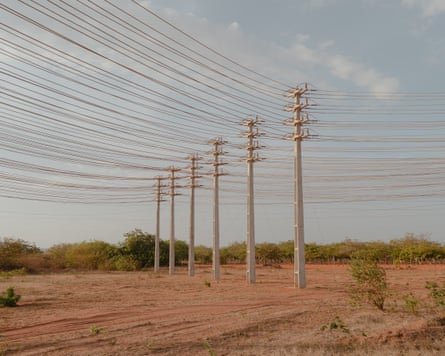
The reality that emerged years later bore little resemblance to the initial corporate pitches. António de Souza, a local farmer whose family has worked the land for decades, quickly found his economic viability choked by the infrastructure he had welcomed. Power lines crisscrossing his property mandated the removal of rows of lucrative cashew trees.
The restrictions multiplied: de Souza was barred from planting crops beneath the high-voltage corridors, prohibited from driving tractors through the saturated earth during bad weather due to lethal electric shock risks, and forbidden from allowing his cattle—a vital source of secondary income—to graze near the subterranean and overhead cables. While official contracts stipulated that the industrial footprint would occupy a modest one hectare, de Souza discovered that four hectares of his family’s 50-hectare holding had effectively been rendered unproductive wasteland.
"If I’d known it would be like this—that I’d be prevented from planting and harvesting—I wouldn’t have signed that contract with them," de Souza reflects.
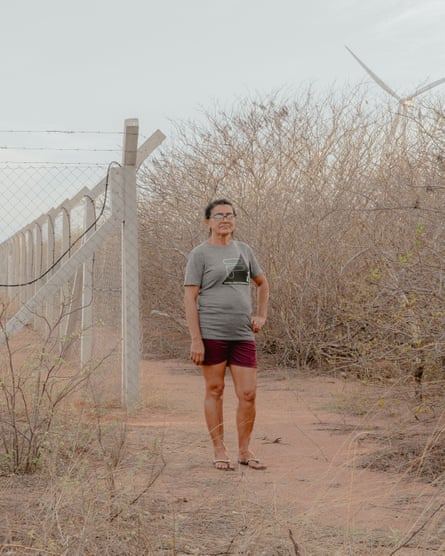
The disruption extended far beyond lost agricultural yield. Edvaldo Bessa, a 75-year-old resident, suffered a severe electric shock from uninsulated steel cables belonging to a metering tower on his holding. Meanwhile, residents living mere hundreds of meters from the rotating blades began reporting chronic health issues. Relvani de Brito, whose home sits a mere 250 metres from a massive turbine—well inside safety boundaries common in European nations—describes the psychological toll of the constant acoustic hum.
"During the day, you can barely hear it," De Brito says. "At night it’s worse because everything is quiet, and that’s when the racket starts. I take medication for anxiety. I don’t sleep at night; I wake up at one o’clock, right on the dot."
The Turning Point: Organized Resistance and Class Action
By July 2024, cumulative grievances reached a boiling point during a packed public assembly where hundreds of farmers voted overwhelmingly to challenge the energy corporations legally.
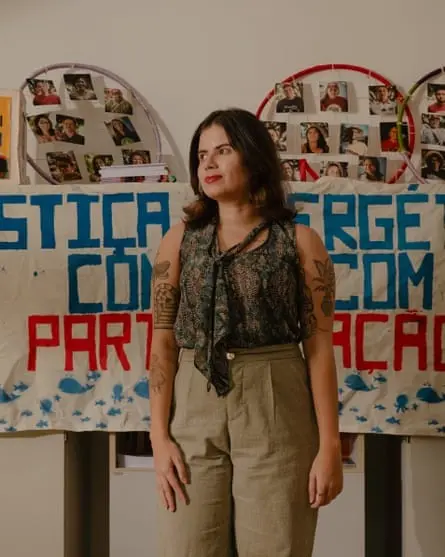
The culmination of this community organizing arrived in May 2025, when a coalition of three rural workers’ organizations filed a landmark public civil lawsuit against Voltalia. The litigation received immediate, favorable assessments from Brazil’s public prosecutor’s office and public defender’s office—institutions tasked with safeguarding human rights and environmental compliance.
Rather than demanding the expulsion of the renewable companies, the plaintiffs are seeking structural reforms:
- Transparency and Fair Compensation: Full disclosure of the actual commercial yields generated on their properties, coupled with a recalculation of royalties that are currently pegged at an opaque 1.55% of turnover tied to distant market sales.
- Contractual Limitations: A legal cap restricting energy developers from leasing more than 50% of any individual smallholding.
- Protection of Social Security Status: Preservation of the farmers’ "special insured person" classification—a vital rural welfare category in the Brazilian social security system that is jeopardized when farmers lose the ability to actively cultivate their entire landholdings.
- Infrastructure Relocation and Environmental Review: The suspension of four wind farms currently under construction, the physical relocation of turbines encroaching on human settlements, and comprehensive, community-inclusive environmental impact assessments.
Supporting Context & Metrics: The Paradox of Abundance
The friction in Serra do Mel highlights a systemic regulatory vacuum at the heart of Brazil’s renewable expansion. Unlike European nations—such as France, which enforces a mandatory 500-metre buffer zone between industrial wind turbines and human residences—Brazil possesses no federal legislation dictating minimum distance thresholds between turbines and populated communities.
Public Health Impacts
Data compiled by the Lavoro Institute from the Primary Healthcare Information System (Sisab) reveals a stark correlation between industrial wind development and localized health declines. From 2022 onward—coinciding with the operational launch of Serra do Mel’s 36 wind farms—local health clinics documented a significant spike in patient complaints regarding anxiety, panic disorders, sleep disturbances, and hearing anomalies. In Poço Branco, a demographically and economically comparable municipality that lacks wind turbine installations, health metrics demonstrated the exact opposite trend.
The Macroeconomic Irony: Curtailment and Waste
Compounding the local grievances is an acute national crisis of energy distribution and market efficiency. The Brazilian northeast produces vastly more clean energy than the existing transmission grid can absorb.
According to data from the National Electricity Agency (Aneel) compiled by the Lavoro Institute, 17 of Serra do Mel’s power stations sell their output entirely on the open market, funneling electricity via direct negotiation to large industrial consumers in Brazil’s distant southeast and central-west regions. Consequently, local residents face a cruel paradox: the electricity generated in their backyards is transmitted cheaply to distant cities, while the municipal power that illuminates their own homes costs twice as much, and many local streets remain unpaved without reliable mains water access.
This infrastructural bottleneck erupted into a severe market crisis in 2025. National data revealed that Brazil wasted an astounding 20.6% of the wind and solar energy it was capable of generating. Grid operators were forced to routinely shut down turbines—a phenomenon known as "curtailment"—to prevent generation from exceeding demand, which risks catastrophic national blackouts. Elbia Gannoum, president of the Brazilian Association of Wind Energy and New Technologies (ABEEólica), termed the resulting losses exceeding 6 billion reais as "the worst crisis in Brazil’s wind energy industry."
Official Statements and Corporate Responses
Faced with mounting legal scrutiny, renewable energy developers maintain that their operations are fully compliant with national laws and international sustainability standards.
In official statements issued to investigative journalists, Voltalia asserted that it had not yet been formally served with the May 2025 class-action lawsuit. The multinational emphasized that it operates in "strict compliance with Brazilian legislation" and utilizes "a collective, participatory, and transparent contractual construction process" designed to foster regional social development.
The company categorically denied that its installations have caused environmental or health degradation, stating: "Voltalia values sustainable development and maintains an ongoing dialogue with local communities—from local in-person assistance to digital channels such as the Ombudsman, as well as regular meetings, and social and environmental initiatives."
Regarding land lease agreements, Voltalia stated that its contracts are formulated "in collaboration with local landowners and diligently address any matters concerning these agreements through the appropriate channels," maintaining that all wind farms are managed in strict adherence to regulatory, social, environmental, and occupational health and safety frameworks.
Future Outlook: The Offshore Frontier and the Fight for Energy Justice
Even as onshore grievances stall in the courts, the expansion of Brazil’s renewable sector is already pivoting toward its next major evolution: offshore wind energy.
Just over 18 miles from Serra do Mel, along the coastline of Areia Branca—where onshore turbines already form an industrial barrier behind local beaches—federal regulators are laying the groundwork for the country’s maritime energy future. In June 2025, Ibama, Brazil’s federal environmental enforcement agency, issued the nation’s first-ever preliminary license for an offshore wind energy project. Developed by the National Industrial Training Service (Senai-RN), the facility will be installed in shallow waters near the local salt-distribution terminal, serving as a legal test bed under a recently enacted regulatory framework.
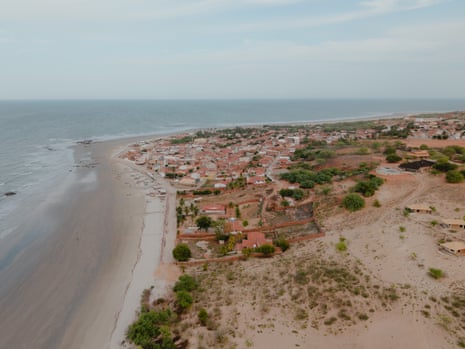
More than 100 additional offshore wind farm license applications currently languish in Ibama’s administrative queue, setting a precedent that will dictate environmental and social safeguards for decades to come.
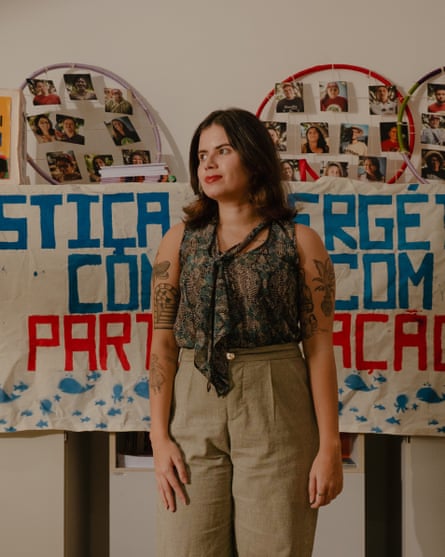
"The way this process is conducted sets a precedent for all others to follow," warns Giovanna Ferreira, an activist monitoring the developments on behalf of the Semi-Arid Region Human Rights Reference Centre (CRDH).
When CRDH researchers conducted field visits to traditional fishing communities surrounding the designated offshore zones, they uncovered a familiar pattern: the populations most directly dependent on the marine ecosystem for their livelihoods had been entirely unconsulted and were largely unaware of the industrialization slated for their waters. While Senai maintains that the project footprint is situated away from traditional fishing grounds, local fishers insist that the turbine towers will occupy the exact waters where they ply their trade.
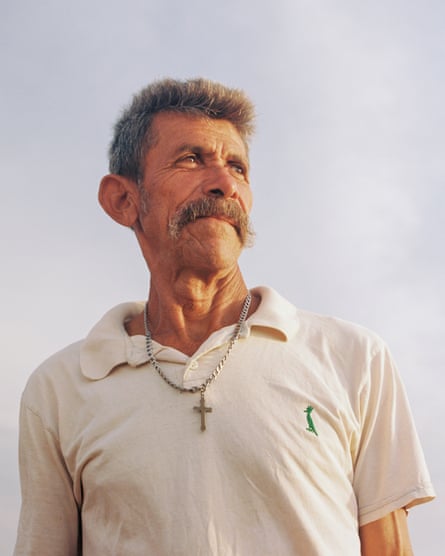
Despite the encroaching industrialization, local communities continue to balance anxiety with resilience. Standing on the prow of his small wooden boat on the sands of Areia Branca, a local fisherman named Luis contemplates the forest of turbines soon to rise on the horizon.
"God and the ocean will always provide the fish we need," he says quietly.
Between the steadfast faith of coastal fishers, the legal mobilization of rural farmers, and the relentless corporate push for green energy expansion, Brazil stands at a critical crossroads. Whether the nation’s historic renewable transition ultimately serves to empower marginalized populations or simply reproduces historical patterns of resource extraction under a green banner will depend heavily on the judicial outcomes unfolding in Rio Grande do Norte—and whether policymakers finally heed the demand that true energy justice must begin with community participation.



